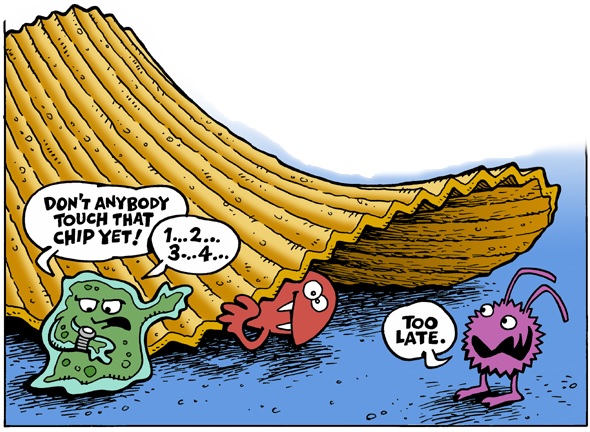
 Last week my colleague Katie posted about Brave Irene, wondering particularly about situations in the book (neglect, stranger danger) that seemed innocent enough at the time of publication but feel somehow more difficult in a contemporary cultural context. The conversation got me thinking about an article I read recently in the Washington Post about the hygiene hypothesis. Researchers suspect a link between our growing obsession with cleanliness (which we understand as the absence of germs) and a rise in diagnosis for all sorts of immunological problems including everything from allergies to multiple sclerosis. As I understand it, the idea is this: by protecting children from garden variety germs, we remove the opportunity for their bodies to distinguish between everyday irritants and dangerous pathogens. When they are exposed to things (as they inevitably will be) their bodies treat all sorts of microbes as major threats, resulting in an overzealous auto-immune response. It’s an interesting premise, and one that makes common sense to me.
And I wonder if the same could be said for ideas. Are there costs to “protecting” children from exposure to intellectual things they will encounter in their lives? What might those costs be? I have long believed that, collectively, we err on the side of over-protection. If an effort to spare children uncomfortable emotions we fill their environments with primary colors and ebullient music and sunshine and cuddles. And we purge those environments of any references to despairing or struggle. We mean well, of course we do. We don’t want the kids in our lives to be unhappy. But kids despair and they struggle. And should not books be places for kids to make sense of those emotions? Of course they should.
I am not suggesting that we tie kids up and subject them to a literary diet of terror and dismay, any more than I would advocate feeding them decidedly rotten meat. Yuck. But I am suggesting that there is a place in the preschool world for books that acknowledge hurt and sorrow, books that recognize that such emotions exist and tell kids that it’s OK to feel them. Maybe, by inoculating children against the darker shadows the human condition, we prepare them for meeting them head on. And by showing kids that books and stories make really effective tools for managing our emotions, we give them a powerful gift indeed.
image crop from Greg Williams’ WikiWorld.











 Open This Little Book
