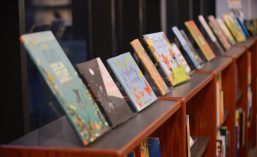
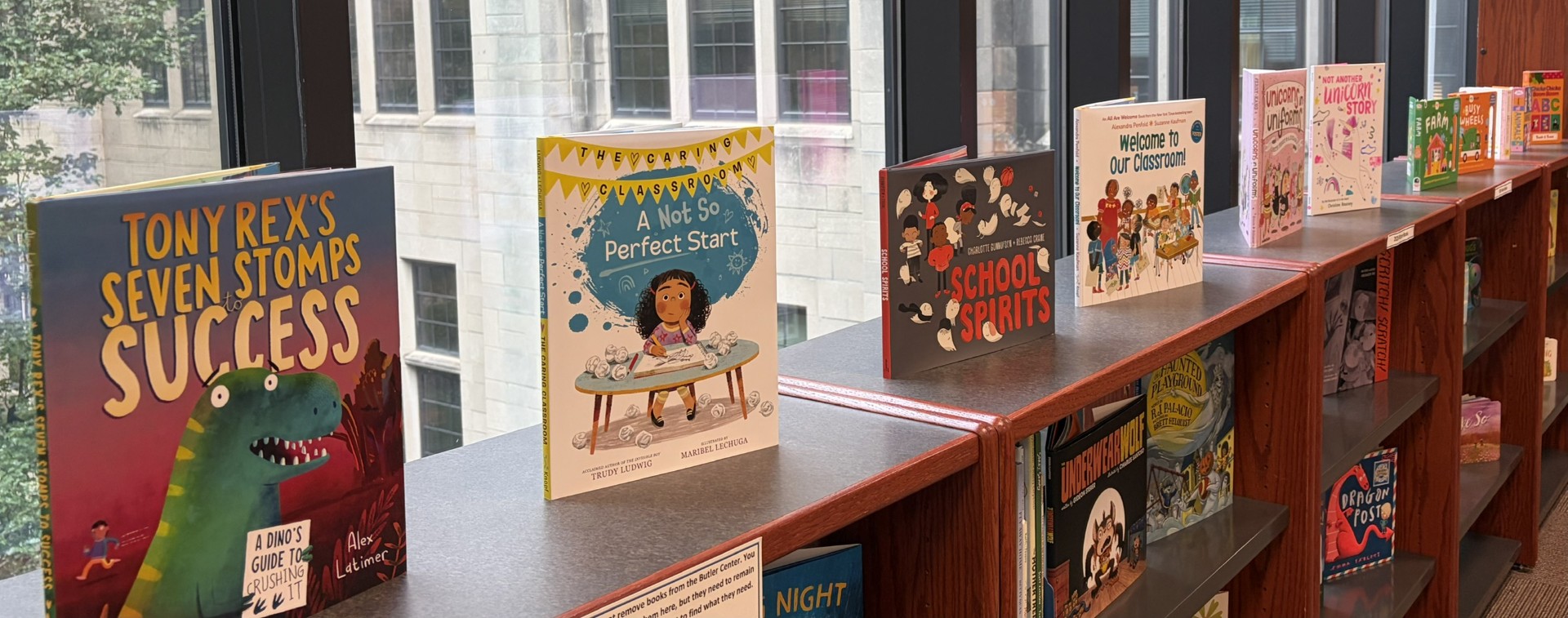
Welcome to the online presence of the Butler Children's Literature Center, housed within Dominican's School of Information Studies, Crown Library room 214. Here, we celebrate the best in books for youth and those who delight in sharing them. For Fall 2026, BCLC will offer collection access to the Dominican community and general public during posted open hours: Monday, Tuesday, Thursday, and Friday 9am-4pm, and by appointment with the Curator. Contact Jen Clemons at butler@dom.edu or jclemons@dom.edu to make arrangements.
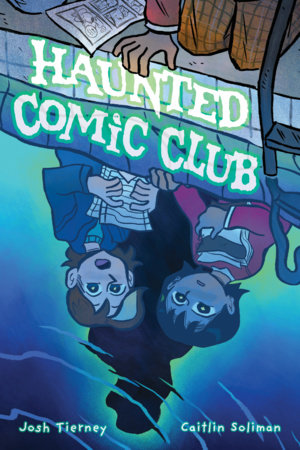
Haunted Comic Club Josh Tierney Illustrated by Caitlin Soliman Oni Press Ages 8-12 Available October 6, 2026
Will is an aspiring writer struggling to fit in at school after his closest and only friend moved away. Anita is a passionate artist grieving her Ama, who was always her biggest supporter. After a chance meeting at the Tween Zone after school club, the two outcasts decide to team up to create the best comic ever. Their subject? The ghost of a former staff member who still haunts the Tween Zone.
Will and Anita’s story is firmly rooted in creativity and friendship. With a core message about finding your “people” and chasing your passions, the graphic novel is simple to digest while still having exciting twists and turns. Drawings of Will and Anita’s own characters interplay with the illustrations, giving extra dimension to the world and the two tweens’ inner lives. The ghost of Sarah, the Tween Zone staff member, lurks throughout the story, both in the fictional comic and in the Tween Zone itself, adding a supernatural element that leaves the main characters and the readers alike questioning whether the ghost story is merely a legend.
A heartfelt, relatable story with protagonists who are easy to root for, Haunted Comic Club has the potential to resonate with a wide variety of readers. Those who are curious about scary books but not yet reading to jump into the deep end will enjoy the spooky atmosphere that radiates throughout the graphic novel without being overly frightening.
There are only days to go before the Fall semester officially begins here at Dominican, and I know the vibes and weather are currently screaming “summer” (at least summer storms here in the Midwest), but it’s still time to start adding back-to-school items to your calendar. Big sigh, I feel it too.
Open Hours:
Please join us to browse the collection of the newest and best children’s books from North American publishers, explore the Effie Lee Morris Collection of African American Children’s Books, or do a bit of research in the Ellin Greene Folk and Fairytale Collection. Beginning August 24th, the Butler Center will be open Monday, Tuesday, Thursday and Friday from 9:00 a.m. to 4:00 p.m. Need a different time for your research visit? Email butler@dom.edu for an appointment.
Information Session – LIS 796: International Book Fair
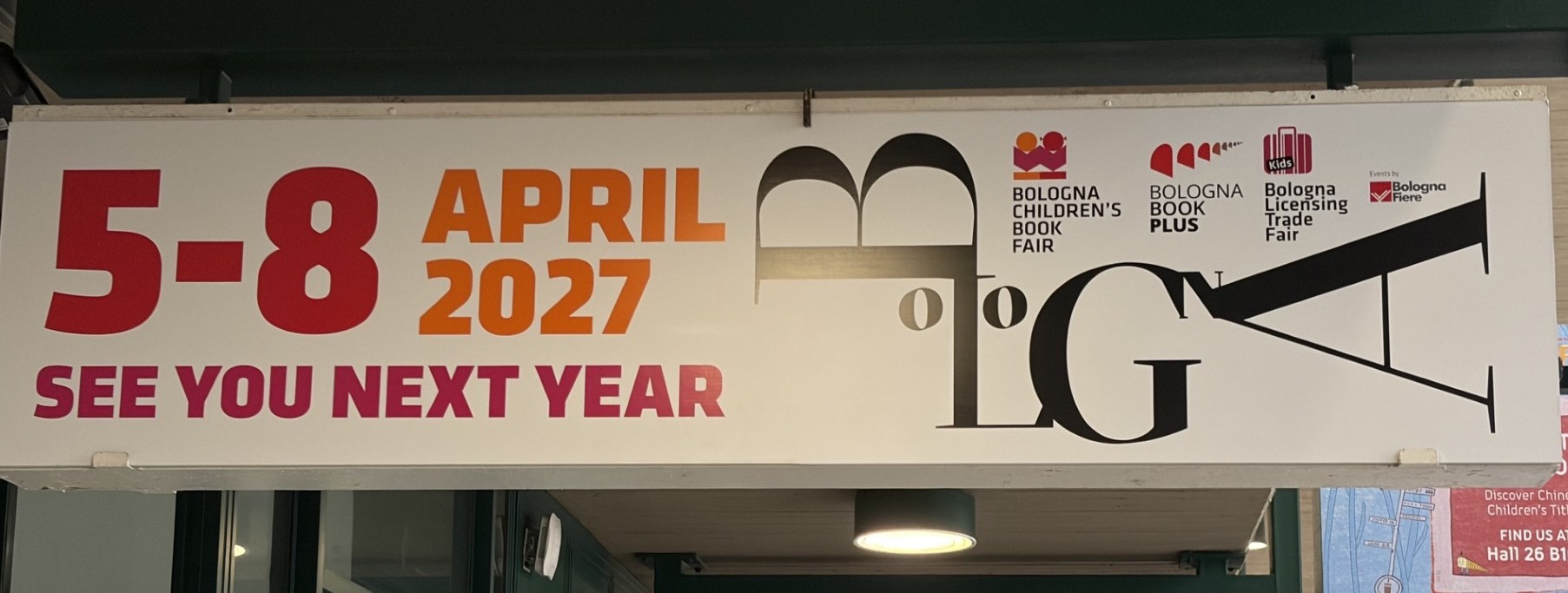
Interested in discovering children’s literature from farther afield? Each spring, Dominican’s School of Information Studies offers LIS 796: International Book Fair. The course explores issues and trends in the global kid lit publishing, considers diversity and cultural appropriate in youth literature, and some of the ways librarians and teachers can apply a wider lens to their own collection development work. The course culminates in a trip to Italy to attend the Bologna Children’s Book Fair.
Connect with course instructor and BCLC director, Jen Clemons, at 7:00 p.m. on September 30, 2026, to learn more about the course, conference, costs, and associated travel. Register here.
Not a current SOIS student? The course is open for you to register as a student-at-large. Reach out to course instructor and BCLC Director Jen Clemons, or the Butler Center for more information.
Book Sale – Save the Date(s)!
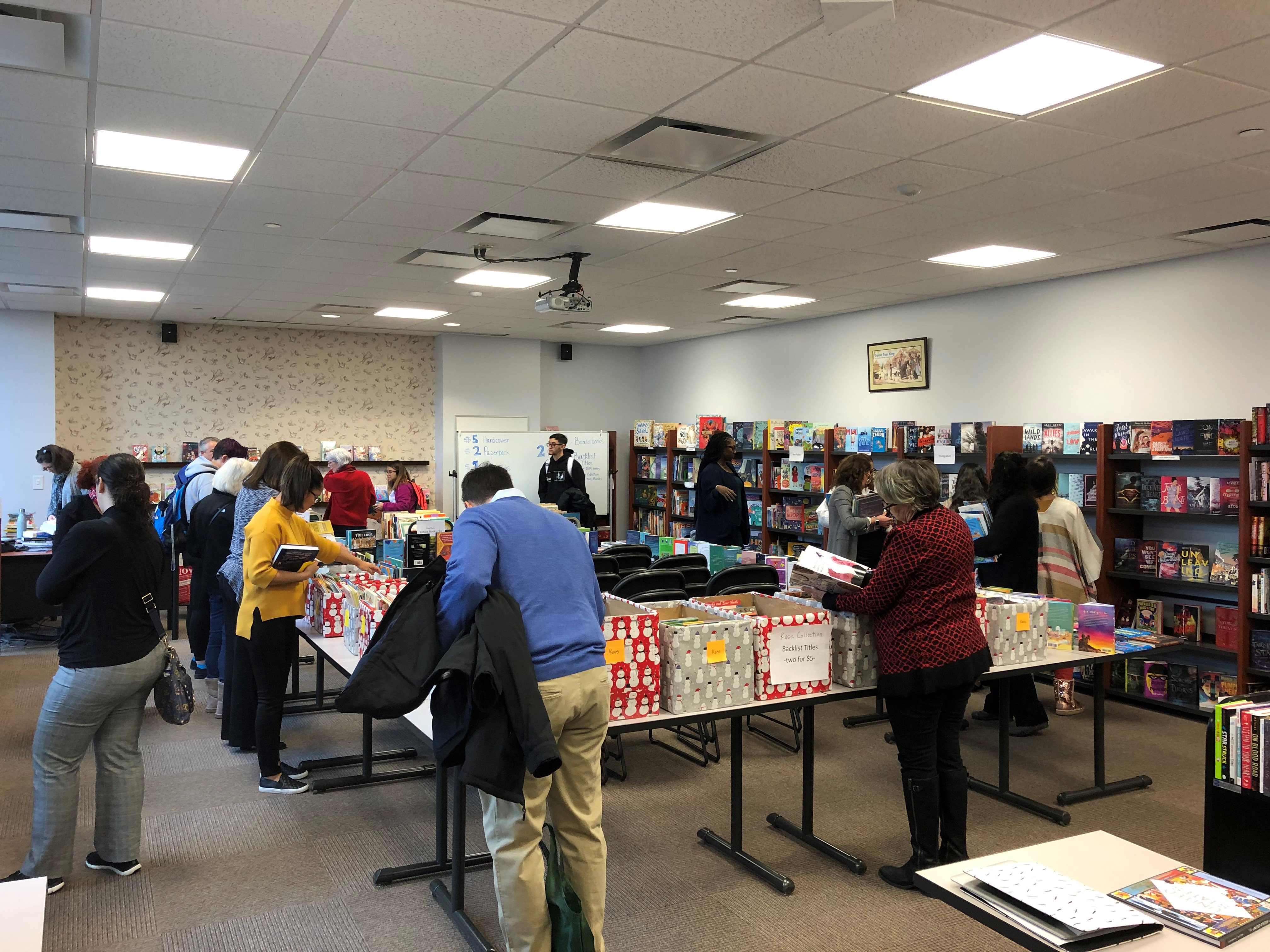
Time to mark your calendar for the Annual Butler Center Book Sale. This year’s sale will include an evening shift for all you librarians and teachers that need to come after school, a full weekday, and weekend mid-day for the Saturday errand-runners.
If you’re looking for more reasons to come to Dominican’s lovely campus this fall, stay tuned for smaller events and lectures presented by other academic units within the College of Business, Information Studies, and Technology; the Butler Center’s administrative home.
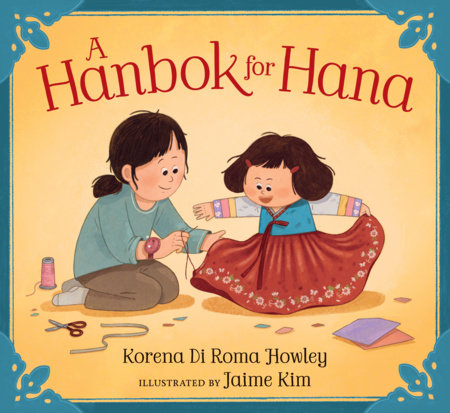
A Hanbok for Hana Korena Di Roma Howley Illustrated by Jaime Kim Candlewick Press Ages 5+ Available September 1, 2026
After moving to a new town with her Eomma, Hana’s life is changing. Now, with the Korean holiday of Chuseok approaching, she’s had enough of change. Instead of celebrating with her family, she has to celebrate with new neighbors, and her traditional hanbok no longer fits. But in creating a new hanbok, Hana discovers ways that the old and the new can coexist, and how new traditions can be just as beloved as old ones.
This simple, easy to follow story grapples with the idea of change, something familiar to many young readers, while introducing Korean concepts including holidays, clothing, and foods. A short explainer in the back gives more information about these for readers who may not be familiar. Kim’s illustrations emphasize the theme of old and new, especially in the depiction of Hana’s new hanbok, which is made from pieces from an old hanbok belonging to her Eomma as well as new pieces.
Perfect for discussions on cultural traditions and fall holidays, A Hanbok for Hana offers a view of a culture that may be familiar to some readers and brand new to others. Universal themes tie together a story that any young reader can relate to, regardless of their background.
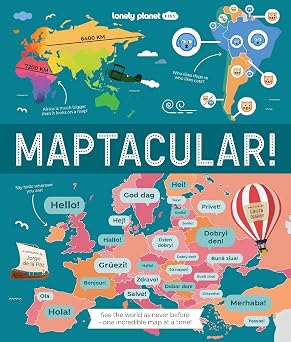
Maptacular! Laura Baker Illustrated by Jorge De La Paz Lonely Planet Kids November 10, 2026 Age 8-12
Most maps divide the world by country borders, but what if it were split by favorite ice cream flavors, tallest trees, or global distribution of video gamers? Prolific children’s nonfiction author, Laura Baker, along with travel guide powerhouse Lonely Planet, offers middle grade readers this fascinating, infographic-like twist on cartography. Maptacular! features 70+ maps with chapters focused on countries, people, nature, transportation, history, and technology, then subdivided further into 2-page spreads exploring a single topic or question, such as “Do You Need a (School) Uniform?” or “Marco Polo’s Voyage.” The amount of easily digestible text varies from spread to spread, but most include a helpful key for understanding the map and fun facts associated with the topic, like that Australia is home to 28 million people and 40 million kangaroos (p24). Without a strong narrative structure, the title allows for consuming intriguing details at a reader’s own pace, either moving slowly through the ideas and images, or dipping in and out like a reference text, while wildly varied topics nurture curiosity about both the earth and the global community. Baker introduces deeper topics for consideration in age-appropriate ways, like that maps are organized the way they are (with Europe in the center) because they were developed by European explorers, gently encouraging readers to look at other things from a new perspective. De La Paz uses graphic design-inspired digital images in a candy-colored palette to clearly express the facts of each topic. Clean image overlays help simplify complex ideas, like the way Mercator Projection maps stretch out the land at the top/bottom of the globe. The inclusion of several wayfinding aids, an about section (explaining the parts of each spread), a world map, glossary, and resource list support both new nonfiction readers and those looking to dig deeper into a topic.
A vivid, info-packed guide for geography buffs and fun fact collectors alike.
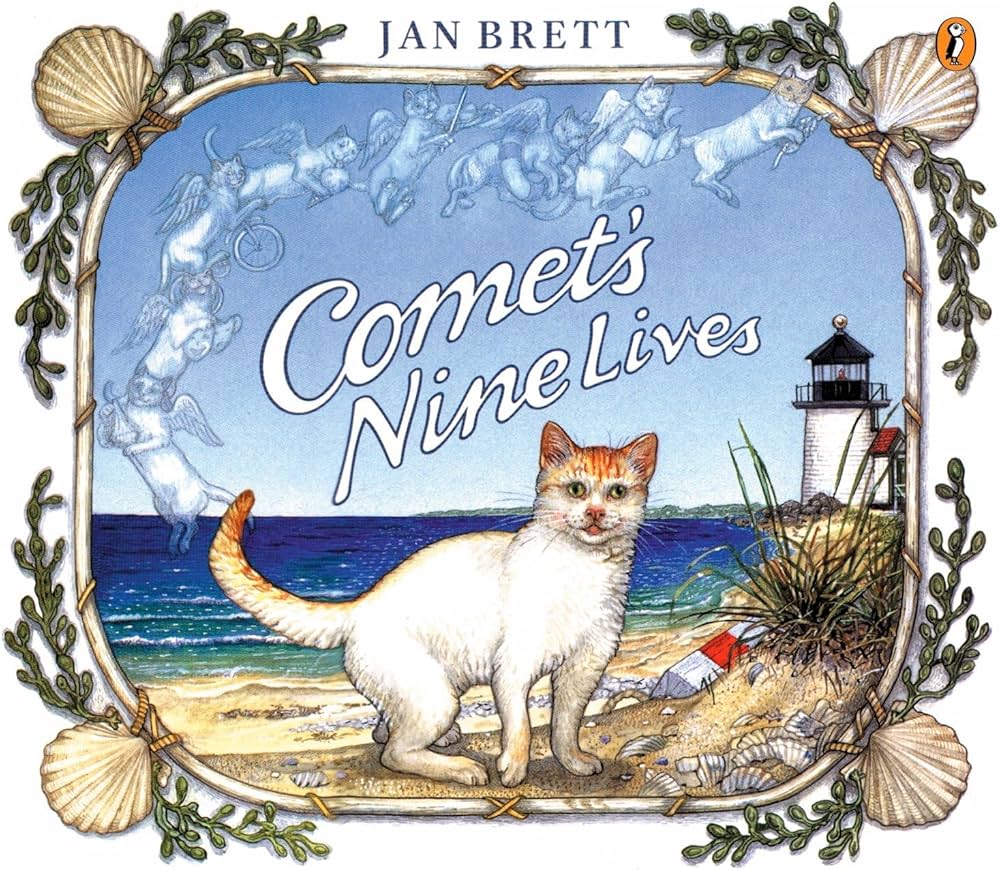
Comet’s Nine Lives Jan Brett G.P. Putnam’s Sons, an Imprint of Penguin Random House Ages 4-8 Available: October 6, 2026
When his first life slips away from him after eating some foxgloves, Comet the cat needs to find a home to keep his other eight lives intact. As his efforts turn into one misadventure after another, losing more lives in the process, Comet’s goal of finding a suitable shelter seemed further than ever. However, the safety he sought may be closer than he first thought.
Jan Brett’s signature intricate and realistic art style shines once again in her latest picture book. Her trademark serene and cool watercolor illustrations and borders, which include seashells, sea creatures, seaweed, and wooden planks, capture the coastal ambiance of the story’s island setting. The watercolor paint isn’t super vibrant, but it is smooth and calm. Comet’s antics portrayed in the pictures spark exciting action despite the lack of bright colors. Brett’s prose doesn’t talk down to her audience. She uses sophisticated language in some areas, especially when a dog character feels outraged or frightened of Comet’s unwelcome presence. For instance, in one scene where a health inspector comes to an ice cream parlor and sees Comet, he proclaims, “Feline residues! Maximum infractions!” As Comet loses each life, Brett’s wording makes apt descriptions that match the situation presented in the illustrations. Overall, Comet’s Nine Lives is an exquisite read sure to charm both parents and young readers alike. Jan Brett fans would be proud to include this book in their collections.
The Continuation of Summer Dillon Sarah Everett HarperCollins Children’s September 15, 2026 Age 8-12
What would you think of a replica android replacing your sibling? What if you were the replica? That’s how Summer 2.0 came to join the grieving Dillon family after their 11-year-old daughter’s passing. With downloads of Summer’s memories and mannerisms, she is not meant to replace, but to continue Summer’s life. That is, until a glitch in her code has Summer 2.0 developing her own likes (the color turquoise), dislikes (oatmeal-yuck), fears (being recycled), and a “forever plan” with dreams for her future—gaining her family’s love, becoming the perfect Summer, growing old, and visiting the Grand Canyon.
This middle grade, science fiction novel is an exploration of what makes us “us,” what makes us human. Sarah Everett’s characters embody all the joys and heartbreaks of life (for both humans and androids), with themes of grief, love, friendship, and individuality. She handles tough subjects delicately and with an 11-year-old’s worry about their place in the worlds of school and family. Fast prose, brief paragraphs, and journal-like footnotes addressed to Summer 1.0 and future Summers embody the voice of a vibrant, yet unsure young girl, with just a touch of AI omniscience. This juxtaposition poses questions about the ethics of artificial intelligence in an age-appropriate way and mirrors the changes tweens experience as they grow from childhood wants to the more complex understanding that comes with growing up. A bittersweet coming of age story to remind readers that we are all unique, we all have value, and we are all irreplaceable.
Last week, the American Library Association’s annual conference was held here in Chicago, only a few miles away from Dominican and the Butler Center. Kathryn and Kian, Graduate Assistants at the Butler Center, both attended as first-time conference goers. Here’s what they had to say about the experience:
Kathryn
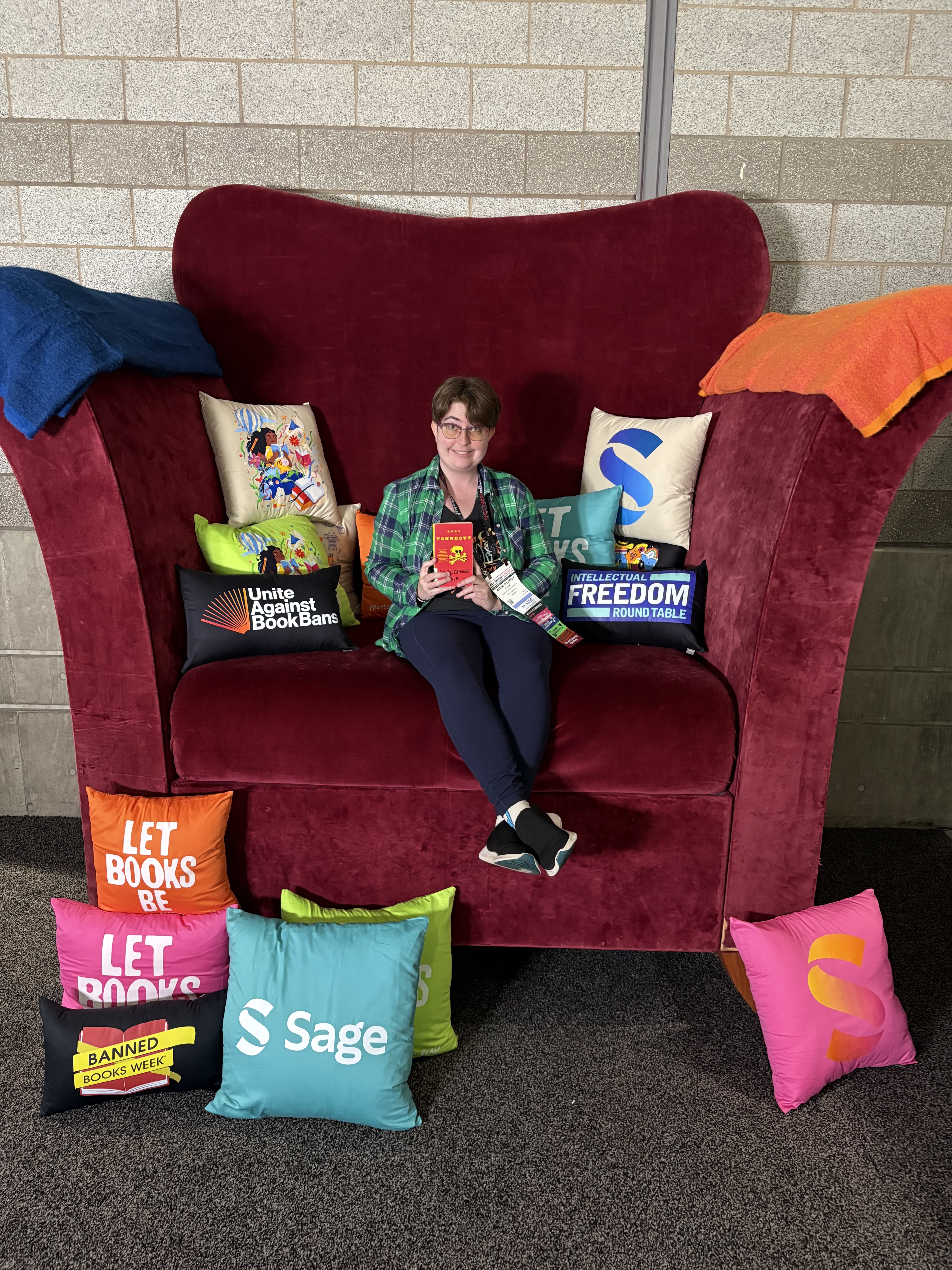
Sesquicentennial: that’s the word of this year’s conference, folks, one that’s hard to spell and say, but it’s what this year’s ALA Annual conference is all about. Except, no, that’s not quite it. Yes, this year marks the 150th ALA annual conference held right here in Chicago; however, this was also a gathering of multitudes. Multitudes of like-minded people assembling in one ginormous McCormick Center, multitudes of sessions featuring awesome authors and/or artists, multitudes of ARCs, stationary, tote bags, and much more than either Kian or I (Kathryn) could barely fit into our suitcases and backpacks for the journey home. Come with us as we graduate assistants here at the Butler Center to share our experience of #ALAA26 with you all!
Ethical Use of AI in Libraries
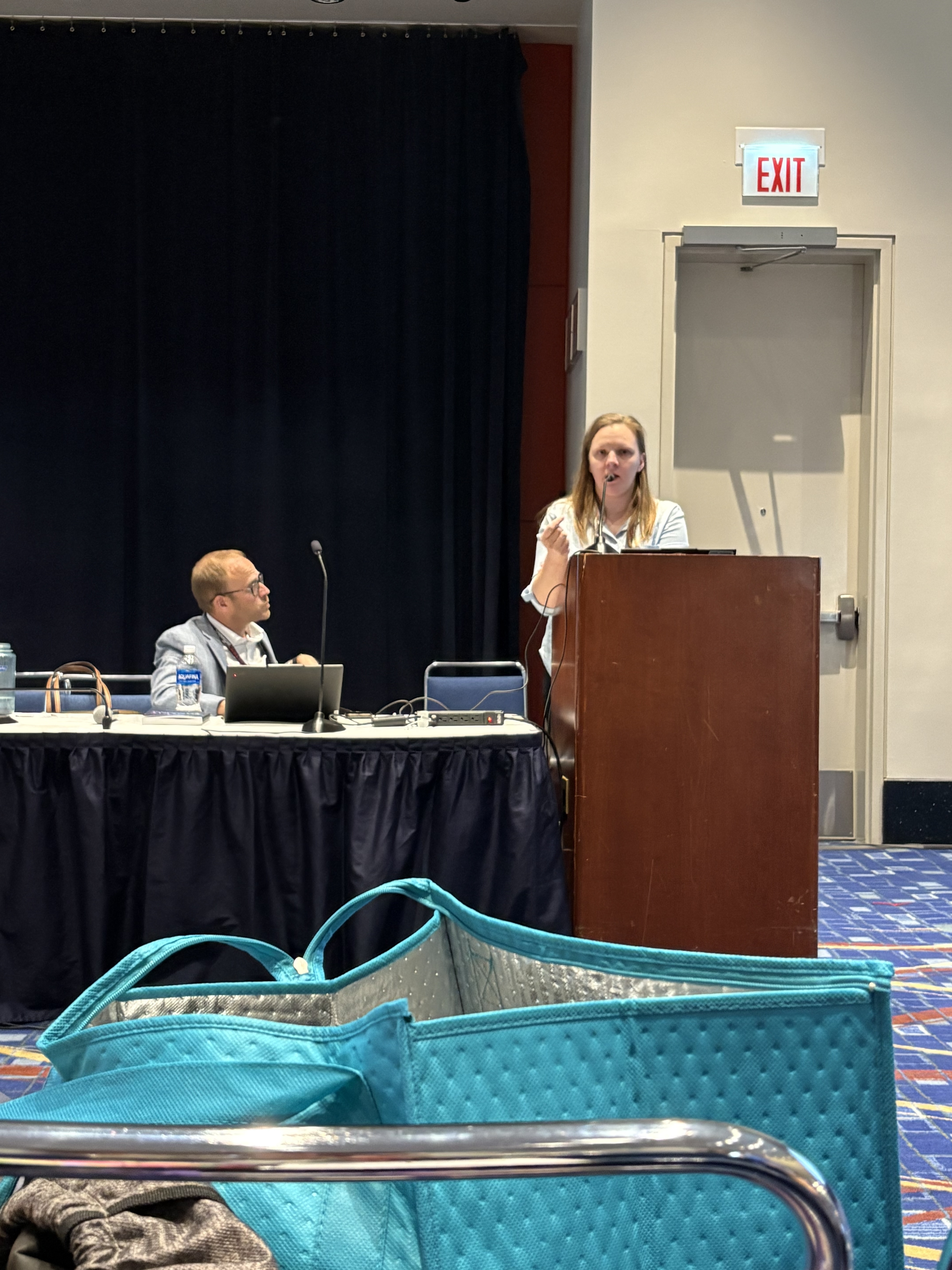
For one of my “Ruffage” conference sessions (that is, informational panels that are good for the critical thinking parts of my brain), I decided to venture into Michaela Herrick’s and Justin Bambico’s panel titled “Finding a Middle Ground: Ethical Use of AI in Libraries.” Seeing the anti-AI memes being flashed as the people filed in their seats and the anti-AI buttons being passed around, I knew we were in good hands. While I’m on the boat that AI does more harm than good in the long run, I also believe that “everything can be enjoyed in moderation.” Throughout their presentation, it was abundantly clear that: there are many types of AI, and when discussing AI types, especially problematic ones, you need to be specific on what AI you’re talking about; Gen AI is adding new issues to already long-running problems, and there is no straight solution to solving them; and, above all else, humans should ALWAYS be in control of technical implementation. With AI use being widespread as it is, it’s no surprise that there were over 30 AI-related panels at the ALA Annual this year, and that number is only going to increase as the years pass. It won’t be the last we’ll hear from this newfangled technology, but for better or worse, it’ll get harder to avoid running into it, too.
Visual Stories, Big Impact: Graphic Novels for Kids
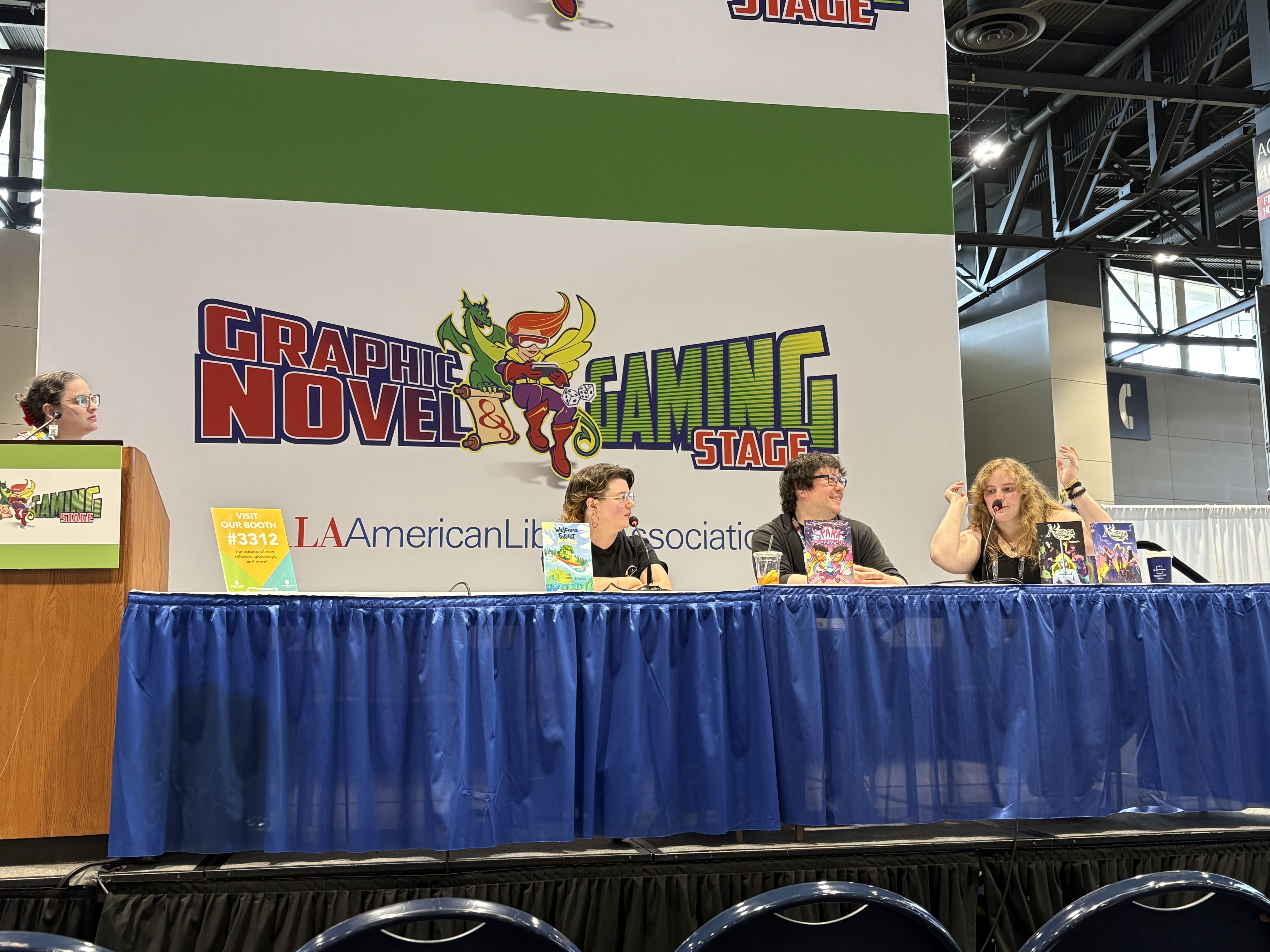
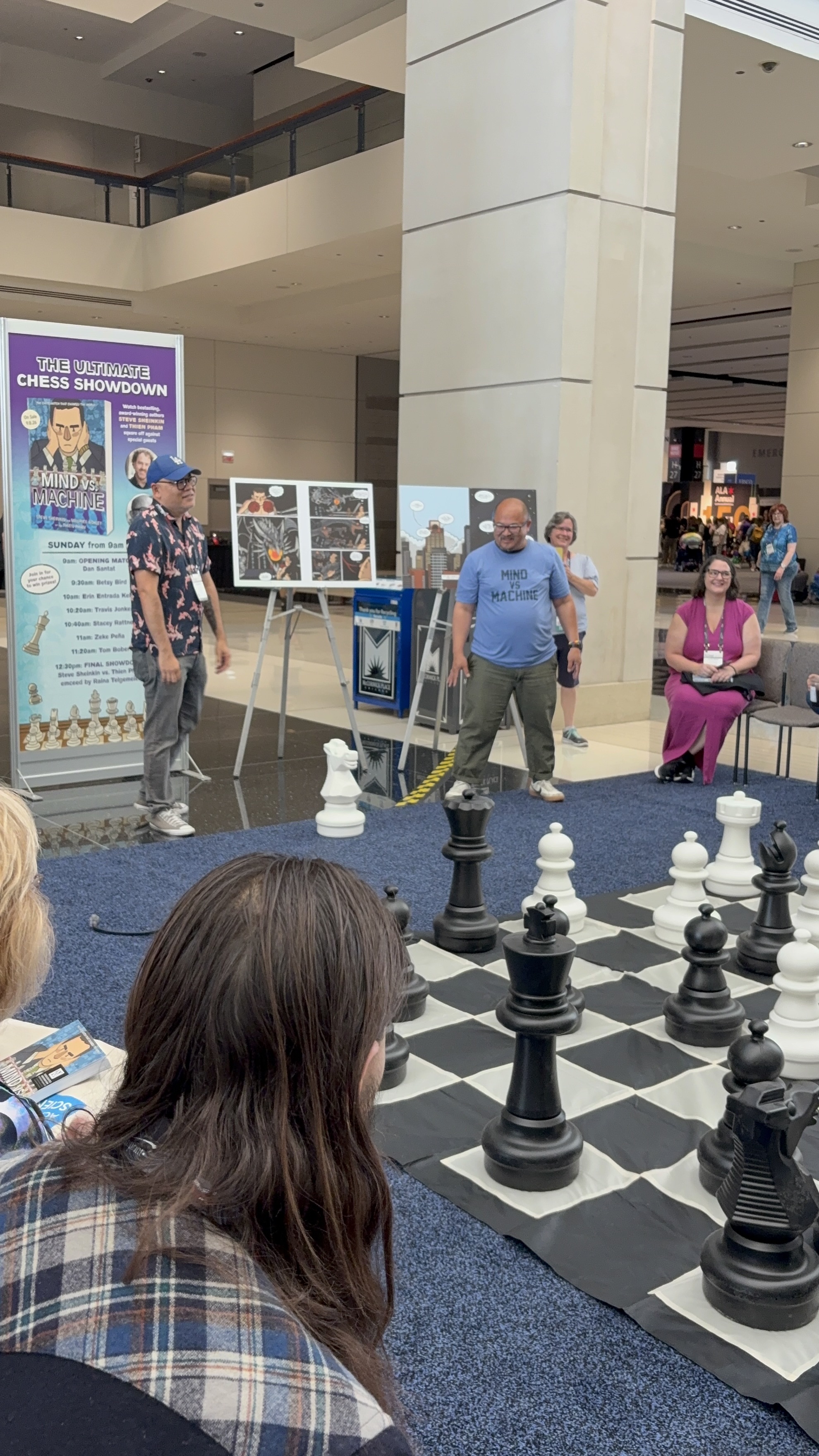
This was one of my favorite sessions I attended. On Sunday (June 28), right after glimpsing the most epic giant chess match between graphic novelists (Dan Santat and Thien Pham) that I had ever witnessed in my life, I dashed over to the Graphic Novel/Gaming Stage in the Exhibition Hall to hear a few author-artists, Red (Aurora vols 1 and 2), Katie Risor (Welcome to the Forest series), and Matthew Loux (illustrator of The Spark Experiment) discuss their works, what attracts readers to them, and why they tell stories in a comic format. Graphic novels and comics can tell tales by combining prose and art in a way that fosters visual literacy for the reader. It’s always fascinating to sneak a peek into a creator’s process and how impactful literature, especially graphic novels, can be to people. As Red points out, and the other author-artists concurred, there’s a sense of richness and depth that’s hard to capture when it’s just words. In a graphic novel/comic format, the artist and writer could get away with having background characters giving each other side-eyes and whisper to each other while the main characters are having a conversation, or a wanted poster hanging on a pole in the village square that might foreshadow to a big reveal later in the story. As those authors would tell you, it truly is a unique way to tell a story and can get young readers excited about reading.
Library Marketplace Madness
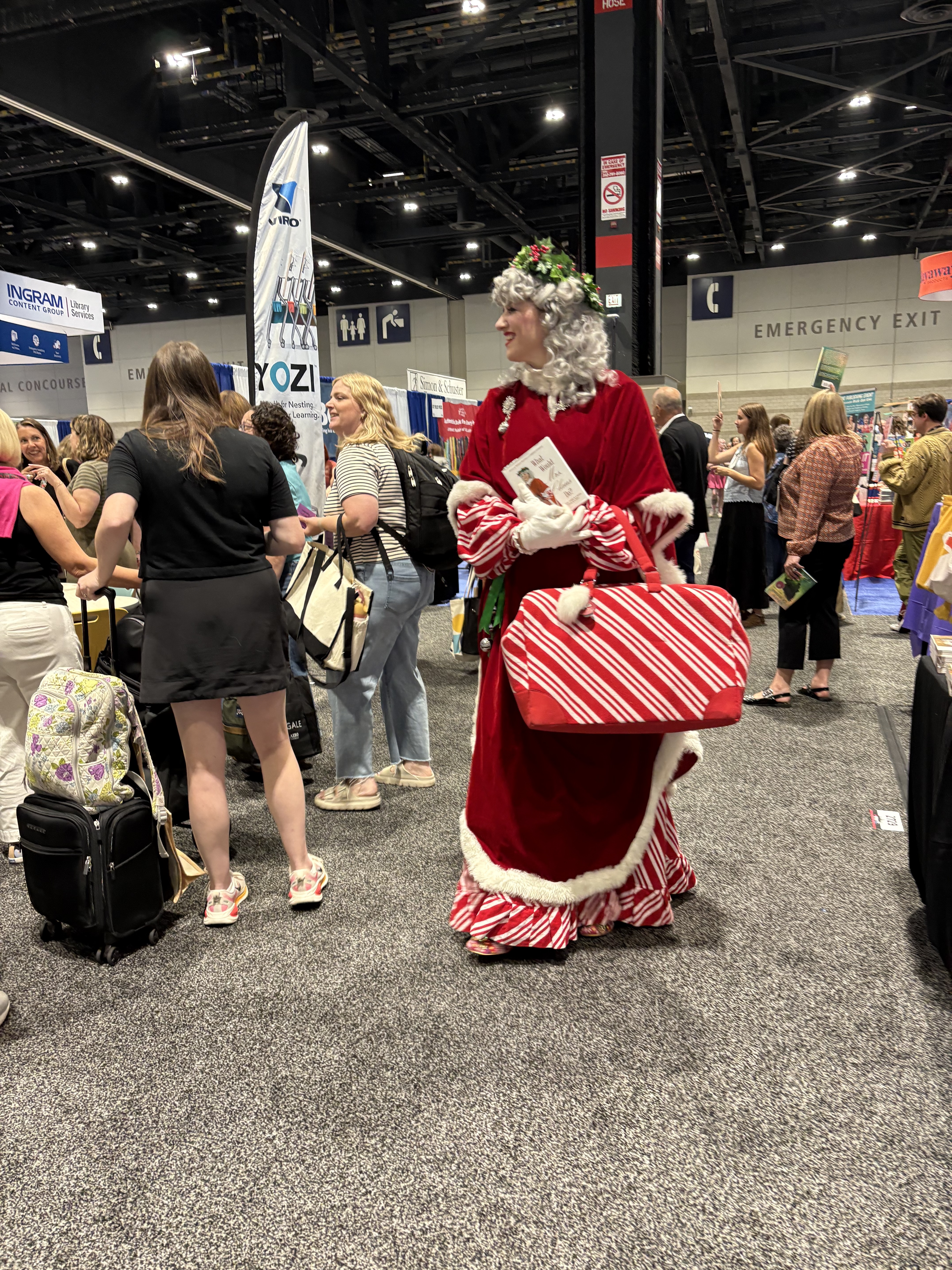
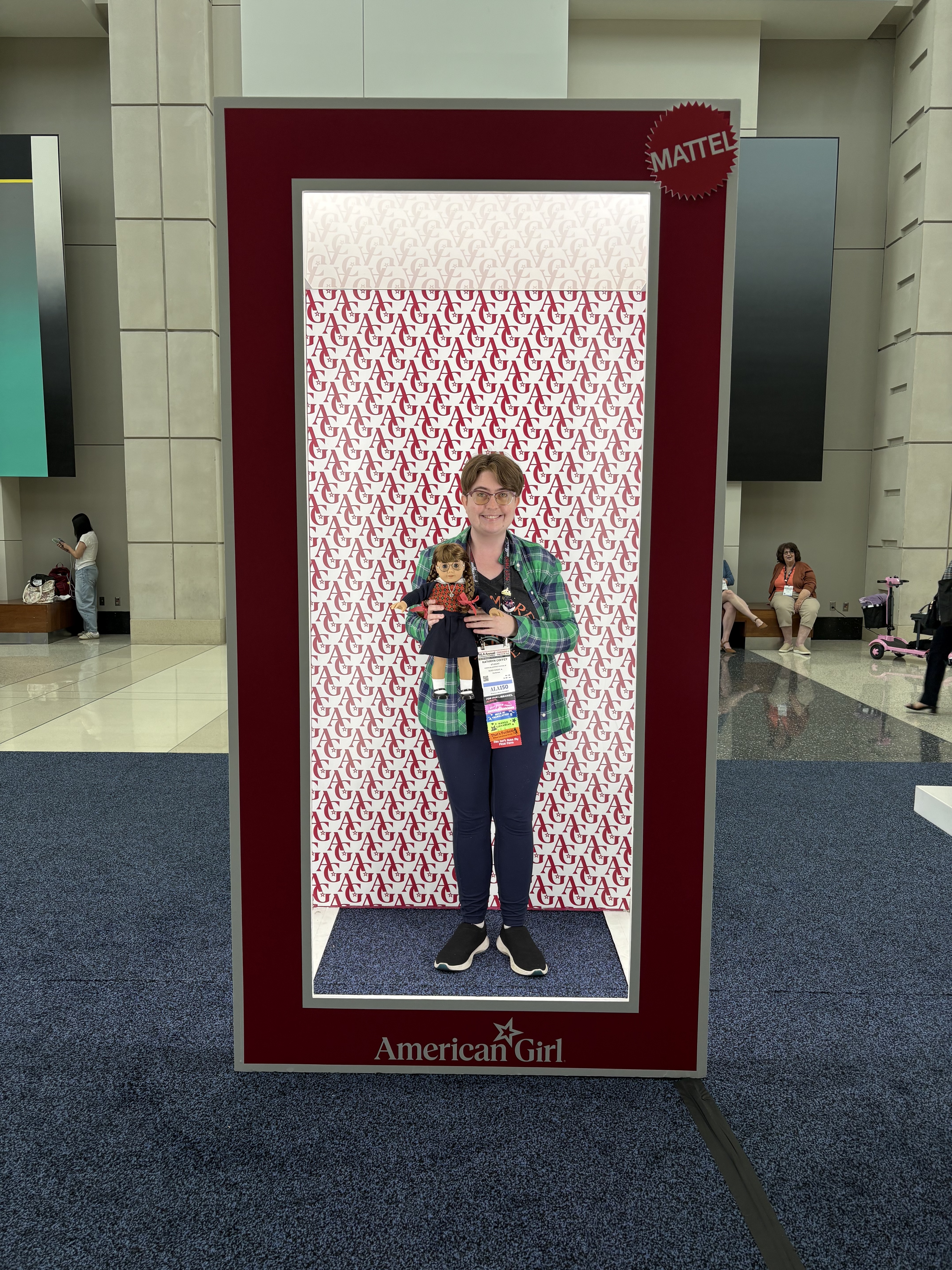
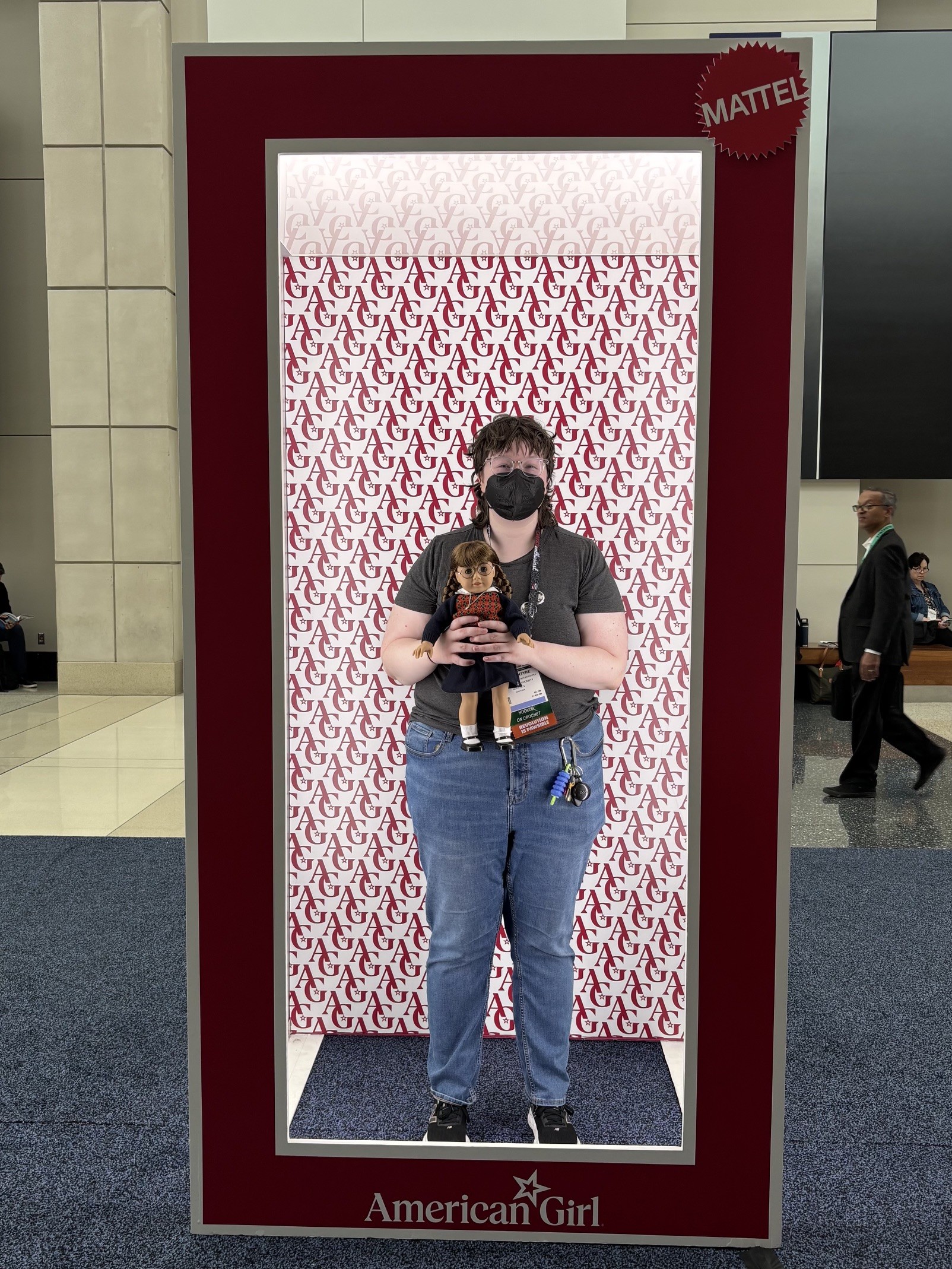
Even after making a preliminary schedule via my ALA information class, I quickly discovered that you’ll still never know who you’ll run into at the ALA. For example, I didn’t know that Red, artist-author of Aurora Vols 1 and 2 and half of the main faces/voices of YouTube channel Overly Sarcastic Productions, was going to be there to sign her latest graphic novel until Saturday night. There was even someone cosplaying as Mrs. Claus walking around the Exhibition Hall on Saturday (June 27). There were so many long lines, advanced reader copies, authors, and more, that it made my head spin! Even the photo ops right outside the Marketplace were fascinating. Where else could you get a photo op with one of the six original American Girl dolls?!
Until next year, #ALAA26. See you in New Orleans @ #ALAA27!
Kian
As a student, “have you been to ALA?” is a constant refrain coming from all sides. Plenty of people in library school had told me that if I had the opportunity to go as a student, I should. With the ALA 150 Conference right here in Chicago, I knew I had the perfect opportunity to take advantage of so I could finally see what all the hype was about for myself.
Armed with the conference scheduler app, my backpack, and advice from several veteran ALA attendees, I tackled three days running wild and free with my fellow librarians at McCormick Place.
Friday Highlights: Rachel Maddow and the Running of the Librarians
I arrived at the conference, immediately discovered that I had vastly overestimated how busy registration would be, and got my badge in under five minutes. Nothing was actually happening yet, so I got to hang out and get the lay of the land. In the grand hall, the shop was bustling (I forced myself to leave without buying anything, even though I really wanted a Snoopy “Read” poster), and the ALA history exhibit was significantly less bustling but interesting nonetheless. Then, on to the opening session!
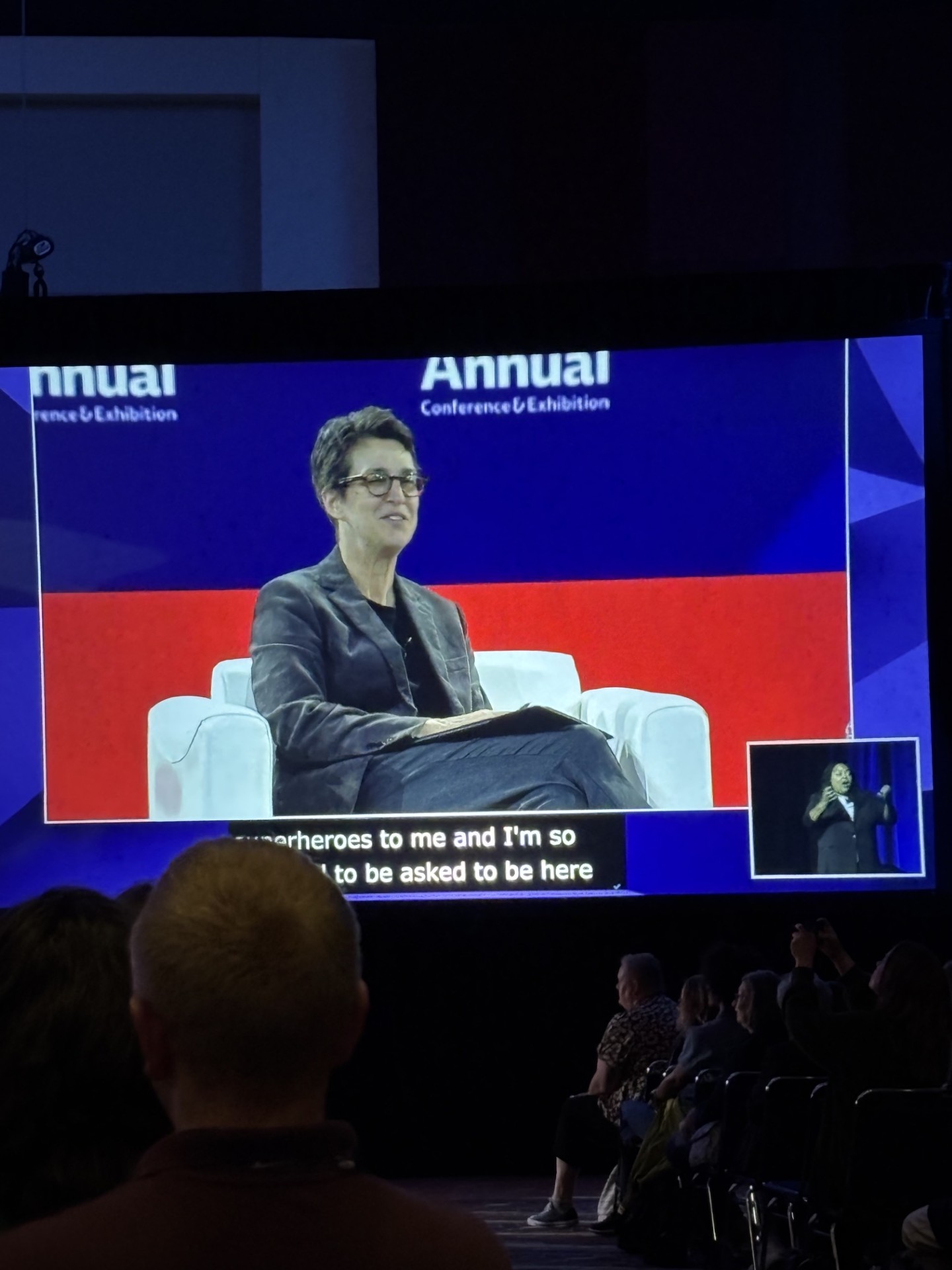
The opening session was long and packed full of speakers. Highlights for me included Chicago Mayor Brandon Johnson and Illinois Governor J.B. Pritzker (the latter of whom appeared via prerecorded video). Both made sure to mention the new Chicago Public Library branch in the Obama Presidential Center, to raucous applause. Of course, the main draw was Rachel Maddow, who talked about the importance of libraries and information access in her own work, as well as her collective crush on all librarians.
After Maddow, there was something which one librarian I spoke to before the conference called the “Running of the Librarians” – the mad dash from the main stage to the now-open exhibitor hall. I made my way through the mass of people and started on the closer end of the hall, opposite from where the publishers were concentrated (which I later figured out was probably the wrong tactical approach), chatted with some exhibitors, and got my first round of books before exhaustion took over and I headed home for the day.
Saturday Highlights: Queer Kidlit, LeVar Burton, and a Gaggle of Authors
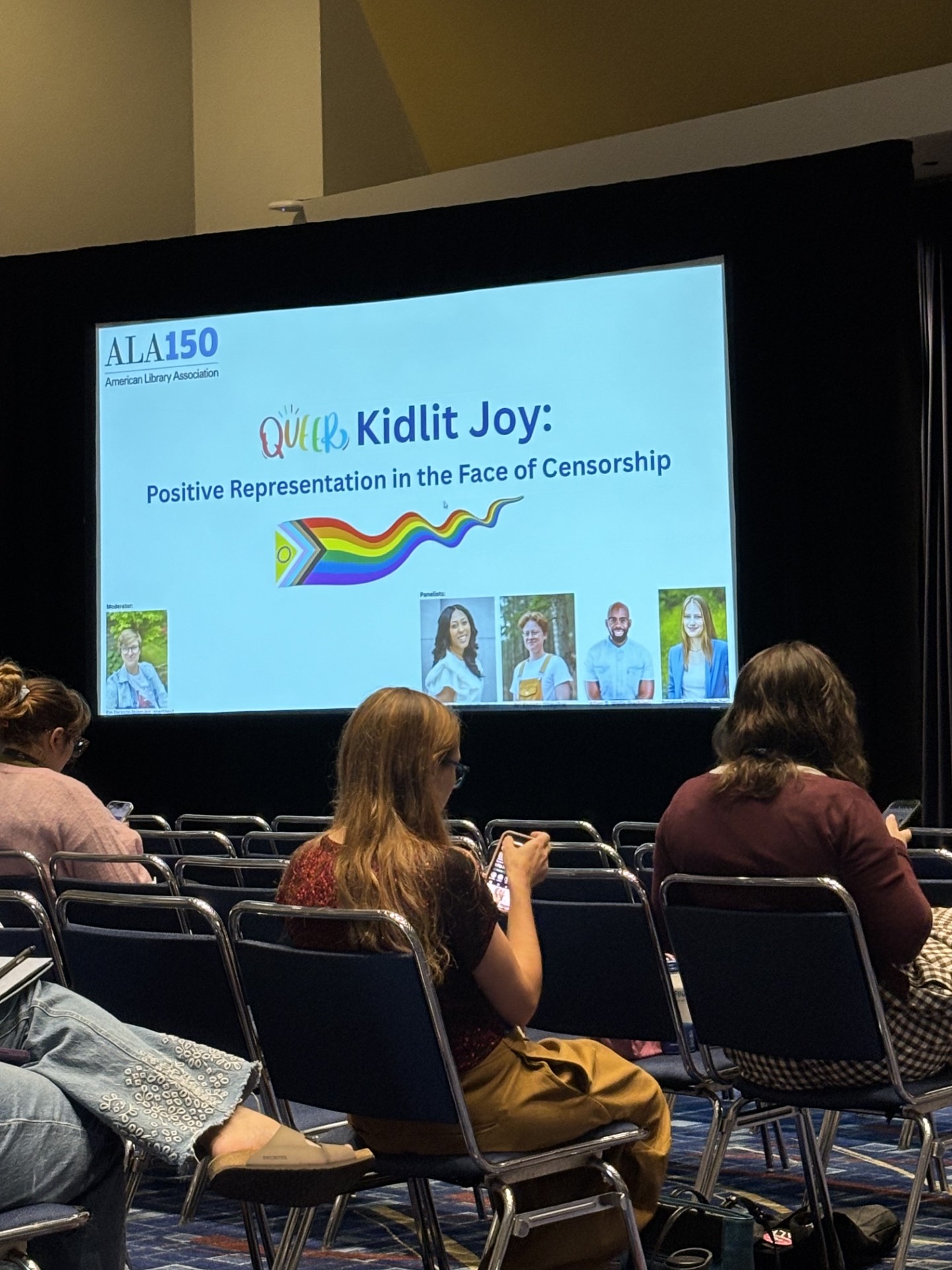
My first session on Saturday was Queer Kidlit Joy, which featured a panel of authors of queer kidlit from picture books to YA. This was a great session that talked a lot about the value of queer books and stories, as well as strategies for getting them into the hands of young readers. It was definitely one of my favorites of the conference.
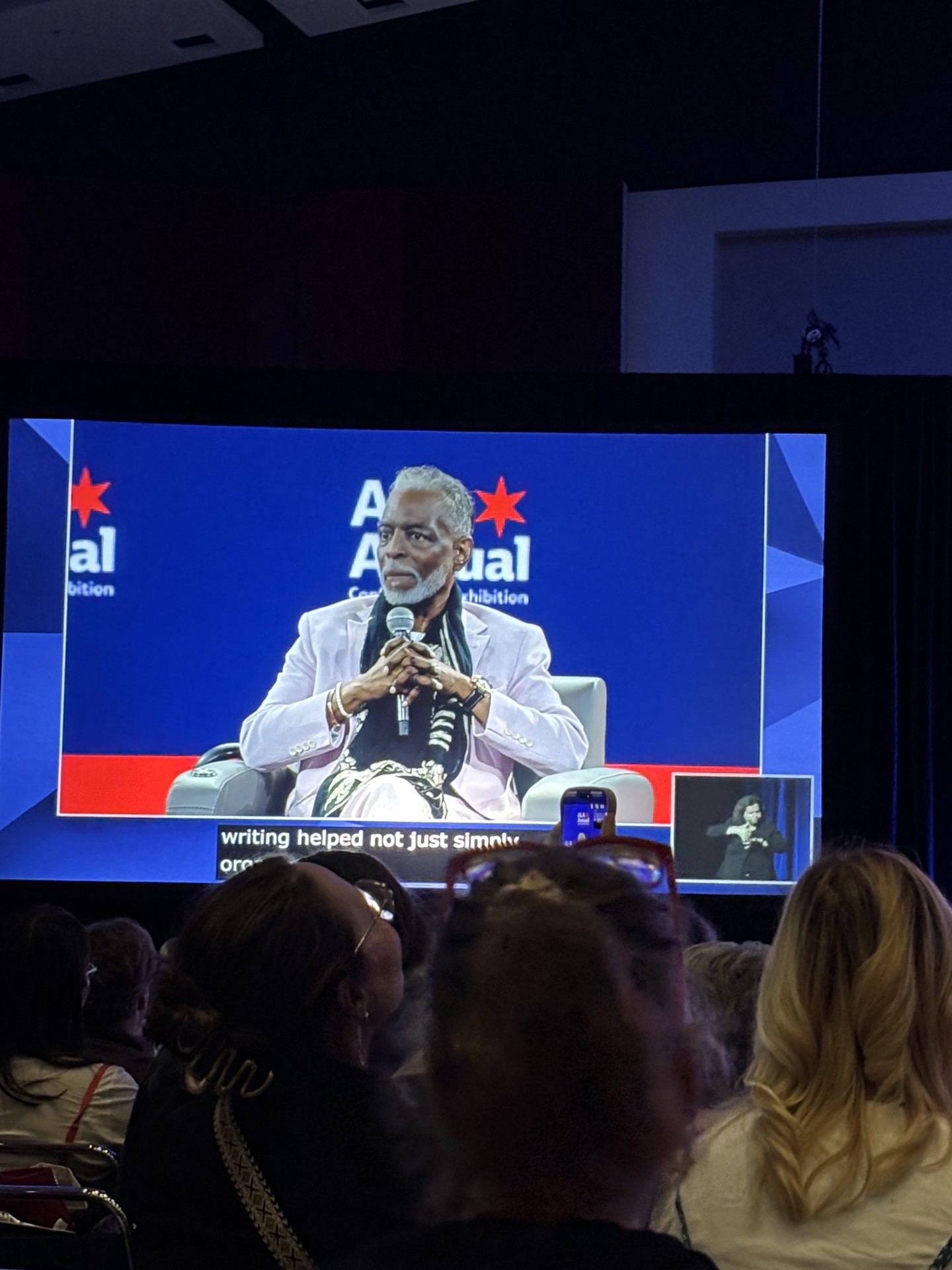
Later in the day I went to see LeVar Burton on the main stage, which was a real stand out of the whole weekend for me. The discussion of stories and imagination as a human superpower was something that really resonated (plus, as a huge Trekkie, I loved how he connected that idea back to Star Trek). Burton’s philosophy that “everyone has a gift they’re meant to give” was another real highlight of the conversation.
I also spent much of this day ping-ponging around the exhibitor hall collecting free books and meeting authors. Among the authors of the day were Raina Telgemeier and Gale Galligan (in a joint signing where everyone got three books!), Lindsay Currie, Cynthia Leitich Smith (I now have my own signed copy of Legendary Fry Bread Drive-In, which I reviewed in March 2025), Cheryl Isaacs, and Megan Fitzmartin (who was very excited that I was a fellow grown-up fandom teen who had read and loved an ARC of Mary Sue). I also snagged a photo with my childhood American Girl doll and last-name twin Molly McIntire, and while there met several generations of American Girl doll book authors who were also waiting for their photos with the dolls. I have to admit I left the weekend with multiple American Girl ARCs – once an American Girl kid, always an American Girl kid!
Sunday Highlights – Candy Boolean Searching, Zines, and Tote Bag Mayhem
By Sunday my energy was waning fast, so I didn’t stay quite as long as I hoped to. I took advantage of the community quiet room, which I’m happy to report seemed to have a lot of thought put into it, and was a great place to recharge when I was running out of steam.
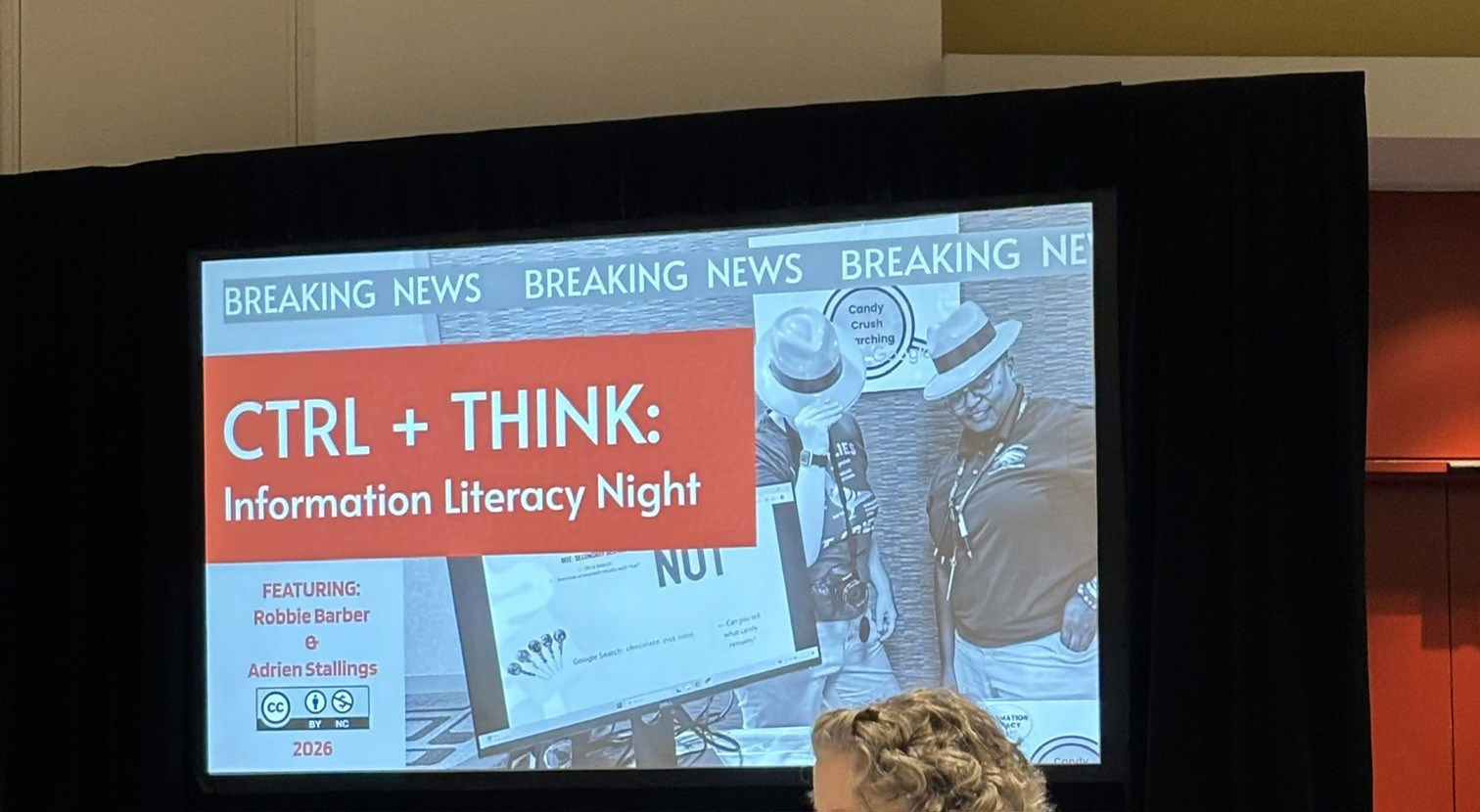
The standout session was CRTL + THINK, which was a model of active and passive programming to teach information literacy skills to secondary students. Among the stations in the mock information literacy night was “candy crush searching,” which taught boolean searching using a pile of candy. Of course, one of the benefits of this was that you get to eat the candy in the end, but it was also a great way to introduce the concept using a tactile model.
On the exhibit floor, I got a signed copy of another of my Butler blog review books, Riding the Trail: Cherokees Remember the Removal. I hung around the zine pavilion, which had very busy DIY tables, presumably due to the ongoing love affair between librarians and arts and crafts. This was also the day that I played a rousing game of “how many tote bags can I get” with the goal of collecting them for the Butler Center’s annual book sale. I topped out at around 7, but I met a pair playing the same game who had at least a dozen, so clearly I have not yet reached my full bag-collecting potential.
Final Thoughts
The biggest struggle coming into my first ALA Annual as a student was that there was so much to do. I definitely felt the pressure to try to fit in as much as possible, which left me with a major case of FOMO. But I did get quite a lot done, and I was lucky to get my trial run done on my home turf. I’m glad to have had the experience, and I’m ready to tackle the next one with a better understanding of both the conference itself and my own limitations and needs and an attendee.
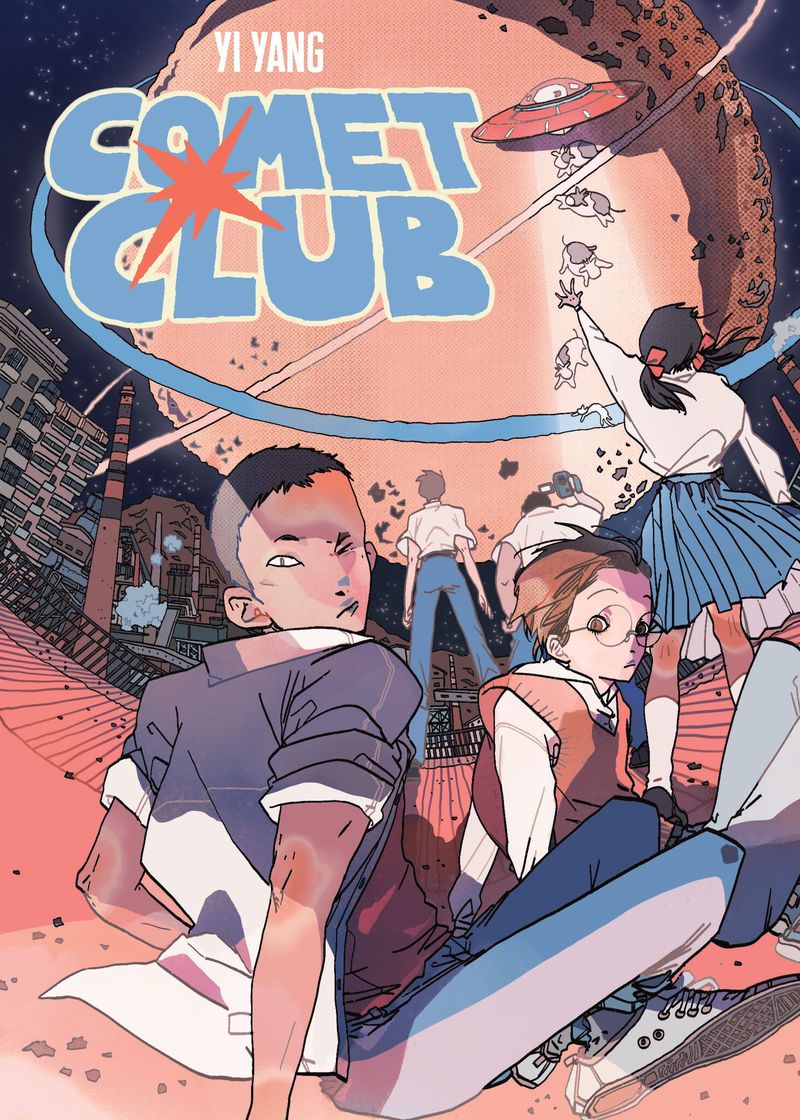
Comet Club Yi Yang Translated by Jaime Richards Fantagraphics Books Age 13+ Available September 29, 2026
Skeptical and sarcastic 14-year-old Yang Kuaikuai reluctantly joins the school’s Comet Club, an organization dedicated to seeking out aliens and UFOs, after his best friend Li Yu goads him into it. When the club ventures into the wilderness near their Chinese mountainside town to investigate presumed alien contact, they uncover something more dream-shattering and sinister that puts their lives at risk, leaving them forever transformed.
Yi Yang emphasizes that even when things look picture perfect from the outside, family and friendship dynamics can be complicated. One of the ways Yang captures this is when Kuaikuai eats chicken, a food he openly despises, at his mother’s insistence, as his parents argue at the dinner table. While Li Yu states how his friend’s dream is “coming true” in his speech bubble, Kuaikuai eats the meat in hopes to not lose her again after being absent for all his life. Kuaikuai’s reflection in the mirror is opaque while the rest of his body is clear, showing muscle and skeleton, indicating how invisible and alien he feels in the moment. Yang’s use of shadows, black backgrounds, and narration boxes further exemplify what seems to be normal and heartwarming only to later reveal something suspect or tragic later in the story.
Yang includes blunt depictions of weapons and their impact with cold reality to shock readers. It also has a bittersweet ending that drives home the book’s message that there is no such thing as a perfect family/dream. Comet Club reflects the ugliness of human nature but also the finest parts that lie beneath the grungy exterior.
BCLC staff will be out and about this summer taking advantage of professional development, observing summer remembrances and celebrations, and taking some well-earned time to relax, recharge, and read (of course!).
Butler Center Open Hours will be suspended or limited during the following times:
06/19/26: Closed for Juneteenth Observance
06/22-07/03/26: Limited hours for ALA Annual and July 4th Holiday
Closed 06/25-29
Open 2-5 pm on June 30 and July 2
Open 8am-Noon on July 1
08/17-08/21/26: Limited hours for staff and faculty development
Closings TBA early August
If you have questions about accessing the collection during this time, please contact us at butler@dom.edu to set up an appointment.
Looking for a recommendation? This is what the BCLC Staff is reading this summer:
Just Finished:
JC:
The Storm by Rachel Hawkins (adult thriller) “Recommended for a suspenseful twist on the classic, tabloid gossipy beach read.”
Dungeon Crawler Carl by Matt Dinniman (adult science fiction/fantasy, 1st in the Dungeon Crawler Carl series) “Action, adventure, and a talking cat, with a side of heart and a focus on what it means to cling to a sense of humanity when faced with a dire situation.”
Platform Decay by Martha Wells (adult science fiction, 8th in the Muderbot Diaries series) “All Muderbot wants to do is watch media, but it just can’t stop winding up in the middle of adventures. This addition adds to the world of The Muderbot Diaries with an exciting rescue mission that keeps with the core of the series and asks what it means to be human under late-stage capitalism.”
KC:
The Sigh by Marjane Satrapi (RIP)(Illustrated Fairy Tale for ages 9+) “Recommended for art style, main character righting past wrongs, mystery, intrigue, and Satrapi’s signature style.”
The Way of the HousehusbandVolumes 1-15 (Manga series for YA and Adults). “Whole series recommended for exaggerated high stakes, humor, and cute/fierce pets.”
Currently Reading:
JC:
Rebel Heiress by Amalie Howard (YA romance, 3rd book in The Diamonds Series) “Enjoying this fun, YA, Bridgerton read alike with a smart and resourceful heroine.”
KM:
The Heirs by Faridah Àbíké-Íyímídé (YA murder mystery) “This murder mystery about teen prodigies, perfect for fans of The Umbrella Academy, deals with the burnout that comes from being given a “gifted” label as a young person.”
KC:
Witch Hat Atelier KitchenVols. 1-5 by Hiromi Sato (Manga for tweens and teens). “Recommended for recipes you can actually cook, the funny-and-cute storylines, character dynamics, and the detailed art style (same goes for the Witch Hat Atelier series, minus the recipes—said series has 14 volumes, and counting).”
Woman Life Freedomby Marjane Satrapi, Farid Vahid, Jean-Pierre Perrin, Abbas Milami, Alba Baccaria, and 16 other comic artists (YA+ nonfiction graphic novel). “Recommended for various art styles, shining a light on the persecution of women in Iran, and intense storytelling.”
Up Next: (Where you learn just how different our TBR piles are!)
JC: We’ll see what comes in first from my Libby waitlist. Could be…
Not Straight: A Young Adult Novelby Savy Leiser (YA realistic fiction). “Recommended for LGBTQ+ character that has scoliosis, written by a neurodiverse author who has/had scoliosis, relatable characters, and journey to self-discovery.”
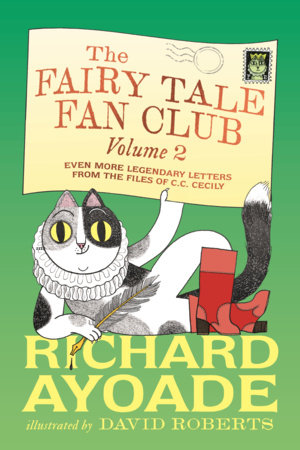
The Fairy Tale Fan Club Volume 2 Richard Ayoade Illustrated by David Roberts Candlewick Press Ages 8+ Available February 2, 2027
What do fairy tale characters do after they get their Happily Ever After? Answer fan letters, of course! With the help of C.C. Cecily, senior secretary of the Fairy Tale Fan Club, children from all over can send letters to their favorite characters in the Fairy Tale Kingdom, and if they’re lucky, maybe even hear back. In this sequel to The Fairy Tale Fan Club, Puss in Boots, Thumbelina, Goldilocks, and other famous literary characters correspond with the adoring (and not-so-adoring) public.
Packed with charm and wit, The Fairy Tale Fan Club Volume 2 is full of Ayoade’s signature British humor. The book is fast-paced, silly, often snarky and occasionally sincere with an author voice that brings to mind Lemony Snicket.
Fairy Tale fans and lovers of the first Fairy Tale Fan Club will find themselves drawn to this title, and librarians looking to expand their fairy tale collections and educators planning fairy tale units might find it useful as well. With its humor and short, quick chapters, even reluctant readers may find Ayoade’s book appealing.

 Butler's Pantry