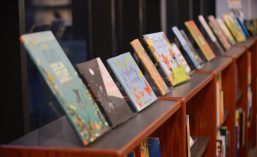
Survival of the Bravest: Wolf Girl: Into the Wild

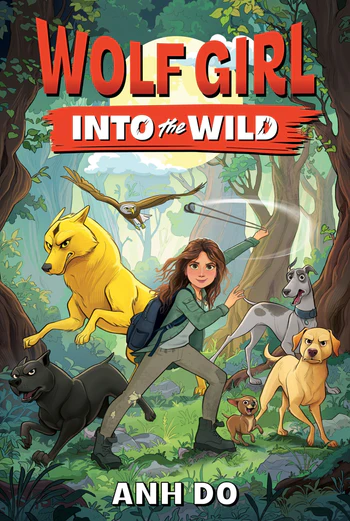
Wolf Girl: Into the Wild
Anh Do
Illustration by Jeremy Ley and Annie Ji
HarperCollins
March 18, 2025
Age 8-12

Pulled from bed and forced to escape home in a war zone, Gwen and her family flee to the mountains where they’re separated during an attack. When she finds herself alone in the forest, she sets off to find her parents and discovers that everyone—all humans—seem to be gone. A fall into a raging river, and rescue by a ragtag pack of dogs, sets her on a path to discover her survival skills and inner strength as she learns to live in the wilderness with a found family. Sighting an aircraft, a first indicator that she’s not alone, sparks harrowing a journey to find her family and other survivors.

Inspired by the author’s own traumatic family flight from post-war Vietnam, this tale of perseverance reads as an adventure with some powerful undercurrents of fear and loneliness, in a departure from his usual comedic work. Flashbacks to earlier childhood act as reminders of Gwen’s emotional strength and intelligence—connection to family, hunting lessons, and her father’s advice to “follow [her] instincts” (p. 8). Time jumps in the narrative have this quick read covering three years and the dual maturation of both Gwen and her “puppy” into a brave and resilient girl and a full-grown wolf. Do’s simple yet descriptive language, comfort derived from her animal family, and the inclusion of slightly anime-like illustrations position the text for a younger MG audience. Themes of war, survival, and isolation skew older, and might require caution for more sensitive young readers. The dramatic cliffhanger of an ending sets the stage for more adventures to come. Do’s new-to-the-US series for middle grade readers already has 12 installments published in Australia. A thrilling, yet warm tale of survival and the importance of family, both the one you’re born to and the companions we find when we need them most. 

Butler Bookshelf

For this week’s Butler Bookshelf, we’re highlighting a variety of youth literature in our collection. This list has something for all ages, fiction, nonfiction, and bilingual! The featured book for this week is Ollie, the Acorn, and the Mighty Idea written by Andrew Hacket and illustrated by Kaz Windness. Ollie is tired of dealing with Everett’s constant bullying. One day, when Everett steals a sapling from Ollie, he has an idea — he will eat an acorn and grow into a mighty tree so that Everett will never be able to bully him again. But when Ollie becomes tall and strong and stands up to Everett once and for all, he realizes that he went about it all wrong. He burps everything up, and Ollie and Everett reconcile and start growing their gardens together. Windness’s colorful, lively illustrations compliment Hacket’s lively and expressive story about how to stand up for yourself and what it truly means to be mighty.

Check out more books for all ages below!

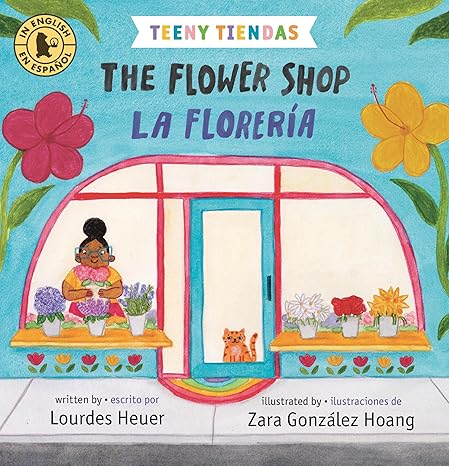
The Flower Shop/La Florería
Written by Lourdes Heuer
Illustrated by Zara González Hoang
Published by Candlewick Press
Available now!

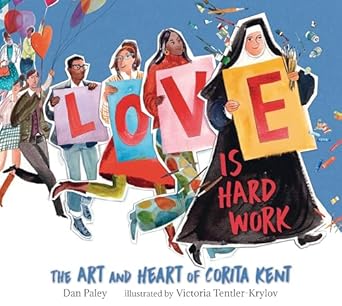
Love Is Hard Work: The Art and Heart of Corita Kent
Written by Dan Paley
Illustrated by Victoria Tentler-Krylov
Published by Candlewick Press
Available now!

My Father’s House
Written by Mina Javaherbin
Illustrated by Lindsey Yankey
Published by Candlewick Press
Available now!

Ollie, the Acorn, and the Mighty Idea
Written by Andrew Hacket
Illustrated by Kaz Windness
Published by Page Street Kids
Available now!

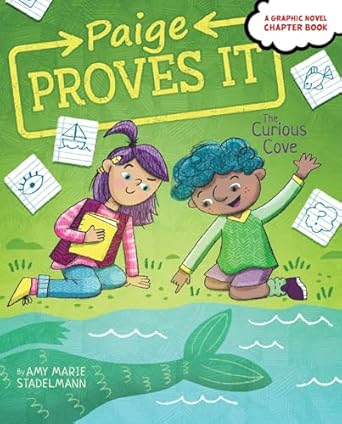
Paige Proves It!: The Curious Cove
Written and illustrated by Amy Marie Stadelmann
Published by Aladdin
Available now!

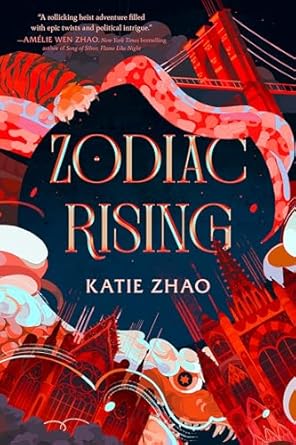
Zodiac Rising
Written by Katie Zhao
Published by Random House Children’s Books
Available now!

“Grow Towards the Light”: A Review of Beyond Mulberry Glen 

Beyond Mulberry Glen 
Written by Millie Florence 
Illustrated by Astrid Sheckels 
Published by Waxwing Books 
Ages 8-12
Available January 7, 2025 

Lydia loves her life in Mulberry Glen, and she wouldn’t change a thing about it, even though change looms over her as she gets closer to the time when she will need to leave for an apprenticeship. Her inner turmoil only grows when she learns about a mysterious force, called the Darkness. Troubled by the effects she feels from the Darkness, Lydia asks her fairy guardian, Pit, about it. The next morning, she discovers Zale and Zamilla, the mischievous twins that live with her in Mulberry Glen, have left to go defeat the Darkness. Lydia sneaks off to rescue them. Along the way, she learns about the inevitability of change and the importance of using the Light within yourself to fight the Darkness. 

Beyond Mulberry Glen is a delightfully cozy story about a young girl overcoming her fear of change and learning to accept that life is still beautiful, even when it has dark moments. Florence fully develops Lydia’s character arc as she overcomes her fears of change and discovers that, while life can have dark moments, she has the power within herself to overcome them. Florence uses Lydia’s resistance to an apprenticeship to illustrate her anxiety over her life changing, effectively making this fantasy setting relatable to all readers. While the overall tone of the story is light, there is an undercurrent of apprehension as Lydia searches for the twins that brings gravity to the story about the life changes that accompany growing up. Sheckels’s illustrations at the beginning of each chapter add an element of charm to the story by giving readers a glimpse into Lydia’s world. A great Lord of the Rings read-alike, Florence weaves together a story that is both whimsical and suspenseful in its portrayal of the anxieties of growing up. 

Butler Bookshelf

Now that school has started, so has the lesson planning! Whether you want to keep the lessons going at home or you’re looking for books to add to your classroom, we have a lot of new nonfiction books to share, including Wild Brunch: Poems About How Creatures Eat by David L. Harrison and illustrated by Giles Laroche. Harrison uses fun poems to explain how different animals across the world eat their food every day. He covers a wide range of animal species, from sea creatures, like narwhals, to land animals, like aardvarks; he also features a variety of flying animals, like turkey vultures, Mexican free-tailed bats, and houseflies. Harrison even includes a poem about mayflies, who only live for one day and don’t eat at all! Harrison includes a back matter that goes into more detail about each animal he writes about and their eating habits, sharing sources for where readers can learn more. Accompanied by Laroche’s detailed collages, Wild Brunch is sure to delight and educate any animal enthusiast!

Check out more of our nonfiction collection below!

50 True Tales From Our Great National Parks
Written by Stephanie Pearson
Illustrated by Madeline Kloepper
Published by Wide Eyed Editions
Available now

Evidence!: How Dr. John Snow Solved the Mystery of Cholera
Written by Deborah Hopkinson
Illustrated by Nik Henderson
Published by Knopf Books for Young Readers
Available now

Radar and the Raft: A True Story About a Scientific Marvel, the Lives it Saved, and the World it Changed
Written by Jeff Lantos
Published by Charlesbridge
Available September 24th, 2024

The Shape of Things: How Mapmakers Picture Our World
Written by Dean Robbins
Illustrated by Matt Tavares
Published by Knopf Books for Young Readers
Available now

Wild Brunch: Poems About How Creatures Eat
Written by David L. Harrison
Illustrated by Giles Laroche
Published by Charlesbridge
Available now

How It Works: A Review of Bounce!: A Scientific History of Rubber

Bounce!: A Scientific History of Rubber
Sarah Albee
Illustrated by Eileen Ryan Ewan
Charlesbridge
October 22, 2024
Age 6-9

Used for everything from bike tires to raincoats, rubber plays a major role in things springy, stretchy and bouncy in ours daily lives. Follow its history from the discovery by indigenous Central American tribes (who farmed natural rubber latex from local plants), adoption by Europeans (imagine the difference when their soccer balls could bounce!), and the evolution in its usefulness into the multipurpose substance we can’t live without today. Part narrative nonfiction and part traditional nonfiction, Bounce combines a fascinating story of invention with “The Science!” interjections that explain the how or why of a narrative detail (what is it that makes rubber sink or float?).

Award-winning nonfiction author and former basketball-player (who appreciates a bouncy ball more?), Sarah Albee explores the history and science behind a very common part of everyday life. With a panel of expert readers—chemists, materials scientists, and engineers—Albee dives deep into both the story and the scholarship with accessible language and delightful facts. The extensive and respectful backmatter includes sections on tribal naming preferences, acknowledgement of the troubling issues of slavery and the environmental impact of rubber production, a timeline that dives deeper into some details from the narrative, and a thorough bibliography and source notes. Intricate yet fluid pen, ink, and watercolor illustrations connect closely to the text descriptions with detailed images of the action, movement in the line work, and expressive faces. Eileen Ryan Ewan uses color to help show the passage of time, moving from muted and historically accurate colors to more vibrant shades in the modern spreads. This engaging and fact-filled picture book would be a perfect accompaniment to introductory science lessons on the properties of matter or chemistry in upper elementary school or for the budding scientists in any library.

Follow the Clues: A Review of A Strange Thing Happened in Cherry Hall

A Strange Thing Happened in Cherry Hall
Jasmine Warga
HarperCollins Childrens
Age 8-12
September 10, 2024

Stolen art, a floating girl, and a mystery-solving turtle make for a quirky and suspenseful whodunit. Introverted and outcast, Rami spends more time than he’d like at the Penelope L. Brooks Museum where his mom oversees the cleaning crew. When a painting is stolen from the Cherry Hall gallery, and he and his mom become suspects, Rami begins seeing a ghost girl hovering in that same gallery. And she looks an awful lot like the girl in the missing painting. With the help of a Veda, a clever classmate and aspiring detective, and an observant turtle named Agatha, he will unravel the story of the girl, the painting, and the theft at the Penelope.

In a story about the importance of being seen, Jasmine Warga explores the connection between art, understanding, and truth. As a child of Lebanese immigrants, Rami is an outcast at school, and too timid to make trouble. Veda, however, is a bold and quirky personality, willing to challenge him to be daring in an attempt to solve the mystery. Their tentative new friendship is drawn with thoughtful attentions to the changeable emotions and growing pains of middle school. Themes of friendship and the desire to be seen (by Rami and Veda, by the girl, and by Agatha) provide subtlety to balance the heavier aspects of loneliness and the immigrant experience. This gentle, yet thrilling early elementary school mystery combines brief chapters, a fast pace, and multiple narrators to appeal to a young audience without being entirely childish. Warga breaks the fourth wall in chapters narrated by Agatha to add context, and a touch of magical realism, for young readers. The best combination of a warm-hearted friendship and clue-laced mystery.

The Big Score: A Review of Faker

Faker
Gordon Korman
Scholastic
Age 8-12
July 2, 2024


Is Trey really defined by what his family does? Confidence man, liar, criminal… Faker? Living a high-end life funded by his father’s career as a con artist, Trey and his little sister are in on the game, to reel in families in a series of prep schools and wealthy communities. Settling into what could be their biggest score yet—the big kahuna—a fictional electric car start-up looking for investors, he begins to question it all. An influential middle school ethics teacher and his activist daughter open Trey’s eyes to the morality of the “family business” and a growing disillusionment with how it affects those around him.

In the authentically conflicted voice of an adolescent boy, Korman gives this realistic fiction tale a twist. What if this boy was a con trying to go straight? Then he adds all the middle school conflict that comes with friendships, family drama, and questioning parental authority. Is Dad right that no one is hurt when you take from the rich? Brisk plotting and snappy dialog mirror the pace of Trey’s quickly developing conscience. “I can’t believe I ever thought it was anything more than stealing” (p. 170). Trey matures throughout the narrative, getting involved to rehab a local park and discovering that a new friend is also part of a con artist family, efficiently driving the final action. In a conveniently tidy conclusion, he makes a dramatic decision—they all go straight, return the money, and build the stable home life Trey always wanted. A funny and fast-paced coming of age story for middle schooler readers that want a side of crime with their family drama.

Can You Keep a Secret?: A Review of The Enigma Girls

The Enigma Girls: How Ten Teenagers Broke Ciphers, Kept Secrets, and Helped Win World War II
Candace Fleming
Scholastic
March 5, 2024
Age 8-12

It wasn’t just the boys doing their bit for the war effort during the harrowing years of World War II. Sibert Award-winner Candace Fleming follows The Enigma Girls, ten young women working with the British government, cracking ciphers and codes to help win the war. Based out of Station X at Bletchley Park, a once top secret center of the British intelligence, thousands of people (nearly ¾ of them young women, p. 237) worked night and day intercepting, decoding, transcribing, translating, and cataloging secret communications from German, Italian, and Japanese government and military leaders. Walking chronologically through the war years (1939-1945), Fleming introduces each woman as she’s recruited into the sphere of Bletchley Park, snippets of her life before, during, and after the conflict, and her often emotional reactions to the exhaustion, secrecy, and triumph of the work.

The brisk pace and simple, yet engaging prose of this narrative nonfiction title pull readers into the frantic feelings and tense atmosphere of Station X. Fleming balances that emotion with well-explained vocabulary and intra-chapter information about codes and code breaking. Extensive photo documentation of Europe at war and Bletchley Park in particular bring the horrors of war and high stakes of the work to vivid life. Due to the clandestine role that the women and Bletchley played in the war, primary source material from the time is limited. Fleming’s source notes show extensive research into the biographies and autobiographies of the women (most of them wrote of their wartime experiences once they were allowed), and archives in Britain and beyond. Other backmatter includes thorough source notes, photography credits, and author’s note, and an index to come (not included in the reviewed ARC).

A deftly crafted tribute to the unsung young women whose efforts often turned the tides of battle, saving the lives of allied servicemen.

Elementary!: A review of The Improbable Tales of Baskerville Hall

The Improbable Tales of Baskerville Hall
Ali Standish
Harper Collins Children’s Books
Age 8-12
Available September 12, 2023

In a middle-grade twist on the Sherlock Holmes stories, a brilliant young Arthur Conan Doyle accepts a full scholarship to a mysterious school for exceptional students. In the hopes of providing a better life for his family, Arthur devotes himself to school, including the friendships, mysteries, and mayhem that one would expect of a 19th century English boarding school—eccentric students and professors, secret societies, magical clocks, and even a baby dinosaur. But when it comes time to submit to the questionable ethics of the secret society, and their promises of wealth and power, or do the right thing at the possible expense of his future, Arthur shows integrity to the end.

Standish borrows liberally from the Holmes novels with characters, like Dr. Watson, Jamie Moriarty, and Sherlock Holmes himself, named for many of the original Doyle’s most famous characters. Arthur himself is drawn as one would imagine a young Sherlock. These details, however, may be lost on young readers. The swiftly plotted and intricately detailed mystery can stand alone though, using its quirky characters and darkly atmospheric setting to draw the reader into its world and to rooting for the cast of diverse and well-crafted characters. Themes of friendship, integrity, and problem-solving run heavily through the novel and help to ground some of the more outlandish plot devices, like time travel and dinosaur hatching. And with a parting “the game is afoot” (p. 310), Standish sets the stage for a series of future adventures that junior sleuths will be sure to love.