Odd Duck

Odd DuckOdd Duck
by Cecil Castellucci & Sara Varon
First Second, 2013

The phrase feels like a relic from an older generation, like bee’s knees. Indeed, when I occasionally say it, I can feel the echo of my parents’ voices in my lungs. “She’s a bit of an odd duck, isn’t she?” It’s almost – almost – an endearing phrase – not quite as nice as “marches to the beat of a different drummer” but a similar notion. Just enough of a raised-eyebrow judgment to acknowledge a differentness in another.

The title’s slightly nostalgic phrase makes me not at all surprised its artist is the quirky, kooky Sara Varon, whose Bake Sale was a deliciously different cookie of a book as well. In Odd Duck, she brings her signature omnisciently-bemused labeling to the endearing details of Cecil Castellucci’s story and character, including duck-protagonist Theodora’s morning rituals (“Quaking exercises, for perfect pitch and tone”), her occasional unorthodox shopping choices (“Duck food, just like all the other ducks…but also…mango salsa! Huh!”), and her eventual disapproval of the new neighbor Chad (“Feathers ASKEW!” and “Violent dancing!”). Details including rotary phones and Theodora’s lavender cloche-like bonnet (complete with a decorative, metaphorically-foreshadowing bee) insist the story is set in some bygone era. The ducks’ wide-eyed expressions and wiggly, spaghetti-like limbs (again, “Violent dancing!”) call to mind the Steamboat Willie days of early cartooning, or perhaps today’s decidedly-retro hit “Adventure Time” on Cartoon Network.

Early in the story, Theodora wishes on a star “that nothing in her happy life would ever change.” She is clearly as sentimental and vintage as her artist’s style suggests. And of course the new neighbor throws a bit of a wrench (nearly literally, as he is a builder of strange modern sculpture) into her life. She is initially offended by his unrefined mannerisms and disheveled appearance until they find some common ground on the ground: both decide not to fly south for winter. Bonded by this quiet rebellion against the birds-of-a-feather rule – a glimmer of the uncompromising nature of each of their odd-duck-ness to be fully revealed and reveled in by the book’s end – Theodora and Chad become fast not-so-fair-weather friends.

The odd-duck odd-couple’s charm lies in their utter contentment with themselves. Up until a critical plot point in which they overhear a stranger’s comments, it never occurs to either party that he or she holds the title of oddest duck. Their mostly unencumbered sense of self and gentle stubbornness to be anything else is such a delightful match to Castellucci’s story and Varon’s artwork. It’s a reading experience so well done and delightful it’s sure to inspire its readers to embrace the odd in themselves.

Adrenaline Fix

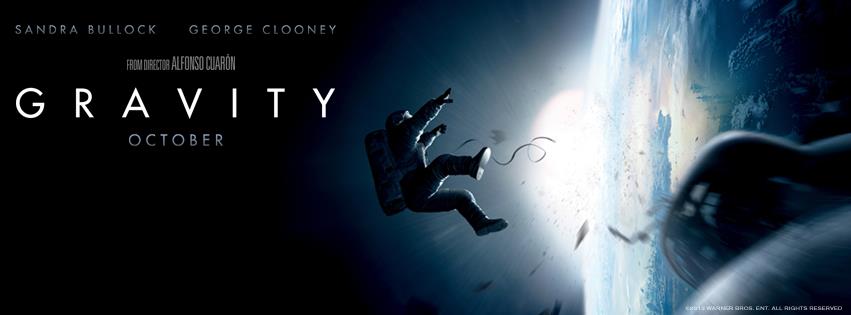
gravityI’m really not much of an adrenaline junky. Sure, I like a roller coaster as much as the next person (though I am now, sadly, too tall to ride most of them) and I’d follow Jason Bourne anywhere. But friends will tell you that all I catch of a screen thriller is what I can see between the fingers pressed firmly over my eyes. I hear even less (my thumbs are blocking my ears). And it takes a good nine hours to watch one from the comfort of my couch, what with all the pausing and walking around the living room shaking out my hands. And yet I find myself strangely addicted to the trailer for the new Alfonso Cuarón film Gravity. The first time I saw it in a theater the hair on my arms was standing up for a good five minutes, and I have worn out the various views on the YouTube (like this one and this one).

And it all has me wondering about a corollary interest in take-your-breath-away books. What are the reads that have left me gasping?

the white darkness The first thing that came to my mind is Geraldine McCaughrean’s Printz-winning The White Darkness which, quite frankly, scared the bejeezus out of me. This story of a shy girl with a hearing impairment and an historically accurate imaginary friend who accompanies her uncle on a mysterious trip to Antarctica compounds the menace of an unhinged villain with all of the terror mother nature can muster. Good night that book is scary.

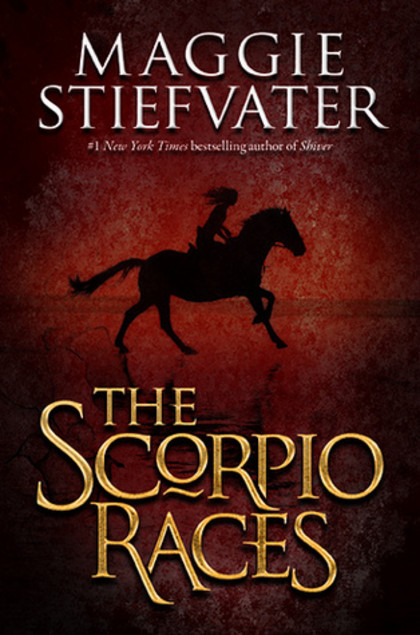
the scorpio racesThe Scorpio Races by Maggie Stiefvater raises hairs in an entirely different way. This is the story of the deadly races that happen every autumn along the shores of a Celtic Island where men capture and train capaill uisce, fierce, carnivorous horses that rise from the sea. And this time, for the first time, young Puck will be the first woman in the race. Much hangs in the balance in this taut drama, but it is Stiefvater’s evocation of the fearsome horses themselves, all teeth and muscle and blood and bone, that is so spine-chilling.

The_Great_Wide_SeaAnd then we’ve got something like The Great Wide Sea by M.H. Herlong that delivers its fright straight through the realm of possibility. Three boys set out on a year-long sail around the world with their father, broken by the recent death of their mother and clearly spinning outside the reach of responsibility. Tensions on the little craft are bad enough, but when the boys awake one morning to find the deck empty and their father gone, fear sets in. Slowly the boys’ resilience weakens as life becomes increasingly precarious and survival starts to slip from their grasp.

And what about you? What are your favorite tales of terror? Hit us up!

Kinship Project

voice from afarThe Butler Center opened in its permanent space two years ago today on September 11th, 2011, the tenth anniversary of that infamous day in world history. To commemorate that occasion we curated an exhibit called the Kinship Project, a collection of books for children and teens that speak to our human kinship. We created a catalog with notes that speak to each of the 29 books connection to the idea of kinship. I link here to the online version. We have some print copies as well (beautiful, actually) and I’d be happy to send some along to you, too. Just fill out the form below with your name and address and I’ll get them in the mail.

← Back

Thank you for your response. ✨

How about you? What do you remember of that day? What do your memories have to say to your work with books and young people? Where do you see kinship among the collections we keep?

if you want to see a whale.

if you want to see a whaleif you want to see a whale.

Written by Julie Fogliano, illustrated by Erin E. Stead.

A Neal Porter Book, Roaring Brook Press, 2013. ISBN 978-1-59643-731-9

Quiet and lyrical, this picturebook (created by the same team as And Then It’s Spring) celebrates childhood in its playful energy and its deep contemplation. Fogliano’s minimalist poetry flows off the page like maple syrup; yet, the text is not without structure. Fogliano uses assonance and alliteration effectively and intelligently throughout the story, using fun phrases such as “whales won’t wait for watching” and delicate ones such as “ship that is sailing” and “flag that is flapping.” Stead’s signature illustration style of muted pastels and purposeful negative space compliment and extend Fogliano’s artful text. As I experienced this story, I couldn’t help but put myself into the young character’s shoes, imagining, remembering and creating images in my head about my own childhood journeys.

I was left with many thoughts and feelings after I finished this book, but the most significant was a personal meditation on patience and discovery. After a first read, it might be easy to think that seeing a whale is the most important thing for this young boy. After all, it is the title of the book. Yet, I think the text and image are purposefully juxtaposed here. Yes, the text states, “You’ll have to just ignore the roses,” and “Don’t look way out and over there to the ship that is sailing.” But, the boy doesn’t ignore the roses, and he does look way out and over there. During the majority of the book, the boy isn’t seeing a whale. Rather, he is exercising patience for the future and truly experiencing the beautiful things of every day. Most days aren’t monumental, right? Most days, we don’t have promotions, our babies aren’t born, our books aren’t published, and the love of our life doesn’t knock on our door with 1,000 yellow daises. Rather, we write emails and cook dinner and help with homework and come home to chaos or maybe empty apartments. The days of actually “seeing the whale” are fabulous and memorable and obviously grand. But we have to be patient to discover them. Maybe Fogliano and Stead are saying that the whale has always been there all along, hanging out in our minds and hearts. We just have to open our eyes to the every day to finally see it.

On a side note, I adore the dog in this picturebook. I love the tilt of its head, the way its back arches when it smells roses, and the way it follows the boy around in every spread, just like dogs do.

And the book trailer is awesome.

“The President Has Been Shot!” vs. Kennedy’s Last Days

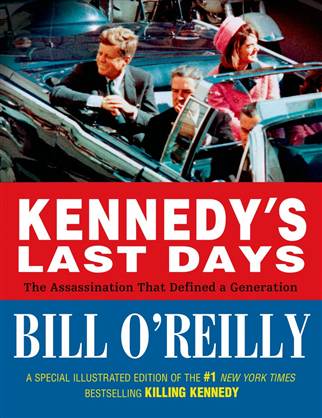
When I discovered that two different accounts of Kennedy’s assassination had arrived at the Butler Center, I immediately grabbed them and started reading. Like so many people, I have a fascination with the Kennedys. I can’t pinpoint why exactly, but I’m guessing it’s a combination of my enchantment with mystery, glamour, politics, unexplainable tragedy, and story. Kennedy’s life—and death—are captivating stories, and two versions of Kennedy’s story are newly published for young adults in 2013: “The President Has Been Shot!”: The Assassination of John F. Kennedy by James L. Swanson, and Kennedy’s Last Days: The Assassination that Defined a Generation by Bill O’Reilly. Before I compare and contrast, I want to make a note about audience. Scholastic suggests that the Swanson book be for ages 12 and up, noted on the book jacket. O’Reilly’s book cover does not indicate an intended age, but after further research I discovered that Henry Holt and Co. notes on their website that the book “will captivate adults and young readers alike” (http://us.macmillan.com/kennedyslastdays/BillOReilly). Of course, librarians can choose where to shelve this book, on what bibliographies to include this book, and what ages to steer this book to in reader’s advisory conversations. Finding out the publisher’s intended age was important to me though, for one reason: As I was reading, I wondered, Why is there no mention of Kennedy’s affairs? Both of these titles are not picturebooks or nonfiction titles intended for early elementary children. They are written for older kids—tweens and teens. Of course, many might argue that Kennedy’s philandering might not be appropriate for tweens, but then I beg the inevitable question. Why are we okay with telling them about extreme violence? Both books have large pictures of rifles and handguns. Of the assassination, Swanson’s book states, “[The third bullet] cut a neat hole through [the president’s] scalp and perforated his skull. The velocity, the pressure, and the physics of death did the rest. The right rear side of the president’s skull blew out—exploded really—tearing open his scalp, and spewing skull fragments, blood, and brains several feet into the air where it hung for a few seconds, suspended in a pink cloud” (113). Similarly, O’Reilly states, “The next bullet explodes his skull…it slices through the tender gray brain matter before exploding out the front of his head” (207). It is bothersome to me that both authors consciously eliminated sexual content for a young adult audience, but were perfectly fine with descriptive violence. I understand the importance of preserving JFK’s legendary status and historical importance, but this is a book of nonfiction, and kids deserve to know the whole story. The intended elimination reminds me of Ingri & Edgar Parin d’Aulaire’s Caldecott winning book Abraham Lincoln, in which there is no mention of Lincoln’s assassination. Do we think we are protecting young adults by eliminating facts? Do we think they won’t find out? What is it that is so much more terrifying about sex than exploding brains, spewing skull fragments, and revolvers?

president bookSwanson’s book establishes a strong narrative flow immediately. His writing is detailed, jargon-free, and action-packed. He is always able to put his reader right inside the story while using a third-person point of view. Swanson knows how to paint a picture, and emphasizes significant things that are not just arbitrary. I’ve read so much about the Kennedys and I never had read this: When Jackie got off the plane in Dallas, she was given red roses EVEN THOUGH the state flower was the yellow rose. Apparently, “so many of them had been ordered for the various events the Kennedys would attend in Texas that local florists had run out of them” (87-8). Pretty eerie that Jackie would be given red roses in the city that her husband would be assassinated in only minutes later. Never-before seen photographs are released in this book, and Swason’s charts and graphs are descriptive and compelling. Swanson details Oswald’s every move through text and picture, even recreating his view of Elm Street from the 6th floor of the Texas School Book Depository. Several photographs of the seconds after the violent shots are shown from varied angles, displaying Clint Hill covering the president and Jackie with his own body. Swanson’s biggest accomplishment is his ability to keep the tension high while keeping facts straight; I didn’t want to put the book down.
kennedy bookWhile I’m not normally a fan of O’Reilly’s politics, I went into this book with a distinct conviction to be unbiased. O’Reilly starts his book off with a personal touch, describing where he was and how he felt on November 22, 1963. He outlines his book into four parts—The Making of a Hero, The Making of a Leader, Dallas, Texas—November 1963, and The Making of a Legend. The chapters alternate perspectives, recounting the parallel time frames of the lives of Kennedy and Oswald. It is an interesting approach the illuminates personality traits of both men. Using present tense, O’Reilly attempts to place his reader directly into the narrative, as if it is happening right now. The thing is, Swanson does that with past tense and it makes much more sense. One does not need to write in present tense in order to make a story come alive. In fact, because the book often needs to use past tense for historical background and context, it is strange to jump back and forth between tenses. Yet, O’Reilly writes with respect towards JFK and loyalty to his country. I was bothered by some of the assumptions made, specifically about people feeling certain things. For example, O’Reilly states , “Jackie Kennedy likes to think of herself as a traditional wife, focusing most of her attention on her husband and children” (55-6). First of all, how do we know what Jackie Kennedy felt about her role as a wife? Secondly, I have read the contrary. Rather than focusing on her family and children, Jackie took several trips abroad without her children, and very rarely had to do the things that many “traditional mothers” have to do—change dirty diapers, cook breakfast, do the dishes, clean the laundry. While I’m not doubting Jackie’s loyalty to her family, I do doubt O’Reilly’s statement that she was a traditional wife. In the memoir Mrs. Kennedy and Me, by Clint Hill (Jackie’s personal secret service agent), Hill describes Mrs. Kennedy in a way you’ve never known her before. It’s definitely a book to read if you like all things Kennedy.

It is difficult to be an author that follows up a fabulous year of narrative nonfiction, and let’s face it—2012 rocked. These two authors do a good job with building and maintaining a tense, politically-charged, mysterious story about a piece of contemporary history. When I grew up, history was just history to me. It all seemed the same, and numbers never had much significance for me, because I just had to MEMORIZE them. I probably became fascinated with the Kennedys because my parents constantly told me about that time period—it’s when they grew up. I remember the realization of “Woah. Civil Rights wasn’t long ago. This assassination (and Bobby Kennedy’s and Martin Luther King’s) was one lifetime away from me.” Kids in middle school and high school now don’t have as many parents that remember this time. It’s up to great nonfiction writers to preserve the past and keep the story alive. Swanson’s book available in October; O’Reilly’s in stores now.
Tommysaurus Rex

Tommysaurus RexTommysaurus Rex
by Doug TenNapel
Graphix, 2013

Opening the pages of one of Doug TenNapel’s book is a bit like pressing play for a David Lynch film: you feel the certainty in your gut that it’s going to be a surprising and unique experience, an hour or two of bizarre, sometimes even disturbing images you’ll never forget seeing. The difference is, with Lynch’s work, I’d usually prefer to look away; with TenNapel, I can’t tear my eyes from the page.

Before the warped worlds of Bad Island and Ghostopolis, before the philosophical minefield of Cardboard, Doug TenNapel wrote Tommysaurus Rex, now beautifully republished in full color (contributed by Katherine Garner). In this middle grade graphic novel, a boy named Ely loses a pet dog and gains a pet dinosaur. Ely knows in his heart that the tyrannosaurus – playful, good-natured, and in need of training – is some manifestation of his old dog Tommy, despite its also having memories of Cretaceous life (and death). The mechanisms for the dinosaur’s rebirth and reincarnation are largely unstated, and blissfully so; TenNapel’s masterful storytelling presents a confident, fantastical logic that shrugs off the dull necessities of reality. The reader is happy to shrug them off, too.

In Tommysaurus Rex, TenNapel nods to fellow monster creators: Ray Harryhausen, visual effects artist who innovated new stop-motion animation techniques in the 1950s and ‘60s, makes a cameo appearance in Ely’s story. Bill Watterson was a clear influence on the artist; like Calvin and Hobbes, Ely and his fellow humans are drawn with occasionally zany stylistic expressions, while Tommysaurus is almost frighteningly realistic. Yet despite its allusions and tributes, the style and story stand alone. Calvin and Hobbes cuts with wit and cynicism, but through its perfectly messy imagery and fantastical conceit, Tommysaurus Rex rings loudly and truly with heart. One moment you might recoil from the image of a tyrannosaurus digging into a bloody feast of a cow carcass; the next, you’re holding back tears as a bully expresses regret or a friend says good-bye forever. TenNapel always surprises me somehow, except I always know I need to hold on for dear life (and keep the tissues within reach).

When You Wander: A Search-and-Rescue Dog Story

when you wanderWhen You Wander: A Search-and-Rescue Dog Story

by Margarita Engle, illustrated by Mary Morgan

Henry Holt, 2013

“If you are lost, stay in one place. Hug a tree. Think of me.”

On paper everything about this sounds didactic and cloying, in the sort of way that might give one a headache and a toothache at the same time. A sniffing school graduate offers help to would-be lost children to keep them safe and get them found. Her first person (first canine?) exposition outlines specific procedures to be undertaken by a lost toddler matched to the dog’s skills and knowledge.

And it is sweet, make no mistake, and not without purpose.

But it is so much more than that. The language is warm and clear, presenting the instructions in an easy, friendly way, studded with details of particular meaning to a child. It is lilting and confident and happy on the tongue, broken like verse to reinforce its poetic rhythms to the reader-alouder. The toddler in question is shown in the rescue dog’s imagination, doing toddlery things that leave an indelible olfactory trail. The pictures themselves, soft and unapologetically accessible, establish a tone of security and success. And so children understand being lost in terms of the dog’s expertise, not the danger the dfficulty represents. In a final spread the roles are switched, as the child, now safe home in bed, dreams of her rescuer in a dream bubble of her own.

Above all, though, this is a story. I wouldn’t hesitate for a moment reading this aloud to a group of children, not because it contains important information that all children need to hear, but because it is purely delightful. Would that more books built on a message could be so.

On a Beam of Light

on a beam of lightOn a Beam of Light

by Jennifer Berne, illustrated by Vladimir Radunsky

Chronicle, 2013

I fancy myself a scaredy dad. My son, who has been with us now for approximately 750ish days, has managed to instill a deep rooted paranoia within me concerning every possible aspect of the human condition. “Is he choking or just laughing really hard?” “What was that, a poop or a toot” (please just be a toot!)? And something I’m certain every parent can relate to: “Why isn’t he deciphering complex algebraic proofs yet?” Unreasonable? Absolutely! Whereas I can look past perceived mathematical deficiencies, I worry away over words and speech.

Believe it or not, other parents have shared concerns for their child’s development. Case in point; THE EINSTEINS! Turns out, even the most (arguably) brilliant scientist ever took a while to blossom. Jennifer Berne’s book On a Beam of Light reveals a quiet, curious baby Albert who barely spoke at the age of three. He sort of took his time checking things out. Upon receiving a compass from his father, young Albert became mesmerized by the consistency of its northward pointing needle. This revelation developed a thirst for knowledge within him that would span a lifetime. Far more inquisitive than his classmates, some teachers believed he would be an utter failure in life. Unperturbed, he searched for answers in books on science and math. Tireless thinking and daydreaming led him to discover some of the most important concepts in scientific history.

Berne takes an interesting approach to Einstein’s story by focusing on his difficulties fitting in, his curious nature, and a love of simple pleasures. In a word: his normalcy. For all practical purposes this seemingly super-natural man was little more than a thoughtful boy who loved music, riding his bicycle, eating ice cream, and wearing shoes with no socks. The author’s clever references to activities children adore make Albert all the more appealing to young readers and listeners. Particularly keen observations and significant moments in Albert’s story are written in large, red ink to emphasize their meaning.

Vladimir Radunsky creates a whimsical mood with static pen drawings which are often colored with ink and gouache paints. Some of Albert’s thoughts and questions are drawn as word bubbles. Particularly effective are the freckled, parchment-like pages which are soft on the reader’s eyes. Images frequently portray Albert in a pensive pose. Depictions of his thoughts and dreams bounce across pages as if they were darting through his mind. One particular spread illustrating a scene made of atoms accompanies Albert’s understanding of nature’s building blocks. In another, mathematical formulas and sheet music spew from a violin played by the passionate genius.

On a Beam of Light is a unique middle grade picture book that allows young readers to indulge their inner mathematician and/or scientist without feeling compelled to learn. It feels complete in many ways. The exquisite, diverse artwork complements the energizing text creating broad appeal for a topic some young readers may consider bland. It even gives fretful parents food for thought. I take comfort in the realization that my boy is WAY smarter than Einstein was at his age. Fellow scaredy dads, there’s hope for us all.

The 39 Deaths of Adam Strand

adam-strandThe 39 Deaths of Adam Strand
Gregory Calloway
Dutton Juvenile, 2013

Teens looking for answers will not find them in Gregory Galloway’s The 39 Deaths of Adam Strand.

Although this is a book about suicide and depression, it is not a classic “problem novel.” Adam Strand has not been persecuted for his beliefs or sexuality. His parents are not abusive or uncaring. He has no body image issues or drug addictions. He’s just inexplicably drawn to the act of killing himself.

But in a sisyphean twist, Adam can never complete this act. Every time, no matter what method he chooses, Adam is fantastically returned to life. 

Galloway is very much aware that he is writing a kind of teen introduction to The Nausea. He even creates a concerned teacher who constantly recommends Kafka and explains Camus. Like any existential protagonist, Adam is unmoved. But the dialogue serves as a nice supplementary reading list for teens that are drawn to the philosophical issues the novel raises. 

Like Adam’s teacher in the novel, I must admit that I often have ulterior motives when I recommend a book. I recognize his hope, his deeply-rooted faith that one of these works will resonate with the troubled teen and inspire him to turn his life around.

There is no such transcendent moment for Adam. And most of the time there’s none for the teens I work with either.

Still, in the life of a transparent nerd and sentimental optimist there are little victories. Books like this one can be the spark of curiosity that have the potential, at least, to open up an entire world of literature.  When you hand a strange, complicated novel like this one to a teen, how can you not secretly hope that he or she will come back and ask who this Kafka guy is?

Openly Straight

Openly StraightOpenly Straight

by Bill Konigsberg

Arthur A. Levine Books, 2013.

In the hilarious comedy Anger Management, Jack Nicholson’s character (a therapist) asks Adam Sandler’s character (an average Joe businessman) who he is (see video below). Adam Sandler answers with thoughts about his job, his personality, and his “likes.” Jack Nicholson pushes, and says “No, those are things ABOUT you. I want to know WHO YOU ARE.” An entertaining dialogue pursues, and the movie goes on.

Who are you?

Quite the question, huh? Often times, when I get asked this question when meeting someone new, my stomach feels like someone forced Robitussin cough syrup down my throat (the worst thing I can remember tasting in my life). Who am I? A graduate student. A dog lover. A dancer. A musician. A writer. I work at a library and I’m a middle child and in my spare time I do aerial acrobatics and play piano. My favorite candy is Laffy Taffy.

All of this is true. But is it really who I am? WHAT DOES THAT QUESTION MEAN?

Part of the problem is that we aren’t defined just by our own labels. Other people have labeled me, and in ways I don’t always like. Blonde. Overly Sensitive. A Pushover. Sometimes, I believe or become those things because someone else labeled me that way. Labeling is a scary, slippery slope, and it happens every day to everyone.

In Bill Konigsberg’s new YA novel, Openly Straight, seventeen-year-old Rafe is sick of his label. He’s been “the gay boy” since he came out in eighth grade, and it has become exhausting. He knows he’s got it lucky—he lives in Boulder, Colorado, where he isn’t bullied in school, his parents fully accept his sexuality, and he has good friends. But he’s been defined by this one label for so long that he feels like his other parts have disappeared. So he takes a risk and transfers to an all-boys’ boarding school in New England to try out a new method of self-expression—being “openly straight.”

For a while, life is fabulous. Rafe discovers his love of sports, hones his gift of creative writing, and fulfills his desire to be seen as Rafe, not Gay Rafe. But of course, there is another boy in this book—a boy that Rafe falls for, and complication ensues. Konignsberg writes his first-person narrative with a quirky grace and his dialogue with honesty and intelligence. His ability to build relationships between characters and willingness to ask thought-provoking, challenging questions to his reader is exceptional.

There’s still more to this book that I’m not including; something that is very hard to put into words. Alas, I will try.

We all want to be taken for the entire, deeply layered, multi-dimensional person that we are. I know I don’t want one of my labels to define me, but I do want the sum of my PARTS to define me. There is a type of psychotherapy called “Parts therapy,” which is based on the concept that we are complex human beings that have many different parts within us. I have a sensitive Part, but I also have a bold Part. I am a creative artist, but I am also a researcher and scholar. I don’t want to get stuck in one Part, and I don’t want to get hidden beneath a Part so no one sees any of the other Parts. Is my sexuality important? Of course. Does it define WHO I AM? No, it’s a Part. There is no Me without every Part that exists within me, and if I deny a Part of me, I’m not really Me either. Parts are fluid. They are not static; they change as we change. Openly Straight is poignant and powerful because it both asks and challenges the question: WHO ARE YOU?

Rafe would have to answer that question for himself, but I’m guessing he would say that he’s many, many things, but most of all he’s human. I would tell him that I’m the same, and that I’m a system of Parts that all work together to create the one—and only—me.

Just like you.