Butler Bookshelf

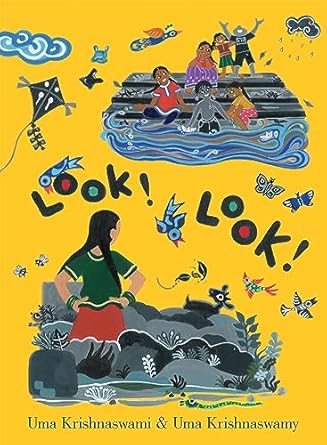
Diverse stories are an important part of literature for all ages, especially for kids. October is Global Diversity Month, so this week’s Butler Bookshelf highlights some fiction and nonfiction books from authors around the world. One of these books is Look! Look! written by Uma Krishnaswami and illustrated by Uma Krishnaswamy. Krishnaswami tells the story of a young Indian girl discovers a slab of stone in the weeds, and she calls her friends to come and take a look. They work together to clean the weeds, garbage, and other stones up. Soon, more and more people from their village and other villages nearby help them uncover an old step well. Once the well is cleaned up, rain fills the well, and the previously dry and dusty land comes back to life as plants begin growing again and the animals return. Accompanied by colorful, geometric illustrations done in acrylic, poster color, and water color by Uma Krishnaswamy, Look! Look! is a delightlful story that educates readers on ancient Indian step wells and shows how they can potentially be a solution for handling floods and providing water in India.

Check out more books from diverse authors below!

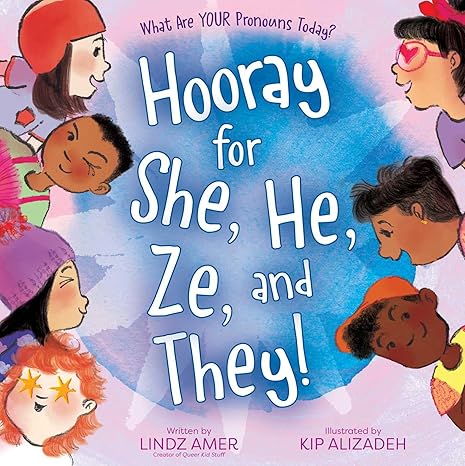
Hooray for She, He, Ze and They!: What Are Your Pronouns Today?
Written by Lindz Amer
Illustrated by Kip Alizadeh
Published by Simon & Schuster Books for Young Readers
Available now

Look! Look!
Written by Uma Krishnaswami
Illustrated by Uma Krishnaswamy
Published by House of Anansi Press
Available now

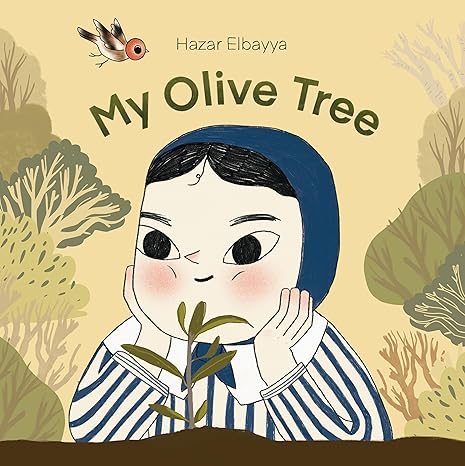
My Olive Tree
Written and illustrated by Hazar Elbayya
Published by Anne Schwartz Books
Available now

Old Wounds
Written by Logan-Ashley Kisner
Published by Delacorte Press
Available now

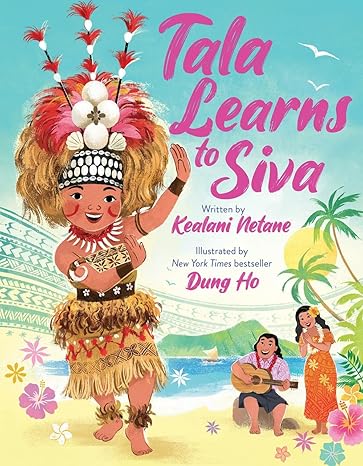
Tala Learns to Siva
Written by Kealani Netane
Illustrated by Dung Ho
Published by Orchard Books
Available now

How It Works: A Review of Bounce!: A Scientific History of Rubber

Bounce!: A Scientific History of Rubber
Sarah Albee
Illustrated by Eileen Ryan Ewan
Charlesbridge
October 22, 2024
Age 6-9

Used for everything from bike tires to raincoats, rubber plays a major role in things springy, stretchy and bouncy in ours daily lives. Follow its history from the discovery by indigenous Central American tribes (who farmed natural rubber latex from local plants), adoption by Europeans (imagine the difference when their soccer balls could bounce!), and the evolution in its usefulness into the multipurpose substance we can’t live without today. Part narrative nonfiction and part traditional nonfiction, Bounce combines a fascinating story of invention with “The Science!” interjections that explain the how or why of a narrative detail (what is it that makes rubber sink or float?).

Award-winning nonfiction author and former basketball-player (who appreciates a bouncy ball more?), Sarah Albee explores the history and science behind a very common part of everyday life. With a panel of expert readers—chemists, materials scientists, and engineers—Albee dives deep into both the story and the scholarship with accessible language and delightful facts. The extensive and respectful backmatter includes sections on tribal naming preferences, acknowledgement of the troubling issues of slavery and the environmental impact of rubber production, a timeline that dives deeper into some details from the narrative, and a thorough bibliography and source notes. Intricate yet fluid pen, ink, and watercolor illustrations connect closely to the text descriptions with detailed images of the action, movement in the line work, and expressive faces. Eileen Ryan Ewan uses color to help show the passage of time, moving from muted and historically accurate colors to more vibrant shades in the modern spreads. This engaging and fact-filled picture book would be a perfect accompaniment to introductory science lessons on the properties of matter or chemistry in upper elementary school or for the budding scientists in any library.

Use Your Voice: A Review of Your Vote Matters: How We Elect the US President

Your Vote Matters: How We Elect the US President
Rebecca Katzman
Illustrated by Ellen Duda
Scholastic Inc
May 7, 2024
Age: 7-10

Selecting a new US President is no easy task, and neither is understanding how it all happens. With this fun and informative explanation of the process, journalist Rebecca Katzman introduces upper elementary schoolers to this aspect of the political process and just how important their voice is to the outcome. Combining civics, history, and governmental fun-facts (do you know how astronauts vote from space?), kids will cover basic facts about the presidency and government, campaigns, voting, the post-election-day process, and what it means to be president. This title is more than just a high-level overview and provides everything from a simple visual explanation of the three branches of government to a more complex, but age appropriate, discussion of the Electoral College. Katzman includes plenty of suggestions for how kids can get involved in the process—from watching debates to writing to politicians—even if they can’t vote for another 10 years. In largely unbiased language, with some swings to the left in discussions of voter suppression and the peaceful transition of power, past and present elections are explored and vocabulary explained with on-page definitions and a thorough glossary. Illustrator Ellen Duda creates a bright and visually engaging combination of drawings, photos, maps, and charts. The full-color, matte pages and dynamic organization help to make the information more accessible to this young audience. Knowing how elections work and our role in them is one of our civic duties. This primer on the election process will introduce political concepts and the importance of our vote as our voice in what matters.

Can You Keep a Secret?: A Review of The Enigma Girls

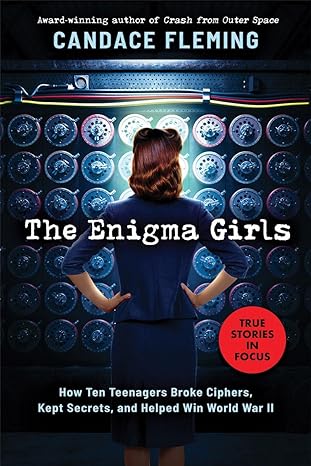
The Enigma Girls: How Ten Teenagers Broke Ciphers, Kept Secrets, and Helped Win World War II
Candace Fleming
Scholastic
March 5, 2024
Age 8-12

It wasn’t just the boys doing their bit for the war effort during the harrowing years of World War II. Sibert Award-winner Candace Fleming follows The Enigma Girls, ten young women working with the British government, cracking ciphers and codes to help win the war. Based out of Station X at Bletchley Park, a once top secret center of the British intelligence, thousands of people (nearly ¾ of them young women, p. 237) worked night and day intercepting, decoding, transcribing, translating, and cataloging secret communications from German, Italian, and Japanese government and military leaders. Walking chronologically through the war years (1939-1945), Fleming introduces each woman as she’s recruited into the sphere of Bletchley Park, snippets of her life before, during, and after the conflict, and her often emotional reactions to the exhaustion, secrecy, and triumph of the work.

The brisk pace and simple, yet engaging prose of this narrative nonfiction title pull readers into the frantic feelings and tense atmosphere of Station X. Fleming balances that emotion with well-explained vocabulary and intra-chapter information about codes and code breaking. Extensive photo documentation of Europe at war and Bletchley Park in particular bring the horrors of war and high stakes of the work to vivid life. Due to the clandestine role that the women and Bletchley played in the war, primary source material from the time is limited. Fleming’s source notes show extensive research into the biographies and autobiographies of the women (most of them wrote of their wartime experiences once they were allowed), and archives in Britain and beyond. Other backmatter includes thorough source notes, photography credits, and author’s note, and an index to come (not included in the reviewed ARC).

A deftly crafted tribute to the unsung young women whose efforts often turned the tides of battle, saving the lives of allied servicemen.

Literature For Parents: A Review of Book Bonding: Building Connections Through Family Reading

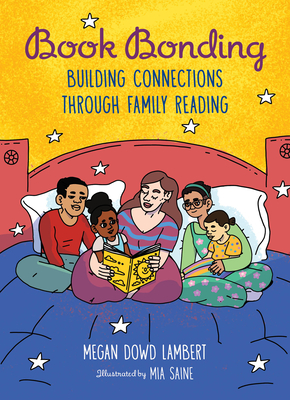
Book Bonding: Building Connections Through Family Reading
Megan Dowd Lambert
Illustrated by Mia Saine
Imagine!
Adult Audience/Professional Reading
April 18, 2023

In this collection of 21 essays, Megan Dowd Lambert divides her essays into four categories that touch upon her own experiences and perspective of being a parent of seven children, four of whom are adopted. Her evolving focus around the categories of parenting, adoption, race, and healing reveal an evolution of thinking and encourage parents and educators to try connecting with their children through a variety of literature.

Lambert discusses her nerve-wracking search for children’s books that have characters that mirror her “multiracial, foster-adoptive, queer, blended family” (pg. 9). Her search proved difficult as she found topics surrounding LGBTQA+, mental health, and disabilities have only been recently, and slowly, integrated into children’s books. With the limited number of books she was able to find on those topics, Lambert made sure to introduce them to her kids to show representation and a reflection of who they are and who they can be. Revealing her faults as a parent, and the mistakes that she’s made with her kids, provides an example of an imperfect parent, but one trying to do better for her kids. Lambert brings lightheartedness in the face of hard issues she’s had to face through humor and tear-jerking stories. This book would be useful for parents looking to find a way to connect to their child and would be great recommendation from librarians or other educational professionals. Children’s and other educational literature are mentioned with limited context, but Lambert later expands on the moral of each story to illustrate personal lessons learned about parenting and the importance of spending quality time with kids. Created digitally and primarily using darker colors, the limited illustrations represent a variety of skin colors and realistic actions happening in each scene, matching Lambert and her messages about parenting her children through a variety of literature. Connecting adults through heartfelt stories about parenting and healing, Book Bonding: Building Connections Through Family Reading inspires readers to bond with children through books, as they will teach kids the value of connection and maybe learn something themselves along the way.


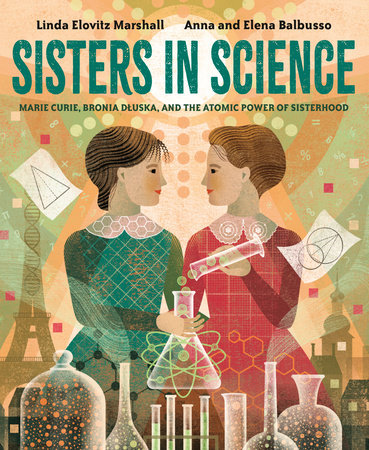
Lab Partners: A Review of Sisters in Science: Marie Curie, Bronia Dluska, and the Atomic Power of SisterhoodLab Partners: A Review of

Sisters in Science: Marie Curie, Bronia Dluska, and the Atomic Power of Sisterhood
Linda Elovitz Marshall
Illustrated by Anna and Elena Balbusso
Knopf
February 14, 2023
Age 5-9

Marie and Bronia grew up in a home surrounded by love, learning, and tragedy. Losing their mother and sister when they were quite young inspired the sisters to discover ways to help others. They supported each other through school and beyond in their journey to become a doctor and scholar in search of medical miracles. Each grew to make significant impacts on their chosen field, and on each other’s lives, through their curiosity, determination, and courage. This picture book biography of Marie Curie and Bronia Dluska explores the lives of the brave and brilliant sisters as they broke gender boundaries and cultural norms in late 1800s Poland to educate themselves and others in their quest to save the world. Marshall tells the story of their progress from young students to scientific trailblazers in a factual, often bleak, manner, broken by moments of whimsy. She describes the struggles between work and family obligations, accompanied by a moody-toned illustration of the conflict, leading into a spring-like spread of Marie and her husband Pierre on their bicycling honeymoon (p. 10-13). She balances moments from their personal biographies with their professional accomplishments, crafting an example of strong, but well-rounded women in science as role models for young readers, developing scientists, and sisters of all ages. Sisters Anna and Elena Balbusso’s geometric, sepia-toned, mixed media illustrations capture the STEM focus and historic setting to perfection. Utilizing imagery of atomic bonds, equations, and lab equipment against poignant images of the family, they reinforce the conflicting priorities that must have been a constant struggle for the women during that time period (and often still are). A time line and reading list (for children and adults) adds weight to this inspirational addition to STEM and Women’s History Month collections and programming.

A story of sisterhood and intellectual curiosity that lead to some of the great medical and scientific discoveries of the 19th and 20th centuries.

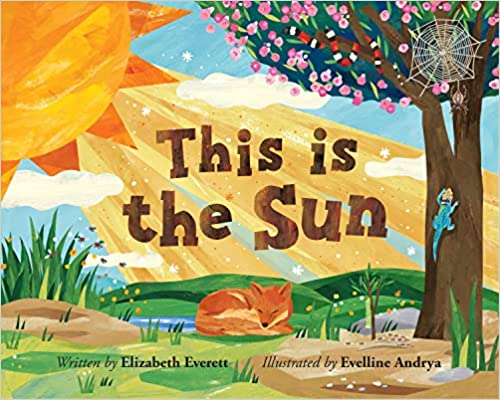
The Circle of Life: A Review of This Is the Sun

This Is the Sun

This Is the Sun
Elizabeth Everett
Illustrated by Evelline Andrya
Science Naturally
October 2022
Ages 4-7

A vibrant geometric sun shines its rays on the undulating earth below. Thus begins this brilliant and bouncy circle of life story told as a cumulative tale to the rhythm of “The House That Jack Built.” Moving from the sun, to the tree, to the flower, and so on Everett walks readers though the tale with simple text, easily digestible by preschool story times or early independent readers. Lush, full-color, digital collage illustrations complement the spare text. With text to the left of the spread and full-page illustrations to the right, Andrya layers in each new element of the story and introduces a seek-and-find component. Can you find the bug, on the leaf, on the tree? The text and art are both reminiscent of Eric Carle’s Very Hungry Caterpillar. This familiar format, combined with the cadence of a well-known nursery rhyme, lends the nonfiction text to story time in a way most NF does not. Adding to its utility, the book will be available in both English and Spanish, with teacher resources available on the publisher’s website after publication.

This deceptively simple story elegantly introduces the complex topic of our interdependent ecosystem and helps young readers see their place in it.

Paving the Way For Future Generations: A Review of Bessie the Motorcycle Queen

Bessie the Motorcycle Queen
Charles R. Smith, Jr.
Illustrated by Charlot Kristensen
Scholastic Inc. / Orchard Books
September 20, 2022
Ages 6 to 8

Through rhyming verse, Bessie the Motorcycle Queen tells the story of little-known adventurer, Bessie Stringfield. A Black motorcyclist, she was known for her spontaneous, cross-country motorcycle rides, flair for the dramatic, and ability to cruise easily past her white, male competitors. Fighting against conditions in the Jim Crow-era South, Bessie was often forced to sleep under the stars when motels rejected her, was chased by Klan members, and cheated out of her race winnings. The impulsive, determined, and highly skilled Bessie gives author Charles Smith, Jr. plenty of tales for an action-packed ride. His verse maintains a quick pace and fun tone, despite some heavy content, even if some lines are a bit clunky. The sherbet-flavored color palette, laid over the modern digital paintings, immediately places the story in the 1920s. Elements like her wheat penny, which she flipped to decide her next location, add to the period details and her legend. The rough, lineless illustrations feel cartoon-like and energetic, with Bessie and her motorcycle significantly more detailed than everything else, keeping the reader’s eyes always on her. The backmatter includes an author’s note explaining his discovery of Bessie’s story, and the inspiration he found in her bravery, as well as a bibliography with books and online articles for additional reading on Bessie.

With races, car chases, and daring motorcycle stunts, this tall tale of an overlooked historical figure shines a spotlight on her bravery and spirit in a story of empowerment.

Bedtime for Creatures Great and Small: A Review of Sleep

Sleep cover art

Sleep
Barbara Herkert
Illustrated by Daniel Long
Albert Whitman & Co.
October 1, 2022
Ages 4-8

Humans require less sleep as they grow older. Grey whales float on the water’s surface to breathe while they sleep. Most mammals and birds exhibit signs of REM sleep, which means they may dream like humans. All living things with a nervous system need sleep, from dogs to insects to sharks to us; sleep specifics just depend on the type of animal and its habitat. Sleep, written by Barbara Herkert and illustrated by Daniel Long, dives deep into the world of slumber with detailed facts about sleep patterns, cycles, and the differences between sleep needs and experiences in humans and animals.

Filled with a lush color scheme and vivid images, the book resonates calm, perfect for this topic of sleep and making it a relaxing bedtime read. Each image is digitally illustrated, in a similar style to mixed media collages, but shaded to bring out depth and textures, which brings each animal to life. Long’s images are vibrant, but simply detailed, keeping them from distracting from the information provided on each page. Sedate pacing prevents the fact-heavy text from overwhelming readers. With a background in biology and fine arts, Barbara Herkert provides facts in a tone filled with admiration for the natural world that complements the extraordinary details she provides. The author also includes a glossary and additional resources as backmatter for those who would like to continue researching the world of sleep. Working through interesting information on humans and animals, the book takes young readers on a mind-opening adventure into the world of sleep and the extraordinary world we live in.


Fact or Fiction: A Review of What the Fact?: Finding the Truth in All the Noise

What the Fact?: Finding the Truth in All the Noise 
Dr. Seema Yasmin 
Simon & Schuster for Young Readers
September 20, 2022 
Ages 12 and up 

In What the Fact?, Dr. Seema Yasmin reveals how people interact with trillions of bytes of data every second and, depending on if it’s fact or fiction, can spark a viral information outbreak leading to fear or hatred. By using a virus as a metaphor for the spread of false information, Yasmin states why people fall for false information and biases, how news sources have changed over decades, and how social media has become the biggest influence on minds, both young and old. From beginning to end, Yasmin encourages readers to be freethinkers and be suspicious of information received from social media, social circles, or any supposedly credible source. 

Throughout the book, the author uses a humorous but down-to-earth tone that encourages readers to keep reading and provides small sidebars that give brain breaks between the chunks of information. Using graphs, pictures, and historical references all backed up by a thorough list of sources in the appendix, the novel is helpfully organized by topic, such as COVID-19, historical events, and governmental issues. Yasmin’s vast experience in fact-based fields—she attended medical school at Cambridge University, worked as a disease detective for the US government and was a finalist for the Pulitzer Prize—has her well-versed in sorting through the noise for the facts beneath. Technical terminology is explained in a way that educates readers on how it is being used and defined, making it easy to follow along. Yasmin, very early in the book, states that this book is just a magnifying glass into how beliefs, thoughts, ideas, actions, etc. are influenced by approximately “1,099,511,627,776,000” (pg. 2) bytes processed and stored in the brain and that this is not a book that is going to tell readers how to think. This information-rich book describes the exhaustion and confusion of being aware of all information, yet bolsters all types of readers to gain skills in critical thinking, media, and digital literacy so they can thoughtfully navigate the information-rich world we live in.