Winter Teamwork: A Review of In the Winter Woods by Daniela Kulot 

In the Winter Woods 
Written and illustrated by Daniela Kulot 
Translated by Elisabeth Lauffer 
Charlesbridge 
Ages 3-7 
Available October 15, 2024 

It’s the middle of a cold winter, and Fox, Mouse, and Crow are all hungry, but they can’t find even a morsel to eat. Squirrel is hungry, too, but he has a secret stash of snacks hidden away that he can’t wait to enjoy. When Fox, Mouse, and Crow ask Squirrel to share, he says no. After hours of searching, he realizes that he forgot where his stash was hidden. He asks Fox, Mouse, and Crow for help in exchange for sharing his food. Soon, they find Squirrel’s food and feast together! 

With these woodland creatures, Kulot tells a story of friendship and community, showing the importance of working together and sharing with others. Although the message has been repeated before, Kulot brings charm to the basic “sharing is caring” theme with her woodland creatures and winter landscape. The illustrations are done in digital media, and the animals have a cute, slightly cartoonish look with beautiful backdrops of winter in the countryside. Kulot uses muted blues, browns, oranges, and greens to create the cold, barren atmosphere. These delightful illustrations complement the text, where Kulot uses devices like alliteration and rhyming to add a sing-song-like quality, bringing levity to what could otherwise be a dire situation. With its beautiful art and thoughtful message, In the Winter Woods would be a great addition to libraries and classrooms looking to do a program or lesson on winter or social-emotional learning.  

Butler Bookshelf

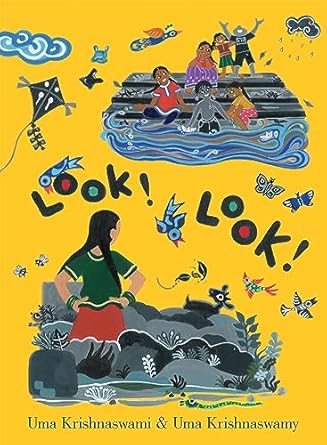
Diverse stories are an important part of literature for all ages, especially for kids. October is Global Diversity Month, so this week’s Butler Bookshelf highlights some fiction and nonfiction books from authors around the world. One of these books is Look! Look! written by Uma Krishnaswami and illustrated by Uma Krishnaswamy. Krishnaswami tells the story of a young Indian girl discovers a slab of stone in the weeds, and she calls her friends to come and take a look. They work together to clean the weeds, garbage, and other stones up. Soon, more and more people from their village and other villages nearby help them uncover an old step well. Once the well is cleaned up, rain fills the well, and the previously dry and dusty land comes back to life as plants begin growing again and the animals return. Accompanied by colorful, geometric illustrations done in acrylic, poster color, and water color by Uma Krishnaswamy, Look! Look! is a delightlful story that educates readers on ancient Indian step wells and shows how they can potentially be a solution for handling floods and providing water in India.

Check out more books from diverse authors below!

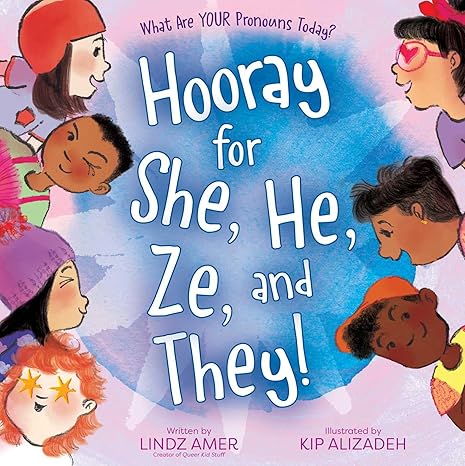
Hooray for She, He, Ze and They!: What Are Your Pronouns Today?
Written by Lindz Amer
Illustrated by Kip Alizadeh
Published by Simon & Schuster Books for Young Readers
Available now

Look! Look!
Written by Uma Krishnaswami
Illustrated by Uma Krishnaswamy
Published by House of Anansi Press
Available now

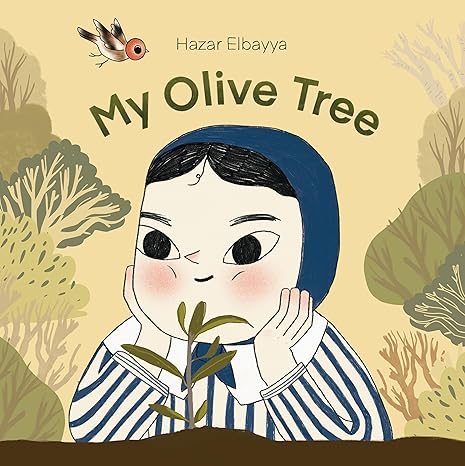
My Olive Tree
Written and illustrated by Hazar Elbayya
Published by Anne Schwartz Books
Available now

Old Wounds
Written by Logan-Ashley Kisner
Published by Delacorte Press
Available now

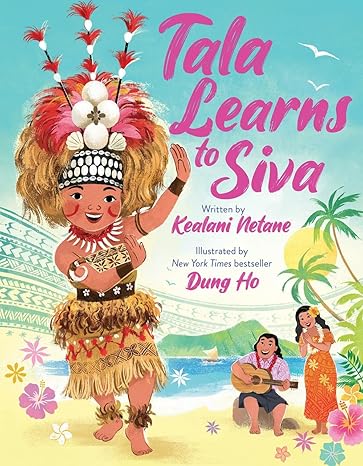
Tala Learns to Siva
Written by Kealani Netane
Illustrated by Dung Ho
Published by Orchard Books
Available now

How It Works: A Review of Bounce!: A Scientific History of Rubber

Bounce!: A Scientific History of Rubber
Sarah Albee
Illustrated by Eileen Ryan Ewan
Charlesbridge
October 22, 2024
Age 6-9

Used for everything from bike tires to raincoats, rubber plays a major role in things springy, stretchy and bouncy in ours daily lives. Follow its history from the discovery by indigenous Central American tribes (who farmed natural rubber latex from local plants), adoption by Europeans (imagine the difference when their soccer balls could bounce!), and the evolution in its usefulness into the multipurpose substance we can’t live without today. Part narrative nonfiction and part traditional nonfiction, Bounce combines a fascinating story of invention with “The Science!” interjections that explain the how or why of a narrative detail (what is it that makes rubber sink or float?).

Award-winning nonfiction author and former basketball-player (who appreciates a bouncy ball more?), Sarah Albee explores the history and science behind a very common part of everyday life. With a panel of expert readers—chemists, materials scientists, and engineers—Albee dives deep into both the story and the scholarship with accessible language and delightful facts. The extensive and respectful backmatter includes sections on tribal naming preferences, acknowledgement of the troubling issues of slavery and the environmental impact of rubber production, a timeline that dives deeper into some details from the narrative, and a thorough bibliography and source notes. Intricate yet fluid pen, ink, and watercolor illustrations connect closely to the text descriptions with detailed images of the action, movement in the line work, and expressive faces. Eileen Ryan Ewan uses color to help show the passage of time, moving from muted and historically accurate colors to more vibrant shades in the modern spreads. This engaging and fact-filled picture book would be a perfect accompaniment to introductory science lessons on the properties of matter or chemistry in upper elementary school or for the budding scientists in any library.

Bloom Where You’re Planted: A review of Millie Fleur’s Poison Garden

Millie Fleur’s Poison Garden
Christy Mandin
Scholastic/Orchard Books
July 2, 2024
Age 4-8

Garden Glen is basic: the homes look the same, the adults look the same, the gardens look the same. And they want to keep it that way. But when Millie Fleur La Fae and her family move to the Addams Family-esque house on the edge of town, things are bound to change. To make Garden Glen feel like home, she plants a truly peculiar garden—full of fanged fairy moss and grumpy gilliflower—and draws the ire of her neighbors who want to “mow it down!” With determination, creativity, an inclusive spirit, and some encouragement from Mom, she invites her young classmates to experience something a little different, but wonderfully weird. And little by little, builds a culture of acceptance in her new home.

In this sweet, silly, yet layered homage to individuality, Mandin proves that a lot of flare and a little bravery can make a big impact. Millie Fleur’s persistence and Mom’s wisdom about fear disguised as resistance offer an unambiguous message on what it takes to effect change. Met with everything from disdain to threats by adults, Millie Fleur finds her peers more open to something new. The full-color, sepia toned illustrations lend a retro feel that’s both appropriate to 1950s feel of the very proper town and the straight-laced character costuming. The “hand-drawn” style of the digital illustrations is deceptively simple, with expressive faces and moments of architectural precision that complement the layers of meaning in the story. An author’s note introduces some unique (though sadly un-fanged) plants that young gardeners can add to their own yard and background on the true poison garden that helped inspired the tale.

A charming, yet inspiring tale for the young change agents in your library.

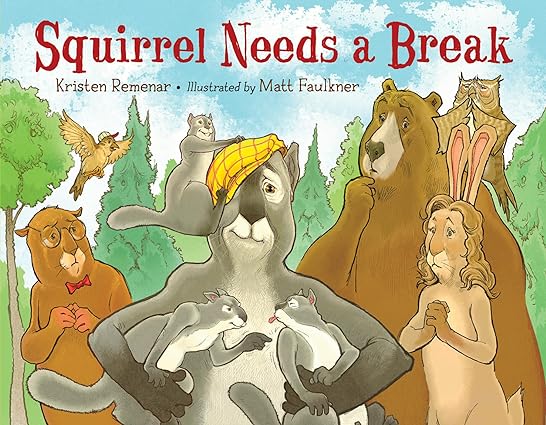
It Takes a Village: A Review of Squirrel Needs a Break

Squirrel Needs a Break
Kristen Remenar
Illustrated by Matt Faulkner
Charlesbridge
Available May 7, 2024
Age 4-7

After a long winter in the nest, Squirrel is an exhausted single dad, just doing his best with three rambunctious kits. Seeing his need, his forest friends hatch a plan to give Squirrel the break he so desperately deserves. How hard could it be to take care of little squirrels? While Owl takes Squirrel to dinner, Hare teaches the kits to make pancakes. While Groundhog takes him to yoga, Owl teaches the kits to meditate—almost. Each friend takes a turn helping Squirrel to relax and watching the kits. As the community rallies to help, they realize how hard and rewarding it can be to parent. In the end, they all appreciate what a wonderful father Squirrel is and what a strong family they make together.

In this companion to Groundhog’s Dilemma, Remenar uses gentle humor to explore the work and love required to raise young of any species with a story as much for parents as children. And the forest community demonstrates just how important a support system, whether an extended or found family, can be to the effort. Faulkner’s digital illustrations use a pencil-like technique and vintage color palette reminiscent of Disney’s The Rescuers (1977). The combination of full-bleed and multi-panel pages with text bubbles provides enough visual interest to keep the story from veering too retro. Emotionally expressive faces showcase the joys and trials of parenthood so thoroughly that adult readers will feel seen. Perfect for a snuggled up read, this title will illustrate to kids the ways caregivers show their love through both actions and words.

The African proverb that it takes a village to raise a child (or, in this case, squirrel) is proven yet again in this sweet and lighthearted tribute to the power of community.

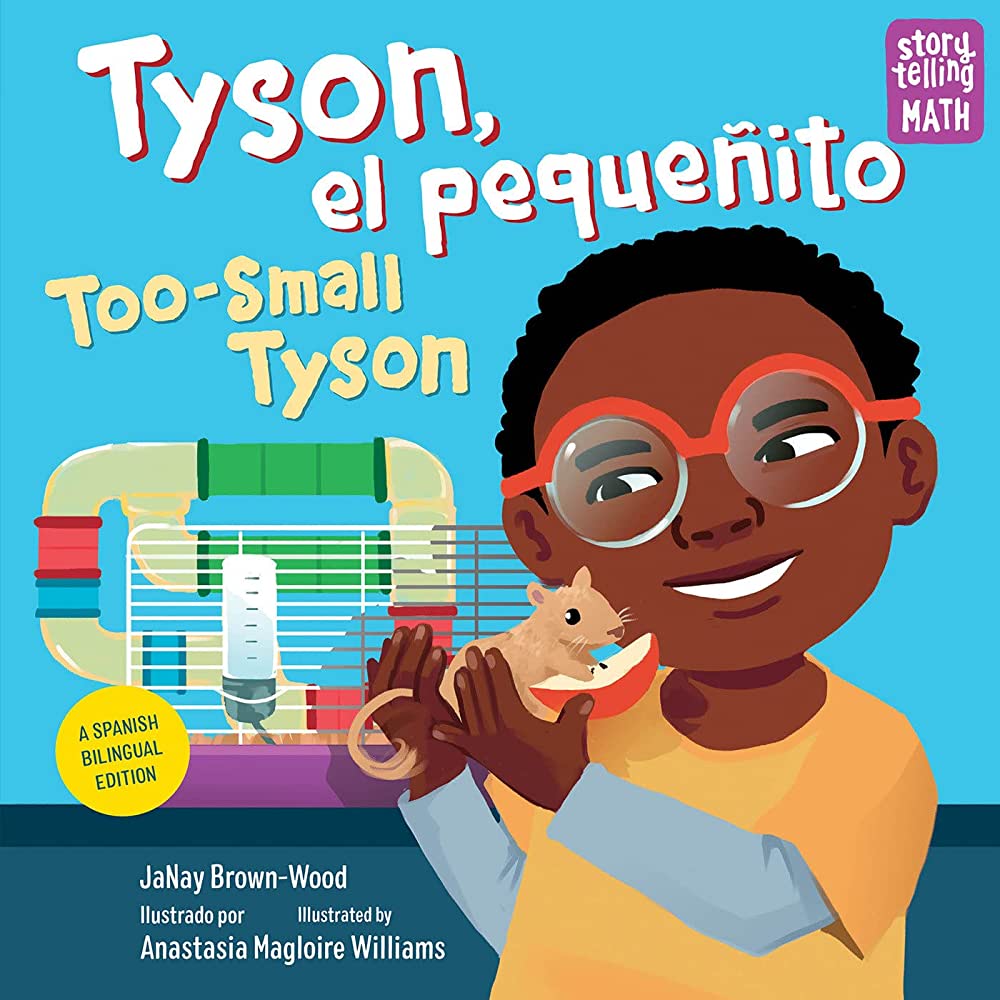
A Bilingual Adventure: A Review of Too-Small Tyson 

Tyson, El pequenito (Too- small Tyson): Storytelling Math, A Spanish Bilingual Edition
JaNay Brown-Wood
Illustrated by Anastasia Magloire Williams
Charlesbridge 
Publish date: April 11, 2023 
Ages: 6+ 

Tyson is the youngest, and smallest, of his siblings. When his family’s pet gerbil Swish goes missing, Tyson steps up, proving that age and size don’t diminish heart and brains. And that even the youngest and the smallest can be the most determined. Using math and intellectual grit, he imagines a way to catch Swish safely. He earns his older brothers’ respect when he successfully rescues Swish, and teaches them to appreciate their sibling. 

This bright and colorful picture book is a celebration of wit and boldness, reminding readers that they are more than capable of getting things done and solving problems, even when others doubt or overlook them. The vibrant, full-color digital illustrations highlight the descriptive expressions of the characters, drawing the reader into Tyson’s world. Conversation bubbles help to clarify the speaker, whether Tyson or one of his many brothers. 

Written in both English and Spanish, this bilingual adventure makes it easy for a native Spanish speaker or non-Spanish speaker to follow along with Tyson and learn simple math as well as a new language.  

Lab Partners: A Review of Sisters in Science: Marie Curie, Bronia Dluska, and the Atomic Power of SisterhoodLab Partners: A Review of

Sisters in Science: Marie Curie, Bronia Dluska, and the Atomic Power of Sisterhood
Linda Elovitz Marshall
Illustrated by Anna and Elena Balbusso
Knopf
February 14, 2023
Age 5-9

Marie and Bronia grew up in a home surrounded by love, learning, and tragedy. Losing their mother and sister when they were quite young inspired the sisters to discover ways to help others. They supported each other through school and beyond in their journey to become a doctor and scholar in search of medical miracles. Each grew to make significant impacts on their chosen field, and on each other’s lives, through their curiosity, determination, and courage. This picture book biography of Marie Curie and Bronia Dluska explores the lives of the brave and brilliant sisters as they broke gender boundaries and cultural norms in late 1800s Poland to educate themselves and others in their quest to save the world. Marshall tells the story of their progress from young students to scientific trailblazers in a factual, often bleak, manner, broken by moments of whimsy. She describes the struggles between work and family obligations, accompanied by a moody-toned illustration of the conflict, leading into a spring-like spread of Marie and her husband Pierre on their bicycling honeymoon (p. 10-13). She balances moments from their personal biographies with their professional accomplishments, crafting an example of strong, but well-rounded women in science as role models for young readers, developing scientists, and sisters of all ages. Sisters Anna and Elena Balbusso’s geometric, sepia-toned, mixed media illustrations capture the STEM focus and historic setting to perfection. Utilizing imagery of atomic bonds, equations, and lab equipment against poignant images of the family, they reinforce the conflicting priorities that must have been a constant struggle for the women during that time period (and often still are). A time line and reading list (for children and adults) adds weight to this inspirational addition to STEM and Women’s History Month collections and programming.

A story of sisterhood and intellectual curiosity that lead to some of the great medical and scientific discoveries of the 19th and 20th centuries.

All in a Days Work: A Review of Stillwater and Koo Save the World

Stillwater and Koo Save the World (A Stillwater and Friends Book)
Jon J. Muth
Scholastic Press
Ages 4 to 8
February 7, 2023

Koo, a young giant panda, wakes up inspired to change the world and enlists his thoughtful Uncle Stillwater to help fix it all—today. As they go about their day, Koo proceeds to have giant expectations of what he would like to do, but Stillwater teaches him that making small changes in the environment, and helping the community, can be their own meaningful way to change the world.

Told using a variety of animals, humans, and anthropomorphic pandas, the diverse characters reflect the diversity of the world and all the characters that might need kindness. Pandas as symbols of peace and friendship in Asian countries, are the main character in this story as they try to bring small improvements to the world around them. The pace of the story changes from rapid excitement as Koo suddenly wakes up one day and instantly ropes his uncle into the expectations of wanting to save the whole world, then slows only when Stillwater speaks to Koo about making small differences in the world around him. As the pace changes, the tone of the story changes to one of acceptance and encouragement of his personal efforts Encouraged by his uncle, Koo begins to bring joy to those around him through small but meaningful actions, such as cleaning his room and making a cake for the neighbors. These realistic everyday chores and acts of thoughtfulness offer young readers clear examples of how their actions impact the world around them. Drawn with pencil and granulated watercolors, the airy but vivid illustrations exemplify the beauty in the world around Stillwater and Koo and why they want to help save it. Stillwater and Koo Save the World is an uplifting story about wanting to make giant differences in the world by doing something small, inspiring readers to make meaningful changes in the world regardless of age.  


Best Friends Forever: A Review of When a Friend Needs a Friend

When a Friend Needs a Friend
Roozeboos (Anne Roos Kleiss)
Scholastic
February 7, 2023
Age 4-8

Creativity and imagination rule for best friends Aya and Oskar. But when Oskar is feeling sad, Aya isn’t sure how to help him get back to enjoying their adventures. With guidance from some caring adults, she finds a way to understand his big feelings, give him space, and offer support until he is ready for fun again. In this thoughtful exploration of friendship, Roozeboos illustrates both the experience of sadness in oneself and in a loved one, and how working through our own feelings of confusion and rejection can help support a friend. Mixed media collage art, with a naïve sensibility, complements the chaos of both creativity and emotion found in the story. Rich natural tones play well with vibrant oranges and turquoise and add a sophistication to the guileless art. Despite simple faces, she captures the feelings of both central characters as they move from joy to sadness to understanding. Spreads that depict the passage of time let both Aya and Oskar feel their feelings and come through them to a new perspective on their surroundings and each other.

Empathy and compassion shine in a gentle story about accepting a friend and their feelings without trying to fix them.

Roundhouse Kick Retelling: A Review of Little Red Riding Hood and the Dragon

Little Red Riding Hood and the Dragon
Ying Chang Compestine
Illustrated by Joy Ang
Abrams Books for Young Readers
November 1st, 2022
Ages 4 to 8

Little Red Riding Hood and the Dragon depicts a refreshing Chinese twist on the age-old folk tale of Little Red Riding Hood, as told by the wolf from the original. But this Little Red knows kung fu and carries a sword, which is why her mother feels safe sending her to grandmother, or Nainai’s house, when she’s sick. Making her way to Nainai’s house, Little Red is tricked by a dragon and uses her quick wit and traditional Chinese instruments to save Nainai and herself, making her the hero of her own story.

Although Little Red Riding Hood knows how to defend herself, she doesn’t use much force when trying to escape the dragon’s belly, just cleverness. This provides deeper character depth than the original tale. More in line with the original tale, many other characters in this picture book aren’t focused on besides Little Red Riding Hood. As the big bad wolf is looked at as an antagonist in other folktales, his perspective as narrator is a unique element that refocuses the story now on a Chinese dragon as the antagonist. The digital art and vivid colors in Ang’s illustrations lend a modern sensibility to the ancient setting and traditional tale, and add a further twist to the retelling. Detailed backmatter contains Compestine’s author note on her inspiration for this twisted tale, her motivation to include certain Chinese elements, and a deeper look into Chinese culture and heritage. Young readers will enjoy this “real” version of the story, and grown up readers will get a chuckle out of the wolf’s audience in the final spread. Messages of empowerment, problem-solving, and not waiting for a huntsman savior are the real beauty of this twisted tale.