Butler Book Banter (B3) Returns 9/15/15!

Butler Book Banter (B3), the Butler Center’s popular youth literature discussion group, is taking place on TUESDAYS this fall, 6:00-8:00 p.m. All GSLIS students and area youth-services colleagues are welcome!

The first one is coming up Tuesday 9/15, and we’ll be focusing on the tenth anniversary of Hurricane Katrina and how it’s portrayed in children’s books. Four new books (at least) have come out this year on the topic:

  • Drowned City by Dan Brown (graphic nonfiction)
  • Marvelous Cornelius: Hurricane Katrina and the Spirit of New Orleans by Phil Bildner, illus. by John Parra (picture book)
  • Finding Someplace by Denise Lewis Patrick (novel)
  • Another Kind of Hurricane by Tamara Ellis Smith (novel)

We’ll be focusing on the first two, but discussion of the others is welcome, as is discussion of previously-published books on the topic such as Coretta Scott King Honor Book Ninth Ward by Jewell Parker Rhodes, Saint Louis Armstrong Beach by Brenda Woods, A Place Where Hurricanes Happen by Renee Watson, illustrated by Shadra Strickland, and A Storm Called Katrina by Myron Uhlberg, illus. by Colin Bootman, among other titles.

What makes an effective book for young people about such a disaster? Realism? Fantasy? A combination of the two? How about images and pictures? For which age levels? Is the storm and its aftermath portrayed any differently today than it was immediately following?

Join us in the Butler Center, Crown 214 on Tuesday, 9/15 from 6:00-8:00 p.m. to listen to New Orleans music, enjoy snacks, and discuss these books and issues with one another. No RSVP necessary, but you can tell me you’re coming if you like!
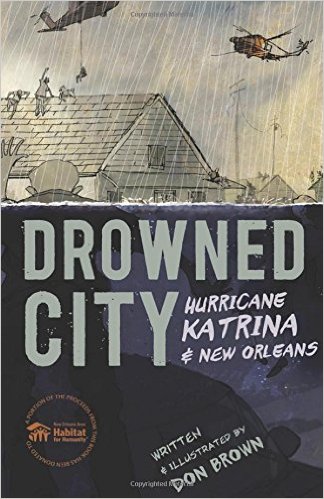
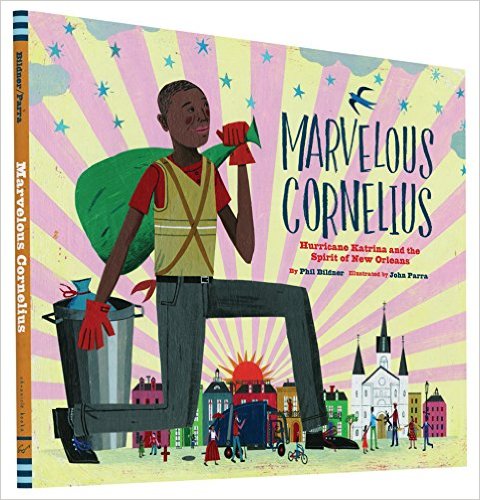
Drowned City by Dan BrownMarvelous Cornelius by Phil Bildner

Fall into Butler

Welcome to the fall semester here at Dominican University GSLIS! The semester began yesterday, and today’s the first day of September, so despite the fact that it’s 90+ degrees outside and meteorological fall doesn’t begin until the autumn solstice….we’re pleased to announce the fall open hours, AND the fall schedule for Butler Book Banter (B3).

We encourage visitors (teachers, librarians, students, parents, grandparents, caregivers, anyone interested in literature for young people) to come in to the Center to view our array of newly-published books for kids and teens, and of course to attend our events.

FALL OPEN HOURS:
Mondays & Tuesdays 1:00-7:00 p.m.
Wednesdays & Thursdays 1:00-6:00 p.m.
Or by appointment (contact me at butler@dom.edu).

BUTLER BOOK BANTER (B3)
I’m thrilled to bring back the Butler Center’s popular series of evening book discussion events! B3 will take place in the Butler Center on the following (TUESDAY this semester!) evenings from 6:00-8:00 p.m.:

Tuesday 9/15: Books about Hurricane Katrina (Drowned City by Dan Brown; Marvelous Cornelius by Phil Bildner)
Tuesday 10/13:
Spooky books (I know, unoriginal perhaps but still fun; titles announced as the date draws closer)
Tuesday 11/10: Books about music and musicians (titles announced as the date draws closer)

Hope to see you here in Crown 214 this fall!

DrownedCityMarvelousCornelius

Mocking the Caldecott

Of course I would never do such a thing!

I am, however, teaching a Mock Caldecott course here at Dominican GSLIS this fall. How fun is THAT? A Mock Caldecott? For graduate credit (PS. It’s open to auditors and students-at-large, so join us even if you aren’t a current student)? Since we’re doing this in the fall semester, voting the weekend of December 12-13, I’m particularly excited to see how our choices stack up against the “real” winners, to be announced during the American Library Association’s Midwinter Meeting in Boston at the Youth Media Awards press conference, January 11, 2016.

I’m in the thick of preparing the course now, and true to the “real” process conducted by the Association for Library Service to Children (ALSC), I’m seeking suggestions from our “membership” (that is, readers of this blog, not necessarily ALSC members, although I hope you’ll join if you aren’t already a member). Which 2015 picture books have resonated with you and/or the children you serve?

I’ll use this suggestion list to get my students started; also true to the real process, they will have the opportunity to make suggestions, write nominations, and–of course, the most fun part–deliberate and vote.

Interested in learning more about the Caldecott Medal, its history, eligibility terms and criteria, and more? Visit ALSC’s Caldecott Medal web page.

Please, please, help me with some good suggestions! Otherwise, I’m left to my own devices, and combing what’s been starred so far by the various journals (noticing weird and meaningless things like the fact that “The Octopuppy” by Martin McKenna and “The Octopus Scientists” by Sy Montgomery and Keith Ellenbogen have both received stars this year).

NIU Children’s Literature Conference

niu conferenceThe 35th Annual Northern Illinois University Children’s Literature Conference: A Celebration of Picture Books takes place on Friday, March 13, 2015 at the Holmes Student Center on the NIU campus in DeKalb. A truly illustrious group of illustrators, including Peter Brown, Laura Vaccaro Seeger, Melissa Sweet, and Gene Luen Yang will speak about their process and product, Alice McGinty, Barb Rosenstock and Suzanne Slade will talk about ways to incorporate nonfiction picture books into school and library settings, and Laura Montenegro, Patricia Hruby Powell and Ruth Spiro will address using picture books to explore cultural diversity and the arts. Oh, and I’ll be booktalking my list of the best books you don’t want to miss (some of them, no doubt, picture books). This will be my fourth time presenting, and I don’t mind telling you that the energy at this conference is tremendous. I’d sure love to see you there!
For more information and to register, visit the conference website!

Mock CaldeNott – January 15, 2015

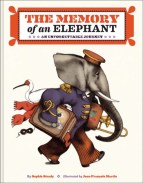
memory of an elephantJoin us for our second annual Mock CaldeNott discussion on Thursday, January 15, 2015! Once again we’ll investigate a collection of extraordinary picture books from the previous year, using the Caldecott terms and criteria as our guide to illustrative excellence. The special component of our experience is that we’re looking at books that are ineligible for the actual Caldecott Medal due to their international provenance. It’s extra-informative and super-fun. You should really come.

Beginning at 5:00pm we’ll have an opportunity to review the picture books in contention (with light refreshments). Indeed, all of the books are currently available for preview in the Butler Center at any time (any time we’re open, anyway).

Our formal deliberations will begin at 7:00pm. Woohoo.

Here are the books we’re looking at:

Two Tough Crocs by David Bedford, illustrated by Tom Jellett, Holiday House, 2014

Fox’s Garden by Princesse Camcam, Enchanted Lion, 2014

Tiny Creatures: The World of Microbes by Nicola Davies, illustrated by Emily Sutton, Candlewick, 2014

Shh! We Have a Plan by Chris Haughton, Candlewick, 2014

Anna’s Heaven by Stian Hole, Eerdmans, 2014

Fall Leaves by Loretta Holland, illustrated by Elly MacKay, HMH, 2014

The Dinner that Cooked Itself by J.C. Hsyu and Kenard Pak, Flying Eye Books, 2014

Mr. Brown’s Fantastic Hat by Ayano Imai, minedition, 2014

Midnight Library by Kazuno Kahara, Roaring Brook Press, 2014

Moví la mano / I Moved My Hand by Jorge Luján, illustrated by Mandana Sadat, Groundwood Books, 2014

Children Growing Up in War by Jenny Matthews, Candlewick, 2014

At the Same Moment Around the World by Clotilde Perrin, Chronicle, 2014

Jim Curious by Matthias Picard, Abrams, 2014

The Mouse Mansion by Karina Schaapman, Dial, 2014

The Memory of an Elephant by Sophie Strady, illustrated by Jean-François Martin, Chronicle, 2014

Rules of Summer by Sean Tan, Scholastic, 2015

Goal! by Sean Taylor, illustrated by Caio Vilela, Henry Holt, 2014

The Big Book of Slumber by Giovanna Zoboli, illustrated by Simona Mulazzani, Eerdmans, 2014

children growing up with warRSVP/Questions in the form below!

← Back

Thank you for your response. ✨

whole round earth

In my children’s literature class I like to introduce different frameworks for our weekly book discussions. Some weeks we consider books through a lens of readers’ advisory service. Sometimes we think about popularity or esoterica. Sometimes we think about separating our personal responses from our professional ones. A week or so ago we engaged in a creative activity as we undertook our discussions. The books on the table were biographies, and the activity was one a recycling craft. It’s an activity I have connected to different books, in different ways. This time around we had a couple of biographies of artists, and we thought about it as an extension of those tests.

Here’s how it works:

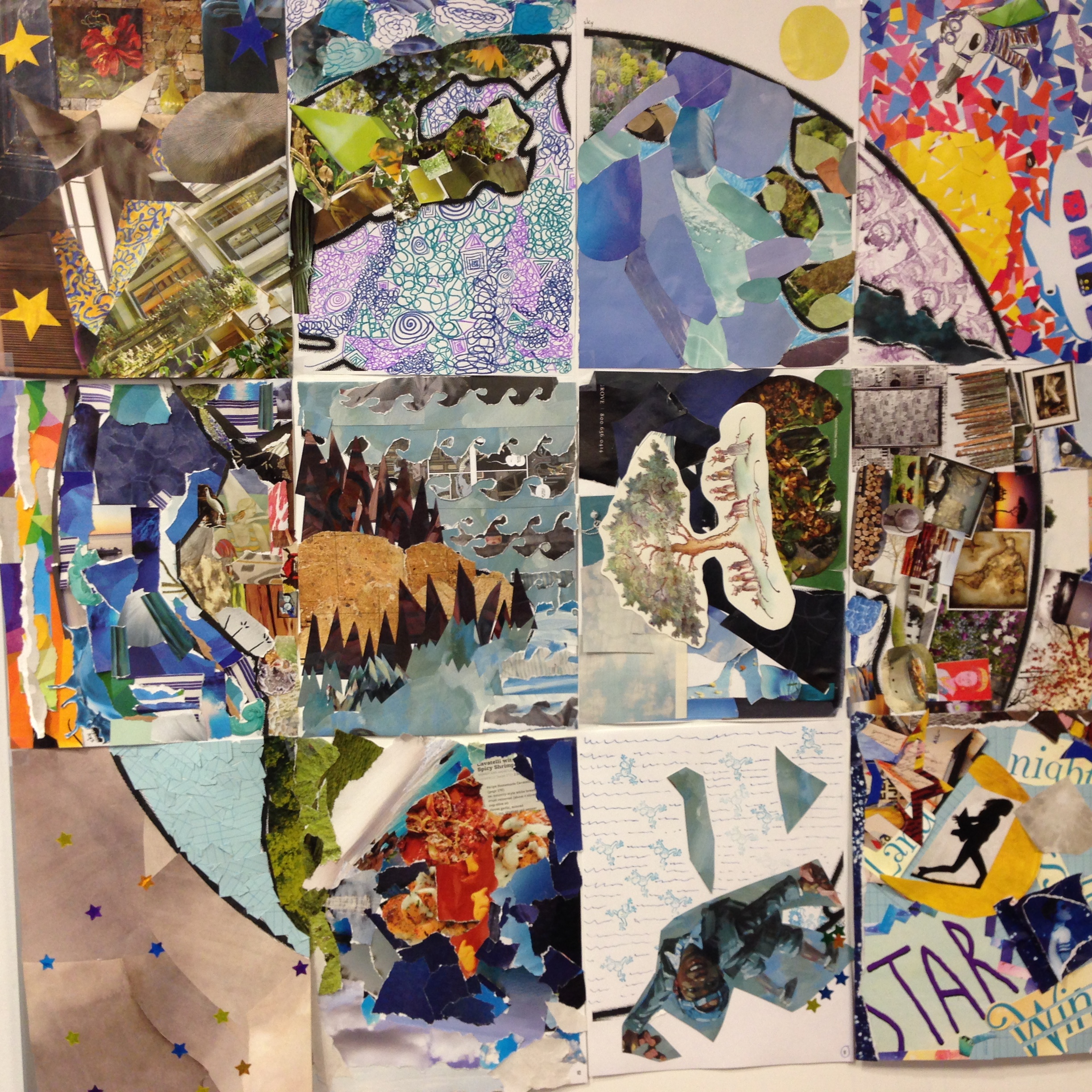
I have a big blown-up line drawing of the globe broken down onto 12 pieces of letter-sized paper which tile together, four-across and three-high, to form a complete image. Each page has markings indicating which parts of the image are air, which are land, and which are water. Then we all fill in the blanks, using whatever we like. I put out a bunch of scissors and glue sticks and old magazines, posters, catalogs, and other paper goods (books that have been withdrawn for condition might be great!), markers and pens, rubber stamps and ink pads, old stickers, felt remnants, leftover foam shapes, etc. The whole idea is that we use or reuse stuff that’s already around, instead of buying lots of stuff special.

And when the individual pieces are done, we assemble them, and magic happens.

To begin with, the assemblies are beautiful. Every time. There’s something about the juxtapositions of all of the different approaches that tickles me no end.

There are metaphorical resonances, too, that are really powerful. The finished product is identifiable as our planet, and as we look at it we understand, deeply, that its beauty comes from its diversity and authenticity. It’s almost as if the planet is only whole when each of us does our part. And then there’s the transformation of what might be considered waste into communicative artwork. It’s just really good.

Here’s a picture of the one we made this semester, and I’ve pasted below a link to the pdf template, in case you’d like to try it yourself!

whole round earth

whole round earth template


Thom’s Rules of Order: Ten Tips for Good Book Discussion

butler center mock newbery discussionHere’s a recent piece I did for the Horn Book about open, inquisitive book discussion. In many ways I’m anti-rule; prescription tends to rub me the wrong way. Still, book discussion benefits from a common framework, and even someone as enamored of the mixture of florals and plaids as I am can probably follow these rules. What are your tricks for staying on topic (and off of nerves)?

pictured: Members of the GSLIS Mock Newbery course discussing books in the Butler Center.

PicWits!

picwits instructionsThis week we wrapped up our consideration of picture books in the Children’s Literature course I’m teaching, and we began class with a rousing game of PicWits! Do you know PicWits!? It’s a party game, much like Apples to Apples, that has players matching cards in their hand to a single phrase, with individuals taking turns choosing which card best represents the phrase in question. What’s unique about PicWits! is that the phrase is a “caption” and the cards in people’s hands are all photographs. You earn points when the chooser chooses the picture you matched to the caption. So, the game’s central point is the visual interpretation of the text. See where I’m going with this?

To begin with, the game is lots of fun. The images themselves represent a huge variety of theme and execution, and are often bizarre, leading to plentiful opportunities for provocative, sometimes outrageous pairings. But beyond the hilarity, our experience gave rise to some really interesting and illuminating thoughts about how picture books function, and what we can and should make of the symbiotic relationships between words and text. Here are some of our ideas:

Possibilities are endless. No matter how clearly you see and understand a phrase, others will see and understand it differently. Even given the limitations of having only a few cards to match from at any given time, there’s still remarkable variety in the relationships established between the single caption and the many visual interpretations offered. Indeed, no matter what picture you match with a phrase, there will be some relationship, even if it is one of tension or discord. Picture book illustrations can take advantage of that same infinite possibility, affecting just as many different responses.

Know your audience. We learned pretty rapidly that different people respond differently to different images. Martina* likes pictures of cute kids. Lynne* hates squirrels (HATES). before too long one learns to play to the chooser, making the match accordingly. We saw a direct parallel between that sort of play, and an illustrator’s attention to audience/age range.

Some pictures are just cute. Some pictures are just cute, and will be chosen, regardless of their interpretation of the caption in question. It’s the way of the world. Similarly, some picture books will find a broad audience due to their visual appeal, irrespective of how well they do (or do not) interpret the text in question or deliver any other literary element. That’s OK. It doesn’t make those bad books. But it is something to remember as we examine large numbers of picture books and parse their success.

The pairing that works is the pairing that works. It can be difficult to predict which pairing is going to capture someone’s attention. Literal is not necessarily best, but neither is ironic. So much depends upon the context, and the players. In terms of connections to picture book evaluation, this reminded us that the only thing we have to judge is the picture book in front of us, and that gives us plenty to talk about!

picwitsHere are a few students going to PicWits! town.

*names have been changed to protect the innocent.

Where Diversity Lives

This week Mental Floss produced a video titled “47 Charming Facts About Children’s Books” hosted by one John Green, wherein the celebrated teen author shares interesting bits of trivia about a selection of iconic books for children and teens. And the video is undeniably charming. The facts themselves, an amalgam of sort of effervescent curiosities, delight with their bubbly humor. And John Green is himself the very embodiment of charm; his simultaneously off-hand and ingenuous relation of this bevy of “facts” is positively infectious. You can watch the video here.

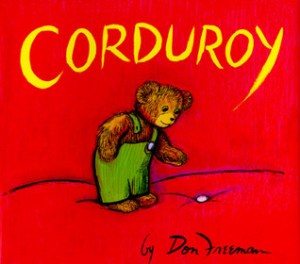
corduroyAs charming as it is, though, this video is also white. Really white. Of the 47 books considered, exactly none of them is written or illustrated by a person of color. We do have Corduroy, by Don Freeman, which features an African American family (though the fact in question is about the stuffed bear). We have a translated book, in Pippi Longstocking by Astrid Lindgren. But that’s about it. Perhaps there was a person of color among the stable of authors writing the Nancy Drew series under the Carolyn Keene pen name.

I find this lack of diversity troubling.

I hasten to say that John Green is one of the good guys. One of the best guys. He is warm and generous and an unfailing defender of broad, diverse reading. He is a brilliant writer and thinker. And he is single-handedly responsible for turning lots (and lots) of young people into young readers (I can’t point to a study that says this, but good luck convincing anybody in the know otherwise). Having been named one of the 100 most influential people by Time Magazine it is no stretch to suggest that his voice is particularly resonant, and in my experience he employs that influence, overwhelmingly, speaking out for justice.

But perhaps that’s what gives me pause. There is a missed opportunity here. Most of these books are undeniably iconic, and I imagine that many of them resonate deeply with the video’s audience. The caption beneath the video proclaims “In this week’s episode of mental_floss on YouTube, John Green looks at the fascinating stories behind the books from your childhood.” I suppose one could make the argument that the list, being  a collection of historical titles, simply reflects the historical lack of diversity in publishing for children. But I’m not buying it.

For, whether or not the video intends to represent a broader swath of children’s literature, it does. Some among us see it, we chuckle and grin, we glow in the nostalgia of our childhoods, and our memories are troublingly homogeneous. Whenever a group of books stands as a sampling of the canon, that collection needs to represent the breadth therein. This video uses its own irresistible charms to reflect the profound charms of the books it considers. It reminds us how deeply the roots of our earliest reading experiences extend. Should not everyone be able to share in that kind of recollection?

Yes, we need diversity on the shelves in libraries and bookstores and in children’s bedrooms. But if we want to find diversity there, we need to sow it, wherever books are told.

Your Story Matters.

With all of the rich conversation going on right now on the CCBC listserv, I wanted to voice my own vision– both connected to the conversation and entirely separate (… I have come to love blurred lines and paradoxes).

We know that, like Megan Schliesman so beautifully stated, THE ONE answer to problems of representation of race and ethnicity doesn’t exist. If there are plural answers, we are all going to have varying opinions about which are correct, which are valid and valuable.

Here’s one thought, among the many:

Let’s do everything we can to let every human being know that THEIR STORY MATTERS. I think if we shift the conversation a bit– from who is publishing or not publishing certain material, who or who is not represented, and blame (the stem and the leaves of the tree)– to a sense of self-ownership and each of us belonging and being valued (the root of the tree), we might get somewhere.

All people have hard issues, deep sensitivities, and a plethora of identities. Each of us wants to be treated as the multi-dimensional person that we are; I definitely want to be seen as more than my physical appearance, more than my cultural identity, more than my age or religion or gender or sexual orientation or my hobbies. But those things ARE me; I can’t separate them out from my story.

So I should tell my story. You should tell your story. You should convince everyone– your friends, your family, your library patrons, the kids in storytime, the people you meet on the train or at the grocery store– to tell their stories. This doesn’t mean that every story will be published as a book for kids (it’s not easy to publish a kid’s book!). But it DOES mean that more people will BELIEVE that they can do it. They can tell their story orally to their grandchildren, they can journal, they can blog about their experiences, they can share anecdotes with friends and family and strangers and their stories will go into the air and might change something. It could change anything! Maybe your story will convince someone else to write something, maybe your story will give someone confidence to get the education they deserve or ignite them to research the publishing industry and how to develop a manuscript and submit. It may sound spiritual, or “self-esteemy” or “woo woo new age let’s go light some incense,” but so much of the stories we hear now are built on shame (think reality TV, magazines, social media, negative self-talk) that it’s no wonder people think their stories are unimportant!

My point is: If more people believed that their story is important, our literature would be a more accurate representation of our diverse world. Sharing story is HARD. It opens you up to vulnerability, possible rejection (think of how many times authors get rejected before getting published!), and critique.

YOUR STORY MATTERS (tell it).