Have You Seen This Website?

Image

There’s not many things cooler than the International Children’s Digital Library (ICDL). Not only does this website contain free ebooks, but it contains literature for children in multiple languages. Here in Chicago, the school system has over 70 different languages represented in its student population. Wow, right? How can we offer these students access to literature in their first language?

You can search in two ways– simple and advanced search. In the simple, kid-friendly search, users can search by “kid characters” vs. “animal characters,” length, even color of the cover! There are books in Spanish, Danish, German, Japanese, Mongolian, Arabic, Swahili, Polish…the list goes on and on.

You won’t find Diary of a Wimpy Kid here, but you will find gems that are endearing, funny, and accessible to all via the Web. Talk about ACCESS and ADVOCACY for ALL. The website states, “Ultimately, the Foundation aspires to have every culture and language represented so that every child can know and appreciate the riches of children’s literature from the world community.” Way to go, ICDL!

Peggy Sharp comes to GSLIS

peggy sharpRespected children’s book authority Peggy Sharp has been touring the country and delighting audiences with her trademark rapid-fire, how-many-titles-can-you-talk-about-in-a-day booktalk sessions for years. This year marks the final tour (Peggy will retire at the end of 2013) and the last chance you’ll have to see and hear her work her magic. She will be at Dominican on November 1st, 2013, with her program “What’s New in Children’s Literature: A Look at the Latest Children’s Books and How to Use Them in Your Program,” jam-packed with ready-to-use-tomorrow ideas.

Preview the best new children’s books: fiction, nonfiction, picture books.

Learn about the future of children’s books and current hot topics in the world of children’s literature.

Discuss the latest technological developments in the world of children’s literature.

Earn 7 CPDU’s!

All participants will leave with extensive annotated bibliographies in a comprehensive resource handbook full of outstanding ideas.

$130 fee includes lunch, breaks and handouts

For more information and to register, visit http://gslis.dom.edu/newsevents/whatsnew2013

Questions: Call (708) 524-6054

Fifty Shades of Ambiguity

As we enter the second week of the federal government shutdown and consider the particularly polarized nature of the DC discourse itself, and the coverage of same, it is hard not to conclude that we have arrived, as a country, at some sort of cultural impasse. Our two-party system seems to have devolved into a he-said-she-said standoff full of bull-headed bravado and empty of reason. And as if the certainty of the politicians wasn’t enough, all of us in the peanut gallery, regardless of which side of the divide we’re spectating from, are equally certain about who’s right and who’s guilty. 100%.

Uh oh.

It seems that the very idea of challenging our own assumptions, wondering about our choices, even changing our minds, is an endangered species.

Part of the reason I do the work I do, in fact, a big part of the reason, has to do with raising up a generation (or 12) of critical thinkers. Kids enter the world with an incredible openness and curiosity, and it is through their cultural “education” that they let go of these possibilities in exchange for a sense of certainty. But those of us who endeavor to connect kids with stories understand the role those connections can play in keeping the wonder gates open. Meeting up with other people (and bears and vampires and cupcakes) in books allows kids to experience things they can’t or don’t experience on their own. Yet. And reading books that expose them to different sides of the same story lets them know that, usually, there is more than one side.

There are, happily, many books for young people that acknowledge, and even celebrate ambiguity. Let’s take a look at a few books about some of our founding fathers. The current debate is fraught with invocations of their fundamental perfection. And yet, there are some books out there, books for children no less, that see them as the people they really were, humanity and all.
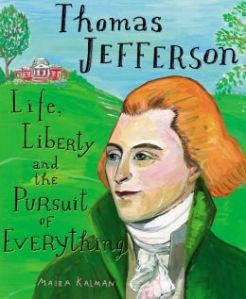
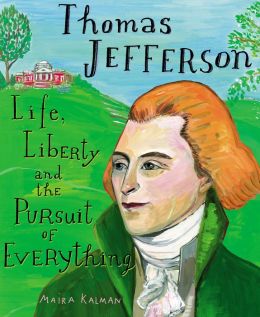
thomas jeffersonIn her upcoming picturebook biography Thomas Jefferson: Life, Liberty and the Pursuit of Everything, Maira Kalman makes the most of her brilliant, quasi-surrealist stlye, painting a portrait of the nation’s third president that expresses the dynamic breadth of his interests and the depth of the passion he brought to them in her wondrous tableaux of electric colors. We learn of diverse pursuits, the art and architecture, science, botany, etc. We learn of the care and generosity with which he ran his house and his infamous Monticello estate. We learn of his public pronouncements about the evils of slavery. And we learn about the slaves he kept himself, including one Sally Hemings, who, it is believed, bore him a number of children. In the mainstream media much has been made of Jefferson’s alleged relationship (so much, in fact, that some would say the allegations are proven) but we do not always see such admissions of guilt in books aimed at young children. But in her direct and unapologetic treatment of the whole man, Kalman ultimately paints a portrait that is more compelling for its inclusion of flaws.
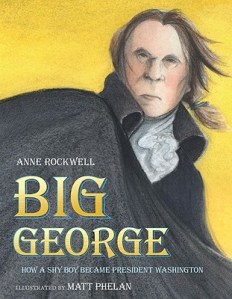
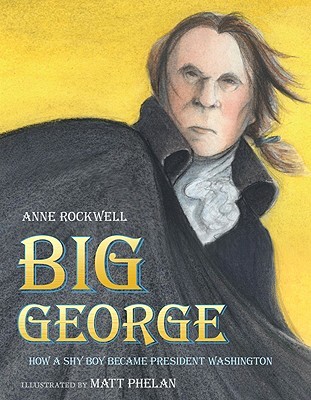
big georgeIn Big George: How a Shy Boy Became President Washington, author Anne Rockwell and illustrator Matt Phelan paint a similarly human portrait of the first of the founding fathers. Right from the start, before we even open the book, we see a different George Washington than the one we’re accustomed to, younger, sadder, and maybe, even, angry. And then we have a subtitle suggesting that he’s shy, a characterization markedly different from the man pictured. The portrait that follows is just as complex and nuanced as the cover promises. Instead of the iconic truth teller of cherry trees and wooden teeth, we meet a man of soft speech and quiet ways. We meet a man reluctant to assume the responsibilities thrust upon him but resigned to his duties. We meet a man. Throughout the book there are tensions between the text and the illustrations, which positively vibrate with the conflicts Washington experienced throughout his life. This is another portrait of an American “hero” that transcends the ordinary hero worship to offer a bigger picture actually worthy of its subject.

The thing to remember is that kids start out smart. They start out ready to think and learn and grow. They wonder. They change their minds. And the best authors and illustrators making books for them see in them the potential to stretch and grow, and challenge them accordingly. There is an inherent and profound respect in asking a lot of a child audience, setting our standards high and believing in their capacity to meet them. In my experience, kids give you what you expect of them. If you expect little, that’s what you get. If you expect everything, look out. I expect them to think and to change their minds.

Of course, I expect this of my politicians, too, and of late I have been sorely disappointed. But if we stick to our commitment to raising up the next generation with open curiosity, I have every faith that we may yet live up to our sizable ideals as a nation of thinkers.

Thomas Jefferson: Life, Liberty and the Pursuit of Everything, by Maira Kalman, Nancy Paulsen Books, 2014.

Big George: How a Shy Boy Became President Washington, by Anne Rockwell, illustrated by Matt Phelan, Houghton Mifflin Harcourt, 2009.

Odd Duck

Odd DuckOdd Duck
by Cecil Castellucci & Sara Varon
First Second, 2013

The phrase feels like a relic from an older generation, like bee’s knees. Indeed, when I occasionally say it, I can feel the echo of my parents’ voices in my lungs. “She’s a bit of an odd duck, isn’t she?” It’s almost – almost – an endearing phrase – not quite as nice as “marches to the beat of a different drummer” but a similar notion. Just enough of a raised-eyebrow judgment to acknowledge a differentness in another.

The title’s slightly nostalgic phrase makes me not at all surprised its artist is the quirky, kooky Sara Varon, whose Bake Sale was a deliciously different cookie of a book as well. In Odd Duck, she brings her signature omnisciently-bemused labeling to the endearing details of Cecil Castellucci’s story and character, including duck-protagonist Theodora’s morning rituals (“Quaking exercises, for perfect pitch and tone”), her occasional unorthodox shopping choices (“Duck food, just like all the other ducks…but also…mango salsa! Huh!”), and her eventual disapproval of the new neighbor Chad (“Feathers ASKEW!” and “Violent dancing!”). Details including rotary phones and Theodora’s lavender cloche-like bonnet (complete with a decorative, metaphorically-foreshadowing bee) insist the story is set in some bygone era. The ducks’ wide-eyed expressions and wiggly, spaghetti-like limbs (again, “Violent dancing!”) call to mind the Steamboat Willie days of early cartooning, or perhaps today’s decidedly-retro hit “Adventure Time” on Cartoon Network.

Early in the story, Theodora wishes on a star “that nothing in her happy life would ever change.” She is clearly as sentimental and vintage as her artist’s style suggests. And of course the new neighbor throws a bit of a wrench (nearly literally, as he is a builder of strange modern sculpture) into her life. She is initially offended by his unrefined mannerisms and disheveled appearance until they find some common ground on the ground: both decide not to fly south for winter. Bonded by this quiet rebellion against the birds-of-a-feather rule – a glimmer of the uncompromising nature of each of their odd-duck-ness to be fully revealed and reveled in by the book’s end – Theodora and Chad become fast not-so-fair-weather friends.

The odd-duck odd-couple’s charm lies in their utter contentment with themselves. Up until a critical plot point in which they overhear a stranger’s comments, it never occurs to either party that he or she holds the title of oddest duck. Their mostly unencumbered sense of self and gentle stubbornness to be anything else is such a delightful match to Castellucci’s story and Varon’s artwork. It’s a reading experience so well done and delightful it’s sure to inspire its readers to embrace the odd in themselves.

Adrenaline Fix

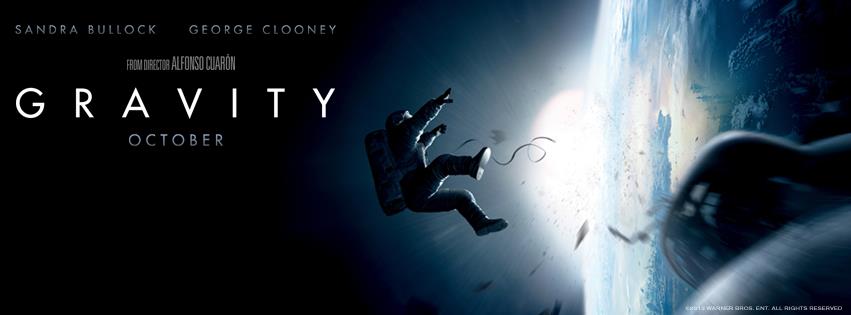
gravityI’m really not much of an adrenaline junky. Sure, I like a roller coaster as much as the next person (though I am now, sadly, too tall to ride most of them) and I’d follow Jason Bourne anywhere. But friends will tell you that all I catch of a screen thriller is what I can see between the fingers pressed firmly over my eyes. I hear even less (my thumbs are blocking my ears). And it takes a good nine hours to watch one from the comfort of my couch, what with all the pausing and walking around the living room shaking out my hands. And yet I find myself strangely addicted to the trailer for the new Alfonso Cuarón film Gravity. The first time I saw it in a theater the hair on my arms was standing up for a good five minutes, and I have worn out the various views on the YouTube (like this one and this one).

And it all has me wondering about a corollary interest in take-your-breath-away books. What are the reads that have left me gasping?

the white darkness The first thing that came to my mind is Geraldine McCaughrean’s Printz-winning The White Darkness which, quite frankly, scared the bejeezus out of me. This story of a shy girl with a hearing impairment and an historically accurate imaginary friend who accompanies her uncle on a mysterious trip to Antarctica compounds the menace of an unhinged villain with all of the terror mother nature can muster. Good night that book is scary.

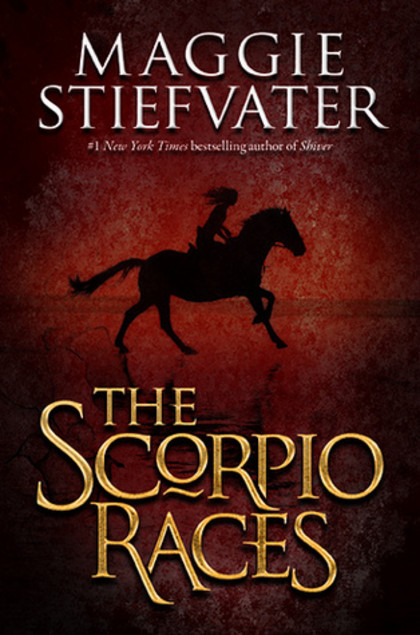
the scorpio racesThe Scorpio Races by Maggie Stiefvater raises hairs in an entirely different way. This is the story of the deadly races that happen every autumn along the shores of a Celtic Island where men capture and train capaill uisce, fierce, carnivorous horses that rise from the sea. And this time, for the first time, young Puck will be the first woman in the race. Much hangs in the balance in this taut drama, but it is Stiefvater’s evocation of the fearsome horses themselves, all teeth and muscle and blood and bone, that is so spine-chilling.

The_Great_Wide_SeaAnd then we’ve got something like The Great Wide Sea by M.H. Herlong that delivers its fright straight through the realm of possibility. Three boys set out on a year-long sail around the world with their father, broken by the recent death of their mother and clearly spinning outside the reach of responsibility. Tensions on the little craft are bad enough, but when the boys awake one morning to find the deck empty and their father gone, fear sets in. Slowly the boys’ resilience weakens as life becomes increasingly precarious and survival starts to slip from their grasp.

And what about you? What are your favorite tales of terror? Hit us up!

Kinship Project

voice from afarThe Butler Center opened in its permanent space two years ago today on September 11th, 2011, the tenth anniversary of that infamous day in world history. To commemorate that occasion we curated an exhibit called the Kinship Project, a collection of books for children and teens that speak to our human kinship. We created a catalog with notes that speak to each of the 29 books connection to the idea of kinship. I link here to the online version. We have some print copies as well (beautiful, actually) and I’d be happy to send some along to you, too. Just fill out the form below with your name and address and I’ll get them in the mail.

← Back

Thank you for your response. ✨

Warning
Warning
Warning

Warning.

How about you? What do you remember of that day? What do your memories have to say to your work with books and young people? Where do you see kinship among the collections we keep?

Picture Books about Loss

myfathersarmsareaboatThe most recent Horn Book includes my article on picture books about loss in which I argue for the forced subjection of preschool children to books about death. In storytime. This gets right to my abiding belief in the importance of grounding our work in mission. Is there a purpose to storytime beyond entertainment? What might that be? And what can we do to invest our programs with deeper meaning? Read three-year-olds books about dead dogs, of course!

Seriously, though, let us remember, always, that children’s library experiences are formative. This is especially true of very young children. If I want teens to think of books and stories as an integral part of their emotional well-being (and I do want that, very much) then I had better make sure that their earliest literary experiences show them how and where books and stories fit. Young people will never know the breadth of our collections if we hide it from them. And they will never believe in their rights to all stories unless all stories share the same spotlights.

That’s what I think. What do you think?

Here’s the article: “What Makes a Good Picture Book about Loss?

if you want to see a whale.

if you want to see a whaleif you want to see a whale.

Written by Julie Fogliano, illustrated by Erin E. Stead.

A Neal Porter Book, Roaring Brook Press, 2013. ISBN 978-1-59643-731-9

Quiet and lyrical, this picturebook (created by the same team as And Then It’s Spring) celebrates childhood in its playful energy and its deep contemplation. Fogliano’s minimalist poetry flows off the page like maple syrup; yet, the text is not without structure. Fogliano uses assonance and alliteration effectively and intelligently throughout the story, using fun phrases such as “whales won’t wait for watching” and delicate ones such as “ship that is sailing” and “flag that is flapping.” Stead’s signature illustration style of muted pastels and purposeful negative space compliment and extend Fogliano’s artful text. As I experienced this story, I couldn’t help but put myself into the young character’s shoes, imagining, remembering and creating images in my head about my own childhood journeys.

I was left with many thoughts and feelings after I finished this book, but the most significant was a personal meditation on patience and discovery. After a first read, it might be easy to think that seeing a whale is the most important thing for this young boy. After all, it is the title of the book. Yet, I think the text and image are purposefully juxtaposed here. Yes, the text states, “You’ll have to just ignore the roses,” and “Don’t look way out and over there to the ship that is sailing.” But, the boy doesn’t ignore the roses, and he does look way out and over there. During the majority of the book, the boy isn’t seeing a whale. Rather, he is exercising patience for the future and truly experiencing the beautiful things of every day. Most days aren’t monumental, right? Most days, we don’t have promotions, our babies aren’t born, our books aren’t published, and the love of our life doesn’t knock on our door with 1,000 yellow daises. Rather, we write emails and cook dinner and help with homework and come home to chaos or maybe empty apartments. The days of actually “seeing the whale” are fabulous and memorable and obviously grand. But we have to be patient to discover them. Maybe Fogliano and Stead are saying that the whale has always been there all along, hanging out in our minds and hearts. We just have to open our eyes to the every day to finally see it.

On a side note, I adore the dog in this picturebook. I love the tilt of its head, the way its back arches when it smells roses, and the way it follows the boy around in every spread, just like dogs do.

And the book trailer is awesome.