Bluefish

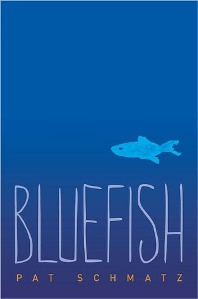
Bluefish by Pat SchmatzRecently during some pretend-play time, my two-year-old niece tucked me into bed and read me a bedtime story.

Of course she didn’t really read it to me. With each illustration, her memory triggered from the countless times Daddy read Olivier Dunrea’s Ollie aloud, and she recited each word flawlessly. A kind of decoding, it could be argued, but not true reading.

Yet for a blissful moment as I snuggled under a doll-sized blanket, I could imagine it. Reading is so commonplace, so easy for most people in my life, I could momentarily believe that this tiny person, so recently a baby, was reading me a story. It felt natural. Normal.

Yet it’s a remarkable feat, isn’t it? Gorillas can learn some basic sign, and dogs can apparently be trained to recognize words, but no other species comes close to the incredible things we can do in speaking, reading and writing. Phonemes come together to represent ideas, and then those sounds are further represented by these symbols on the page. It’s decoding that’s two abstract layers deep, yet somehow we all manage to master this skill by the time we’re still young children.

Well, most of us do.

In Bluefish we meet a 14-year-old protagonist who cannot read. We aren’t aware of that information at first. Like the parents and teachers who know him marginally, we might see Travis as indifferent. Guarded. Maybe a little rebellious or even lazy. A typical teenager, no? If only he would try harder. If only he would apply himself.

But then we learn of his problem, and we think of how little we know anyone. How much we can assume. And how mountainous of a task it would be to catch up to peers ahead of you by 10 years of reading.

Thank goodness he’s not alone. One wise teacher catches on, and with pointed references to The Book Thief, he has him start circling words just as Liesel did. An eccentric classmate, Velveeta, eventually figures it out as well, and offers her help. But there’s no romantic eureka moment in this process. It’s slow, often frustrating work. Velveeta, eager to see results, makes a painful mistake after a failed tutoring attempt:

“Travis, come on. You didn’t even try.”

Try. That word torched fire-hot.

Of course he’s trying; it’s the single most important skill in society. He can’t read, but he’s not a fool.

How many of us fervent readers might ask him to try harder? How easy it seems now, our linguistic synapses established so long ago. I see myself in Velveeta, eager to help and a bit clueless how to do so. Here’s something she’s good at, something she perhaps can fix – a marked difference from her own problems hidden beneath her exuberant exterior. Though Velveeta can’t fix Travis’ reading problem, she can be his friend, with all the trust and acceptance (and, yes, mistakes) that come with the job. And he can be hers right back.
For your consideration

As the days get shorter and the wind gets colder and people put Christmas lights up right after Halloween, our thoughts turn to Caldecott contenders (well, my thoughts do, anyway). So over the coming days we’ll be putting forward some books on our Caldecott radar.

This Moose Belongs to Me

Oliver Jeffers

Philomel, 2012

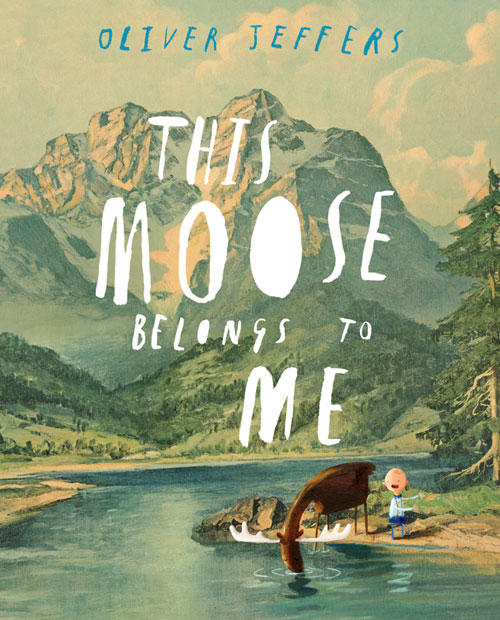
This is the story of Wilfred, a boy who finds and adopts a moose, and Marcel, the moose who will not be adopted. There is so much to love about this book: gentle humor, indelible characterizations, careful pacing. The Caldecott Medal, of course, is awarded for particular criteria, though, and “Thom loves it” didn’t make the cut. Luckily, this wonderful book excels with the actual criteria as well. Indeed, each of the wonderful elements mentioned above is achieved in the illustrations. Indeed, all of them are realized, to a high degree, in the illustrations. The incongruous background material, pixelated Romantic landscape paintings and Victorian engravings, amplifies the situational humor, giving it tone and color. Similarly, even though Wilfred’s behavior gives us the skeleton of his persona, the remarkable, gestural facial expressions take it home. Even the Moose singular apple obsession finds subtle expression in his square countenance. And the book’s design, the varied use of panels, blank backgrounds, image-filled word balloons, and even combination of typeface and handwriting, fixes a perfect pace. This is a picture book that gets better and better with multiple readings. Here’s hoping that it is being read again and again.

The List

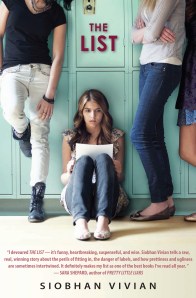
the-list-siobhan-vivianWhen I was in middle school, I wrote a story that was printed in the school lit magazine.  It was about a girl that is so obsessed with the upcoming dance and what’s she’s going to wear that she forgets to look both ways crossing the street and is fatally injured in a car crash. Yes, I was an angry teenager. It was this kind of juvenile catharsis that I expected from The List by Siobhan Vivian. I gleaned from the cover flap that the story revolves around an actual list of the prettiest and ugliest girls in each grade. Apparently it comes out every year right before homecoming and somehow no one knows who makes it and the school administration does absolutely nothing about it. I imagined “pretty girls” and “ugly girls” discovering they had more in common than they thought. I saw an eating disorder somewhere in there. And I hoped for at least one pretty girl getting blood dumped on her or being horribly disfigured in an accident. Entertaining, maybe. But I’ve (almost) moved on from all the bitterness and insecurity of my teenage years. As a mature and confident adult I find reading about these kinds of stories shallow and boring.

I was wrong. And right. This is undeniably a book about body image and identity. There is, indeed, a girl with an eating disorder. But that’s just a hook. Vivian uses the list and the inevitable drama it creates as a way to drop a bomb into the lives of girls who are fully realized characters all on their own. They are worried their boyfriend is ashamed of them. They hate their mothers. They lost their virginity and aren’t ready for the emotional consequences. They just don’t want to be friends anymore. With alternating chapters from the voice of each girl on the list, readers can dip in and out of these girls’ lives drawing the larger thematic connections where they want. I have to hand it to Vivian for holding the plot together across eight different points of view. By the end, I not only felt I really knew each girl, but I really wanted to know who wrote the list. And then I remembered that I’m a mature and confident adult…and stopped judging books by their cover.

Wonder Show

Wonder-ShowSince reading Wonder Show I’ve had the chance to tell a lot of people about it. Every time, I find myself outlining the plot for them. There’s a girl, I say, who is abandoned by her family and sent to a home with a sadistic head master. She’s mistreated, I tell them, but also possibly guilty of a terrible crime. And so she escapes to a traveling freak show, which is when the story really begins. Oh, they say, cool. And after they have politely smiled and nodded their head, I realize that I have failed. They think this is just another novel. I could go into more detail, sure. I could point out what a relief it is to read a book written for young adults that is not entirely in the first person. I could talk about how Barnaby weaves together the omniscient voice of the narrator, pieces of diary entries, letters, lists, and chapters from the viewpoint of tertiary characters. I might explain just how rich those characters are, that they are not just a quirky backdrop for the adventures of the protagonist, but are on journeys of their own deeply woven into the larger narrative. I could talk about how the book is really about the power of storytelling and how we define, burden, and limit ourselves with the stories we tell ourselves about who we are.  But who would listen? I’m not the storyteller that Barnaby is and even if I was, most people don’t want to hear about anything but the plot. They want the coming attractions that show exactly what is going to happen and reveal all the best jokes. But sometimes, the story is all in the telling. And Wonder Show is that kind of story.

Gifts of Information

Our last stop on the holiday book recommendation train includes some books about real, actual people and things.

Chuck Close: Face Book

Chuck Close

Abrams, 2012

The famous portraitist tells his remarkable story, overcoming severe dyslexia, prosoagnosia (the inability to recognize faces) and paraplegia to become one of the most celebrated artists alive in an interactive book brimming with stunning detail. A class of fifth grade students in Brooklyn asks him questions, and his candid, matter-of-fact responses give us a picture of the artist just as clear and impressive as the portraits he paints of others. Exquisite, tactile and inspirational.

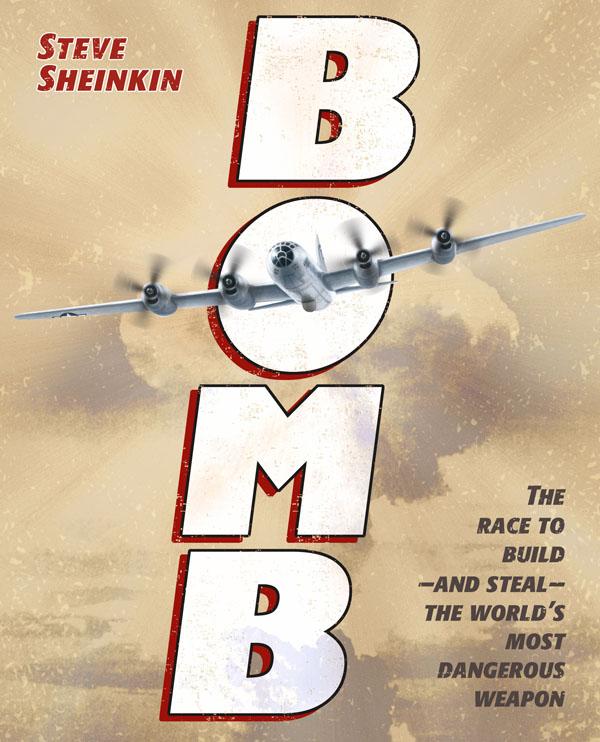
Bomb: The Race to Build–and Steal–the World’s Most Dangerous Weapon

Steve Sheinkin

Macmillan, 2012

In this un-put-downable record of the Manhattan Project historian Sheinkin weaves three distinct narratives into an utterly compelling page-turner about spies, science and sabotage with abundant facts and indelible lessons. It’s always a pleasure to follow an enthusiast on a literary exploration, and the velocity of this particular journey makes it is especially exciting. Gripping, informative and scrupulous.

Children’s Book-A-Day Almanac

Anita Silvey

Macmillan, 2012

For the children’s-book-loving adult on your list, this treasure trove by noted critic Anita Silvey makes a different recommendation for every day of the year and comes overflowing with corollary tidbits of fascination. Look for Silvey’s book-a-day for more suggestions and more fun.  Erudite, expert and comprehensive.

Novel Gifts

Our holiday gift recommendations continue with a few novels we think young readers might enjoy.

The One and Only Ivan

Katherine Applegate, illustrated by Patricia Castelao

HarperCollins, 2012

Ivan the gorilla is resigned to his life in a glass enclosure at the Exit 8 Big Top Mall and Video Arcade. But when Ruby the baby elephant arrives, Ivan commits himself to winning a better life for her. Applegate crafts a natural and believable voice for Ivan, at once plain and poetic, and with it will break your heart (in the best possible way). And Castelao’s gentle gestures only add to the grace. Beautiful prose tells a beautiful story. Poignant, emotional and uplifting.

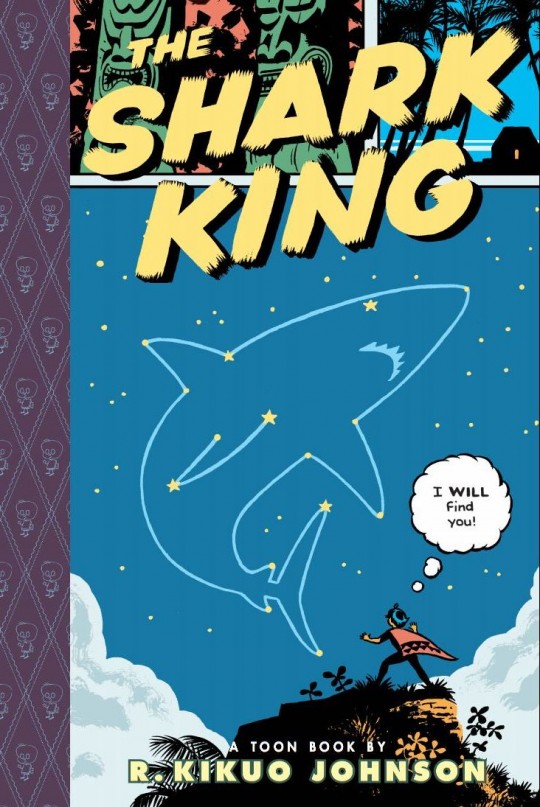
Shark King

Kikuo R. Johnson

Candlewick, 2012

A Hawaiian legend about a shape-shifting boy who becomes a king is just the thing for a picture-perfect beginning reader with graphic illustrations, comic book panels, word-balloon dialogue and ebullient excitement! Those familiar with the tropes of the graphic novel will appreciate the care with which they are observed, and those new to the format will enjoy its immediacy and its fun. Bright, smart and ebullient.

Code Name Verity

Elizabeth Wein

Disney-Hyperion, 2012

Shot down behind German lines during WWII, and enduring starvation and torture, Julie trades Allied secrets for prolonged safety and a few trifling comforts. Or does she? Wein’s startling novel weaves espionage, honor and indelible friendship into a gripping, revelatory package. Fierce readers will appreciate the investment required to dig through the obfuscation and retrieve a singularlygratifying literary reward. Dense, complex and thrilling.

Picture Book Gifts

Ready or not, holiday shopping season is upon us! The Butler Children’s Literature Center has your back. In a season overcome with ill-fitting sweaters and batteries-not-included gadgets, books make the perfect gift. These titles promise afternoons full of cozy, fireplace-adjacent escape, and there’s absolutely no assembly required.

Let’s start with some picture books:

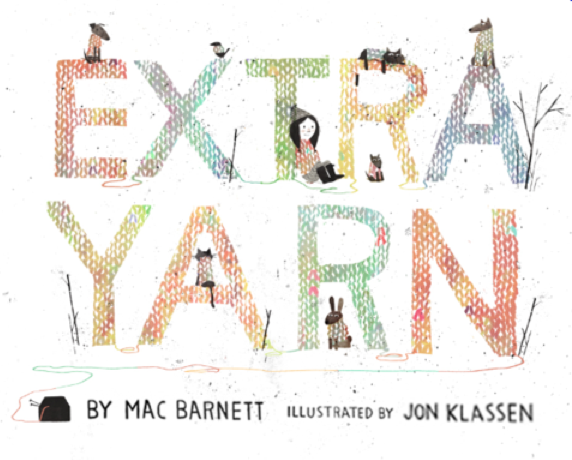
Extra Yarn

Mar Barnett, illustrated by Jon Klassen

HarperCollins, 2012

A young girl discovers a mysterious box full of a seemingly inextinguishable volume of yarm. She knits sweaters for all of the people in her coastal village, and, with yarn to spare, knits sweaters for the buildings, the trees, and everything else stationary. An evil Archduke absconds with the magical box, but the truth will out. Barnett crafts his story with care, paying special attention to the ace with which it unfolds, and Klassen yarn-bombs the entire outing with an irresistibly cozy charm. Warm, sweet and lovely.

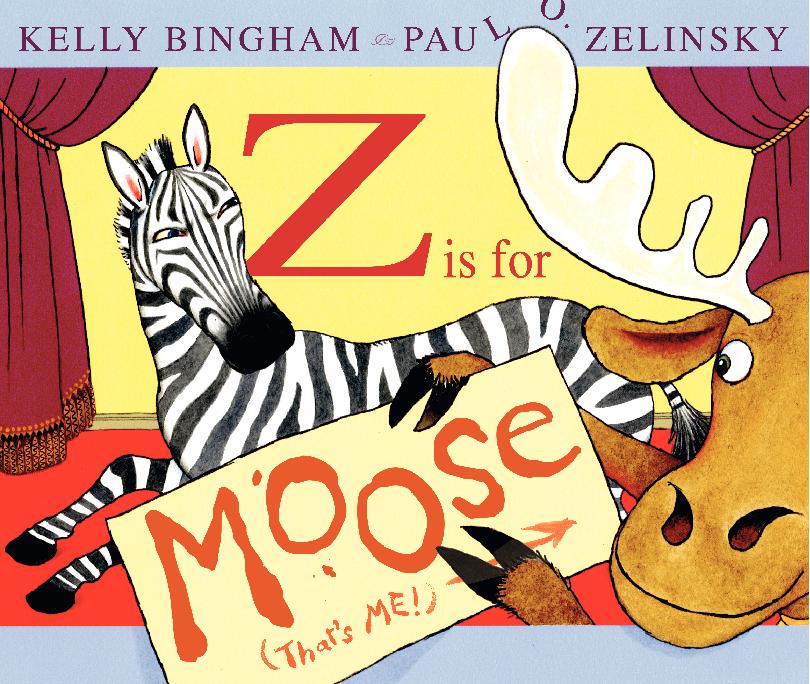
Z is for Moose

Kelly Bingham, illustrated by Paul O. Zelinsky

HarperCollins, 2012

Zebra is staging an alphabet book and is busy corralling a cast of characters to represent the different letters. When Moose’s letter is up and Mouse takes his place, bedlam ensues, with hysterical chaos leading to a heart-warming finish. Look for the (many, many) little alphabetical details happening off stage that only add to the boisterous clamor. Hilarious, irreverent and satisfying.

Nighttime Ninja

Barbara DaCosta, illustrated by Ed Young

Little, Brown, 2012

A stealth ninja sneaks through a house at midnight in pursuit of treasure of inestimable value. Just as the prize is in his grasp, his mother flips on the lights, seizes the ice-cream and sends him back to bed. With tight formatting, sinuous prose, and a masterful match of words and pictures, this one will be requested again and again. Gorgeous, funny and irresistible.