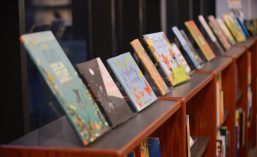
Welcome to the online presence of the Butler Children's Literature Center, housed within Dominican's School of Information Studies, Crown Library room 214. Here, we celebrate the best in books for youth and those who delight in sharing them. For Fall 2026, BCLC will offer collection access to the Dominican community and general public during posted open hours: Monday, Tuesday, Thursday, and Friday 9am-4pm, and by appointment with the Curator. Contact Jen Clemons at butler@dom.edu or jclemons@dom.edu to make arrangements.
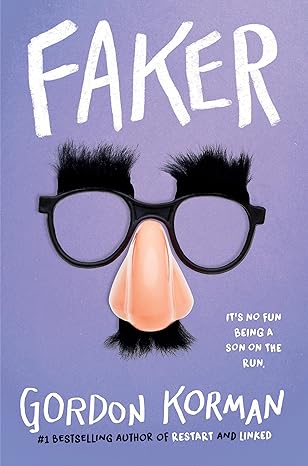
Faker Gordon Korman Scholastic Age 8-12 July 2, 2024
Is Trey really defined by what his family does? Confidence man, liar, criminal… Faker? Living a high-end life funded by his father’s career as a con artist, Trey and his little sister are in on the game, to reel in families in a series of prep schools and wealthy communities. Settling into what could be their biggest score yet—the big kahuna—a fictional electric car start-up looking for investors, he begins to question it all. An influential middle school ethics teacher and his activist daughter open Trey’s eyes to the morality of the “family business” and a growing disillusionment with how it affects those around him.
In the authentically conflicted voice of an adolescent boy, Korman gives this realistic fiction tale a twist. What if this boy was a con trying to go straight? Then he adds all the middle school conflict that comes with friendships, family drama, and questioning parental authority. Is Dad right that no one is hurt when you take from the rich? Brisk plotting and snappy dialog mirror the pace of Trey’s quickly developing conscience. “I can’t believe I ever thought it was anything more than stealing” (p. 170). Trey matures throughout the narrative, getting involved to rehab a local park and discovering that a new friend is also part of a con artist family, efficiently driving the final action. In a conveniently tidy conclusion, he makes a dramatic decision—they all go straight, return the money, and build the stable home life Trey always wanted. A funny and fast-paced coming of age story for middle schooler readers that want a side of crime with their family drama.
Your Vote Matters: How We Elect the US President Rebecca Katzman Illustrated by Ellen Duda Scholastic Inc May 7, 2024 Age: 7-10
Selecting a new US President is no easy task, and neither is understanding how it all happens. With this fun and informative explanation of the process, journalist Rebecca Katzman introduces upper elementary schoolers to this aspect of the political process and just how important their voice is to the outcome. Combining civics, history, and governmental fun-facts (do you know how astronauts vote from space?), kids will cover basic facts about the presidency and government, campaigns, voting, the post-election-day process, and what it means to be president. This title is more than just a high-level overview and provides everything from a simple visual explanation of the three branches of government to a more complex, but age appropriate, discussion of the Electoral College. Katzman includes plenty of suggestions for how kids can get involved in the process—from watching debates to writing to politicians—even if they can’t vote for another 10 years. In largely unbiased language, with some swings to the left in discussions of voter suppression and the peaceful transition of power, past and present elections are explored and vocabulary explained with on-page definitions and a thorough glossary. Illustrator Ellen Duda creates a bright and visually engaging combination of drawings, photos, maps, and charts. The full-color, matte pages and dynamic organization help to make the information more accessible to this young audience. Knowing how elections work and our role in them is one of our civic duties. This primer on the election process will introduce political concepts and the importance of our vote as our voice in what matters.
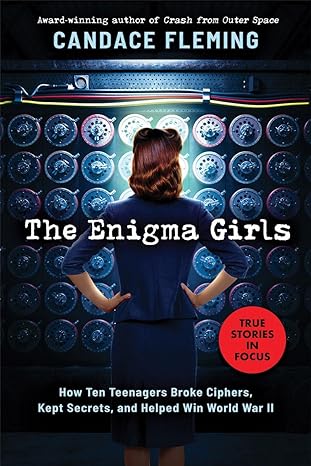
The Enigma Girls: How Ten Teenagers Broke Ciphers, Kept Secrets, and Helped Win World War II Candace Fleming Scholastic March 5, 2024 Age 8-12
It wasn’t just the boys doing their bit for the war effort during the harrowing years of World War II. Sibert Award-winner Candace Fleming follows The Enigma Girls, ten young women working with the British government, cracking ciphers and codes to help win the war. Based out of Station X at Bletchley Park, a once top secret center of the British intelligence, thousands of people (nearly ¾ of them young women, p. 237) worked night and day intercepting, decoding, transcribing, translating, and cataloging secret communications from German, Italian, and Japanese government and military leaders. Walking chronologically through the war years (1939-1945), Fleming introduces each woman as she’s recruited into the sphere of Bletchley Park, snippets of her life before, during, and after the conflict, and her often emotional reactions to the exhaustion, secrecy, and triumph of the work.
The brisk pace and simple, yet engaging prose of this narrative nonfiction title pull readers into the frantic feelings and tense atmosphere of Station X. Fleming balances that emotion with well-explained vocabulary and intra-chapter information about codes and code breaking. Extensive photo documentation of Europe at war and Bletchley Park in particular bring the horrors of war and high stakes of the work to vivid life. Due to the clandestine role that the women and Bletchley played in the war, primary source material from the time is limited. Fleming’s source notes show extensive research into the biographies and autobiographies of the women (most of them wrote of their wartime experiences once they were allowed), and archives in Britain and beyond. Other backmatter includes thorough source notes, photography credits, and author’s note, and an index to come (not included in the reviewed ARC).
A deftly crafted tribute to the unsung young women whose efforts often turned the tides of battle, saving the lives of allied servicemen.
The Dubious Pranks of Shaindy Goodman By Mari Lowe Levine Querdio Published November 7, 2023 Age 10-14
Awkward and excluded, 12-year-old Shaindy Goodman just wants to fit in with the girls at Bais Yaakov Middle School. When she’s invited by Gayil, the queen bee next door, to help with a series of pranks, she shrugs off her misgivings in favor of acceptance. Helping out with some harmless jokes, even if it means breaking into school, may be her chance to find friendship. Shaindy quickly realizes the pranks are more mean-spirited than high-spirited, and that only certain classmates are being targeted. Naïve to Gayil’s manipulation, she feels guilty but hopes for the best until the mischief and hard feelings are all pinned on her. As she finally understands Gayil’s acts of revenge for an unintended slight, she lets go of her own anger for lessons of penance, forgiveness, and taking responsibility for her actions.
Lowe uses the period of the Jewish High Holidays of Rosh Hashanah and Yom Kippur, as well as their lessons, as a frame for this middle grade drama of judgement and atonement. She crafts a well-rounded and sympathetic character in Shaindy, expressing a universal need for friendship and belonging, and the way tweens and teens often make poor decisions in search of them. The plot and pace of the title move quickly through the season, mirroring the way bad choices can often lead to snowballing consequences. Moments of lightness, Shaindy’s struggle with roller blades, and final closeness with her sister help temper more serious content and lead to a satisfying conclusion. In the penultimate scene, a classroom of girls offers each other silent acknowledgment of wrongs and forgiveness for them. The wise words of a teacher, “The hardest thing many of you will do in your lives… is admit you were wrong,” (p 155) is a life lesson for those of all ages and religious backgrounds.
The Improbable Tales of Baskerville Hall Ali Standish Harper Collins Children’s Books Age 8-12 Available September 12, 2023
In a middle-grade twist on the Sherlock Holmes stories, a brilliant young Arthur Conan Doyle accepts a full scholarship to a mysterious school for exceptional students. In the hopes of providing a better life for his family, Arthur devotes himself to school, including the friendships, mysteries, and mayhem that one would expect of a 19th century English boarding school—eccentric students and professors, secret societies, magical clocks, and even a baby dinosaur. But when it comes time to submit to the questionable ethics of the secret society, and their promises of wealth and power, or do the right thing at the possible expense of his future, Arthur shows integrity to the end.
Standish borrows liberally from the Holmes novels with characters, like Dr. Watson, Jamie Moriarty, and Sherlock Holmes himself, named for many of the original Doyle’s most famous characters. Arthur himself is drawn as one would imagine a young Sherlock. These details, however, may be lost on young readers. The swiftly plotted and intricately detailed mystery can stand alone though, using its quirky characters and darkly atmospheric setting to draw the reader into its world and to rooting for the cast of diverse and well-crafted characters. Themes of friendship, integrity, and problem-solving run heavily through the novel and help to ground some of the more outlandish plot devices, like time travel and dinosaur hatching. And with a parting “the game is afoot” (p. 310), Standish sets the stage for a series of future adventures that junior sleuths will be sure to love.
We Still Belong Christine Day HarperCollins Children’s Books Age 8-12 August 1, 2023
Excitement, anxiety, disappointment, and hope—over the course of one emotional day, Wesley Wilder explores all the feeling middle school has to offer. As the early riser in her close-knit, multi-generational, indigenous household, Wesley battles nerves over the big day she’s planned. She’s written a heartfelt poem for the school newspaper in celebration of Indigenous People’s Day. She’s planning to use the same newspaper issue to ask her kind, funny, gamer-boy, crush to the school dance. And will cap off the day celebrating at the intertribal powwow planned in her Seattle area community.
As the title implies, themes of belonging, community, family, and friendship drive the fast-paced plot of this middle grade novel. Wesley is a thoroughly sympathetic character, full of all the uncertainty, eagerness, and budding confidence of adolescence, while exhibiting a strong connection to her single mother, grandfather, and extended family (a well-crafted network of supportive adult characters). Her thoughtful voice, and desire for community, come through in care for her best friend, Hanan, and her efforts to reach out to those around her in need of a friend. And even when things around Wesley seem to unravel, like her crush already having a date or her aunt’s family’s potential move, she grounds herself in gratefulness, showing a mindfulness uncommon to most middle grade characters. Day (Upper Skagit) handles incidences of discrimination toward indigenous people and causes with a gentle touch, weaving them into the narrative in a way that explains and exemplifies Wesley’s kindness. A day in the life of a soft-hearted girl growing into her voice.
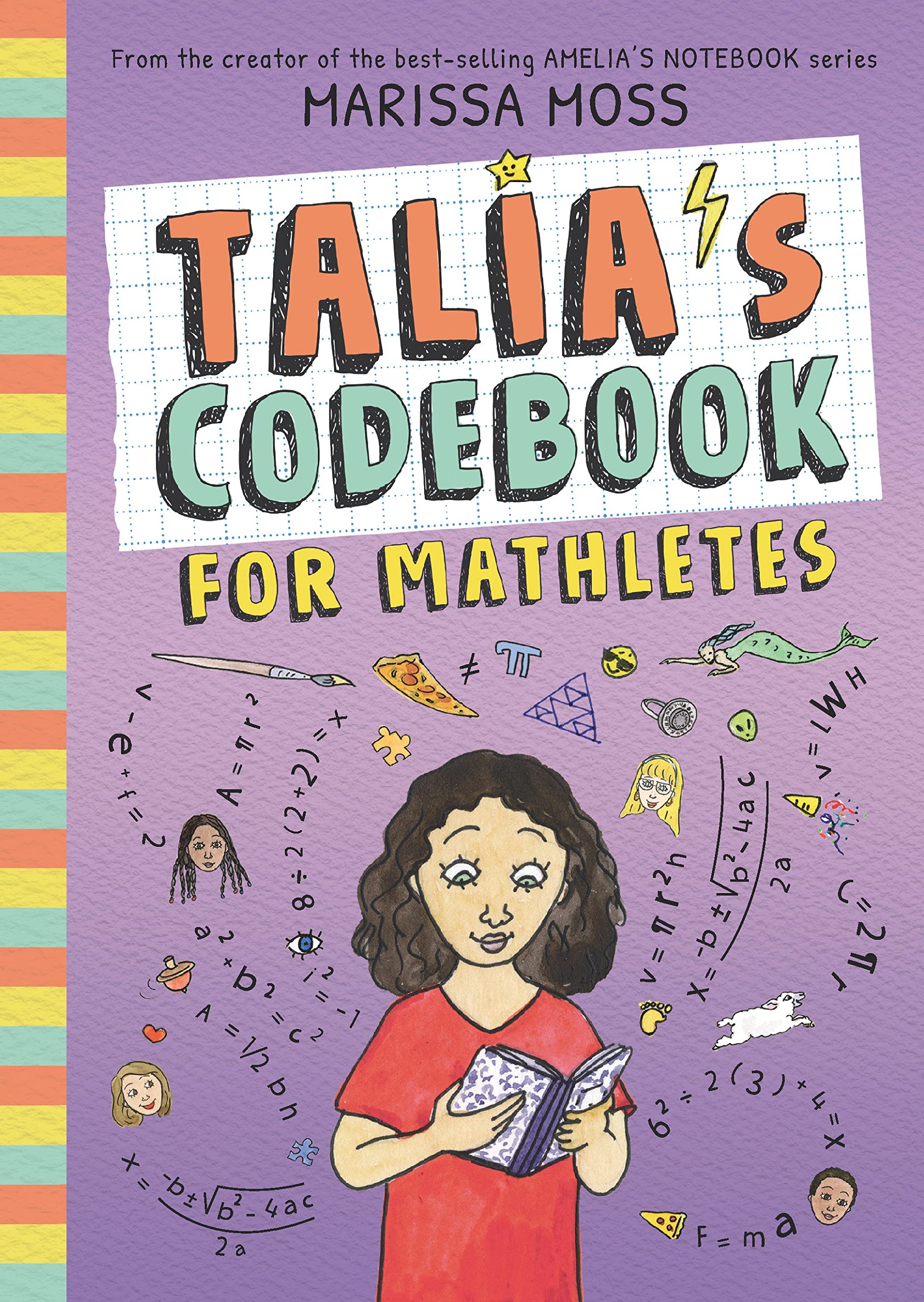
Talia’s Codebook for Mathletes Marissa Moss Walker Books June 13, 2023 Ages 8 to 12
Talia loves cracking codes and doing math, but can’t seem to solve the puzzle that is middle school. Joining the mathlete team was supposed to help with her transition, but as the only girl on the team, the boys make her the outcast. When her mathlete best friend, Dash, gets too embarrassed to be best friends with a girl, and wants to hide their friendship, there’s only one thing Talia can do—make her own all-girls mathlete team! With her new friends by her side, Talia becomes determined to bring their team to victory, get her friend back, and figure out the social rules of middle school.
The comic diary form gives a personal touch to the feelings, actions, and reactions Talia has to daily life as a middle school student. The book is broken down into observations, deductions, quizzes, and puzzles, which act as chapters. With this style, readers get a fast-paced book with no breaks in the plot. The illustrations are meant to look like doodles in a diary but are still expressive with the use of postures and facial expressions. The colors are bright with the use of watercolors and gouache with ink to give definitions to characters and objects. The overarching themes of friendship, discovering a sense of self, and finding the courage to do something outside the norm make this book perfect for readers entering middle school. Talia evolves in her social development, starting as self-centered and refusing to see her friend’s perspectives then becoming conscious of her actions and how they affect other people’s feelings. Talia’s friends and family don’t have major character developments during the book, but they do support and encourage her on her journey through middle school. Talia’s Codebook for Mathletes is a STEM-oriented book that teaches young readers, especially girls interested in math or science, to be courageous and forge their own unique path in middle school.
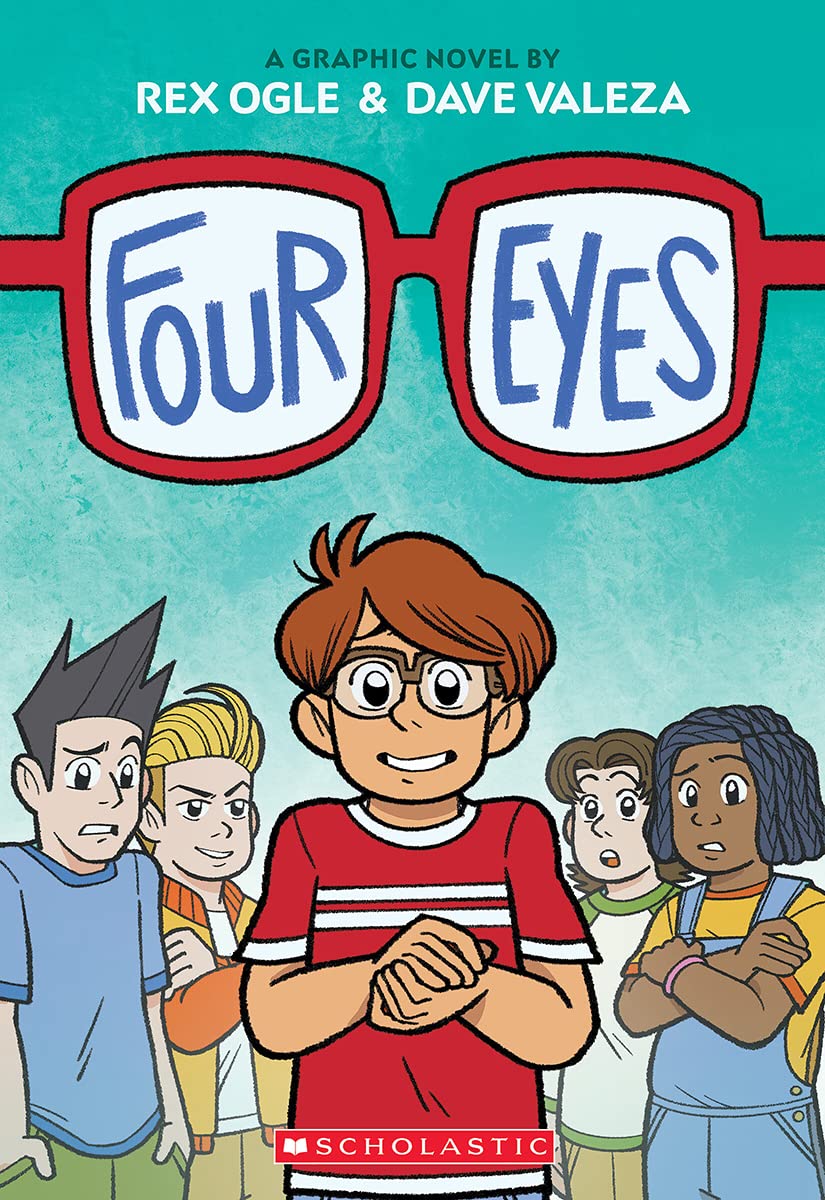
Four Eyes Rex Ogle Illustrated by Dave Valeza Graphix Ages 8 to 12 May 2nd, 2023
Rex thought sixth grade was going to be exciting, with new teachers, a fancy locker, and his best friend by his side. He was going to conquer the year with flying colors. Then his best friend starts hanging out with the popular crowd who don’t like the comics and who start bullying Rex for being short. Rex’s year can’t get any worse—until he finds out he needs glasses. Now, Rex has to deal with wearing glasses and being bullied for it, while navigating sixth grade, having no friends, and a family who don’t understand him.
The pencil-drawn illustrations express detailed features like the emotional facial expressions of each character and objects in the background. The warmer-hued colors distinguish the characters and the scene and give energy to the novel, matching the fast-pace of the story. The author and illustrator express an encouraging tone when themes of growing up and trying to figure out a place in school are brought up in Rex’s life. As Rex matures into his own person, he learns that everyone needs help sometimes, even adults. A major emotional moment in the story explores the difficulty of living in a low-income household, and although his family can’t afford the fancy pair of glasses for him or the nice clothes, Rex learns that having a loving family, a safe place to sleep, and the things you need are more important than what you might want. Middle school may be hard to figure out, but Rex finds his place by making new friends, and with their support, stands up to the bullies that his friend is hanging out with. Eventually, he also understands that becoming your own person means it’s okay to let go of old friends and accepts that glasses don’t change who you are. Four Eyes is a coming-of-age story for readers who are trying to navigate the intricate balance of middle school and what it means to grow up.
Have you registered for the March 23rd Butler Lecture yet? What are you waiting for? Find out more.
Now that you’re in, it’s time to get to know this year’s speaker.
Pablo Cartaya is an internationally acclaimed author, screenwriter, speaker, and educator. His work has been featured in the New York Times, Washington Post, NBC, and on Oprah’s Booklist. He has received multiple starred reviews from Kirkus, Publisher’s Weekly, Booklist, School Library Journal, and Audiofile Magazine for his novels and audiobook narrations. Pablo has worked with Disney, Apple+, and Sesame Street on projects adapted from television series and features. His novels have been published by Penguin Random House, HarperCollins, and Disney Publishing Worldwide.
In 2021, Pablo served as a judge for the National Book Award in Young People’s Literature, selecting a longlist, shortlist, and winner for the nation’s most prestigious literary award. Over the past decade, Pablo has facilitated approximately over one hundred and fifty writing workshops and lectures. Most have taken place at colleges, universities, libraries, and a variety of community organizations, and K-12 schools throughout the U.S., and in countries across the globe including Sweden, Canada, Jamaica, and Mexico.
Additionally, Pablo served as director of literary arts programming and community engagement at the prestigious four-star, four-diamond boutique hotel, The Betsy-South Beach. During his tenure he led the first literary festival celebrating and highlighting Latinx authors and creators; created the first hybrid literary and visual arts program for Art Basel Miami at The Betsy; helped secure seed funding and performance spaces for the first TransArt Festival in Miami, FL; created the first Writers for Young Readers authors program in Miami, FL; and received a grant for The Betsy Writer’s Room, a dedicated space in the luxury hotel to host writers and creators gratis for up to four days of residency. During his tenure, he oversaw the development of over twenty creative arts initiatives and over four hundred residencies for writers and creatives.
Most recent novels include: The Epic Fail of Arturo Zamora, Marcus Vega Doesn’t Speak Spanish, EachTiny Spark, the climate dystopia The Last Beekeeper, and the collection of essays Hope Wins: ACollection of Inspiring Stories for Young Readers. Pablo’s writing has been a featured in VOICES, a National Council of Teachers of English periodical, the literary magazine, Miami Rail; the Spanish language editorial, Suburbano Ediciones; as a translator for the poetry chapbook, Cinco Poemas/Five Poems based on the work of the poet Hyam Plutzik; and several award-winning podcasts. Notable Awards and Honors include: 2020 Schneider Family Book Award Honor, 2019 ALSC Notable Book, 2018 American Library Association’s Pura Belpré Honor, 2018 Audie Award Finalist, and 2018 E.B. White Read Aloud Book Award Finalist as well as being on over forty state book award lists. Since 2016, he has served as Lead Faculty for the Writing for Children and Young Adult track at Sierra Nevada University’s MFA (now part of the University of Nevada-Reno) Creative Writing program.
Where to find Pablo:
His website is full of book info, photos, tools for teachers and librarians, and some fantastic FAQ info.
Publisher sites are full of funny and informative interviews. Check out a few favorites:
And, of course, his books are available all over the place. Might I recommend some favorite independent book sellers?
The Book Cellar in Chicago (many thanks to them for hosting the lecture night book sale!), The Book Table in Oak Park, Books and Books in the Miami area (Pablo’s favorite), or Sundog Books in Seaside, FL (my favorite vacation book spot).
Full Lecture Details:
11th Annual Butler Lecture featuring Pablo Cartaya March 23, 2023 6:00 p.m. Free with registration required Martin Recital Hall– Dominican University Fine Arts Building, 7900 W. Division St. River Forest, IL 60305 Online (link will be sent to online registrations the day of the event) A book signing and reception will follow the lecture.
Good Different Meg Eden Kuyatt Scholastic Press March 7, 2023 Age 8-12
Always follow the rules for “normal” people: no crying in public, smile and nod, tell people you’re “fine.” But Selah doesn’t always want to be normal. In fact, she wants to be a dragon—escaping to fly free above the chaotic world below. She is pretty good at hiding her feelings in order to fit in, until an outburst at school pits Selah against her classmates, the school administration, and her mom. This leaves poetry (and her grandfather) as her only avenues to explore her feelings when speech fails her. A chance encounter with an understanding vendor at FantasyCon opens her eyes to a new definition for her experience—autism.
Kuyatt’s novel in verse follows Selah’s journey as a burgeoning poet and her exploration of neurodivergence as an explanation for the feeling and reactions she has always thought of as weird. Selah’s perspective shifts through the novel from a longing to hide, to self-discovery, to a desire to advocate for her needs, her loved ones, and her place in the world. Harsh treatment by teachers and school administrators, and her mother’s denial of any differences, paint a lonely picture of Selah’s experience. Other caring adults in her life help lighten the tone of this story, which focuses primarily on her struggles. As narrator, Selah’s typical seventh-grade self-centeredness leaves secondary characters like her mother, grandfather, and best friend less well-defined than they could be and add to the sense of isolation. Through her own determination, Selah finds her voice and a way to work with her world instead of against it. A thoughtful endnote, detailing the author’s own autism diagnosis as an adult, places the text as both a mirror for undiagnosed kids and a potential tool for adult readers, and provides an uplifting interpretation of neurodivergence as a strength rather than problem.