Makankosappo Kamehameha

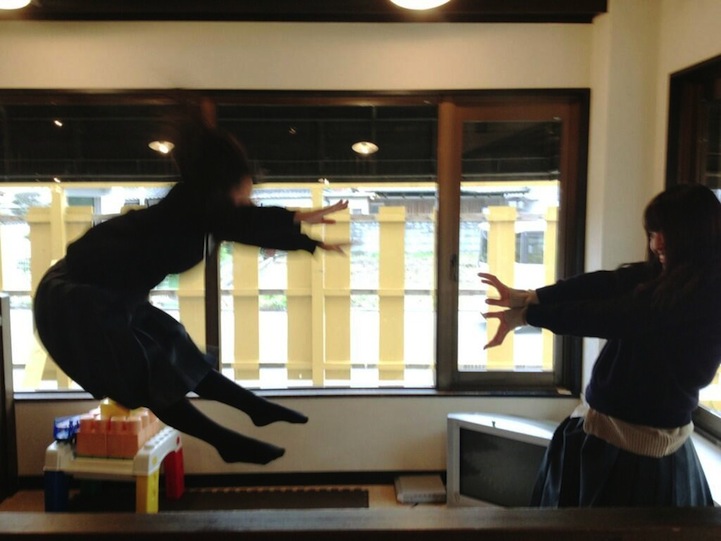
dragonballz6My friend Heath alerted me to this trend of Japanese young people sharing photographic interpretations of manga/anime energy cannons. I love so much about it: the appropriation of the theme and its translation to a new medium, the ironic juxtaposition of prim, restrained school uniforms and dynamic, energetic composition, and the contagious fun. Just look. For all of their serious machinations, they can’t help but grin. It’s no surprise that it’s catching on quick. It’s like planking only interesting.

My favorite thing, though, is its expressive process of story. All of this began with books, books that made a mark on the cultural consciousness that these kids feel the need to explore and share. In 2013, in a world suffused with gadgetry, this is how stories perpetuate themselves. We get so distracted by sensational arguments about the end of publishing and fling ourselves on the funeral pyre of the printed book, and miss the truth staring us in the face. Stories are there. Right in front of us, telling us something about ourselves, just like they always have. We just have to remember to look.

Babies!

What’s little and round and needs to be read to every day?

A baby, that’s what. Thankfully, there is no shortage of wonderful, baby-friendly reading material out there. Here are a few recent titles that caught our attention:

now im bigNow I’m Big!

by Karen Katz

McElderry Boos, 2013

Karen Katz has dozens of bright, ebullient, irresistible board and picture books to her credit, all populated with her unmistakably round baby figures, in vivid, technicolor glory. This time around a collection of toddlers reminisce about their long-ago infancy. Each spread has a baby on the left suffering some baby indignity (When I was a baby I had to wear diapers) followed by the grown-up toddler celebrating new found preschool prowess (NOW I’M BIG! I can wear underpants and poo in the toilet). The final situation has a little girl welcoming a new baby to the family, offering a litany of all the ways she can help, now that she’s big. While toddlers will love feeling all grown-up, the bright colors, expressive faces and simple illustrative style make this a winner for the brand-newest little ones, too.

faces for babyFaces for Baby

curated by Yana Peel

Templar Books, 2013

In 2009 Templar Books created an exquisite board book of black and white fine art reproductions specially selected for babies’ taste for bold, high-contrast imagery. This follow up taps in to babies’ interest in faces, offering twelve modern depictions of the human face in varying styles. The composition is uncluttered, with nothing but the image, with the artist’s name and date of the work printed unobtrusively below. Brief biographical information of the artists represented appears on the verso and a circular mirror on the final page stands apart from the series of rectangular pieces, distinguishing baby’s face from the others. A luxe and lovely package.

you are my baby farmYou Are My Baby: Farm

by Lorena Siminovich

Chronicle, 2013

This charming, ingenious board book takes advantage of a deceptively simple die-cut process, making a matching game of farm animal parents and their young. On each large page a grown-up farm animal describes her baby, complete with a color reference (You have a curly pink tail) and on the smaller pages the baby is pictured, identified by name, and the animal sound is communicated (You are my baby, little piglet. Oink! Oink!). The large and small pages turn independent of one another, though careful use of backgrounds that contrast in color and texture facilitates easy matching. With all sorts of developmental concepts at play (colors, patterns, animal names and sounds, matching, motor skills) this winning volume and it’s sister volume You Are My Baby: Safari fire on all baby cylinders.

What are your favorite books for baby?

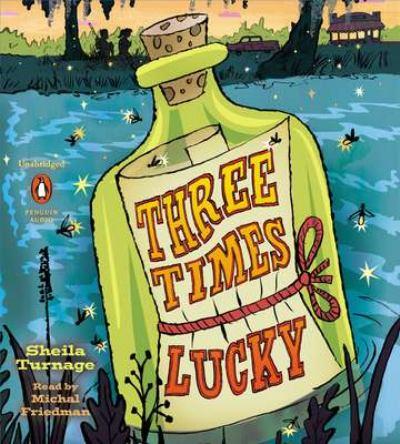
Three Times Lucky

three-times-luckyThree Times Lucky

by Sheila Turnage

read by Michal Friedman

Penguin Audio, 2012

My colleague Luke recently posted about Marcelo in the Real World, 2010 Schneider Award winner, paying particular attention to the audio version. I, too, am busy listening to award-winning titles, and find myself charmed by Michal Friedman’s reading of Three Times Lucky by Sheila Turnage.

Audiobook evaluation can be a tricky business, and this title makes for a nice case study. One of the stickier wickets has to do with separating the quality of the reading and the production from the quality of the source material. As far as the quality of the source material here, we have the endorsement of the 2013 Newbery Committee, who chose Three Times Lucky as one of their Honor Books (and I’m more than happy to throw my enthusiastic appreciation into the pot).

Then there’s the question of artistic interpretation. Set in fictional  Tupelo Landing, NC, the book features a cast of honest, sometimes quixotic characters, drawn with the thick outline of bigger-than-life eccentricity. Turnage is a native of North Carolina herself. She chronicles the outlandish, small-town behavior of the inhabitants of Tupelo Landing with a generous, colorful twang and Friedman captures the cadence of the language and the integrity of the characters in her spirited reading.

The story features a few mysteries playing out on different levels: Mo and her friend Dale are “assisting” the police with a murder investigation; Mo is searching for her own mother, who left her drifting down a river in a basket (Mo is short for Moses); and the reader is busy puzzling out the truth about Mo’s adopted family, The Colonel and Miss Lana, and their own mysterious behavior. Friedman’s narration manages a sharp intensity that maintains all of that suspense without ever puncturing the delicate humor.

As far as the production values, there is much to celebrate here. The source material comes easily divided into chapters of manageable size, and are broken into tracks accordingly. The sound is crisp, clean and consistent, without any audible hissing, muddiness, or variations in the voice reproduction. There is nothing to notice here, and that’s just as it should be.

My one quibble would be with the application of southern accents. While Turnage’s language feels authentic, Friedman’s North Carolina drawl has a few consistency issues. I can’t speak to the authenticity of the North Carolina accent in general, but I don’t think it unreasonable to expect one character to pronounce another character’s name consistently throughout. The cadence feels genuine, though, and beautifully captures the essential nature of the characters. And Mo’s first person narrative, even with the pronunciation lapses, is remarkably and genuinely childlike, in a refreshing and indelible way. So, my quibble is just that, and nothing more.

At the end of the day I look for an audiobook that adds something to the experience that I can’t bring to it myself, reading in my head, and in that regard this one scores right off the charts. Give it a listen and tell me what you think!

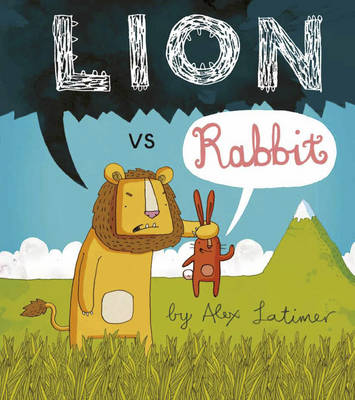
Lion vs Rabbit

lion vs rabbitLion vs. Rabbit

by Alex Latimer

Peachtree, 2013

Lion is the king, and something of a bully. He steals Hyena’s lunch monkey. He gives Buffalo a wedgie. Baboon puts an ad in the paper, looking for someone to put lion in his place. Bear and Moose and Tiger arrive on a plane, ready to challenge Lion, one by one. Lion wins, every time. Then comes Rabbit. Rabbit chooses his own contests (marshmallow eating, painting, trivia) and wins each one. Lion relents, agreeing to bully no more, and rabbit takes his leave. As his ship departs we learn that he is in fact a bunch of rabbits, chosen specifically for the individual contests. And, indeed, looking back through the book we see evidence of the subterfuge. For every rabbit competing there are other rabbits hiding, their ears or tails peeking out from behind rocks or hills or tall grasses. Droll details and comic characterizations add wild panache. The story’s skewed humor and buoyant charm delight on their own, but the regular opportunities for the listener to know just a little more than the protagonist elevate this outing from mere felicity to full-on fun.

Jeb

JebI adopted a dog over spring break. Jeb is an indeterminate hound, sweet, affable, and a little bit goofy. He arrived in Chicago from an informal pipeline that extends down to Oklahoma, rescuing dogs from uncertain futures. We don’t know much about Jeb. He had no people to turn him in. He has no real history. It seems as though he has lived his life on the streets; things like the indoors are something of a mystery to him. Doors are a curiosity, regular meals are a revelation, and he had no idea what to make of stairs. He didn’t know if or when I was coming back. All of these things he had to figure out on his own. I couldn’t tell him. It was all left to trust, to consistency, to promise.

And he is starting to understand.

I mention this because it reminds me of our first experiences with books and with libraries, especially when we are children. It is nice to hear pretty words about access and service and commitment. It is nice to be told that the books and stories belong to us. But whatever you tell me about who you are and who I am to you, I will know the truth of these things through my experiences. If children are to trust that we will not judge their reading choices, we must celebrate those choices. If teens are to believe that their ideas have a place in our business, we must integrate those ideas. All library users will know the library through their contact with it, but young people, above all, will take those understandings to heart.

Just like Jeb.

Sir Quentin Blake

quentin blakeAfter a long and storied career, British illustrator Quentin Blake was knighted by the Prince of Wales today. From Mrs. Armitage to Matilda, he has deposited lots and lots (and lots) of indelible characters, human and otherwise, into our collective consciousness, where they will stay in perpetuity. He is also responsible for the wonderful wallpaper on the display wall right here in the Butler Center. On this side of the pond he is best known for his spot illustrations for the Roald Dahl oeuvre, but in his 64 year career (and 64 is my favorite number) he has crafted a remarkable variety of really exquisite books, as author and as illustrator. Here are a few standouts:

CockatoosCockatoos

by Quentin Blake

Little, Brown 1992

Professor Dupont is a slave to his routine, and it is driving his cockatoos crazy! They decide to teach him a lesson, and distribute themselves about the conservatory, never to be seen again. Or not.  This clever, infectious book turns the familiar counting book on its head, with the ever diminishing items-to-be-counted hidden (in plain, polychrome sight), to the delight of observant children everywhere.

tell me a picture

Tell Me A Picture

by Quentin Blake

Millbook Press, 2003

Quentin Blake curated a collection of 26 paintings and children’s book illustrations and employs his trademark figures to interpret them with us. Each work of art enjoys four pages, two for uncluttered presentation, followed by two more where the sketchy individuals respond, with genuine curiosity, puzzlement, and affection. As much about looking at art as it is about art itself, it offers children a safe and stable place from which to begin their own inquisitions.

michael rosens sad bookMichael Rosen’s Sad Book

by Michael Rosen

illustrated by Quentin Blake

Candlewick, 2005

Michael Rosen tells the story of his own experience losing his adult son, and explores the fundamental nature of grief. Blake’s sketchy, chaotic images, in drab greys and blues, express grief’s uncontrollable disquiet in a profound and deeply affecting way. The world will continue to debate whether or not it is a book for children (it is), but it’s artistic power is undeniable.

On the money (mostly)

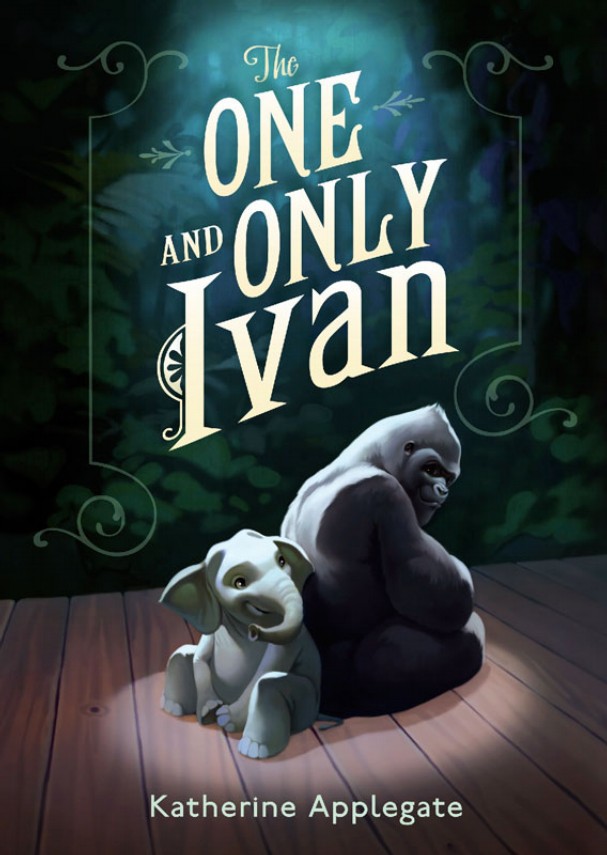
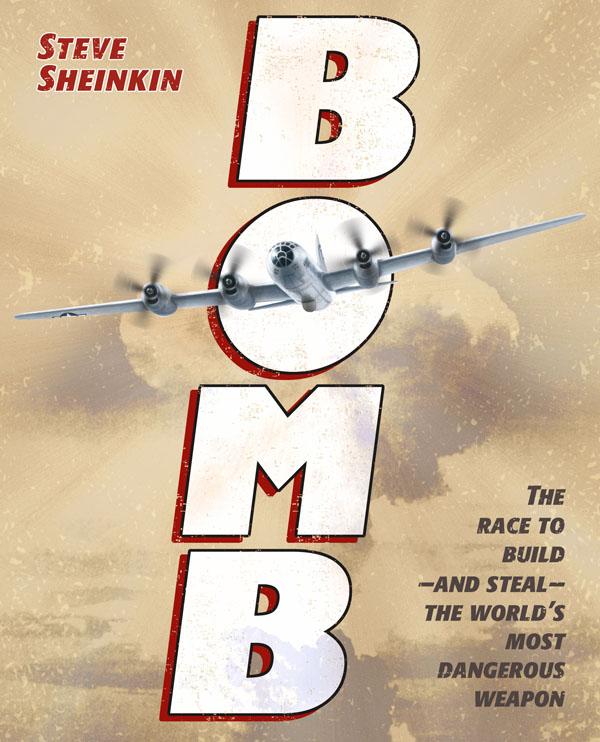
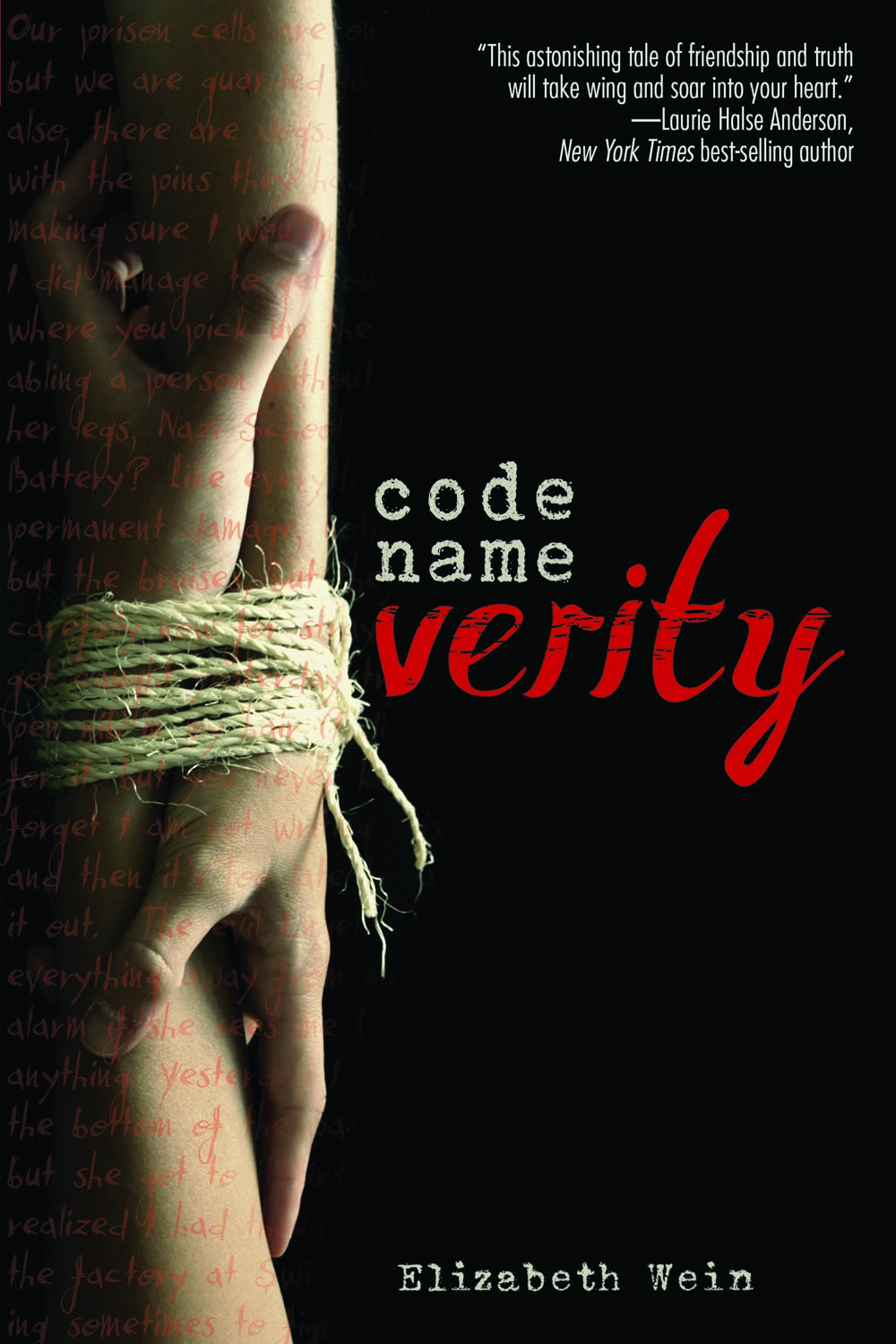
Back in December we suggested some books as particularly holiday-giftable. Looking back, I see that among the eight books for young people we recommended, half were recognized at the ALA Youth Media Awards! We had the Newbery winner (The One and Only Ivan), The Sibert winner/Newbery honor book (Bomb: The Race to Build–and Steal–the World’s Most Dangerous Weapon), a Caldecott honor book (Extra Yarn), and a Printz honor book (Code Name Verity). Not bad for a day’s work.

The One and Only IvanbombExtra YarnCode Name Verity


You can find a link to all of the ALA award winning titles here.

My Family Valentine

When I was growing up, Valentine’s Day was the biggest holiday going. The Valentine’s Day Peacock would administer the annual treasure hunt, hiding construction paper hearts around the house, each with a different clue on it, in Latin, and it fell to me and my sisters to hunt them down, translating one to lead to the next, and so on. Each of us was assigned a different color heart (lest they get confused) and as we grew older, the clues became more difficult and more plentiful. The trail invariably ended with particular paydirt: a cellophane-wrapped, heart-shaped box of chocolates and a pair of pink socks. I believe this went on all through our high school years (though my sister swears it was the Valentine’s Day Aardvark, so my memory may not be especially dependable) and was, even as a teen, a sweet, resonant tradition. To me, Valentine’s day will always be a holiday about family, more than romance, and so I offer you a bevy of picture books about family love, in its infinite variety, as my valentine.

Marisol McDonald Doesn’t Match/Marisol McDonald no combina by Monica Brown,  illustrated by Sara Palacios, Children’s Book Press, 2011

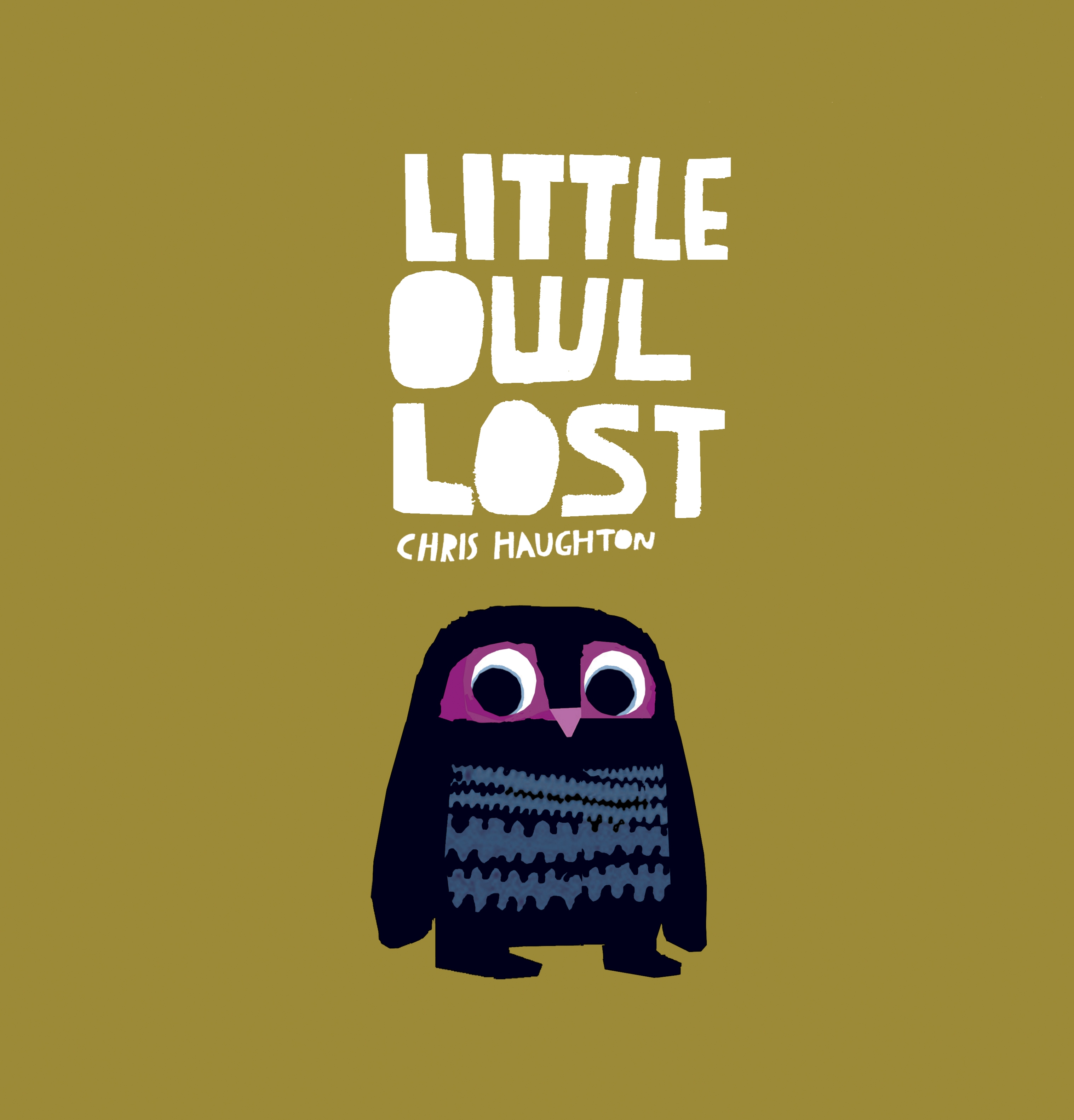
Little Owl Lost by Chris Haughton, Candlewick, 2010

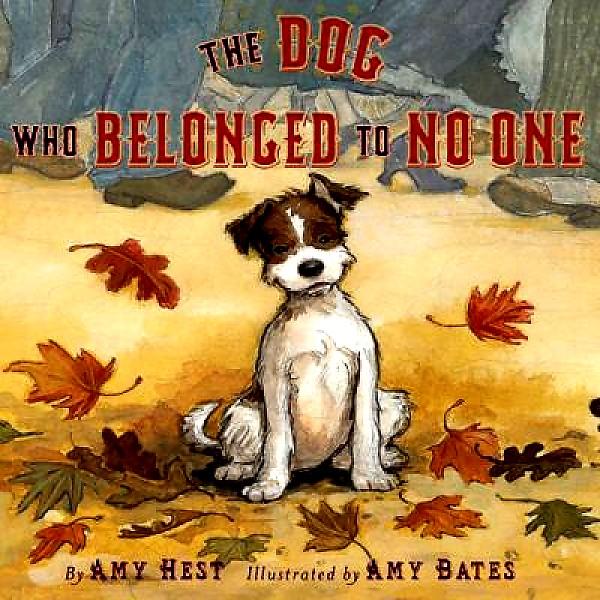
The Dog Who Belonged to No One, by Amy Hest, illustrated by Amy Bates, Abrams Books for Young Readers, 2008

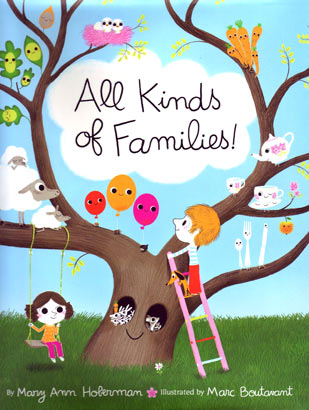
All Kinds of Families, by Mary Ann Hoberman, illustrated by Marc Boutavant, Little, Brown, 2009

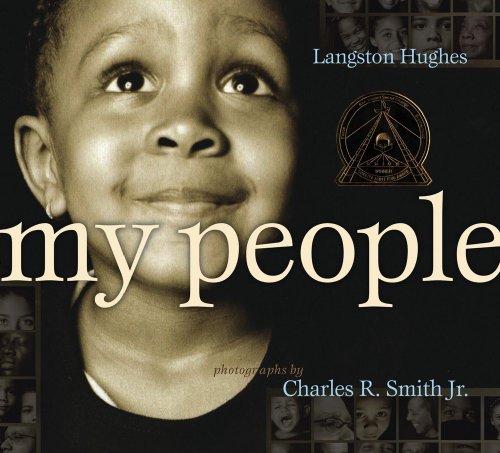
My People by Langston Hughes, illustrated by Charles R. Smith, Atheneum, 2009

I’ll See You in the Morning, by Mike Jolley, illustrated by Mique Moriuchi, Roaring Brook, 2008

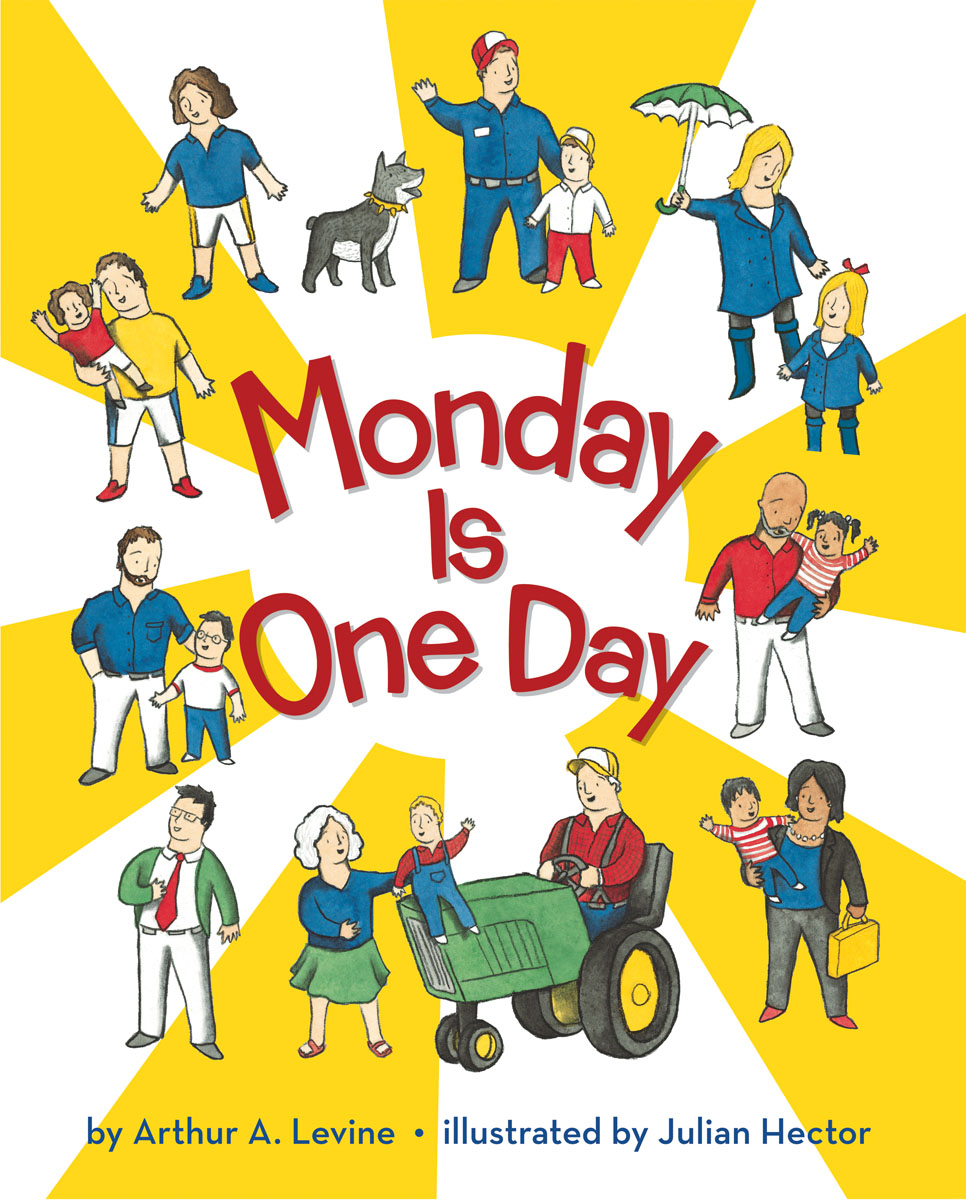
Monday is One Day by Arthur Levine, illustrated by Julian Hector, Scholastic, 2011

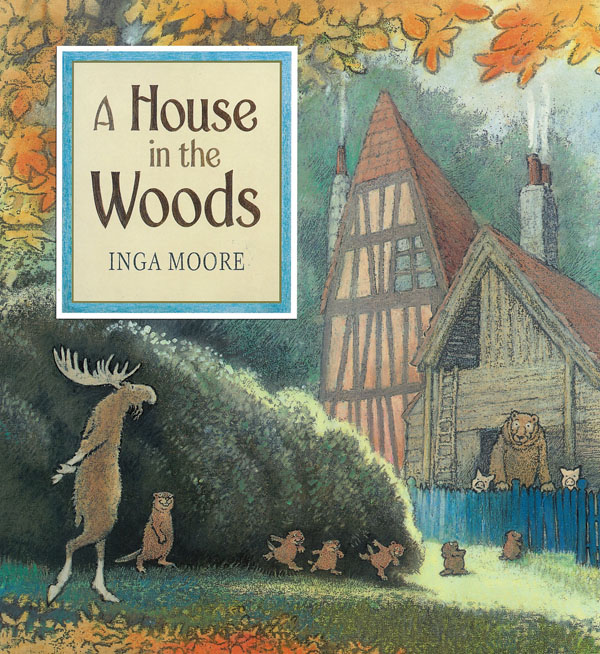
A House in the Woods by Inga Moore, Candlewick, 2011

The Family Book by Todd Parr, Little Brown, 2003

In Our Mothers’ House by Patricia Polacco, Philomel, 2009

The Schmutzy Family, by Madelyn Rosenberg, illustrated by Paul Meisel, Holiday House, 2012

Mad at Mommy by Komako Sakai, Arthur A. Levine Books, 2010

marisollittle owl lostdog who belonged to no one all kinds of families     my people ill see you in the morningmonday is one dayhouse in the woodsfamily bookin our mothers houseschmutzy family    mad at mommy

Open This Little Book

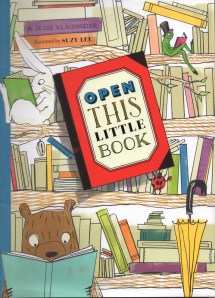
open this little bookOpen This Little Book

written by Jesse Klausmeier

illustrated by Suzy Lee

Chronicle Books, 2013

In a world where meta is everywhere, a book turning in on itself might come across as trendy or superficial. Indeed, many such books do. But the overuse of a particular approach to storytelling does not make such an approach necessarily obsolete. It does, however, raise the storytelling bar. To transcend the dangers of gimmickry, a meta picture book needs to weave together its plot, text and illustration into a tight and cohesive package, in service of a reverberant message. Fixing meta’s self reflection in some meaningful purpose grounds it, rescuing the by-definition disconnectedness of the narrative from flapping in the literary breeze. When done right, this kind of circular storytelling packs a real wallop, and such is the case with Open This Little Book.

The book is literally a number of books inside one another, each smaller than the last, each identified by a different colored cover (purple, red, green, orange, yellow, blue), each “opened” in succession by a different character (reader, ladybug, frog, rabbit, bear, giant), and then consumed and read in reverse order, arriving at the end with a compelling case for more. More books. More reading. More community. The clarity of Klausmeier’s text, clean and simple and exact, and the way she establishes and then breaks the patterned structure, shows more than tells us about the seductive sway of a well-written book. Suzy Lee’s careful illustrations begin in monochrome with the singular color of the little books’ titles. With each successive opening we have more colors in which to delight, and by the time we arrive at the final scene, with all of our friends, plus many more, luxuriating beneath and within a polychrome tree full of books, the remarkably appealing rainbow of variety stands as an immediate, resonant symbol of the endless glories of books and reading.

This is a book you need to find and experience with your own hands and eyes (and spirit). I include the book trailer below to give you a sense of the mechanics and the mood, but there is no substitute for opening this little book yourself.

Ed Young to visit the Butler Center!

Caldecott Medalist Ed Young is coming to the Butler Center in February for two spectacular events.

ed youngOn Friday, February 22 at 6:00pm Mr. Young will deliver the inaugural Butler Lecture “The House Baba Built” in which he will talk about his book of the same name. This beautiful and engaging piece of expressive nonfiction chronicles his childhood in Shanghai and illuminates the monumental home his father built for his family, which was both a playground for Young and his siblings, and a refuge from the dangers of the second world war for friends from around the world. The lecture is free and open to the public, but registration is required. Click here to register.

On Saturday, February 23 Mr. Young headlines The Truth About Expression, the Butler Center’s fourth annual continuing education conference. Every year we look to literature for young people as a means of pursuing and understanding some aspect of our world a little more fully. This year we investigate expression. Joining Mr. Young are Ascha Drake, Amanda Freymann and Joan Sommers, cocreators of Chuck Close: Face Book, the artist’s Boston Globe Horn Book Award winning autobiography; members of the Butler Center community; and local storytellers of international repute. Visit The Truth About Expression  page for more information and click here to register.