April B3: Immigration Stories

These days, it’s more important than ever for us to share stories about immigration with the young readers we serve; both for the sake of immigrant kids in our communities, and to encourage understanding among others of these kids’ experiences.

Join us on April 5, 2017 in the Butler Center from 5:30-7:00 (books & snacks out at 5:30; discussion from 6-7) to discuss the following list of recently published books with an immigration theme, from picture books to children’s fiction to teen fiction. We’re focusing on fiction this time; we know there are lots of excellent informational books too. You may remember the Butler Center’s “Big Read” bibliography from last year; this month’s list complements the selections recommended there.

PICTURE BOOKS

CallingtheWaterDrum
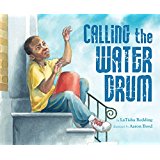
Calling the Water Drum
by LaTisha Redding, illus. by Aaron Boyd (Lee & Low, 2016)

PieceofHome
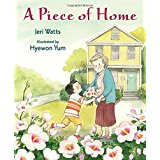
A Piece of Home
by Jeri Watts, illus. by Hyewon Yum (Candlewick, 2016)

CHILDREN’S FICTION

LongPitchHome
A Long Pitch Home
by Natalie Dias Lorenzi (Charlesbridge, 2016)

OnlyRoad.jpeg
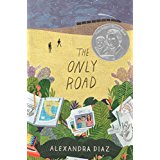
The Only Road
by Alexandra Diaz (Simon & Schuster/Paula Wiseman, 2016)

TEEN FICTION

GirlMansUp.jpeg
Girl Mans Up
by M-E Girard (HarperTeen, 2016)

Watched
Watched
by Marina Budhos (Random/Wendy Lamb, 2016)

Butler Book Banter 10/26/16

It’s nearly October again, and it’s time to announce our discussion titles for our upcoming Butler Book Banter on Wednesday, 10/26/16 “Spooky YA (and Tween).” We listened to you and added some tween titles to the YA roster this time! Be prepared to be scared:

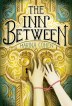
The Inn Between
The Inn Between
by Marina Cohen (Roaring Brook, 2016)


killingjar
The Killing Jar
by Jennifer Bosworth (Farrar Straus Giroux, 2016)


LastBogler.jpg


The Last Bogler
by Catherine Jinks (Houghton Mifflin Harcourt, 2016)


TeenFrankenstein.jpg
Teen Frankenstein
by Chandler Baker (Feiwel and Friends, 2016)


Bonus reading!
We’re starting to prepare for Holly Black’s 2017 Butler Lecture, and her oeuvre fits nicely with B3 this month. Revisit Newbery Honor Doll Bones (Simon & Schuster, 2013) or teen faves The Coldest Girl in Coldtown (Little, Brown, 2013) and The Darkest Part of the Forest (Little, Brown, 2015).

Whether you’ve read all, some, or none, join us for a spooky time on October 26. Books and snacks will be out at 5:30 and we’ll discuss from 6-7. Boo!


Mal Peet

life: an exploded diagramI met Mal Peet when his gorgeous, expansive novel Life: An Exploded Diagram won a Boston Globe Horn Book Honor the year I served on the jury. I sat beside him at dinner after the Awards ceremony, and reveled in his gruff, take-no-prisoners affability. He somehow managed to be warm and exacting, all at once. It’s that quality that I love so much about his work. His observations are searing and precise, yet grounded in an unmistakable affection.

And boy, howdy, could he spin a sentence.

He got a late start in the author business–his first novel was published when he was 56–but he leaves behind a wonderful body of work defined by its ambition and uniform quality.

Mal Peet died Monday at the age of 67. I’m going to revisit some of his writing today. You should, too.

PCP Three of Clubs: When I Was the Greatest

when i was the greatestWhen I Was the Greatest

by Jason Reynolds

Atheneum, 2014

This funny, gritty, tender story follows three young men growing up in Bed-Stuy, navigating the pressures and tensions that would pull them up or drag them under as they make their way to manhood. There’s Ali, bright, respectful and curious; Noodles, tight, irascible, and full of bravado; and his brother Needles, sweet, fragile, and genius. Needles struggles with Tourette’s, a syndrome his neighborhood doesn’t really understand, and finds solace in knitting (Ali’s mother’s very good idea), something else not everybody gets. Ali and Noodles have his back, until one night, at a house party, all hell breaks loose, and everything breaks apart.

There is so much to love here. The crisp writing crackles with wit and rings with authenticity. The exploration of maleness, and the ways in which young men are called to define themselves, is bare and nuanced. Every single character lives and breathes in three dimensions. But for our playing card purposes, it is these boys’ inextricable relationship that beats at this marvelous novel’s heart. Theirs is a special bond, and no matter what comes at them, they belong to one another.

For those looking for an especially immersive and gratifying experience, I recommend Random House Audio’s extraordinary audiobook recording, narrated by J.B. Adkins.

LeUyen Pham to deliver the Butler Lecture!

LeUyenPham

Award-winning and best-selling author/illustrator/graphic novelist LeUyen Pham will deliver her lecture “Wandering Wonderland: An Immigrant’s Story Told Through Books,” on Thursday, March 5, 2015. Pham’s work includes a delightful variety of picture books, from the Orbis Pictus honor The Boy Who Loved Math by Deborah Heiligman and the Freckleface Strawberry books by Julianne Moore to her own stories Big Sister, Little Sister and A Piece of Cake; illustrations for the New York Times best-seller The Princess in Black by Shannon and Dean Hale and the Scott O’Dell Award winner Bo at Ballard Creek by Kirkpatrick Hill; and a range of graphic novels with Jordan Mechner and Alex Puvilland, including Prince of Persia, Solomon’s Thieves, and Templar. For this, the third annual Butler Lecture, Pham is literally “drawing” on her own childhood, producing a series of comic panels that explore her earliest experiences with particular books for children.

The lecture will take place at 6 p.m., followed by a reception with refreshments and a book sale and signing; it is free and open to the public, though registration is required. This an evening not to be missed.

To register, please visit: http://gslis.dom.edu/newsevents/butler-lecture-2015-featuring-leuyen-pham

For more information, please contact me at tbarthelmess@dom.edu.

The Butler Lecture is generously underwritten by the Butler Family Foundation.

PCP Two of Diamonds: My Book of Life By Angel

my book of life by angelMy Book of Life By Angel

by Martine Leavitt

Farrar Strauss Giroux, 2012

The grief surrounding her mother’s death and the havoc it wreaks on her family pushes Angel to breaking. She slips onto the streets, and soon is in thrall to charming, malevolent Call and his “candy.” At first she’s doing favors for his friends, but in short order she finds herself working a corner to support herself and her habit. She is broken and resigned, until Call shows up one evening with eleven-year-old Melli in tow. Angel searches her soul to find an untapped store of resilience and resolve, and sets out to rescue Melli, and maybe, herself.

Leavitt writes in stunning, atmospheric free verse, and somehow manages to craft crystalline beauty from brutal, harrowing circumstances. Angel’s first-person narrative swings between blunt resignation and fierce defiance, beautifully articulating the confused despair of her gradual destitution and the clambering strength of her willful climb back up. It’s a staggering piece of writing–searing and evocative–and leaves the young reader with a profound understanding of the complex circumstances some teens face, full of empathy and free from judgment.

YMA thoughts

There were lots of surprises at the ALA Youth Media Awards this past Monday morning (you can read about all of the winners here) and they have already been much celebrated, dissected, and critiqued. I have my own thoughts (don’t we all) which I offer as a list, because I fear if I started writing something long form I’d be here until April. And I have some snow to shovel.

So, in no particular order, here’s what I think:

1) Diversity won the day. Everywhere. The Newbery medal and both honor books. The Wilder (ALSC lifetime contribution) and Edwards (YALSA lifetime contribution) awards. The Caldecott medal and three of the six honor books. The Arbuthnot lecturer. Three of the five Sibert honor books. The Geisel award author. Not to mention the slates from the Belpré, the Coretta Scott King, the Schneider Family, and the Stonewall, all of which are diverse by nature. Everywhere!

2) Back in December, in a comment on the Calling Caldecott blog, I suggested that it was entirely possible for This One Summer be recognized by both the Caldecott and Printz committees. Nobody was buying it. This is me, gloating.

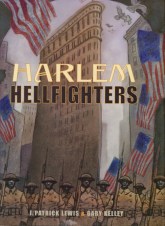
3) Some of my favorites were overlooked. Harlem Hellfighters, The Misadventures of the Family Fletcher, The Turtle of Oman. But I still get to love and champion those books, and now I get to (re)acquaint myself with other books that other folks find to be extraordinary. It’s hard to think of that as a problem, really.

4) Some things I really don’t like were recognized, too. And that’s a terrific opportunity to remember that people see books differently from how I do, and people see the awards differently from how I do. And, ultimately, that the greater the variety of taste and appreciation we have among our ranks, the better able we are to meet the many different literary needs of the young people we serve. Win win, as it were.

5) What did you think?

harlem hellfighters Levy_Front_final 91xfx6cxaRL._SL1500_


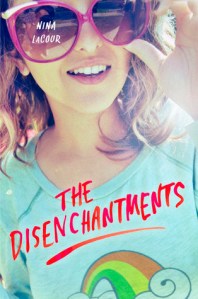
PCP Ace of Spades: The Disenchantments

11699055The Disenchantments

by Nina LaCour

Dutton, 2012

Colby and Bev have been saving for years (and years) for their year-long-backpack-around-Europe-before-college-trip. It’s going to be the best. They’re best friends, after all, and, well, Colby is pretty much in love with Bev. Except Bev isn’t going. She’s going to college instead. She applied ages ago. Sorry.

To make matters worse (or not quite so bad), Colby will be spending the summer before he’s not going to college traveling around with Bev and Meg and Alexa, The Disenchantments, managing their Pacific Northwest tour from his Uncle Pete’s VW van. There is some road-trip revelry here, and a goodly amount of deep adolescent angst, that keep things moving and give us plenty to think about along the way. But the novel’s real genius comes from profound clarity and resonance with which LaCour paints Colby’s circumstances. To be sure, not many of us have experienced this particular turn of events, but she makes something universal of the skittish confusion and achy disorientation that come when the dependability of high school gives way to the unknown of what comes next. It’s no easy path to tread, and Colby’s way through is thrilling and sad and powerfully affecting. By getting the trauma just right, LaCour makes the resultant growth immediately recognizable and especially gratifying.

The results are in

As part of the fifth annual Dominican University Caritas Veritas Symposium the Butler Center staged a Book Identity Project through which we solicited from members of the university community a book (or six) from childhood that contributed to their identity. Participants were given an old-school check-out card asking for the book and we lined the front door and window of the center with old-school check-out card pockets to receive them. We had a tremendous response, with 101 books listed on 86 different cards.

identity cardsThe submissions are fascinating, with a surprising variety. To be sure, the collection includes some well-loved, to be expected titles. Where the Wild Things Are gets three mentions, and Dr. Seuss shows up six times, twice for The Cat in the Hat, twice for Green Eggs and Ham, and once each for Oh, the Places You’ll Go! and One Fish, Two Fish, Red Fish, Blue Fish. I’m not surprised to see Louisa May Alcott or A.A. Milne, C.S. Lewis or Lewis Carroll (or Robert Louis Stevenson) in the mix. The single most-cited title is Shel Silverstein’s The Giving Tree, with four mentions, which is something of a surprise, not because it’s a book I don’t care for (indeed, I don’t care for it) but because it seems to have the sort of nostalgic perspective that I never thought spoke strongly to children. Consider me schooled. I was somewhat surprised, too, to find books outside the children’s canon, by the likes of Hemingway and Steinbeck and Dwight D. Eisenhower. We didn’t specify that the book needed to be a book written expressly for children, just that it resonated in the participant’s childhood, so it makes perfect sense that books like these would show up. It’s a great reminder of my own myopia, that I automatically understand young people’s reading through my deep engagement with the body of literature I study. Schooled again!

Quite a few series made the cut, including Nancy Drew, The Boxcar Children, The Chronicles of Narnia, and, of course, Harry Potter (I was 32 when Harry Potter and the Sorcerer’s Stone was published, and it’s just a little sobering to realize how many of our students read it as children). Alexander and the Terrible, Horrible, No Good, Very Bad Day got two mentions (I wonder if those folks saw the movie) as did The Runaway Bunny. Andrew Clements’ Things Not Seen, published in 2004, is the youngest book mentioned, and the oldest is Henry Wadsworth Longfellow’s Song of Hiawatha, first published in 1855.

Here’s the complete list. Check it out. Are you surprised by what you see? And while you’re at it, let us know if you can identify the authors of any of the first few books listed, unfamiliar to us.
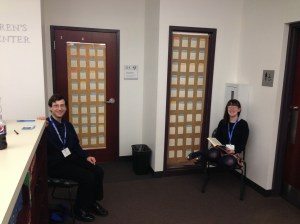
stephan and karaHere are Butler Center Student Assistant Kara Pauley and LISSA President Stephan Licitra collecting entires (and passing out candy). It sure is great to have such friendly, diligent assistance.


Oh, and for the record, my choice was Spectacles, by Ellen Raskin. It’s a great book. You should check it out.spectacles