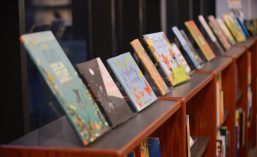
A Review of Silent Days, Silent Dreams by Allen Say

This is one of the most remarkably affecting books I have ever read. When a baby is born, he or she doesn’t know s/he is deaf, autistic, or any different from anyone else; it is positively heartbreaking to read about this one’s introduction to a world that was almost unfailingly cruel.

Born in in 1899 in rural Idaho, James Castle was deaf, unable to speak, and autistic. Through straightforward narration, his nephew attempts to show the world through baby James’ eyes: “James opened his eyes to the world and saw things that moved and things that were still. Anything that moved seemed to scare him. He cried as his parents bobbed around him with darting eyes and flapping mouths. But James couldn’t hear himself shrieking. For him the world would always be silent.” It is truly the stuff of nightmares, interpreted hauntingly by Say’s mixed-media art, some in smudgy grayscale and some in color. Images of young James engaged by various scraps of paper, charcoal, and other “found” art materials are almost peaceful; they are juxtaposed by harrowing scenes of him holding his arms around his ears while other children scream taunts at him.

SilentDaysSilentDreams

Silent Days, Silent Dreams by Allen Say (Scholastic/Arthur A. Levine, 2017)

James’ own parents were no doubt as terrified and perplexed by their son as he was by the world; unfortunately, they were ill-equipped, or unable or unwilling, to figure out how best to rear him. At first, they gave him old paper or other throwaway items, since those things seemed to keep him entertained or at least occupied. They sent him to a school where he appears to have found some level of engagement: looking books and printed materials in the library, although he could not read; watching teachers sew books together; and doing “well in shoe repair class.” But the school considered him a failure because he could not learn to speak. There is no judgement made explicit in the text on the principal who advised James’ parents “…not to give James and drawing materials at home. He said James should learn to read and write and not waste time on drawings.” Readers will come to their own conclusions about the humanity, or lack thereof, in this approach.

As an adult, James became extremely isolated, essentially living in a barn where he had his “studio” and a mattress on the floor. Continually tormented by kids stealing his artwork, and called names such as “Dummy” and “Crazy Jimmy,” he nonetheless persisted in doing the only thing that seemed to give him any pleasure: using whatever he could find (soot with spit, charred sticks, and the like) to create art. Say’s portrayal of the type of illustrations James was creating at this time show eerie pictures of people with boxes or blank circles where faces should be, as well as quotidian images of small wooden houses and little puppets of dolls, farm animals and birds. We’ll never really know, but it’s possible James was expressing his wishes, desires, and silent dreams for home and companionship in the only way he knew how.

There is some redemption to James’ story with an art show organized by his nephew’s teacher in art school, and an eventual trailer in which he could live that was a big step up from the shacks he’d inhabited for most of his life. Nowadays, “found” or “naïve” art is a recognized genre, and James Castle is a respected contributor to it. Say’s closing portrait shows James as an adult, standing in front of his “Dream House,” with what might be a hint of a smile. The text reads “I think he was happy.”

An author’s note, bibliography, and photos of some of the found materials Say used to create the art round out this haunting picture book biography for older readers.
April B3: Immigration Stories

These days, it’s more important than ever for us to share stories about immigration with the young readers we serve; both for the sake of immigrant kids in our communities, and to encourage understanding among others of these kids’ experiences.

Join us on April 5, 2017 in the Butler Center from 5:30-7:00 (books & snacks out at 5:30; discussion from 6-7) to discuss the following list of recently published books with an immigration theme, from picture books to children’s fiction to teen fiction. We’re focusing on fiction this time; we know there are lots of excellent informational books too. You may remember the Butler Center’s “Big Read” bibliography from last year; this month’s list complements the selections recommended there.

PICTURE BOOKS

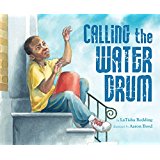
CallingtheWaterDrum
Calling the Water Drum
by LaTisha Redding, illus. by Aaron Boyd (Lee & Low, 2016)

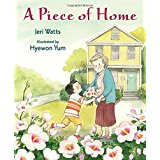
PieceofHome
A Piece of Home
by Jeri Watts, illus. by Hyewon Yum (Candlewick, 2016)

CHILDREN’S FICTION

LongPitchHome
A Long Pitch Home
by Natalie Dias Lorenzi (Charlesbridge, 2016)

OnlyRoad.jpeg
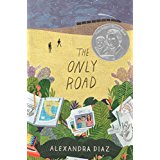
The Only Road
by Alexandra Diaz (Simon & Schuster/Paula Wiseman, 2016)

TEEN FICTION

GirlMansUp.jpeg
Girl Mans Up
by M-E Girard (HarperTeen, 2016)

Watched
Watched
by Marina Budhos (Random/Wendy Lamb, 2016)

Butler Book Banter 10/26/16

It’s nearly October again, and it’s time to announce our discussion titles for our upcoming Butler Book Banter on Wednesday, 10/26/16 “Spooky YA (and Tween).” We listened to you and added some tween titles to the YA roster this time! Be prepared to be scared:

The Inn Between
The Inn Between
by Marina Cohen (Roaring Brook, 2016)


killingjar
The Killing Jar
by Jennifer Bosworth (Farrar Straus Giroux, 2016)


LastBogler.jpg


The Last Bogler
by Catherine Jinks (Houghton Mifflin Harcourt, 2016)


TeenFrankenstein.jpg
Teen Frankenstein
by Chandler Baker (Feiwel and Friends, 2016)


Bonus reading!
We’re starting to prepare for Holly Black’s 2017 Butler Lecture, and her oeuvre fits nicely with B3 this month. Revisit Newbery Honor Doll Bones (Simon & Schuster, 2013) or teen faves The Coldest Girl in Coldtown (Little, Brown, 2013) and The Darkest Part of the Forest (Little, Brown, 2015).

Whether you’ve read all, some, or none, join us for a spooky time on October 26. Books and snacks will be out at 5:30 and we’ll discuss from 6-7. Boo!


PCP Three of Diamonds: Separate is Never Equal

separate is never equalSeparate is Never Equal: Sylvia Mendez and Her Family’s Fight for Desegregation

by Duncan Tonatiuh

Abrams, 2014

In 1943, Sylvia Mendez, her two brothers, and three cousins all go to the local 17th Street Elementary School to register. Sylvia’s light-skinned cousins are accepted, and she and her brothers are told they’ll need to enroll at the inferior Mexican school, father from their home. Sylvia’s parents aren’t having it, and push back, filing file suit, undertaking multiple appeals, and ultimately prevailing. Tonatiuh’s account details the family’s many struggles, from the complexities of the legal process to the personal attacks Sylvia experiences. After rigorous research, and interviews with Sylvia herself, Tonatiuh delivers a story that is both compelling and inspiring. And his archetypal artwork, with its Pre-Columbian influences, connects the contemporary fight with its formidable ancestry. The strong lines, simplified postures, and fixed profiles convey the family’s resolute determination; theirs is a victory that comes from strength, and a strength that comes from family.

PCP Two of Hearts: The Thing About Luck

the thing about luckThe Thing About Luck

by Cynthia Kadohata, with illustrations by Julia Kuo

Atheneum, 2013

I am a huge fan of Cynthia Kadohata’s work. Huge. I was on the committee that selected Kira-Kira, her first book for children, as the 2005 Newbery Medal winner, and I have loved every subsequent book. There is a quiet, raw honesty that runs through her writing, a transparency of language that sneaks up on you and, out of events that seem mundane, delivers something exquisite and profound. It’s like magic.

The Thing About Luck tells the story of a Japanese American farming family toiling amidst a flurry of bad luck. Sunny’s parents have been called away to Japan on emergency family business, leaving Sunny and her little brother Jaz in the care of her grandparents Obaachan and Jiichan, saddled with the back-breaking work of itinerant, contract wheat harvesting. Kadohata paints the circumstances in vivid, albeit plainspoken detail: Sunny’s fear of mosquitoes (she had malaria once); Jaz’s difficulty connecting; Obaachan’s strict, traditional ways; Jiichan’s tireless effort; and an impossibly thorough explanation farm machinery. And somehow, in the spaces between these definitions and explanations, she offers a tender, immediate, indelible portrait of family that is as touching as it is unique. These are people who love one another deeply, and Kadohata’s ability to show us that love, in the conflicts and struggles that would threaten it, is simply staggering.

LeUyen Pham to deliver the Butler Lecture!

LeUyenPham

Award-winning and best-selling author/illustrator/graphic novelist LeUyen Pham will deliver her lecture “Wandering Wonderland: An Immigrant’s Story Told Through Books,” on Thursday, March 5, 2015. Pham’s work includes a delightful variety of picture books, from the Orbis Pictus honor The Boy Who Loved Math by Deborah Heiligman and the Freckleface Strawberry books by Julianne Moore to her own stories Big Sister, Little Sister and A Piece of Cake; illustrations for the New York Times best-seller The Princess in Black by Shannon and Dean Hale and the Scott O’Dell Award winner Bo at Ballard Creek by Kirkpatrick Hill; and a range of graphic novels with Jordan Mechner and Alex Puvilland, including Prince of Persia, Solomon’s Thieves, and Templar. For this, the third annual Butler Lecture, Pham is literally “drawing” on her own childhood, producing a series of comic panels that explore her earliest experiences with particular books for children.

The lecture will take place at 6 p.m., followed by a reception with refreshments and a book sale and signing; it is free and open to the public, though registration is required. This an evening not to be missed.

To register, please visit: http://gslis.dom.edu/newsevents/butler-lecture-2015-featuring-leuyen-pham

For more information, please contact me at tbarthelmess@dom.edu.

The Butler Lecture is generously underwritten by the Butler Family Foundation.

YMA thoughts

There were lots of surprises at the ALA Youth Media Awards this past Monday morning (you can read about all of the winners here) and they have already been much celebrated, dissected, and critiqued. I have my own thoughts (don’t we all) which I offer as a list, because I fear if I started writing something long form I’d be here until April. And I have some snow to shovel.

So, in no particular order, here’s what I think:

1) Diversity won the day. Everywhere. The Newbery medal and both honor books. The Wilder (ALSC lifetime contribution) and Edwards (YALSA lifetime contribution) awards. The Caldecott medal and three of the six honor books. The Arbuthnot lecturer. Three of the five Sibert honor books. The Geisel award author. Not to mention the slates from the Belpré, the Coretta Scott King, the Schneider Family, and the Stonewall, all of which are diverse by nature. Everywhere!

2) Back in December, in a comment on the Calling Caldecott blog, I suggested that it was entirely possible for This One Summer be recognized by both the Caldecott and Printz committees. Nobody was buying it. This is me, gloating.

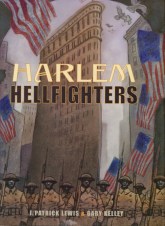
3) Some of my favorites were overlooked. Harlem Hellfighters, The Misadventures of the Family Fletcher, The Turtle of Oman. But I still get to love and champion those books, and now I get to (re)acquaint myself with other books that other folks find to be extraordinary. It’s hard to think of that as a problem, really.

4) Some things I really don’t like were recognized, too. And that’s a terrific opportunity to remember that people see books differently from how I do, and people see the awards differently from how I do. And, ultimately, that the greater the variety of taste and appreciation we have among our ranks, the better able we are to meet the many different literary needs of the young people we serve. Win win, as it were.

5) What did you think?

harlem hellfighters Levy_Front_final 91xfx6cxaRL._SL1500_


PCP Two of Clubs: Denied Detained Deported

denied detained deportedDenied Detained Deported: Stories from the Dark Side of American Immigration
by Ann Bausum

National Geographic, 2009

Negative space is an artistic construct that looks at the visual space around or between subjects as a place in an image where meaning can exist and communicate itself: objects can be defined by their own outlines, or by the outlines of adjacent objects. The construct has application in the study of literature, too, as we consider how an idea is shaped not only by its own definition but also by the definitions of related concepts. As we seek to understand “belonging” in books for young people, then, let us look not only at books that celebrate someone’s place in a particular community, but books that consider the refusal of such membership, too.

Ann Bausum applies such an approach to American history in Denied Detained Deported: Stories from the Dark Side of American Immigration, seeking to understand how people came to this country, by looking deeply and carefully at a number of situations where that arrival was thwarted. She begins with the familiar Emma Lazurus poem that appears on the plaque at the base of the Statue of Liberty, followed by a contemporary poem by Naomi Shihab Nye that offers a decidedly less welcoming vision of the US border. From there Bausum investigates a number of historical events, each titled with a different form of alienation. “Excluded” looks at the Chinese Exclusion Act of 1882 which left Chinese immigrants ineligible for citizenship until 1943. “Denied” tells the story of the St. Louis, a ship carrying hundreds of German Jewish refugees that the US turned away in 1939. The author captures the events with arresting clarity, engaging the reader’s empathy and outrage with her precise language and documentary research. And on top of the harrowing stories Bausum posits questions about our contemporary treatment of those newest to our country, often subjected to xenophobic mistreatment and persecution.

By exacting the nature of fearsome, systematized alienation, Denied Detained Deported delivers a powerful picture of how important it is to belong.

PCP Ace of Hearts: When the Beat was Born: DJ Kool Herc and the Creation of Hip Hop

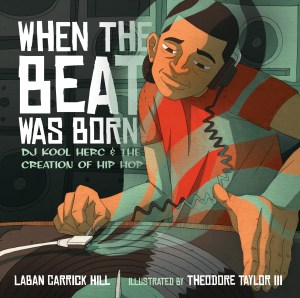
when the beat was bornWhen the Beat was Born: DJ Kool Herc and the Creation of Hip Hop

by Laban Carrick Hill, illustrated by Theodore Taylor III

Roaring Brook, 2013

“Clive loved music.” So begins this spirited, affirmative biography of the inventor of Hip Hop, and right from the start we are primed for an exposition of how that love would manifest itself, on Sedgwick Avenue in the Bronx, and around the world. The story offers a straightforward, linear account of DJ Kool Herc’s childhood in Jamaica, move to NYC, and self-propelled rise to prominence as DJ and legend, noting such innovations as inviting rapper friends to “MC” his parties, using dual turntables to extend the “break” between songs, and encouraging break dancing, calling out the b-boys and doing play-by-play of their acrobatic moves. The color quality of the illustrations is decidedly dark, with a predominance of murky grays,greens and browns, and strong, definitive shadows. Yet the book itself is remarkably positive and bright. On court, in line, and around the park, smiles abound. Indeed, everything we learn about DJ Kool Herc, from his devotion to his little sister and party partner, to the way his friendships played such a central role in his music, gives us a picture of an artist excited to share his world, replacing fighting with dancing, and loneliness with community. Ultimately, this is an affectionate portrait of an affectionate man, someone who loves his music and loves his people, all at once.

CaldeNott Results!

Yesterday evening twelve dutiful children’s book discussers met to consider a selection of picture books of international provenance, applying the Caldecott Medal terms and criteria to picture books ineligible for the actual award, in hopes of learning about some wonderful books, and the Caldecott Medal itself, in the process. We began with 18 very different books (you can find our complete discussion list here) and ended up with one winner and three honor books.

Our honor books are:

tiny creaturesTiny Creatures: The World of Microbes

illustrated by Emily Sutton (England)

written by Nicola Davies (Wales),

Candlewick Press, 2014

A scientific exploration of microbes explains their natural existence and celebrates the intricacies of their ecological function. Our committee appreciated Sutton’s use of scale, visually explaining the size and amount of the microbes around us; the friendly, approachable tone of her watercolor paintings, reinforcing the book’s even, almost enthusiastic approach to its subject; and the repeated presence of two children, not mentioned in the text, who, in their constant dress and curious attitude, serve as a ready point of access for the young reader.

at the same moment around the worldAt the Same Moment Around the World

illustrated and written by Clotilde Perrin (France)

Chronicle, 2014

This magical book circles the globe, exploring different children’s experiences at a single moment in time. We begin at 6:00am in Senegal, and travel east across time zones, to France, to Bulgaria, to Iraq, as kids of all stripes work, play, eat and dream. Each spread moves from one country to the next, connecting otherwise disparate locales and delivering a powerful message of human continuity. We appreciated the tall trim size, reflecting the longitudinal time zones; the attention to detail, with watery endpapers suggesting the surrounding oceans; and the indelible warmth of the culturally specific depictions. The final, fold-out map, that names the children and fixes them on the globe, adds concrete understanding to the sensitive expression of community.

rules of summerRules of Summer

illustrated and written by Shaun Tan (Australia)

Scholastic, 2014.

Two brothers offer fantastical, superstitious interpretations of a collection of seemingly pedestrian rules, brought to bigger-than-life through Tan’s edgy, immersive, dreamlike paintings. While each of the rules comes to individual life in its own spread, Tan links them together in an emotional arc that traces a bumpy, competitive, and ultimately tender relationship between two brothers who appear together, at the story’s end, surrounded by drawings of their imaginative adventures. We appreciated the painterly precision of the drama; the powerfully depicted relationship; the curious, sometimes impenetrable symbolism of birds and crowns; and the way the sinister undercurrent of the imaginings resolves into dependable comfort.

And our CaldeNott Medal goes to:

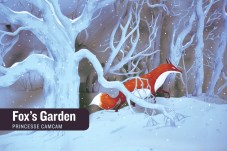
foxs gardenFox’s Garden

illustrated by Princess Camcam (Germany)

Enchanted Lion, 2014

A fox seeks shelter for herself and her babies and, when chased from a house on a wintry night, takes refuge in the nearby greenhouse. The house’s boy delivers a basket of sustenance, and the fox repays the kindness, decorating his bedroom with flowers as he sleeps. Princess Camcam creates her illustrations in three dimensions, photographing dioramas of intricately cut and painted paper, carefully arranged and lit. The effect is intimate and tranquil, with hushed colors, soft shadows, and an immediate sense of place. The artist’s careful use of sharp and cloudy focus pulls the viewer into the images, and her supreme command of light conveys the chill of the air, the stillness of the snow, and the arrival of the morning. Simply breathtaking.

It was noted that ours is not a “mock” endeavor but is instead, as the only one of its kind, the CaldeNott. Boom. It was also noted that we have chosen a book about a fox two years in a row. Make of that what you will.

This fall we’ll (re)turn our attention to international picture books, to do this all over again in 2016. Feel free to send any candidate titles my way. In the meantime, I’ll be off to the Bologna International Children’s Book Fair with a group of students in March, in search of our own. We’ll keep you posted.