2018 Picture Book Poetry

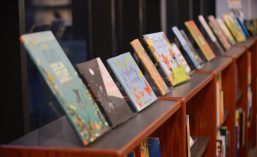
April is National Poetry Month – celebrate with us by checking out new collections and illustrated poems. You can find these titles, novels in verse for older readers, and other lyrical picture books for children here at Butler Children’s Literature Center!

blackgirlmagic

Black Girl Magic (Macmillan/Roaring Brook Press, January 2018)
Written by Mahogany Browne
Illustrated by Jess X. Snow

With a dedication stating “This book is for you,” this spirited poem of strength and finding beauty in yourself despite what the world expects of you lifts up black women, acknowledging their accomplishments and struggles, and gives young black girls an anthem of support. The text is accompanied by striking black, white, and red illustrations that amplify the empowering message of the poem.


In the Past (Candlewick Press, March 2018)
inthepastWritten by David Elliott
Illustrated by Matthew Trueman

This collection of poems about ancient creatures ranges from the humble Trilobite to the mighty Quetzacoatlus and proves that anything can be poetic. Perfect for dinosaur fans of any age, In the Past includes a geologic timeline and notes for each ancient creature along with realistic mixed media images. The poetry is light-hearted and informative and plays on the illustrations on each page.


martinrisingMartin Rising: Requiem for a King (Scholastic Press, January 2018)
Written by Andrea Davis Pinkney
Illustrated by Brian Pinkney

In this collection of “docu-poems,” author Andrea Davis Pinkney presents the final months of Dr. King’s life. With a musicality of language and along with Brian Pinkney’s illuminating and spiritual paintings, each poem carries a different emotional tone and honors multiple facets of King’s life – his work, his family, and his ministry. This selection works on its own as a memorial of Dr. King’s life, but would also be a powerful read aloud in a classroom or theater setting, or as a part of a larger program for students at any age.


The Horse’s Haiku (Candlewick Press, March 2018)horseshaiku
Written by Michael J. Rosen
Illustrated by Stan Fellows

This collection of haiku about horses is organized into three sections: In the Field, At the Barn, and Under Saddle. Watercolor illustrations on each page allow the reader’s eye to graze while the mind contemplates the sparse verse. A note on haiku concludes the collection and teaches the reader how to enjoy haiku in everyday life. The Horse’s Haiku would be suitable for a read aloud for younger children, or as a read along as part of a larger poetry unit for older elementary students.


withmyhandsWith My Hands: Poems About Making Things (HMH/Clarion Books, March 2018)
Written by Amy Ludwig VanDerwater
Illustrated by Lou Fancher & Steve Johnson

This collection celebrates the “joy of making” with over 20 poems about different creative activities, each written in unique styles. The illustrations are also varied, ranging from crayon and colored pencil sketches to mixed media collages and paintings. With My Hands would pair well with an arts and crafts session, or as inspiration for creative pursuits of all types.


Earth Verse: Haiku from the Ground Up (Candlewick Press, February 2018)earthverse
Written by Sally M. Walker
Illustrated by William Grill

Geographical concepts and natural events like minerals, fossils, earthquakes, and volcanoes are explored in this collection of haiku, accompanied by impressionistic and muted colored pencil illustrations. Each concept is explained in further detail at the end of the book, and a suggested reading list is also included, making this a perfect poetic tie-in or an added “layer” of a geology curriculum.


didyouhear

Did You Hear What I Heard? Poems About School (Penguin Random House/Dial Books, February 2018)
Written by Kay Winters
Illustrated by Patrice Barton

Over 30 poems fill this colorful collection – all about bus rides, fire drills, recess, field trips, tests, and teachers. Stylistically, the poems range from structured stanzas to free verse to singsong rhymes. Bright and playful illustrations make this collection suitable for younger students and perfect for classroom read-alouds or as a starting point for students to write their own school-themed poems.

Finding Their Way Home: A Review of Refugee by Alan Gratz

Told in three separate yet connected stories, Refugee is a novel of perseverance and commitment to who you are in the face of persecution.

refugeeJosef is fleeing from 1930s Nazi Germany and the threat of concentration camps with his parents and sister. Isabel, her parents, and her neighbors use a makeshift raft to escape Cuba in 1994, during the unrest of Castro’s regime. Mahmoud, along with his parents and younger siblings, leave the violence of war in Syria in 2015, traveling through Europe as they search for a safer place to live. Though the details of their stories are unique, Josef, Isabel, and Mahmoud share more similarities than just their situations.

The attention given to creating characters with heart and conviction is engaging, while the conflicts each protagonist faces ensure none of their individual stories get stuck in the emotion of the book as a whole. Refugee tells an important story, and does so without preaching or sensationalizing the experiences of refugees past and present. Maps and an author’s note highlight the reality of Josef, Isabel, and Mahmoud’s stories and show the readers how they can help with relief efforts.

A Review of The Peculiar Incident on Shady Street by Lindsay Currie

Just in time for the changing season and upcoming Halloween celebrations comes Lindsay Currie’s first book for middle grades.

peculiar incident

Tessa Woodward is less than thrilled about her family’s move from Florida to Chicago, and their house doesn’t seem to be too pleased either, based on the moving items, flickering lights, and eerie drawings appearing in Tessa’s sketchbook. When Tessa reveals to her classmates that her house is haunted on her first day at her new school, she is afraid her social life is over, but a group of unlikely friends decides to help Tessa solve the mystery of who used to live in her house – and who is making it difficult for the Woodwards to live there now.

Lindsay Currie’s in-depth research on the haunted settings and ghost stories featured in The Peculiar Incident on Shady Street shows in the details of this mystery, and makes for a satisfying read. Tessa is a smart, sensitive, and curious protagonist, and her relationship with her parents and younger brother is genuine. Readers will want to cheer her on as she works to solve her own problems, with the help of her peers, who are proud to explore their interests. The pacing adds to the spook-factor without being too dramatic and makes you want to keep reading (preferably with the lights on!).

A Review of Silent Days, Silent Dreams by Allen Say

This is one of the most remarkably affecting books I have ever read. When a baby is born, he or she doesn’t know s/he is deaf, autistic, or any different from anyone else; it is positively heartbreaking to read about this one’s introduction to a world that was almost unfailingly cruel.

Born in in 1899 in rural Idaho, James Castle was deaf, unable to speak, and autistic. Through straightforward narration, his nephew attempts to show the world through baby James’ eyes: “James opened his eyes to the world and saw things that moved and things that were still. Anything that moved seemed to scare him. He cried as his parents bobbed around him with darting eyes and flapping mouths. But James couldn’t hear himself shrieking. For him the world would always be silent.” It is truly the stuff of nightmares, interpreted hauntingly by Say’s mixed-media art, some in smudgy grayscale and some in color. Images of young James engaged by various scraps of paper, charcoal, and other “found” art materials are almost peaceful; they are juxtaposed by harrowing scenes of him holding his arms around his ears while other children scream taunts at him.

SilentDaysSilentDreams

Silent Days, Silent Dreams by Allen Say (Scholastic/Arthur A. Levine, 2017)

James’ own parents were no doubt as terrified and perplexed by their son as he was by the world; unfortunately, they were ill-equipped, or unable or unwilling, to figure out how best to rear him. At first, they gave him old paper or other throwaway items, since those things seemed to keep him entertained or at least occupied. They sent him to a school where he appears to have found some level of engagement: looking books and printed materials in the library, although he could not read; watching teachers sew books together; and doing “well in shoe repair class.” But the school considered him a failure because he could not learn to speak. There is no judgement made explicit in the text on the principal who advised James’ parents “…not to give James and drawing materials at home. He said James should learn to read and write and not waste time on drawings.” Readers will come to their own conclusions about the humanity, or lack thereof, in this approach.

As an adult, James became extremely isolated, essentially living in a barn where he had his “studio” and a mattress on the floor. Continually tormented by kids stealing his artwork, and called names such as “Dummy” and “Crazy Jimmy,” he nonetheless persisted in doing the only thing that seemed to give him any pleasure: using whatever he could find (soot with spit, charred sticks, and the like) to create art. Say’s portrayal of the type of illustrations James was creating at this time show eerie pictures of people with boxes or blank circles where faces should be, as well as quotidian images of small wooden houses and little puppets of dolls, farm animals and birds. We’ll never really know, but it’s possible James was expressing his wishes, desires, and silent dreams for home and companionship in the only way he knew how.

There is some redemption to James’ story with an art show organized by his nephew’s teacher in art school, and an eventual trailer in which he could live that was a big step up from the shacks he’d inhabited for most of his life. Nowadays, “found” or “naïve” art is a recognized genre, and James Castle is a respected contributor to it. Say’s closing portrait shows James as an adult, standing in front of his “Dream House,” with what might be a hint of a smile. The text reads “I think he was happy.”

An author’s note, bibliography, and photos of some of the found materials Say used to create the art round out this haunting picture book biography for older readers.

April B3: Immigration Stories

These days, it’s more important than ever for us to share stories about immigration with the young readers we serve; both for the sake of immigrant kids in our communities, and to encourage understanding among others of these kids’ experiences.

Join us on April 5, 2017 in the Butler Center from 5:30-7:00 (books & snacks out at 5:30; discussion from 6-7) to discuss the following list of recently published books with an immigration theme, from picture books to children’s fiction to teen fiction. We’re focusing on fiction this time; we know there are lots of excellent informational books too. You may remember the Butler Center’s “Big Read” bibliography from last year; this month’s list complements the selections recommended there.

PICTURE BOOKS

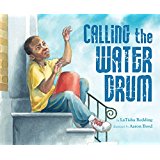
CallingtheWaterDrum
Calling the Water Drum
by LaTisha Redding, illus. by Aaron Boyd (Lee & Low, 2016)

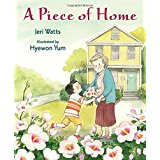
PieceofHome
A Piece of Home
by Jeri Watts, illus. by Hyewon Yum (Candlewick, 2016)

CHILDREN’S FICTION

LongPitchHome
A Long Pitch Home
by Natalie Dias Lorenzi (Charlesbridge, 2016)

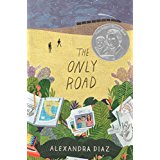
OnlyRoad.jpeg
The Only Road
by Alexandra Diaz (Simon & Schuster/Paula Wiseman, 2016)

TEEN FICTION

GirlMansUp.jpeg
Girl Mans Up
by M-E Girard (HarperTeen, 2016)

Watched
Watched
by Marina Budhos (Random/Wendy Lamb, 2016)

Butler Book Banter 10/26/16

It’s nearly October again, and it’s time to announce our discussion titles for our upcoming Butler Book Banter on Wednesday, 10/26/16 “Spooky YA (and Tween).” We listened to you and added some tween titles to the YA roster this time! Be prepared to be scared:

The Inn Between
The Inn Between
by Marina Cohen (Roaring Brook, 2016)


killingjar
The Killing Jar
by Jennifer Bosworth (Farrar Straus Giroux, 2016)


LastBogler.jpg


The Last Bogler
by Catherine Jinks (Houghton Mifflin Harcourt, 2016)


TeenFrankenstein.jpg
Teen Frankenstein
by Chandler Baker (Feiwel and Friends, 2016)


Bonus reading!
We’re starting to prepare for Holly Black’s 2017 Butler Lecture, and her oeuvre fits nicely with B3 this month. Revisit Newbery Honor Doll Bones (Simon & Schuster, 2013) or teen faves The Coldest Girl in Coldtown (Little, Brown, 2013) and The Darkest Part of the Forest (Little, Brown, 2015).

Whether you’ve read all, some, or none, join us for a spooky time on October 26. Books and snacks will be out at 5:30 and we’ll discuss from 6-7. Boo!


Mal Peet

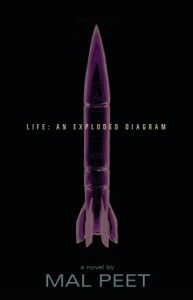
life: an exploded diagramI met Mal Peet when his gorgeous, expansive novel Life: An Exploded Diagram won a Boston Globe Horn Book Honor the year I served on the jury. I sat beside him at dinner after the Awards ceremony, and reveled in his gruff, take-no-prisoners affability. He somehow managed to be warm and exacting, all at once. It’s that quality that I love so much about his work. His observations are searing and precise, yet grounded in an unmistakable affection.

And boy, howdy, could he spin a sentence.

He got a late start in the author business–his first novel was published when he was 56–but he leaves behind a wonderful body of work defined by its ambition and uniform quality.

Mal Peet died Monday at the age of 67. I’m going to revisit some of his writing today. You should, too.

PCP Three of Clubs: When I Was the Greatest

when i was the greatestWhen I Was the Greatest

by Jason Reynolds

Atheneum, 2014

This funny, gritty, tender story follows three young men growing up in Bed-Stuy, navigating the pressures and tensions that would pull them up or drag them under as they make their way to manhood. There’s Ali, bright, respectful and curious; Noodles, tight, irascible, and full of bravado; and his brother Needles, sweet, fragile, and genius. Needles struggles with Tourette’s, a syndrome his neighborhood doesn’t really understand, and finds solace in knitting (Ali’s mother’s very good idea), something else not everybody gets. Ali and Noodles have his back, until one night, at a house party, all hell breaks loose, and everything breaks apart.

There is so much to love here. The crisp writing crackles with wit and rings with authenticity. The exploration of maleness, and the ways in which young men are called to define themselves, is bare and nuanced. Every single character lives and breathes in three dimensions. But for our playing card purposes, it is these boys’ inextricable relationship that beats at this marvelous novel’s heart. Theirs is a special bond, and no matter what comes at them, they belong to one another.

For those looking for an especially immersive and gratifying experience, I recommend Random House Audio’s extraordinary audiobook recording, narrated by J.B. Adkins.

PCP Two of Hearts: The Thing About Luck

the thing about luckThe Thing About Luck

by Cynthia Kadohata, with illustrations by Julia Kuo

Atheneum, 2013

I am a huge fan of Cynthia Kadohata’s work. Huge. I was on the committee that selected Kira-Kira, her first book for children, as the 2005 Newbery Medal winner, and I have loved every subsequent book. There is a quiet, raw honesty that runs through her writing, a transparency of language that sneaks up on you and, out of events that seem mundane, delivers something exquisite and profound. It’s like magic.

The Thing About Luck tells the story of a Japanese American farming family toiling amidst a flurry of bad luck. Sunny’s parents have been called away to Japan on emergency family business, leaving Sunny and her little brother Jaz in the care of her grandparents Obaachan and Jiichan, saddled with the back-breaking work of itinerant, contract wheat harvesting. Kadohata paints the circumstances in vivid, albeit plainspoken detail: Sunny’s fear of mosquitoes (she had malaria once); Jaz’s difficulty connecting; Obaachan’s strict, traditional ways; Jiichan’s tireless effort; and an impossibly thorough explanation farm machinery. And somehow, in the spaces between these definitions and explanations, she offers a tender, immediate, indelible portrait of family that is as touching as it is unique. These are people who love one another deeply, and Kadohata’s ability to show us that love, in the conflicts and struggles that would threaten it, is simply staggering.

LeUyen Pham to deliver the Butler Lecture!

LeUyenPham

Award-winning and best-selling author/illustrator/graphic novelist LeUyen Pham will deliver her lecture “Wandering Wonderland: An Immigrant’s Story Told Through Books,” on Thursday, March 5, 2015. Pham’s work includes a delightful variety of picture books, from the Orbis Pictus honor The Boy Who Loved Math by Deborah Heiligman and the Freckleface Strawberry books by Julianne Moore to her own stories Big Sister, Little Sister and A Piece of Cake; illustrations for the New York Times best-seller The Princess in Black by Shannon and Dean Hale and the Scott O’Dell Award winner Bo at Ballard Creek by Kirkpatrick Hill; and a range of graphic novels with Jordan Mechner and Alex Puvilland, including Prince of Persia, Solomon’s Thieves, and Templar. For this, the third annual Butler Lecture, Pham is literally “drawing” on her own childhood, producing a series of comic panels that explore her earliest experiences with particular books for children.

The lecture will take place at 6 p.m., followed by a reception with refreshments and a book sale and signing; it is free and open to the public, though registration is required. This an evening not to be missed.

To register, please visit: http://gslis.dom.edu/newsevents/butler-lecture-2015-featuring-leuyen-pham

For more information, please contact me at tbarthelmess@dom.edu.

The Butler Lecture is generously underwritten by the Butler Family Foundation.