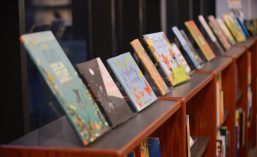
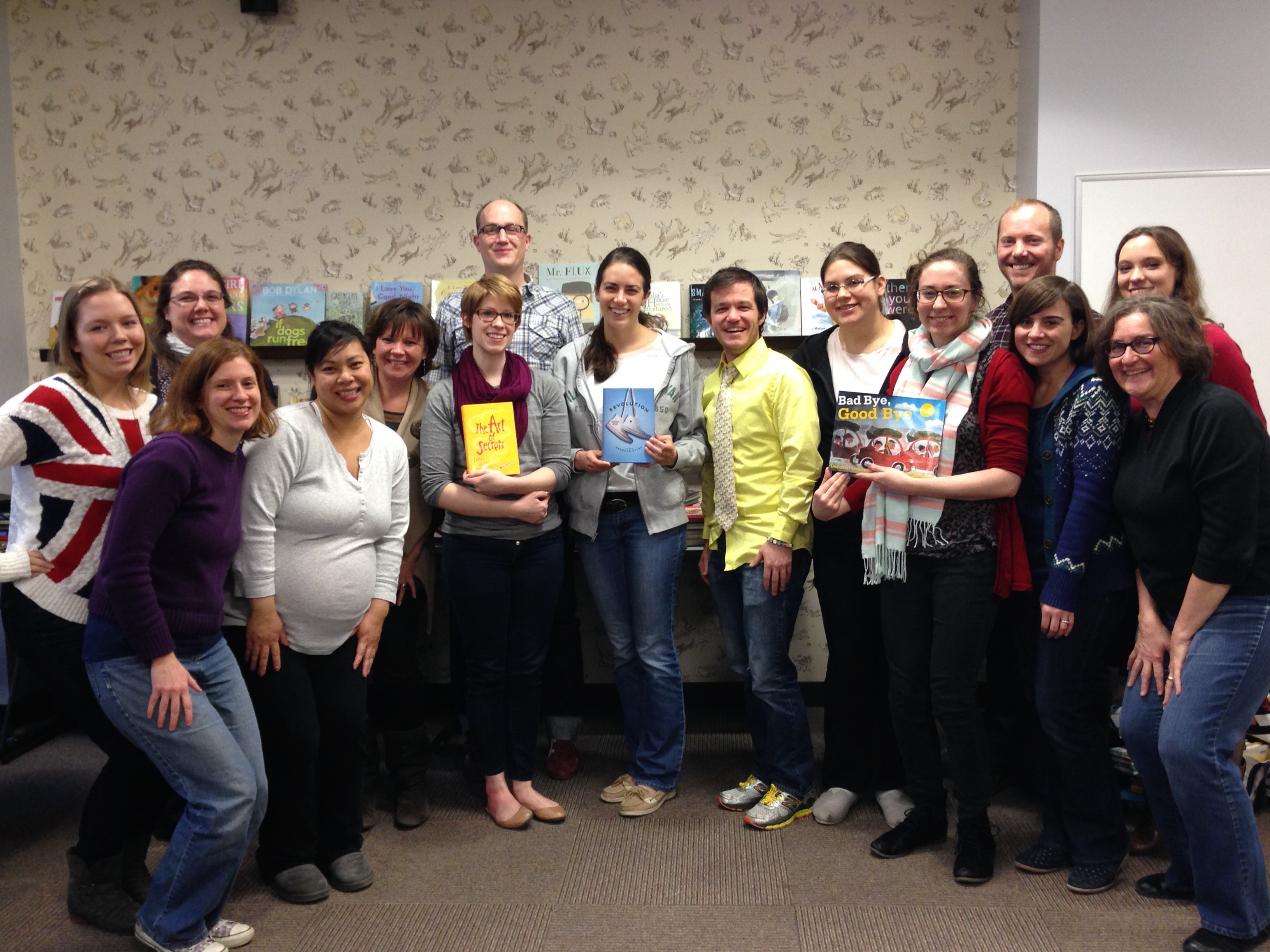
I spent this past weekend immersed in deep, insightful book discussion with fourteen other astute, committed individuals, in search of “the most distinguished contribution to American literature for children” published in 2014. This was the culmination of a semester’s worth of reading, nominating, and more reading. By dedicating the time and energy of an entire course to the endeavor we were able to really dig into the Newbery process, replicating not just the book discussion, but the nominations, introductions, and balloting. In the end we spent 15 hours over two days discussing and voting on a list of 29 titles, arriving at a winner and two honor books. I’ll talk a bit more about our lists in a bit, but let me now get to our results:
The committee chose two honor books:
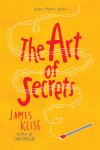 The Art of Secrets by James Klise, published by Algonquin Young Readers, 2014
When arsonists torch Saba Khan’s apartment, tensions are high. Is this a hate crime, targeting Saba’s Pakistani immigrant family? Was is staged? Who is responsible? The community at her independent school steps up, raising funds to help the family, but when one of the items collected for auction turns out to be the work of Chicago outsider artist Henry Darger, valued at half a million dollars, things get bona fide complicated. Klise exposes the truths, and misdirections, through a series of blindered e-mails, texts, journal entries, phone conversations, and other exchanges between a diverse cast of players, threading the compelling mystery with obfuscation and intrigue. Taut plotting, masterful characterization, and nuanced exposition combine in a satisfying, surprising novel.

Bad Bye, Good Bye by Deborah Underwood, illustrated by Jonathan Bean, published by HMH Books for Young Readers, 2014
A little boy travels with his family from their old home to their new one, lamenting their losses, considering their transitions, and hoping for their future. Underwood composes 57 discrete single-syllable words into forty rhyming couplets, with every couplet being an adjective/noun pairing (with the exception of one critical turning point). Within this structured framework she achieves a staggering range of emotion and experience, equally resonant to the lap-based toddler, the emerging reader, or budding poet. Simple words take on layers of meaning that shift and grow in their careful sequence, drawing the reader or listener along the journey’s immediate, indelible arc. While Bean’s energetic, substantial images add atmosphere to the outing, establishing meaningful context and reinforcing the emotional tug, Underwood’s spare, rhythmic, verse has its own unmistakable, dramatic power.
And the committee chose, as winner of our 2015 Mock Newbery:
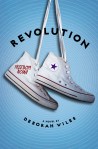 Revolution by Deborah Wiles, published by Scholastic Press, 2014.
The town of Greenwood, Mississippi becomes the battleground for a nation in turmoil during the freedom summer of 1964. “Agitators” from the north descend to establish and protect black voters’ rights while the local communities erupt at the challenge to the status quo. Wiles tells the story in two first-person narratives, of twelve-year-old Sunny, whose eyes are opening to habituated racism she couldn’t see, and fourteen-year-old Raymond, who experiences that racism first-hand. Wiles embellishes and interrupts those two distinct voices with a jarring battery of primary documents, submerging the reader in a cultural context that includes everything from frothy invocations of pop-culture to noxious expressions of hatred, all of them documented and real. The resulting combination makes for a piercing, illuminating, and especially human exploration of a tumultuous episode in our country’s history.
A note about our lists:
We began our reading with a list of 15 titles selected by me (as instructor for the course) in July, which included both published and anticipated books. Unlike the “real” committee, that short list was curated to represent a wide range of style, tone, format, and reading level, as well as a balance of cultural diversity. In addition to those titles we all read widely from an ever-growing list of suggested titles from which each student nominated one. And in the end we arrived at our final 29. We can never know how well our final list might compare to the books the “real” committee is looking at this year. Indeed, in many ways our purposes are different. But we have great confidence in the depth and precision of the investigation we undertook, and great pride in the results.
 The submissions are fascinating, with a surprising variety. To be sure, the collection includes some well-loved, to be expected titles. Where the Wild Things Are gets three mentions, and Dr. Seuss shows up six times, twice for The Cat in the Hat, twice for Green Eggs and Ham, and once each for Oh, the Places You’ll Go! and One Fish, Two Fish, Red Fish, Blue Fish. I’m not surprised to see Louisa May Alcott or A.A. Milne, C.S. Lewis or Lewis Carroll (or Robert Louis Stevenson) in the mix. The single most-cited title is Shel Silverstein’s The Giving Tree, with four mentions, which is something of a surprise, not because it’s a book I don’t care for (indeed, I don’t care for it) but because it seems to have the sort of nostalgic perspective that I never thought spoke strongly to children. Consider me schooled. I was somewhat surprised, too, to find books outside the children’s canon, by the likes of Hemingway and Steinbeck and Dwight D. Eisenhower. We didn’t specify that the book needed to be a book written expressly for children, just that it resonated in the participant’s childhood, so it makes perfect sense that books like these would show up. It’s a great reminder of my own myopia, that I automatically understand young people’s reading through my deep engagement with the body of literature I study. Schooled again!

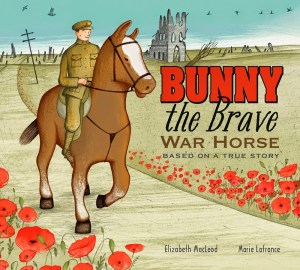 ve War Horse: Based on a True Story
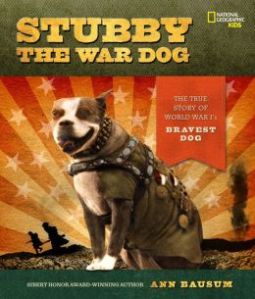 Stubby the War Dog: The True Story of World War I’s Bravest Dog
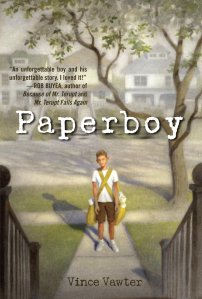 Paperboy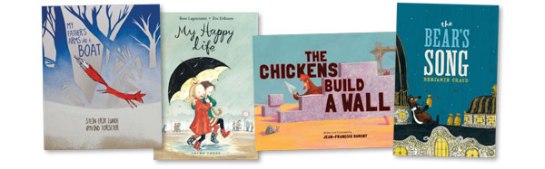
 what i came to tell you
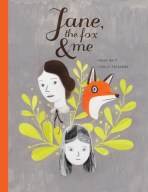 For our winner we selected
 Our honor book is My Father’s Arms Are a Boat by Stein Erik Lunde, illustrated by Øyvind Torseter (Enchanted Lion Books). A boy who recently lost his mother steps into the night with his father to process grief, look for comfort, and reconnect with the world that still holds possibility. Here we appreciated the untethered compositions, expressing the amorphous, rudderless nature of grief; the gradual relief that comes with the return of regular boundaries; and the expression of life’s fragility in the delicate three-dimensional paper-work dioramas.


 God got a dog
 Butler's Pantry