Adrenaline Fix

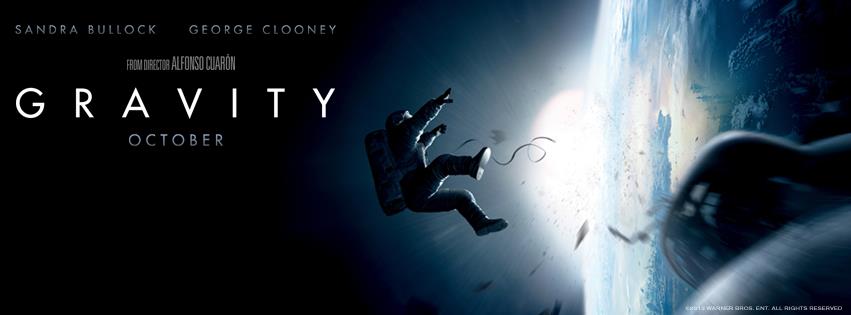
gravityI’m really not much of an adrenaline junky. Sure, I like a roller coaster as much as the next person (though I am now, sadly, too tall to ride most of them) and I’d follow Jason Bourne anywhere. But friends will tell you that all I catch of a screen thriller is what I can see between the fingers pressed firmly over my eyes. I hear even less (my thumbs are blocking my ears). And it takes a good nine hours to watch one from the comfort of my couch, what with all the pausing and walking around the living room shaking out my hands. And yet I find myself strangely addicted to the trailer for the new Alfonso Cuarón film Gravity. The first time I saw it in a theater the hair on my arms was standing up for a good five minutes, and I have worn out the various views on the YouTube (like this one and this one).

And it all has me wondering about a corollary interest in take-your-breath-away books. What are the reads that have left me gasping?

the white darkness The first thing that came to my mind is Geraldine McCaughrean’s Printz-winning The White Darkness which, quite frankly, scared the bejeezus out of me. This story of a shy girl with a hearing impairment and an historically accurate imaginary friend who accompanies her uncle on a mysterious trip to Antarctica compounds the menace of an unhinged villain with all of the terror mother nature can muster. Good night that book is scary.
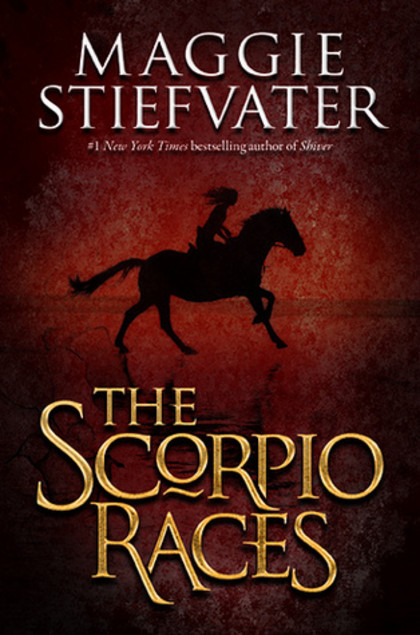
the scorpio racesThe Scorpio Races by Maggie Stiefvater raises hairs in an entirely different way. This is the story of the deadly races that happen every autumn along the shores of a Celtic Island where men capture and train capaill uisce, fierce, carnivorous horses that rise from the sea. And this time, for the first time, young Puck will be the first woman in the race. Much hangs in the balance in this taut drama, but it is Stiefvater’s evocation of the fearsome horses themselves, all teeth and muscle and blood and bone, that is so spine-chilling.

The_Great_Wide_SeaAnd then we’ve got something like The Great Wide Sea by M.H. Herlong that delivers its fright straight through the realm of possibility. Three boys set out on a year-long sail around the world with their father, broken by the recent death of their mother and clearly spinning outside the reach of responsibility. Tensions on the little craft are bad enough, but when the boys awake one morning to find the deck empty and their father gone, fear sets in. Slowly the boys’ resilience weakens as life becomes increasingly precarious and survival starts to slip from their grasp.

And what about you? What are your favorite tales of terror? Hit us up!

Kinship Project

voice from afarThe Butler Center opened in its permanent space two years ago today on September 11th, 2011, the tenth anniversary of that infamous day in world history. To commemorate that occasion we curated an exhibit called the Kinship Project, a collection of books for children and teens that speak to our human kinship. We created a catalog with notes that speak to each of the 29 books connection to the idea of kinship. I link here to the online version. We have some print copies as well (beautiful, actually) and I’d be happy to send some along to you, too. Just fill out the form below with your name and address and I’ll get them in the mail.

← Back

Thank you for your response. ✨

How about you? What do you remember of that day? What do your memories have to say to your work with books and young people? Where do you see kinship among the collections we keep?

“The President Has Been Shot!” vs. Kennedy’s Last Days

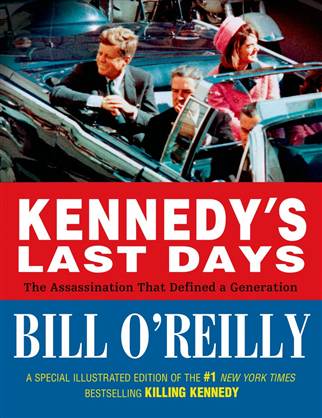
When I discovered that two different accounts of Kennedy’s assassination had arrived at the Butler Center, I immediately grabbed them and started reading. Like so many people, I have a fascination with the Kennedys. I can’t pinpoint why exactly, but I’m guessing it’s a combination of my enchantment with mystery, glamour, politics, unexplainable tragedy, and story. Kennedy’s life—and death—are captivating stories, and two versions of Kennedy’s story are newly published for young adults in 2013: “The President Has Been Shot!”: The Assassination of John F. Kennedy by James L. Swanson, and Kennedy’s Last Days: The Assassination that Defined a Generation by Bill O’Reilly. Before I compare and contrast, I want to make a note about audience. Scholastic suggests that the Swanson book be for ages 12 and up, noted on the book jacket. O’Reilly’s book cover does not indicate an intended age, but after further research I discovered that Henry Holt and Co. notes on their website that the book “will captivate adults and young readers alike” (http://us.macmillan.com/kennedyslastdays/BillOReilly). Of course, librarians can choose where to shelve this book, on what bibliographies to include this book, and what ages to steer this book to in reader’s advisory conversations. Finding out the publisher’s intended age was important to me though, for one reason: As I was reading, I wondered, Why is there no mention of Kennedy’s affairs? Both of these titles are not picturebooks or nonfiction titles intended for early elementary children. They are written for older kids—tweens and teens. Of course, many might argue that Kennedy’s philandering might not be appropriate for tweens, but then I beg the inevitable question. Why are we okay with telling them about extreme violence? Both books have large pictures of rifles and handguns. Of the assassination, Swanson’s book states, “[The third bullet] cut a neat hole through [the president’s] scalp and perforated his skull. The velocity, the pressure, and the physics of death did the rest. The right rear side of the president’s skull blew out—exploded really—tearing open his scalp, and spewing skull fragments, blood, and brains several feet into the air where it hung for a few seconds, suspended in a pink cloud” (113). Similarly, O’Reilly states, “The next bullet explodes his skull…it slices through the tender gray brain matter before exploding out the front of his head” (207). It is bothersome to me that both authors consciously eliminated sexual content for a young adult audience, but were perfectly fine with descriptive violence. I understand the importance of preserving JFK’s legendary status and historical importance, but this is a book of nonfiction, and kids deserve to know the whole story. The intended elimination reminds me of Ingri & Edgar Parin d’Aulaire’s Caldecott winning book Abraham Lincoln, in which there is no mention of Lincoln’s assassination. Do we think we are protecting young adults by eliminating facts? Do we think they won’t find out? What is it that is so much more terrifying about sex than exploding brains, spewing skull fragments, and revolvers?

president bookSwanson’s book establishes a strong narrative flow immediately. His writing is detailed, jargon-free, and action-packed. He is always able to put his reader right inside the story while using a third-person point of view. Swanson knows how to paint a picture, and emphasizes significant things that are not just arbitrary. I’ve read so much about the Kennedys and I never had read this: When Jackie got off the plane in Dallas, she was given red roses EVEN THOUGH the state flower was the yellow rose. Apparently, “so many of them had been ordered for the various events the Kennedys would attend in Texas that local florists had run out of them” (87-8). Pretty eerie that Jackie would be given red roses in the city that her husband would be assassinated in only minutes later. Never-before seen photographs are released in this book, and Swason’s charts and graphs are descriptive and compelling. Swanson details Oswald’s every move through text and picture, even recreating his view of Elm Street from the 6th floor of the Texas School Book Depository. Several photographs of the seconds after the violent shots are shown from varied angles, displaying Clint Hill covering the president and Jackie with his own body. Swanson’s biggest accomplishment is his ability to keep the tension high while keeping facts straight; I didn’t want to put the book down.

kennedy bookWhile I’m not normally a fan of O’Reilly’s politics, I went into this book with a distinct conviction to be unbiased. O’Reilly starts his book off with a personal touch, describing where he was and how he felt on November 22, 1963. He outlines his book into four parts—The Making of a Hero, The Making of a Leader, Dallas, Texas—November 1963, and The Making of a Legend. The chapters alternate perspectives, recounting the parallel time frames of the lives of Kennedy and Oswald. It is an interesting approach the illuminates personality traits of both men. Using present tense, O’Reilly attempts to place his reader directly into the narrative, as if it is happening right now. The thing is, Swanson does that with past tense and it makes much more sense. One does not need to write in present tense in order to make a story come alive. In fact, because the book often needs to use past tense for historical background and context, it is strange to jump back and forth between tenses. Yet, O’Reilly writes with respect towards JFK and loyalty to his country. I was bothered by some of the assumptions made, specifically about people feeling certain things. For example, O’Reilly states , “Jackie Kennedy likes to think of herself as a traditional wife, focusing most of her attention on her husband and children” (55-6). First of all, how do we know what Jackie Kennedy felt about her role as a wife? Secondly, I have read the contrary. Rather than focusing on her family and children, Jackie took several trips abroad without her children, and very rarely had to do the things that many “traditional mothers” have to do—change dirty diapers, cook breakfast, do the dishes, clean the laundry. While I’m not doubting Jackie’s loyalty to her family, I do doubt O’Reilly’s statement that she was a traditional wife. In the memoir Mrs. Kennedy and Me, by Clint Hill (Jackie’s personal secret service agent), Hill describes Mrs. Kennedy in a way you’ve never known her before. It’s definitely a book to read if you like all things Kennedy.

It is difficult to be an author that follows up a fabulous year of narrative nonfiction, and let’s face it—2012 rocked. These two authors do a good job with building and maintaining a tense, politically-charged, mysterious story about a piece of contemporary history. When I grew up, history was just history to me. It all seemed the same, and numbers never had much significance for me, because I just had to MEMORIZE them. I probably became fascinated with the Kennedys because my parents constantly told me about that time period—it’s when they grew up. I remember the realization of “Woah. Civil Rights wasn’t long ago. This assassination (and Bobby Kennedy’s and Martin Luther King’s) was one lifetime away from me.” Kids in middle school and high school now don’t have as many parents that remember this time. It’s up to great nonfiction writers to preserve the past and keep the story alive. Swanson’s book available in October; O’Reilly’s in stores now.

Tommysaurus Rex

Tommysaurus RexTommysaurus Rex
by Doug TenNapel
Graphix, 2013

Opening the pages of one of Doug TenNapel’s book is a bit like pressing play for a David Lynch film: you feel the certainty in your gut that it’s going to be a surprising and unique experience, an hour or two of bizarre, sometimes even disturbing images you’ll never forget seeing. The difference is, with Lynch’s work, I’d usually prefer to look away; with TenNapel, I can’t tear my eyes from the page.

Before the warped worlds of Bad Island and Ghostopolis, before the philosophical minefield of Cardboard, Doug TenNapel wrote Tommysaurus Rex, now beautifully republished in full color (contributed by Katherine Garner). In this middle grade graphic novel, a boy named Ely loses a pet dog and gains a pet dinosaur. Ely knows in his heart that the tyrannosaurus – playful, good-natured, and in need of training – is some manifestation of his old dog Tommy, despite its also having memories of Cretaceous life (and death). The mechanisms for the dinosaur’s rebirth and reincarnation are largely unstated, and blissfully so; TenNapel’s masterful storytelling presents a confident, fantastical logic that shrugs off the dull necessities of reality. The reader is happy to shrug them off, too.

In Tommysaurus Rex, TenNapel nods to fellow monster creators: Ray Harryhausen, visual effects artist who innovated new stop-motion animation techniques in the 1950s and ‘60s, makes a cameo appearance in Ely’s story. Bill Watterson was a clear influence on the artist; like Calvin and Hobbes, Ely and his fellow humans are drawn with occasionally zany stylistic expressions, while Tommysaurus is almost frighteningly realistic. Yet despite its allusions and tributes, the style and story stand alone. Calvin and Hobbes cuts with wit and cynicism, but through its perfectly messy imagery and fantastical conceit, Tommysaurus Rex rings loudly and truly with heart. One moment you might recoil from the image of a tyrannosaurus digging into a bloody feast of a cow carcass; the next, you’re holding back tears as a bully expresses regret or a friend says good-bye forever. TenNapel always surprises me somehow, except I always know I need to hold on for dear life (and keep the tissues within reach).

Openly Straight

Openly StraightOpenly Straight

by Bill Konigsberg

Arthur A. Levine Books, 2013.

In the hilarious comedy Anger Management, Jack Nicholson’s character (a therapist) asks Adam Sandler’s character (an average Joe businessman) who he is (see video below). Adam Sandler answers with thoughts about his job, his personality, and his “likes.” Jack Nicholson pushes, and says “No, those are things ABOUT you. I want to know WHO YOU ARE.” An entertaining dialogue pursues, and the movie goes on.

Who are you?

Quite the question, huh? Often times, when I get asked this question when meeting someone new, my stomach feels like someone forced Robitussin cough syrup down my throat (the worst thing I can remember tasting in my life). Who am I? A graduate student. A dog lover. A dancer. A musician. A writer. I work at a library and I’m a middle child and in my spare time I do aerial acrobatics and play piano. My favorite candy is Laffy Taffy.

All of this is true. But is it really who I am? WHAT DOES THAT QUESTION MEAN?

Part of the problem is that we aren’t defined just by our own labels. Other people have labeled me, and in ways I don’t always like. Blonde. Overly Sensitive. A Pushover. Sometimes, I believe or become those things because someone else labeled me that way. Labeling is a scary, slippery slope, and it happens every day to everyone.

In Bill Konigsberg’s new YA novel, Openly Straight, seventeen-year-old Rafe is sick of his label. He’s been “the gay boy” since he came out in eighth grade, and it has become exhausting. He knows he’s got it lucky—he lives in Boulder, Colorado, where he isn’t bullied in school, his parents fully accept his sexuality, and he has good friends. But he’s been defined by this one label for so long that he feels like his other parts have disappeared. So he takes a risk and transfers to an all-boys’ boarding school in New England to try out a new method of self-expression—being “openly straight.”

For a while, life is fabulous. Rafe discovers his love of sports, hones his gift of creative writing, and fulfills his desire to be seen as Rafe, not Gay Rafe. But of course, there is another boy in this book—a boy that Rafe falls for, and complication ensues. Konignsberg writes his first-person narrative with a quirky grace and his dialogue with honesty and intelligence. His ability to build relationships between characters and willingness to ask thought-provoking, challenging questions to his reader is exceptional.

There’s still more to this book that I’m not including; something that is very hard to put into words. Alas, I will try.

We all want to be taken for the entire, deeply layered, multi-dimensional person that we are. I know I don’t want one of my labels to define me, but I do want the sum of my PARTS to define me. There is a type of psychotherapy called “Parts therapy,” which is based on the concept that we are complex human beings that have many different parts within us. I have a sensitive Part, but I also have a bold Part. I am a creative artist, but I am also a researcher and scholar. I don’t want to get stuck in one Part, and I don’t want to get hidden beneath a Part so no one sees any of the other Parts. Is my sexuality important? Of course. Does it define WHO I AM? No, it’s a Part. There is no Me without every Part that exists within me, and if I deny a Part of me, I’m not really Me either. Parts are fluid. They are not static; they change as we change. Openly Straight is poignant and powerful because it both asks and challenges the question: WHO ARE YOU?

Rafe would have to answer that question for himself, but I’m guessing he would say that he’s many, many things, but most of all he’s human. I would tell him that I’m the same, and that I’m a system of Parts that all work together to create the one—and only—me.

Just like you.

One for the Murphys

One for the Murphys

One for the Murphys
by Lynda Mullaly Hunt
Nancy Paulsen Books, 2012

For a dog owner, it’s always a fascinating exercise to see what your pet notices. You pick up the house keys and she’s at the door; simply raise your eyebrows and her ears are pricked up in anticipation. A dog’s job is above all observing her humans, and we’re amazed by what she notices.

Yet nothing tops our own species as the reigning champions of observation. When we’re paying attention, we see everything: the slight tightness in a boss’s face, or the averted eyes of a suspicious stranger. The key is the paying attention part. In psychology experiments, a subject might be “primed” for a test by viewing significant words or images. In life, our past experiences teach us what to look out for.

One for the Murphys is a story about seeing. Twelve-year-old Carley Connors keeps much to herself, but the reader sees she’s a pro at observation, especially of her foster family:

“Michael Eric comes in with his hand tucked into his armpit. His mother drops to the floor like someone has kicked her behind the knees, but she lands gently, holding out her arms, and he melts into them.”

From smiling photos, neatly arranged pantry supplies, and especially the warm gestures and touches exchanged between the Murphys, Carley sees she doesn’t belong. She sees other things, too: moments of tension, worry, and anger. To another’s eyes, these might be normal moments of stress for a family, especially a new foster family. But to Carley, every frown is evidence that she is unwanted. Every hand reaching out is a potential slap, and she reflexively flinches. Although she has a keen eye for observation, her perception is skewed.

Through fragments of memory, the reader starts to see why: the last thing Carley saw before she woke up in the hospital was her stepfather raising his fists to beat her, and her mother holding her down. Carley, believing strength and emotion are mutually exclusive, doesn’t share this information readily with the people she encounters. Without all the facts, these other characters make their own judgments: a police officer sees her as an instigator; a classmate, seeing only the new clothes Mrs. Murphy has purchase for Carley, thinks she’s a mindless clone of any other kid. But the reader is granted the most accurate view. In seeing each person’s mistakes in perception, including Carley’s, we start to wonder about the people we see and the judgments we make. There’s almost always more to the story – in One for the Murphys and in life – and it isn’t always something that we great observers can clearly see.

Out of the Easy

Image

Out of the Easy

by Ruta Sepetys

Philomel, 2013.

Ruta Sepety’s second novel, Out of the Easy, is set in a world of cigarette smoke, shadows, and bourbon. It’s 1950 in the french quarter of New Orleans. Josie is a smart girl with hopes of college, but the city feels like a cage. Her mother is a call girl at a well-known brothel and a highly publicized murder has caught them both in a web of lies and secrets. A supporting cast of prostitutes, errand boys, madames, and madmen completes the picture.

In short, this is a noir.

And noir is a rare setting for a YA novel. Perhaps authors assume that the iconic imagery and archetypal characters will be unrecognizable to the Millennial generation. Maybe they are uncomfortable with the femme fatale and the mess of gender stereotypes that come with her. Or maybe they just don’t like it.

But there’s more to noir than snappy dialogue and shoulder pads. Beyond the private eyes and sexual innuendos are themes of misrepresentation, moral ambiguity, betrayal, and alienation. Its perspective is cynical, depicting a world infested with lies and liars.

For many (myself included) adolescence is a period of not fitting in, feeling that the world around you is obscure and impossible to navigate, like being lost in a maze. Sometimes, at least, it can feel like noir.

Which is why Sepetys’ choice of setting feels so right for a young adult audience. When Josie realizes that she has only herself to blame for the web of self-serving lies and half-truths she has has been spinning, she is both the quintessential young adult and the quintessential noir anti-hero.

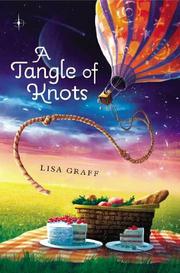
A Tangle of Knots, by Lisa Graff

9780399255175

I pick up a book for a number of reasons—good reviews, a fabulous cover, or because a friend or colleague gives a recommendation. Rarely does a book’s title encourage me to dive in. Even though A Tangle of Knots has all of the aforementioned things, its title is what really struck me.

Tangles and knots both suggest tension, complexity, and stress. I don’t know about anyone else out there, but the world has seemed to be a tangle of knots lately. I’m not sure when the tangle of knots began for me—maybe 9/11 was the first time I truly  comprehended catastrophe. Since then, and very recently, it feels like they just keep coming– the shootings in Aurora, Colorado and Newtown, Connecticut. The Boston Marathon bombings. The tornado. The daily violence here in Chicago.

That’s just the United States. If I start thinking about the terrorism in Mogadishu or the violence in Syria, the knots get thicker and the tangles more snarly.

So what does this difficult stuff have to do with a middle grade novel? Well, I picked up this book in the middle of one of those really tangly, knotty weeks. I had read first-person accounts from the families affected by the Newtown, CT shootings at my doctor’s appointment. The Boston Marathon bombings happened. Then the tornado came. Yet, as I read Graff’s novel, a number of things changed for me. First of all, I let myself sink into the world of the novel and was distracted from my sensitivity for little while. Graff’s eloquent, imaginative story weaving and her sophisticated, third-person writer’s voice made it impossible not to be encapsulated by the book. Secondly, I laughed, probably for the first time that week. Lastly, the book was a window and a mirror.  I thought about the book’s tangle of knots, my own tangle of knots, and the world’s tangle of knots, and I accepted them all.

This acceptance probably has to do with the fact that the book is all about cake, and there is no way I can be in a bad mood when I am reading about cake. The protagonist, Cady, is an orphan searching for her place in the world. She has her own special Talent—she can meet someone and instantly know his or her favorite cake. I love Cady. The novel is rich with a puzzle of characters, but what I love about Cady is that she has lost almost everything, and she is not bitter. By the end of the book, I realized that Cady’s magic had nothing to do with her cake making—it is all about her heart. Add in a whimsical family, an old woman who has lost her ability to speak, a boy who has a Talent for spitting, a thief, several real cake recipes, and some blue suitcases–we’ve got a winner.

As I turned the last page, I stopped thinking about the horrific parts of past tragedies and turned toward the small miracles. The police workers on 9/11. The Boston marathoners who crossed the finish line and ran to the local hospitals to give blood. The interview with the woman who had lost her dog in the rubble of Oklahoma’s tornado (see attached video). I know people talk about the small stuff, but it truly is everywhere. And it’s written all over Graff’s novel. A ferret. Peanut butter cake.  A missing dinosaur bone.

And then I thought: tangles and knots. Yes, both suggest tension. But put in a different light, they suggest stability, support, strength. We tie knots when we want something to stay together. When my hair tangles, it comes together in clumps, and each individual hair is indistinguishable. Maybe sometimes we need to be individuals, to be untangled and free. But other times, especially hard times, we need to tie knots with each other, and learn to lean on each other for support and strength. Cady does.

Graff writes, “Cady was one of the biggest-hearted people Marigold had ever met—she tried harder than anybody else to make others happy…If Marigold had learned anything that week, it was that trying hard and being a good person didn’t always mean that good things would happen to you.”

We all know that bad things happen. But that fact doesn’t make Cady lose her sensitive heart or her willingness to stay positive, so it won’t make me lose mine, either.

I think my favorite cake would be a chocolate one; almost brownie-like, with a really rich, dense texture and chocolate frosting, warmed up with ice cream on the side.

What’s your favorite?

Get well Tim Curry

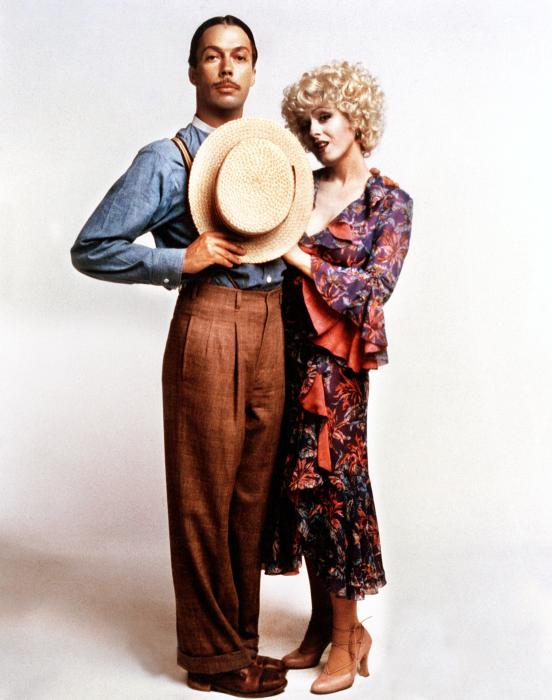
News is emerging that actor Tim Curry is recovering from a stroke. Initial reports suggested that he had collapsed yesterday following a massive episode. More recent reports say that, while he collapsed in his LA home yesterday, the stroke occurred last July, and he has been recovering (well) ever since. In any event, I wish him very well.

rocky horrorWhen I was in High School I went to midnight showings of the Rocky Horror Picture Show week after week (after week) at the Coventry Cinema in Cleveland Heights. I think its fair to say that the experience had a profound effect on my adolescence, offering an indelible, albeit particular, affirmation of different ways of being. Watching and eventually joining the participatory irreverence, throwing toast, spritzing rain, singing and dancing along, offered me a kind of community I really needed at the time. Who knew musical theater could be like that?!

annieSpeaking of musical theater, I refuse to apologize for the fact that I love all things Annie. I just do. Ask me about Kristen Vigard’s casting as the original red-mopped orphan and her replacement with Andrea McArdle after previews in Conecticutt. Heck, watch the Julie Stevens documentary, Life After Tomorrow (SJP!) if you want to know more about it. Anyhow, Curry plays Rooster in the 1982 movie version. There’s lots to love about the film, if you’re me, at least, including his sneaky, sinister performance. He’s brilliant. And, thinking back, it’s a little striking how much Carol Burnett, as Miss Hannigam. looks like Frank N. Furter. Huh.

But today I remember Tim Curry as an extraordinary narrator of audiobooks. My introduction to audiobooks came with my very first ALSC evaluation committee experience as a member of Notable Recordings for Children. Back then each of us was assigned a sampling of eligible recordings (cassette tapes!), based on the first letter of the title. I was assigned A-C, and received, relatively early in the year, the first of  Lemony Snicket’s Series of Unfortunate Events, The Bad Beginning. So charming. Curry’s arch, over-the-top narration makes the most of the tongue-in-cheek prose, honoring its playful irony and milking the humor. It’s just a little irresistible.

AbhorsenBut my favorite audiobook performance of all time must be his stunning readings of Garth Nix’s Abhorsen trilogy. It was such an interesting choice, casting a man to read these menacing novels about a family of necromancers in a centuries-old battle against conspiring evil, as all of the protagonists are young women. But once you hear Curry’s contemptuous reading of Mogget the familiar, and the positively dripping malevolence of Orannis, the baddest of the many baddies, you know the choice was just perfect. I have listened to all three, in sequence, at least five times, stem to stern, and they never disappoint. I recommend them all the time, and do so again today, to you.

So, here’s wishing Tim Curry a continued speedy recovery, with hopes that he finds his way back to the recording booth soon.

Emily’s Dress and Other Missing Things

“Emily Dickinson is the perfect thing to hand to a 16-year old girl,” advised fellow blogger lynchlibrarian recently. What is it about Emily? Indeed, I was 16 when I purchased my paperback copy of her complete works (at the local Borders bookstore, my idea of the cool hangout spot), and I vividly remember discussing “Success is counted sweetest” in my high school’s U.S. Literature class. Certainly I considered her words earlier and later in life, though not by much: an eager seventh grade teacher chalked “I never saw a moor” on the board for the daily quote; in my second year of college, fellow English majors and I spent the better part of a class dissecting the differences between her 1859 and 1861 versions of “Safe in their Alabaster Chambers” (the power — of a dash!).

So what is it about Emily that resonates during young adulthood? While increasingly introspective teens may be intrigued by her famously reclusive habits, it’s her words that truly inspire. At a time when teenagers feel pulled between their past and future selves, her voice simultaneously offers innocence and wisdom. As they encounter the terribly great problems of the world and personal decisions to make, her subject matter rings with the impossible brightness and darkness of life’s great questions. Through succinct, tender verses, Emily provides young people with a “nugget of pure truth” to grasp in their hands and hearts. (My Virginia Woolf obsession came later in life.)

  Feathers by Jacqueline Woodson   Emily's Dress and Other Missing Things

If young people miss out on enthusiastic teachers reading Emily’s poetry aloud, I’m happy to know they may also discover her in the pages of fiction. Jacqueline Woodson’s beloved Feathers (Putnam, 2007) perfectly pairs “‘Hope’ is the thing with feathers” with a story that examines the power of friendship over divisions and discrimination during the 1970s, a fragile, precariously hopeful time in our nation’s history. What a perfect story for a 12-year-old.

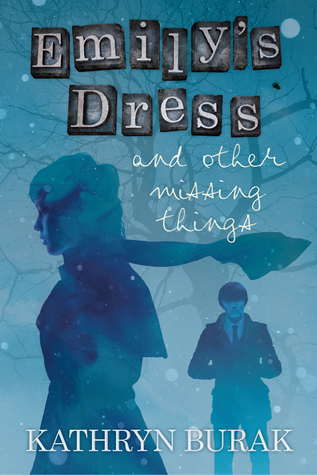
For older readers, Kathryn Burak’s novel Emily’s Dress and Other Missing Things (Roaring Book Press, 2012) explores Emily’s darker side. After experiencing personal tragedy, Claire and her father attempt to start fresh by moving to Amherst, Massachusetts, the home of Emily Dickinson. Claire is a poet herself  and finds herself drawn to Emily’s words, rich with poignant examinations of death, and to Emily’s house, now of course a museum where Emily’s personal belongings are artfully arranged for tourists to view. As if in a creative trance, she breaks in, night after night, to write while wearing Emily’s white dress — until the day the college-aged student teacher Tate discovers her. Instantly linked by this strangely intimate crime, they run, stealing the dress in the process. Burak’s poetry is the star of this novel, both in the actual verses Claire writes — the portals by which she gradually shares the tragic details of her past — and in the crisp, shimmering prose of Claire’s narration:

The smell of snow on the winter air fades. I take a deep breath. I smell paper. Here I have the cool, clean feeling of paper, too.

I am so glad to get away. To be in Emily Dickinson’s house.


With a frigate like this book, the reader will certainly agree.