Maggot Moon

maggot moon

Maggot Moon

by Sally Gardner

Candlewick/Brilliance Audio, 2013

There is so much I want to say about this book. So much. But each and every element or facet or consequence I might mention would rob you of the opportunity to experience it yourself, thereby diminishing your encounter. Even saying that much feels like something of a spoiler.

So I’ll make just these few short comments:

1) Every now and again you read something that feels actually new. This is one of those stories.

2) For a good while you will feel disoriented. Stick it out. It’s worth it.

3) There are some powerful, interactive spot illustrations in the print book that contribute to the mood. The audiobook is sharp and reserved and extraordinary. Take your pick.

4) Please read this book as soon as you can, then find me so we can talk about it.

Summer and Bird

ImageSummer and Bird

by Catherine Catmull

Dutton, 2012

This book is a book to write about.

I first picked it up on Thom Barthelmess’s (curator of The Butler) recommendation, but was also instantly attracted to the beauty of the cover. A cream background contrasted with eerie, sharp bare tree branches echoes the themes of light and dark in the text. A giant swan opens its wings at the top of the cover, inviting you to look at the beautifully embossed, maroon, shiny cursive-like font of the title. The stark white of the back cover seems stripped of feeling, except for the back of two girls walking away, close in physical space but looking in different directions. Ingenious design here.

The text itself is lyrical, insightful, and entirely imaginative. Like Shannon Hale, Catmull pulls you slowly into her world, and in order to follow, you have to surrender your skepticism and let yourself be taken over by the lush phrases and astonishing world building. As with Neil Gaiman or Kathi Appelt, you must relinquish control let the author lead you through a story that will surely be magical, and maybe will even change you.

The plot centers on two very different sisters, Summer and Bird, who wake up one day to find their parents missing in their forest home. Softspoken, warm Summer and the young, spunky, but selfish Bird are overwhelmed with confusion, rejection, and mystery, but decide to follow a cryptic note from their mother and are drawn to the woods in search of their parents. Much like Narnia or The Looking Glass, the sisters enter into the fantasy world of Down, where they take separate, parallel journeys as they try to find their parents. Through their own experiences—Bird falling under the power of The Puppeteer, a manipulative bird who has stolen her mother’s crown, and Summer finding herself stuck in a nest high in the sky with nothing but a small egg—they find that maybe what they were searching for wasn’t necessarily their parents, but themselves. Touching on complex themes of jealousy, desire for power, betrayal, guilt, anger, the dynamic nature of family relationships, courage, inner strength, hope, and freedom, this book is mesmerizing and thought provoking. I admit that as I was reading it, I went through cycles of emotion—anger, fear, irritation, hope, joy, catharsis, and a type of tender sorrow that reaches down deep where I can feel my chest sting a bit with wonder.

Catmull writes in a third-person omniscient perspective, one that is difficult to write in and hard to keep your reader involved in, because the narrator knows every character, and can write from each of their viewpoints. Catmull, however, uses the perspective to add layer and layer upon the story, sometimes jumping in time, sometimes giving the reader secret information that Summer and Bird do not know. Abundant with the mythology of birds and elements of fairy tale, Catmull entwines sections of her story like a skilled weaver, leaving her reader with a one-of-a-kind, extraordinary piece of art.

An eloquent, magical, unsettling, brave debut novel, this is one you want to read.

“All their lives, Bird had been the difficult one, the unmanageable child, and Summer the good girl who could always be relied on. But Summer could see that Bird had always found her own story and chosen to follow it, and Summer envied that. Most of all, she envied the magnetic bird-soul that had told Bird what to do.”

~from the text
Makankosappo Kamehameha

dragonballz6My friend Heath alerted me to this trend of Japanese young people sharing photographic interpretations of manga/anime energy cannons. I love so much about it: the appropriation of the theme and its translation to a new medium, the ironic juxtaposition of prim, restrained school uniforms and dynamic, energetic composition, and the contagious fun. Just look. For all of their serious machinations, they can’t help but grin. It’s no surprise that it’s catching on quick. It’s like planking only interesting.

My favorite thing, though, is its expressive process of story. All of this began with books, books that made a mark on the cultural consciousness that these kids feel the need to explore and share. In 2013, in a world suffused with gadgetry, this is how stories perpetuate themselves. We get so distracted by sensational arguments about the end of publishing and fling ourselves on the funeral pyre of the printed book, and miss the truth staring us in the face. Stories are there. Right in front of us, telling us something about ourselves, just like they always have. We just have to remember to look.

Three Times Lucky

three-times-luckyThree Times Lucky

by Sheila Turnage

read by Michal Friedman

Penguin Audio, 2012

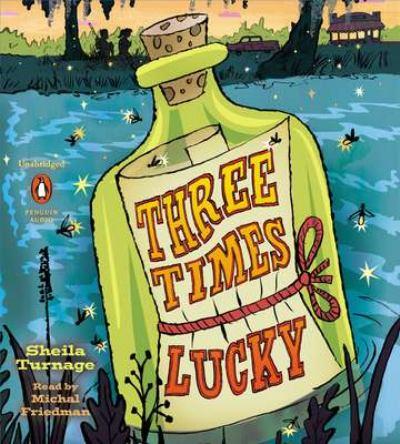
My colleague Luke recently posted about Marcelo in the Real World, 2010 Schneider Award winner, paying particular attention to the audio version. I, too, am busy listening to award-winning titles, and find myself charmed by Michal Friedman’s reading of Three Times Lucky by Sheila Turnage.

Audiobook evaluation can be a tricky business, and this title makes for a nice case study. One of the stickier wickets has to do with separating the quality of the reading and the production from the quality of the source material. As far as the quality of the source material here, we have the endorsement of the 2013 Newbery Committee, who chose Three Times Lucky as one of their Honor Books (and I’m more than happy to throw my enthusiastic appreciation into the pot).

Then there’s the question of artistic interpretation. Set in fictional  Tupelo Landing, NC, the book features a cast of honest, sometimes quixotic characters, drawn with the thick outline of bigger-than-life eccentricity. Turnage is a native of North Carolina herself. She chronicles the outlandish, small-town behavior of the inhabitants of Tupelo Landing with a generous, colorful twang and Friedman captures the cadence of the language and the integrity of the characters in her spirited reading.

The story features a few mysteries playing out on different levels: Mo and her friend Dale are “assisting” the police with a murder investigation; Mo is searching for her own mother, who left her drifting down a river in a basket (Mo is short for Moses); and the reader is busy puzzling out the truth about Mo’s adopted family, The Colonel and Miss Lana, and their own mysterious behavior. Friedman’s narration manages a sharp intensity that maintains all of that suspense without ever puncturing the delicate humor.

As far as the production values, there is much to celebrate here. The source material comes easily divided into chapters of manageable size, and are broken into tracks accordingly. The sound is crisp, clean and consistent, without any audible hissing, muddiness, or variations in the voice reproduction. There is nothing to notice here, and that’s just as it should be.

My one quibble would be with the application of southern accents. While Turnage’s language feels authentic, Friedman’s North Carolina drawl has a few consistency issues. I can’t speak to the authenticity of the North Carolina accent in general, but I don’t think it unreasonable to expect one character to pronounce another character’s name consistently throughout. The cadence feels genuine, though, and beautifully captures the essential nature of the characters. And Mo’s first person narrative, even with the pronunciation lapses, is remarkably and genuinely childlike, in a refreshing and indelible way. So, my quibble is just that, and nothing more.

At the end of the day I look for an audiobook that adds something to the experience that I can’t bring to it myself, reading in my head, and in that regard this one scores right off the charts. Give it a listen and tell me what you think!

Sir Quentin Blake

quentin blakeAfter a long and storied career, British illustrator Quentin Blake was knighted by the Prince of Wales today. From Mrs. Armitage to Matilda, he has deposited lots and lots (and lots) of indelible characters, human and otherwise, into our collective consciousness, where they will stay in perpetuity. He is also responsible for the wonderful wallpaper on the display wall right here in the Butler Center. On this side of the pond he is best known for his spot illustrations for the Roald Dahl oeuvre, but in his 64 year career (and 64 is my favorite number) he has crafted a remarkable variety of really exquisite books, as author and as illustrator. Here are a few standouts:

CockatoosCockatoos

by Quentin Blake

Little, Brown 1992

Professor Dupont is a slave to his routine, and it is driving his cockatoos crazy! They decide to teach him a lesson, and distribute themselves about the conservatory, never to be seen again. Or not.  This clever, infectious book turns the familiar counting book on its head, with the ever diminishing items-to-be-counted hidden (in plain, polychrome sight), to the delight of observant children everywhere.

tell me a picture

Tell Me A Picture

by Quentin Blake

Millbook Press, 2003

Quentin Blake curated a collection of 26 paintings and children’s book illustrations and employs his trademark figures to interpret them with us. Each work of art enjoys four pages, two for uncluttered presentation, followed by two more where the sketchy individuals respond, with genuine curiosity, puzzlement, and affection. As much about looking at art as it is about art itself, it offers children a safe and stable place from which to begin their own inquisitions.

michael rosens sad bookMichael Rosen’s Sad Book

by Michael Rosen

illustrated by Quentin Blake

Candlewick, 2005

Michael Rosen tells the story of his own experience losing his adult son, and explores the fundamental nature of grief. Blake’s sketchy, chaotic images, in drab greys and blues, express grief’s uncontrollable disquiet in a profound and deeply affecting way. The world will continue to debate whether or not it is a book for children (it is), but it’s artistic power is undeniable.

On the money (mostly)

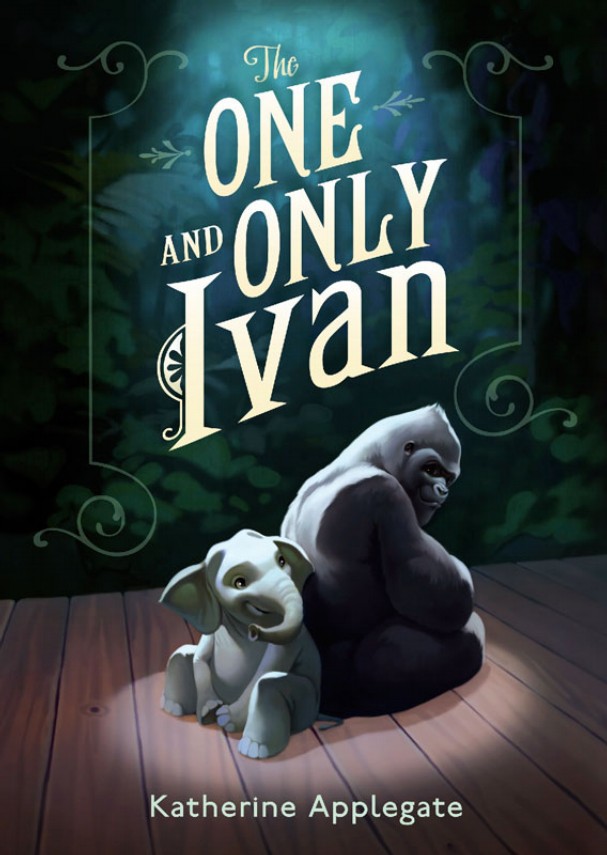
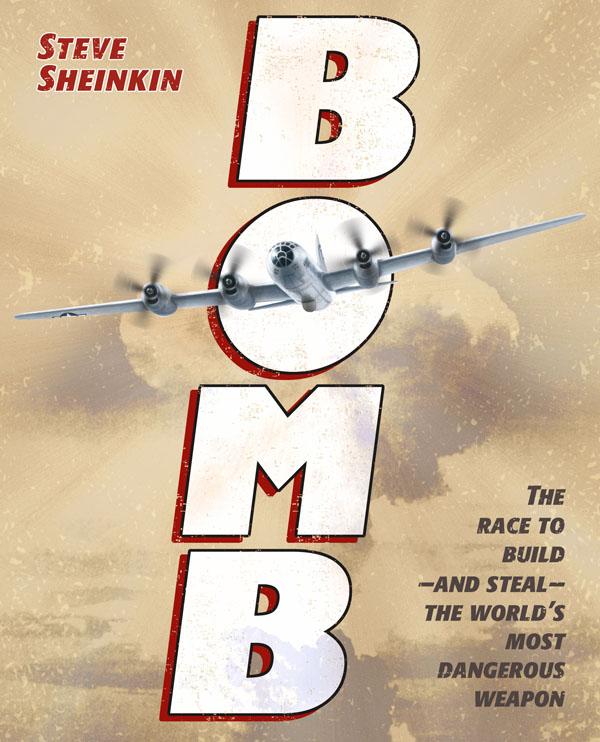
Back in December we suggested some books as particularly holiday-giftable. Looking back, I see that among the eight books for young people we recommended, half were recognized at the ALA Youth Media Awards! We had the Newbery winner (The One and Only Ivan), The Sibert winner/Newbery honor book (Bomb: The Race to Build–and Steal–the World’s Most Dangerous Weapon), a Caldecott honor book (Extra Yarn), and a Printz honor book (Code Name Verity). Not bad for a day’s work.

The One and Only IvanbombExtra YarnCode Name Verity


You can find a link to all of the ALA award winning titles here.

The Brother’s Grimm: Popular Folk Tales

brothers grimmThe Brothers Grimm: Popular Folk Tales

Newly translated by Brian Alderson, illustrated by Michael Foreman

Doubleday, 1978

This rich collection of thirty-one Grimm’s tales combines familiar stories, such as “Hansel and Gretel,” “Rapunzel,” and “Rumpelstiltskin,” with lesser-known tales like the haunting “Fitcher’s Bird” and “King Throstlebeard.” While the anthology contains no formal introduction, internal notes or citations, there is a table of contents and a list of color illustrations in the front matter. Alderson also includes detailed “Afterward” and “Notes” sections in the back matter, in which he affirms his mission for the book. He states that many English translations of Grimm, though accurate, “miss the spirit of the tales” (188), and his objective for this collection is to translate the German tales “not from the scholar’s study but from a storyteller talking to his listeners” (188). He succeeds in this goal, as the translations are clear, concise, and readable—yet they still contain anecdotes of humor, gruesome description, and evocative imagery. Alderson notes that the Brothers Grimm stories “exist in a number of forms,” and his translation “is largely based on texts which had reached [the] final form, the ninth edition of the ‘Grosse Ausgabe’” (189). When he uses previous versions of the tales in his translations, he does not make a specific source note in the internal text, but he does mention it in the “Notes”, which are a thorough three pages long. Alderson comments that himself, his illustrator, and his publisher chose the specific tales to be included, and notes that the order of arranging the tales is intentional. He states, “It was hoped that the sequence of stories would have a naturalness about it that would make it comfortable for readers to work through, if they wished, from one end to the other” (189). Michael Foreman’s dynamic illustrations enhance the collection, as each tale begins with a black-and-white thumbnail sketch and twenty-six full-color, vibrant, watercolor illustrations are scattered throughout the book. Foreman captures the tone of each tale, using muted and dark colors, shadow, and thin lines in the mysterious tales and luminous color, imaginative details, and softer lines in the lighter tales. The collection’s most remarkable feature is its potential diversity of audience. Because of the collection’s comprehensible translation, it is a great resource for the oral storyteller, but it is also a worthy selection for upper-elementary children, as the illustrations bring out the pathos of each story. Translated and illustrated by two qualified, experienced experts in children’s literature, this collection is a significant addition to the canon of folklore for children.

“Rubberized” book covers?!

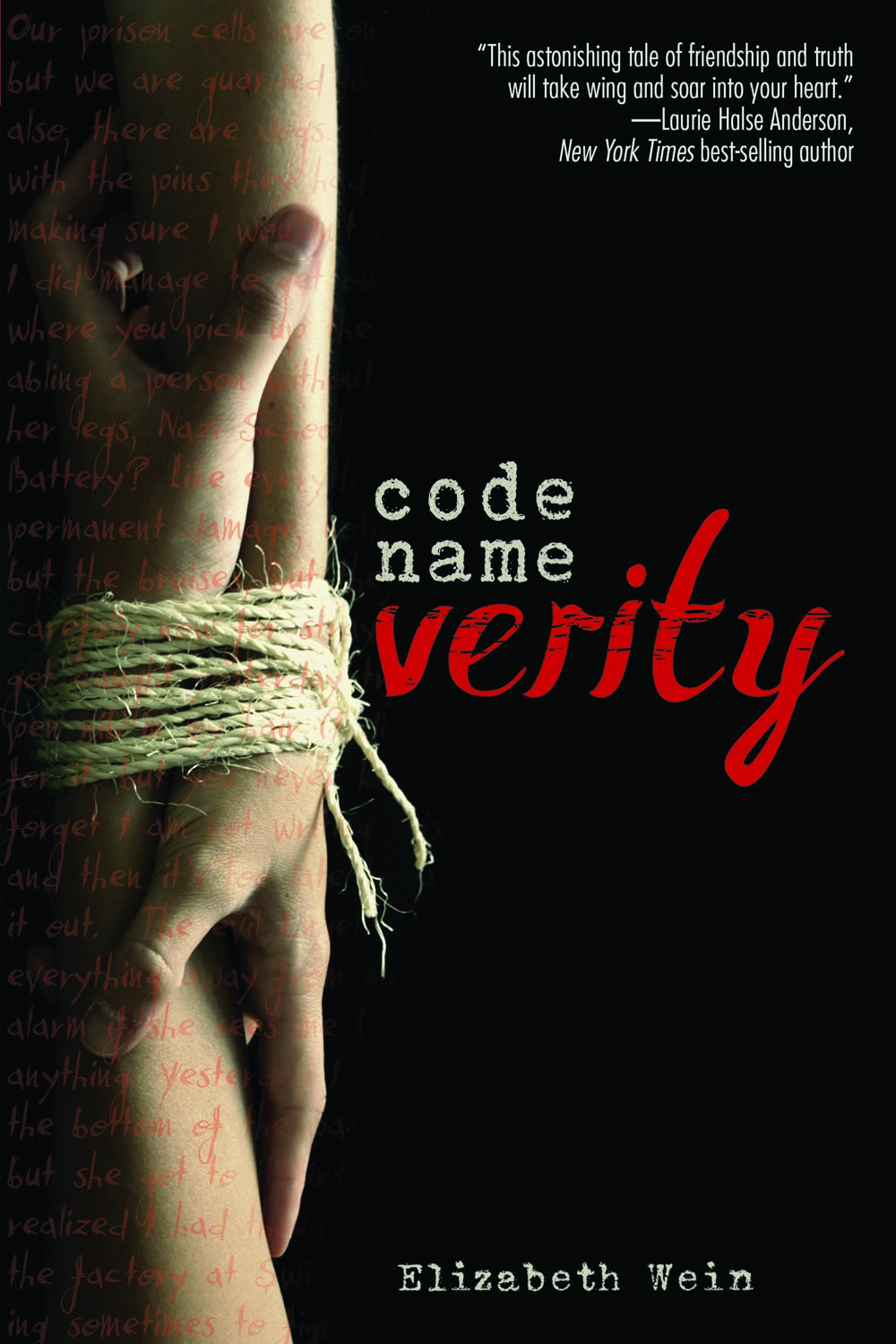
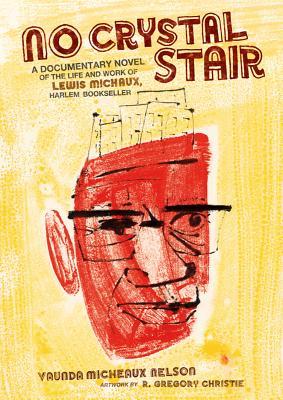
Is it just me? It seems that publishers have become really enamored of some new dust jacket treatment that adds an almost sticky texture to the paper. It feels sort of like a neoprene wetsuity material. I was on the Boston Globe Horn Book Award jury for 2012 and we recognized three pieces of fiction: No Crystal Stair by Vaunda Michaux Nelson (winner), Life: An Exploded Diagram by Mal Peet (honor book), and Code Name Verity by Elizabeth Wein (honor book). And all three have been subjected to these rubbery covers. Two of the three have dark, black backgrounds and I will admit that the matte finish of the texture adds some depth to it. But it also shows fingerprints something awful. And it’s a little tacky (duct-tape-adhesive tacky, not white-pants-after-labor-day tacky). Most libraries will put mylar covers over the jacket, simultaneously solving the problem of the unpleasant feel and compromising the benefits of the matte finish. And, really, at the end of the day, it doesn’t much matter. At all. But, still, someone is going to a lot of trouble (it must be some trouble) to take what might be perfectly fine dust jackets and make them stick.

What do you think?

no crystal stairlife an exploded diagramverity

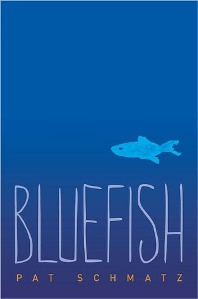
Bluefish

Bluefish by Pat SchmatzRecently during some pretend-play time, my two-year-old niece tucked me into bed and read me a bedtime story.

Of course she didn’t really read it to me. With each illustration, her memory triggered from the countless times Daddy read Olivier Dunrea’s Ollie aloud, and she recited each word flawlessly. A kind of decoding, it could be argued, but not true reading.

Yet for a blissful moment as I snuggled under a doll-sized blanket, I could imagine it. Reading is so commonplace, so easy for most people in my life, I could momentarily believe that this tiny person, so recently a baby, was reading me a story. It felt natural. Normal.

Yet it’s a remarkable feat, isn’t it? Gorillas can learn some basic sign, and dogs can apparently be trained to recognize words, but no other species comes close to the incredible things we can do in speaking, reading and writing. Phonemes come together to represent ideas, and then those sounds are further represented by these symbols on the page. It’s decoding that’s two abstract layers deep, yet somehow we all manage to master this skill by the time we’re still young children.

Well, most of us do.

In Bluefish we meet a 14-year-old protagonist who cannot read. We aren’t aware of that information at first. Like the parents and teachers who know him marginally, we might see Travis as indifferent. Guarded. Maybe a little rebellious or even lazy. A typical teenager, no? If only he would try harder. If only he would apply himself.

But then we learn of his problem, and we think of how little we know anyone. How much we can assume. And how mountainous of a task it would be to catch up to peers ahead of you by 10 years of reading.

Thank goodness he’s not alone. One wise teacher catches on, and with pointed references to The Book Thief, he has him start circling words just as Liesel did. An eccentric classmate, Velveeta, eventually figures it out as well, and offers her help. But there’s no romantic eureka moment in this process. It’s slow, often frustrating work. Velveeta, eager to see results, makes a painful mistake after a failed tutoring attempt:

“Travis, come on. You didn’t even try.”

Try. That word torched fire-hot.

Of course he’s trying; it’s the single most important skill in society. He can’t read, but he’s not a fool.

How many of us fervent readers might ask him to try harder? How easy it seems now, our linguistic synapses established so long ago. I see myself in Velveeta, eager to help and a bit clueless how to do so. Here’s something she’s good at, something she perhaps can fix – a marked difference from her own problems hidden beneath her exuberant exterior. Though Velveeta can’t fix Travis’ reading problem, she can be his friend, with all the trust and acceptance (and, yes, mistakes) that come with the job. And he can be hers right back.

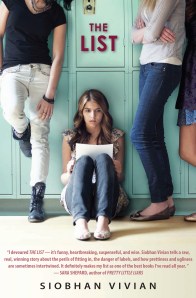
The List

the-list-siobhan-vivianWhen I was in middle school, I wrote a story that was printed in the school lit magazine.  It was about a girl that is so obsessed with the upcoming dance and what’s she’s going to wear that she forgets to look both ways crossing the street and is fatally injured in a car crash. Yes, I was an angry teenager. It was this kind of juvenile catharsis that I expected from The List by Siobhan Vivian. I gleaned from the cover flap that the story revolves around an actual list of the prettiest and ugliest girls in each grade. Apparently it comes out every year right before homecoming and somehow no one knows who makes it and the school administration does absolutely nothing about it. I imagined “pretty girls” and “ugly girls” discovering they had more in common than they thought. I saw an eating disorder somewhere in there. And I hoped for at least one pretty girl getting blood dumped on her or being horribly disfigured in an accident. Entertaining, maybe. But I’ve (almost) moved on from all the bitterness and insecurity of my teenage years. As a mature and confident adult I find reading about these kinds of stories shallow and boring.

I was wrong. And right. This is undeniably a book about body image and identity. There is, indeed, a girl with an eating disorder. But that’s just a hook. Vivian uses the list and the inevitable drama it creates as a way to drop a bomb into the lives of girls who are fully realized characters all on their own. They are worried their boyfriend is ashamed of them. They hate their mothers. They lost their virginity and aren’t ready for the emotional consequences. They just don’t want to be friends anymore. With alternating chapters from the voice of each girl on the list, readers can dip in and out of these girls’ lives drawing the larger thematic connections where they want. I have to hand it to Vivian for holding the plot together across eight different points of view. By the end, I not only felt I really knew each girl, but I really wanted to know who wrote the list. And then I remembered that I’m a mature and confident adult…and stopped judging books by their cover.