Geeky Reads

By Hal Patnott

Not all characters are suited for sword-swinging, dragon-fighting heroics. This week I looked at two titles from our collection with unlikely heroes that are thrust into their role with no choice but to fight to survive. Both protagonists come armed with knowledge of video games, pop culture, and the mechanics of a good fantasy story. Their “geeky” passions help them along the way, but ultimately they both have to learn about the importance of friendship and family to save the day.

Josh Baxter Levels Up by Gavin Brown (Scholastic, 2016)

Josh Baxter has no friends at his new middle school, but he’s had no problems making enemies. On his very first day he puts his lock on the wrong locker, accidently stores his gym clothes in the girl’s locker room, and becomes the target of the popular and evil football star Henry Schmittendorf (aka “Mittens”). Video games are his only escape, but when his grades start to tank, his mom takes those away too. That’s when Josh realizes his life is like an adventure game. If he wants to survive, he needs to build up his skills, make some allies, and face his problems head-on. Since the day school began he’s “been playing not to lose” but now “[it’s] time to play to win” (35). Josh Baxter Levels Up is filled with video game and pop culture references. As Josh learns to navigate friendships, school, and his relationship with his family, his health points go up and down. Every chapter tracks his new skills and experience points. When Josh has to make tough decisions, he first considers what his favorite heroes—including Superman, Han Solo, Link, and Steve the Minecraft Guy—would do in his situation. This fast-paced middle school adventure is a good read for an avid gamer.

Geek Fantasy Novel by Eliot Schrefer writing as E. Archer (Scholastic, 2016 Reprint Edition)

Fourteen-year-old, aspiring-game-designer Ralph Stevens only has one rule. He “must never, ever, make a wish. Not under any circumstances whatsoever” (4). His parents are so serious about this rule that, back in the fifth grade, when he brought in frosted cupcakes for his birthday treat, he was forced to sit in the hallway just in case one of his classmates tried to pressure him into making a wish. Of course, Ralph has no idea of his family’s dark and tragic history of wish-making. When his long-lost, British family invites him to stay for the summer, the last thing Ralph expects is to get tangled with his three cousins in a twisted and magical adventure of wish-fulfillment. As it turns out, granting wishes is not as simple as waving a wand. Ralph must help his cousins journey through fairy tale lands, and fight their evil duchess aunt. Meanwhile, the fourth-wall-breaking narrator hiding in the rafters keeps trying to kill him, and Ralph’s time is running out, because “by the rules of narrative economy, [each] wish has to finish within a hundred pages” (78). A lighthearted, over-the-top quest, Geek Fantasy Novel will appeal to gamers and fans of fractured fairy tales.

Soul-Searching Books for Sweltering Days: Middle Grade Summer Reads

By Alena Rivers

In a recent blog post, we featured picture books that speak to the summer experiences of young readers. This week’s books are summer-themed tomes fit for the elementary and middle-grade reader. These older children are embarking on a new level of self-discovery and finding their place in the world amongst their family and friends. Slow summer months can be full of opportunities for older children to do some soul-searching and to confront issues in their lives. The children in the stories featured here explore bigger themes in their lives such as adoption, death and divorce. Their experiences may be challenging but their stories are interlaced with touching, humorous and revelatory moments that lighten their moods. When given the space and the freedom that summer vacation can often provide, children can take another step into maturity by discovering that elusive balance between accepting their circumstances and doing something about them.

As Brave As You by Jason Reynolds (Simon & Schuster/Atheneum, 2016)

Twelve-year-old Genie and his older brother Ernie are spending a month with their grandparents in North Hill, Virginia while their parents spend time together sorting out their fading marriage. Genie is distraught knowing that his parents are on the brink of divorce so his time away from them has him more anxious than usual. Shortly after they arrive at their grandparents’ home Genie learns that his grandfather is blind. This revelation, and adapting to an environment unlike his home in Brooklyn, only adds to Genie’s anxiety. Country life offers a quiet and industrious place for Genie to roam, think and get to know his grandfather. All of these experiences deepen his understanding of his family history and help him discover more about himself and his role within the family. Readers will empathize and laugh with Genie as he braves new territory learning about grits, sweet tea and family secrets. Recommended for ages 9-12.

Just Like Me by Nancy Cavanaugh (Sourcebooks, 2016)

Julia is an eleven-year-old girl who has been encouraged by her parents to attend a week-long, overnight summer camp to bond with her “Chinese sisters.” Julia, Becca and Avery are not exactly sisters, but they were adopted from the same adoption agency in China and their families get the girls together occasionally. Julia is not excited about spending more time with Becca and Avery who identify more with their Chinese heritage than Julia. To add to her frustration, within minutes of checking into their camp cabin, Julia realizes that all six cabin-mates are not going to get along well. Through narrative text and periodic journal entries, Julia shares her week-long experiences as she tries to navigate contentious relationships while still enjoying proverbial summer camp activities. Julia’s concerns about her adoption story and her periods of reflection provide readers with thoughtful examples of how taking risks can help us find answers. Recommended for ages 9-12.

Summerlost by Ally Condie (Penguin Random House/Dutton, 2016)

Nearly a year ago, twelve-year-old Cedar Lee suddenly lost her father and youngest brother in a car accident. Cedar, her mother and her remaining younger brother, still feeling the pain of their loss, move to their mother’s home town for the summer where Cedar finds an unexpected friendship, mystery and a summer job at the Summerlost theater festival to keep her busy. Despite her new distractions, the loss of her loved ones leaves a void not easily filled. Cedar’s time over the summer is spent building relationships, bravely taking on new experiences and learning how to find strength through the recovery process. A heart-felt exploration of the growth we hope to find after losing loved ones. Recommended for ages 9-12.

Butler’s Thoughts on Moving Forward after Orlando

by Hal Patnott

Last week, I planned to write an entirely different post today, but, in the early hours of Sunday morning, everything changed. One hateful man with a semi-automatic assault rifle killed 49 people and injured over 50 more at Pulse, an LGBTQ nightclub in Orlando, Florida. This tragedy was not a random act of violence, but a deliberate act of hatred. During Pride Month–a time of year set aside for celebrating our community and our continued fight for equality–a violent and ignorant act ended the lives of 49 human beings with families, friends, and futures in one of the few spaces in our society where they should have been able to freely express themselves and their love. Let’s not forget, he also attacked on a night of cultural celebration. It was Latinx Night at Pulse. More than 90% of the victims belong to the Latinx community. The attack on Pulse was not an isolated incident of hatred either. Evidence from the National Coalition of Anti-Violence shows that LGBTQ People of Color face a significantly higher risk of homicide and violence. Those of us in the LGBTQ community grow up with messages from the media and our peers telling us not to exist. A survey conducted by the Human Rights Campaign reveals that LGBTQ youth are two times more likely than their peers to experience physical assault at school. The bullying doesn’t end when we grow up. We are accused of crimes we’ve never committed and then barred from fulfilling basic needs like using the bathroom.

In his address on Sunday following the massacre, President Obama said, “In the face of hate and violence, we will love one another. We will not give in to fear and turn against each other.” He reminds Americans that to continue to “actively do nothing” about the violence in our country “is a decision.” LGBTQ people live in every city across the United States, and, whether you realize it or not, we stand on both sides of the reference desk in the library. Since Sunday, leaders in the library profession have spoken out about the tragedy in Orlando. Sari Feldman, President of the ALA, promises in her statement that, “In defiance of fear, ignorance and intolerance, the library community will continue its profound commitment to transforming communities by lending its support.” The chair of the Gay, Lesbian, Bisexual, Transgender Round Table, Peter Coyl also writes, “Libraries can and should be safe places. Even if you are far from Orlando, there are those you serve who are affected by this tragedy. They are looking for help and hope.” Libraries must offer more than empty promises to serve everyone in the community.

So, this is the part when you may be asking how you can help. June is GLBT Book Month. It’s not too late to raise awareness by building a display or making finding aids like bibliographies to increase access for your patrons. Don’t stop at the end of the month, though. Recommend diverse books to all patrons all year round. GLBT books aren’t just for GLBT readers. Evaluate the collection you have and make sure you can provide patrons with representation for all sexual orientations, gender identities, racial, and ethnic backgrounds. If you don’t know where to start, the Rainbow List is an excellent resource. Consider how you catalog and where you shelve these materials. Above all, think critically about how you treat people. Watch out for the assumptions in your language about gender identity. Don’t contribute to a culture of hatred and fear by reacting with Islamophobia. Remember that everyone walks into the library with a different narrative and different needs. We say the library serves everyone, but as librarians it’s our responsibility to actively open the doors and welcome them.


We affirm and support the thoughts and recommendations outlined here, and aspire for the library community to be a model of service to all communities.

Janice M. Del Negro, associate professor

Diane Foote, assistant dean and curator, Butler Children’s Literature Center

Sujin Huggins, assistant professor

Kate Marek,  dean and professor

Alena Rivers, graduate assistant, Butler Children’s Literature Center

To Grandmother’s House We Go!

by Alena Rivers

Not all of our summer excursions can be tropical vacations. Whether taking time for staycations or logging miles and miles on the road to visit family, for children, time spent in a different place, or traveling to it, can spark imaginations and inspire new adventures. Long road trips and quiet summer days provide great opportunities for children to explore their surroundings and give their brains the freedom to daydream. Here are a group of newly-published picture books in the Butler Center that feature children and the imaginative ways they spend time with grandparents or passing the time on warrior-style road trips to visit them.

Are We There Yet? By Nina Laden, illus. by Adam McCauley (Chronicle, 2016)

A boy and his mother take an extended drive to grandmother’s house. Not long before they are on the road, the boy asks his mother, “Are we there yet?”. The mother simply replies, “No.” This familiar-to-adults exchange is repeated across each two-page spread of the book while readers are taken on an illustrated journey through cities, over bridges past farms and deserts until they reach grandmother’s house. The story is a simple reminder for kids and their adult caregivers of the excitement just outside the car window that can be easily overlooked on long road trips.

Are We There Yet? By Dan Santat (Little, Brown, 2016)

Caldecott medalist, Dan Santat creates a larger-than-life visual voyage when a young boy and his parents embark on what feels like the longest car ride ever to his grandmother’s birthday party. The boy’s initial excitement about the road trip is soon stunted by the bland scenery outside his car window. Santat illustrates imaginative scenes and uses minimal but complimentary text to depict what can happen when you let your brain run wild during the most mind-numbing, tiresome treks to the fun waiting at the end of the road.

The Bell in the Bridge by Ted Kooser, illus. by Barry Root (Candlewick, 2016)

Charlie, a young boy, makes annual, two-week summer visits to his grandparents’ farm. Not much happens during these summer visits so Charlie amuses himself by playing near a stream with tadpoles and turtles. Charlie discovers that by using a rock to hit the railing of a bridge over the stream, the result is a bell-like sound with its faint echo following it. One day after banging the bridge, an extra sound, just like his, is returned in the distance. Who or what is causing this additional sound? The mystery adds just the right amount of excitement to speed up the slow summer days that remain before Charlie’s parents come to pick him up. Soft water color and gouache shades of green, yellow and orange enhance the feeling of quiet warmth indicative of summer mornings and late afternoons.

The Not-So-Faraway Adventure by Andrew Larsen, illus. by Irene Luxbacher (Kids Can, 2016)

Young Theodora, or Theo as her grandfather, Poppa, calls her, decides that a trip on a streetcar to a nearby beach is the perfect birthday present for her adventurous grandfather. The journey takes time but there is much to see along the way. When they finally reach the beach, Theo and Poppa spend the day discovering its many treasures and dreaming up big adventures. Their trip ends with a refreshing meal of gazpacho soup and another surprise waiting for Poppa in his apartment. Colorful, mixed-media artwork provides vivid illustrations of the city, beach and all the places in between.

GLBT Book Month

by Hal Patnott

Welcome to June, Everyone! As you may know, it’s GLBT Book Month. With Summer Reading kicking off too, it’s a great time to celebrate and share titles that offer representation of the diverse experiences of people in the GLBT community. Here are a couple 2016 titles on our shelves at the Butler Center. Stop by to check them out if you are interested, and let us know in the comments below what GLBT books you’re excited to read and share this month.

Saving Montgomery Sole by Mariko Tamaki (Roaring Brook Press, 2016)
Sixteen-year-old Montgomery Sole has a passion for the unexplained. Her after-school, mystery club dedicates time to investigating everything from aliens to ESP. While searching the Net for a new mystery, Montgomery discovers a mystical rock, the Eye of Know, which gives her the power to target her enemies. With the Eye of Know she might even be able to take down Reverend White, a new preacher in town hell-bent on saving the “American Family” from “sinners” like Montgomery’s moms. Montgomery must decide what it means to be a hero and whether to risk her friendships by wielding the stone’s dark and dangerous power.

Drag Teen by Jeffery Self (Scholastic, 2016)
JT needs to escape his small hometown of Clearwater, Florida. He dreams of becoming a writer, a singer, or just a part of something bigger than his close-minded family. Unfortunately, he doesn’t have many allies except his best friend Heather and his popular boyfriend Seth. Leaving for college seems like his only option, but scholarship money is out of reach. However, an opportunity arises when Seth learns about a drag pageant in New York with the prize of a full-ride, college scholarship. The pageant is JT’s last chance. Against the odds, he must find a way to get to New York and win.

Picture Book Themes Exploring Friendships Lost, Gained, Treasured and Imagined

Many picture book themes resonate with children, especially those that portray the various aspects of friendship. Preschoolers and early elementary school-aged children are just beginning to experience what it means to be a friend, to share, to be kind, to cooperate, to disagree, to get angry, to reconcile, to feel accepted and understood. Friendships start small and grow, are tested and even lost but these relationships are an integral part of a young child’s development into a compassionate, self-aware human being.

Children lose friendships, when neighbors or classmates move or change schools, and they make new friends for the same reasons. What happens when a child has a best friend and a new one comes along, changing the dynamic of an existing friendship? How do children respond when their best friend is being teased? How do children learn to stand up for friends who are being teased? No one wants to feel isolated or unwelcome, and yet there will be times when children experience these challenges.

Books are an excellent way to explore these facets of friendship. The Butler Center has recently received several picture books that share a common theme when best friends, whether real or imaginary, are lost, gained, challenged and treasured.  We hope you can take a few minutes to peruse these titles and others in the collection!

Big Friends by Linda Sarah, illus. by Benji Davies (Henry Holt, 2016).

Two young boys, Birt and Etho have formed a comfortable, dependable friendship as they spend their days coming up with imaginative ways to pretend play with two cardboard boxes. A third boy, Shu, asks if he can join them and the three boys spend time together, until Birt finds that he misses playing alone with his best friend, Etho. He stops playing with them altogether until he is coaxed back in with a new box invention created by Etho and Shu. This is a warm, gentle story that depicts the trials young children face with the changing dynamics of expanding friendships.

Life Without Nico by Andrea Maturana, illus. by Francisco Javier Olea (Kids Can Press, 2016).

Nico and Maia are best friends who find endless ways to play together until Nico learns that his family must move away for a period of time, leaving Maia to overcome the empty feeling of lost friendship. Time without Nico is difficult for Maia, but she eventually discovers other ways to pass her time and even meets a new friend. Upon Nico’s return, Maia fears that these changes will affect her friendship with Nico, but happily learns otherwise. Author, Andrea Maturana, explores our capacity for change and our ability to reconnect with absent friends.

My Friend Maggie by Hannah E. Harrison (Dial Books, 2016).

Paula adores her best friend Maggie. They are inseparable until Veronica, another classmate, convinces Paula that Maggie is too big and clumsy to be worth hanging around. Paula drifts away from Maggie but finds herself in the same position when Veronica decides that Paula is the next target of her teasing. Young children can explore ways to stay true to meaningful friendships, even when they are challenged by others. This book will be released in August. An advanced reader’s copy is available for review in the Butler Center.

Sam and Jump by Jennifer K. Mann (Candlewick, 2016).

A child’s best friend does not always have to be human! Author, Jennifer K. Mann describes the friendship between Sam and his stuffed animal, Jump. Characteristic of best friendships, Sam and Jump are never apart, until Jump is accidentally left behind at the beach when Sam finds, Tim, a young boy with whom he spends the day playing in the sand and water. Sam experiences a restless night worrying about ever seeing his beloved stuffed animal again. The next day, a grateful Sam is not only reunited with Jump, but with his new friend Tim. Children whose most precious friendships begin with a treasured stuffed animal or toy will identify with the feelings associated with losing and, hopefully, reuniting with it, as well as finding comfort in welcoming new relationships.

Young Adult Narratives for the Digital Age

Books

by Hal Patnott

More and more we live on the Web, narrating our days in snaps, tweets, IMs, and status updates. It only makes sense then that we can find books on the shelves that reflect our digital lives. Why not? People thousands of miles away from one another connect, form communities around shared passions, and fall in love (or, at least, fall in love with the idea of having someone to love) online.

Novels in texts and emails invite the reader to participate and explore the story. They offer an immediate narrative and pacing as rapid-fire as key strokes. Like in poetry, every word counts. There’s less room for leisurely description. Messages between two characters need to capture voice and carry the plot.

If you’re looking for an energetic, emotional, and suspenseful read to recommend to a teen, try one of these 2016 titles with a nontraditional narrative style. Come check out the advanced reader’s editions at the Butler Center if you want to see them for yourself!

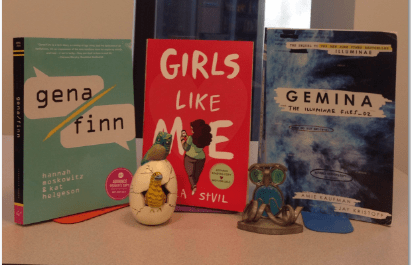
Gena/Finn by Hannah Moskowitz and Kat Helgeson (Chronicle, April 2016) 

An entire country separates Gena and Finn. Gena attends a boarding school on the east coast. She looks forward to a future at an Ivy League school. Finn, on the other hand, followed her college boyfriend Charlie out to California, where she struggles to find a job. They have nothing in common except their love for the cop drama Up Below. Through fan fiction and fan art, two young women who might never have met form a bond that starts as shared enthusiasm for a television show and develops into love more complicated than friendship.

Fans of the book Fangirl by Rainbow Rowell will recognize a similar affection for the world of online fandom in Gena/Finn. Like Cath in Fangirl, both Gena and Finn cling to the stability of their fan community when they feel isolated and unsatisfied. Far away from her home with no friends to confide in but Gena, Finn fears taking the next step of commitment in her relationship with Charlie, who knows nothing about her obsession with Up Below. Always private about her past, Gena has her own secrets, a fight with mental illness, and unresponsive parents who left to gallivant around the globe. Told through blog posts, emails, text messages, and journal entries, Gena/Finn invites readers into an intimate and fast-paced story of two fans trying to make sense of the real world.

Girls Like Me by Lola StVil (Houghton Mifflin Harcourt, October 2016)

Shay Summers doesn’t “fit into the puzzle of high school” and she doesn’t fit in to her step-mother’s narrow-waist-line expectations (12). In class and in the halls, the head cheerleader Kelly torments Shay at every opportunity, while at home Shay is haunted by the memory of her father who died in a car crash. At least her two best friends Dash and Boots stand by her side on the outskirts of social acceptance. As the anniversary of her father’s death looms over her, Shay seeks a distraction online. She meets a boy called Godot on TrashFire.com, a website where everyone at her school shares the latest gossip. Godot falls for Shay’s wit, and he identifies with her feelings of loneliness at home. As their instant message relationship progresses, Godot urges Shay to meet him in real life. However, Shay fears rejection, especially when she learns Godot’s true identity: Blake Harrison, King of the School.  She must decide whether a chance at real-life love is worth the risk of losing Godot.

Girls Like Me alternates between verse and text messages. Short lines and chatspeak convey the urgency and the longing of Shay’s romance with Blake as the story unfolds. Over text message they use fonts to communicate their feelings. A single post carries enough weight to change the status of their relationship. Ultimately, neither Shay nor Blake is satisfied with digital love, but if they want their love to last in the real world, Shay needs to learn to love herself first.

Gemina: The Illuminae Files_02 by Amie Kaufman and Jay Kristoff (Alfred A. Knopf/Penguin Random House, October 2016)

The second installment in the Illuminae Files picks up on space station Heimdall. Hanna Donnelly, daughter of the space station’s commander, knows nothing about the BeiTech Corporation’s assault on the illegal mining settlement of Kerenza. Consumed with her social engagements and her perfect love life, she has no idea that in less than two weeks BeiTech will launch a new attack to destroy the Heimdall and all evidence of what happened in Kerenza. When a BeiTech invasion force sneaks on board the Heimdall, Hanna is thrust together with unlikely hero Nik Malikov, a member of a dangerous criminal organization, to save their people before BeiTech destroys the station and a time paradox rips apart the universe.

Like the first book in the series, Gemina unravels through transcripts of video feed, radio transmissions, chat logs, reports, and emails. Kaufman and Kristoff raise the stakes—not only life or death hangs in the balance, but the existence of two entire universes depend on Hanna and Nik for survival. The intricately woven plot takes every detail into account. Frequent shifts in perspective build tension as the story twists and turns in unexpected directions with heart-stopping force. Although Gemina follows a new set of leading characters, readers should start with Illuminae to fully understand the context of the story. For fans of science fiction and thrillers, the Illuminae Files is a series worth exploring.

Cozy Up with a Little One and a Board Book Based on Classic Literature

by Alena Rivers

Busy parents and caregivers of babies and toddlers may not be able to find the time to sit down with a cup of tea and a read a classic piece of literature such as Moby Dick or Pride and Prejudice but there may be another way to share the benefits of reading aloud to young children while also dipping into a literary classic for themselves.

The Butler Center recently received a small collection of Cozy Classics board books by brothers Jack and Holman Wang featuring classic novels told in an abbreviated 12 words and illustrated by hand-crafted felt figures depicting characters from the original stories. The first page in each board book poses felt figures against the backdrop of text from the first chapter of the board book’s original counterpart. The detailed craftwork of the felt figures is admirable and the one-word per two-page spread invites a very selective exploration of themes from the original novels. For example, in the Pride & Prejudice board book, the word “sick” accompanies an image of a character lying in bed with two others kneeling by her bedside.

While there is little doubt babies will miss the connection between many of the featured words and the actions depicted by their corresponding felt images, adults may enjoy the challenge of remembering the context for each literary scene. The unique concept behind these board books could certainly serve as a fun novelty for families that are familiar with the classic stories featured in the Cozy Classics series. These also make great selections for anyone who appreciates a simplified version of a lengthy classic work!

Visit the Butler Center to take a look!

Cozy Classics: Charles Dickens’s Great Expectations by Jack and Holman Wang (Chronicle, 2016).

Cozy Classics: Herman Melville’s Moby Dick by Jack and Holman Wang (Chronicle, 2016).

Cozy Classics: Jane Austen’s Pride & Prejudice by Jack and Holman Wang (Chronicle, 2016).

Cozy Classics: Leo Tolstoy’s War & Peace by Jack and Holman Wang (Chronicle, 2016).

We Have a Way with Words!

by Alena Rivers

Summer is upon us and that has many librarians, teachers, parents and caregivers thinking about the summer reading programs that will encourage children to continue reading over their school breaks. As much as we love reading, we also love the creative writing process that brings to life the stories our children encounter.  Reading books will always be a worthwhile endeavor but, this summer, let’s also encourage our children to explore the creative writing process. The Butler Center has a few nonfiction selections that can help children expand their vocabularies and give them a better understanding of the origins and definitions of commonly used word phrases. Then pull it all together with some imaginative activities that challenge a child’s writing process, or get them inspired by reading an author’s biography to see how the creative writing process develops. Stop by and take a look at some of these books!

You’re Pulling My Leg: 400 Human-Body Sayings from Head to Toe by Pat Street and Eric Brace, illus. by Eric Brace (Holiday, 2016). Humorous illustrations of animals demonstrating human-body part phrases and an index of body parts referenced throughout the book will give children plenty of possibilities to include in their next writing experience.

Will’s Words: How William Shakespeare Changed the Way You Talk by Jane Sutcliffe, illus. by John Shelley (Charlesbridge, 2016). Children will be surprised to see how many common phrases we use today were created or popularized by William Shakespeare’s plays. The author includes a note about William Shakespeare, a timeline of his life and a bibliography.

Yaks Yak: Animal Word Pairs by Linda Sue Park, illus. by Jennifer Black Reinhardt (Clarion/Houghton Mifflin Harcourt, 2016). Words have multiple meanings and young children will discover several animal words and their active counterparts, when noun meets verb!

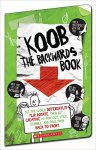
Koob: The Backwards Book by Anna Brett, illus. by Elle Ward (Scholastic, 2016)Try out this activity book that includes some creative ways to think outside of the box when writing. A fun option to address the summer mantra, “I’m bored”!

Some Writer: The Story of E.B. White by Melissa Sweet (Houghton Mifflin Harcourt, Oct. 2016). Melissa Sweet wrote and illustrated this biography about E. B. White’s early love of writing and how he became the author of the classic stories, Charlotte’s Web and Stuart Little. This book will be released in October. Come see the advanced reader’s copy in the Butler Center, today!


Anime & Manga Recommendations for the Summer

Akame_ga_killArslanDanMachiNozakinichijou_v_1

by Hal Patnott

Looking for something new to read or watch this summer? Try one of these manga/anime series. All of the manga versions of the series are on-going, and most of the anime adaptions are available for free (and legally!) on Crunchyroll. These were some of my favorites from the last year

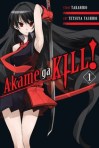
Akame ga KILL! by Takahiro and Tetsuya Tashiro

Publisher: Yen Press

Available Volumes: 6

Episodes: 24

Tatsumi, a naive teenager from the country, moves to the imperial capital in hopes of earning a fortune by joining the army. However, he quickly learns that the Capital is corrupt and infested by demons. Instead of enlisting like he planned, Tatsumi joins forces with an elite group of assassins called Night Raid who punish evil from the shadows. They are determined to free their country from demon control.

The Heroic Legend of Arslan by Yoshiki Tanaka and Hiromu Arakawa

Publisher: Kodansha Comics

Volumes: 4

Episodes: 25

Arslan, the young prince of the kingdom of Pars, is no warrior like his father King Adragoras, who has never lost a battle. He’s curious about other cultures and merciful to his subjects, even when his life has been put in danger. However, in Arlsan’s fourteenth year, the fanatically religious kingdom of Lusitania attacks the borders of Pars. For the first time Arslan must prove himself. No one expects the King’s army to lose, but, when treachery turns the tides of war against them, Arlsan must set out on a quest to overthrow Lusitania and win back his kingdom.

Is It Wrong to Try to Pick Up Girls in a Dungeon? by Fujino Omori and Suzuhito Yasuda

Publisher: Yen Press

Available Volumes: 4

Episodes: 13

Bell Cranel makes his living as an adventurer, killing monsters in the Dungeon in exchange for magic stones. He dreams of one day impressing a girl by rescuing her from a monster. However, his dream doesn’t go quite as planned. When Bell ventures too deep into the dungeons, a Minotaur attacks and nearly kills him. Lucky for Bell, Aiz Wallenstein, a top-class warrior known as the Sword Princess, steps in just in time to save his life. Even the gods honor Aiz Wallenstein for her power in battle. She’s far beyond Bell’s league as an adventurer. Determined that one day Aiz will notice him, Bell devotes himself to becoming the strongest hero in the world.

Monthly Girls’ Nozaki-kun by Izumi Tsubaki

Publisher: Yen Press

Volumes: 3

Episodes: 12

When Chiyo Sakura confesses her love to Nozaki, a tall and brawny boy in her year, the last thing she expects is to receive his autograph. Soon she discovers that he’s secretly a manga artist for a popular series called “Let’s Fall in Love!” and he wants Sakura to be his assistant. Although, as an artist, Nozaki is known as “the spokesperson for girls’ hearts everywhere,” he turns out to be pretty clueless about love in the real world.

Nichijou: My Ordinary Life by Keiichi Arawi

Publisher: Vertical

Available Volumes: 1

Episodes: 26

Yuuko, Mio, and Mai, sophomores at an ordinary high school, find themselves in strange and surprising circumstances every day. One of their classmates is not-so-secretly a robot with a giant turnkey on her back. The boy Mio has a crush on rides a goat to school. Their principal battles deer in the courtyard. In this parody of slice-of-life, each chapter is a vignette that challenges the definition of “normal.”