On the money (mostly)

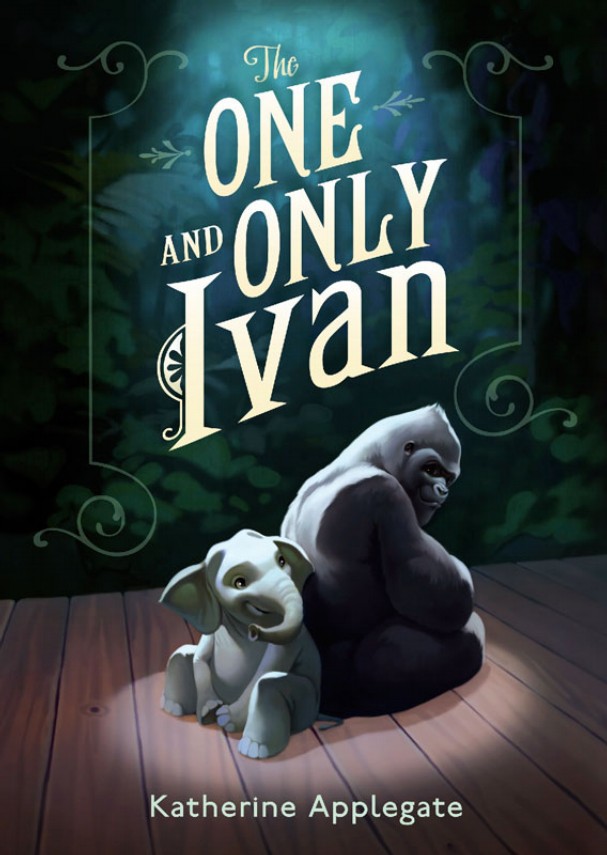
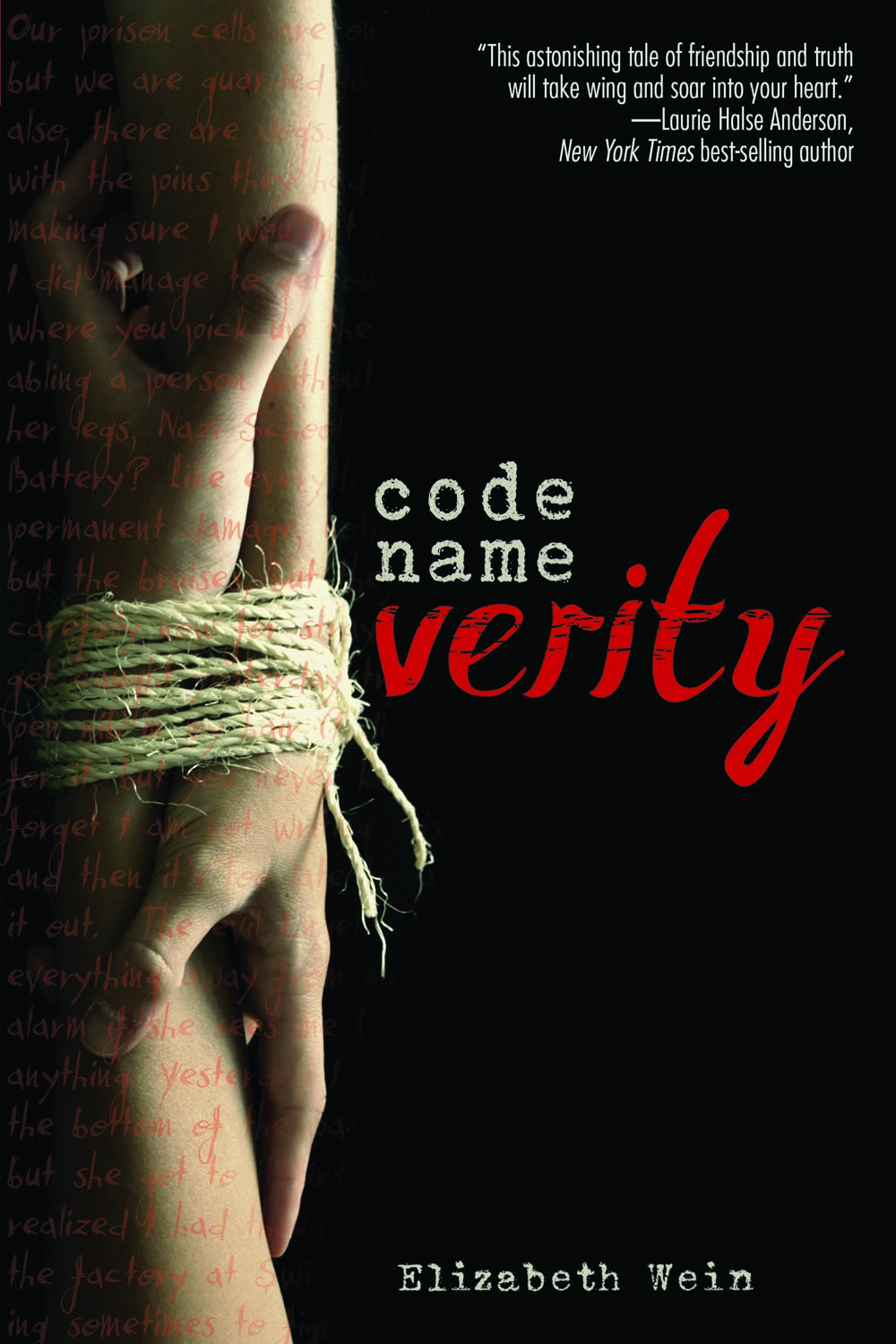
Back in December we suggested some books as particularly holiday-giftable. Looking back, I see that among the eight books for young people we recommended, half were recognized at the ALA Youth Media Awards! We had the Newbery winner (The One and Only Ivan), The Sibert winner/Newbery honor book (Bomb: The Race to Build–and Steal–the World’s Most Dangerous Weapon), a Caldecott honor book (Extra Yarn), and a Printz honor book (Code Name Verity). Not bad for a day’s work.

The One and Only IvanbombExtra YarnCode Name Verity


You can find a link to all of the ALA award winning titles here.

My Family Valentine

When I was growing up, Valentine’s Day was the biggest holiday going. The Valentine’s Day Peacock would administer the annual treasure hunt, hiding construction paper hearts around the house, each with a different clue on it, in Latin, and it fell to me and my sisters to hunt them down, translating one to lead to the next, and so on. Each of us was assigned a different color heart (lest they get confused) and as we grew older, the clues became more difficult and more plentiful. The trail invariably ended with particular paydirt: a cellophane-wrapped, heart-shaped box of chocolates and a pair of pink socks. I believe this went on all through our high school years (though my sister swears it was the Valentine’s Day Aardvark, so my memory may not be especially dependable) and was, even as a teen, a sweet, resonant tradition. To me, Valentine’s day will always be a holiday about family, more than romance, and so I offer you a bevy of picture books about family love, in its infinite variety, as my valentine.

Marisol McDonald Doesn’t Match/Marisol McDonald no combina by Monica Brown,  illustrated by Sara Palacios, Children’s Book Press, 2011

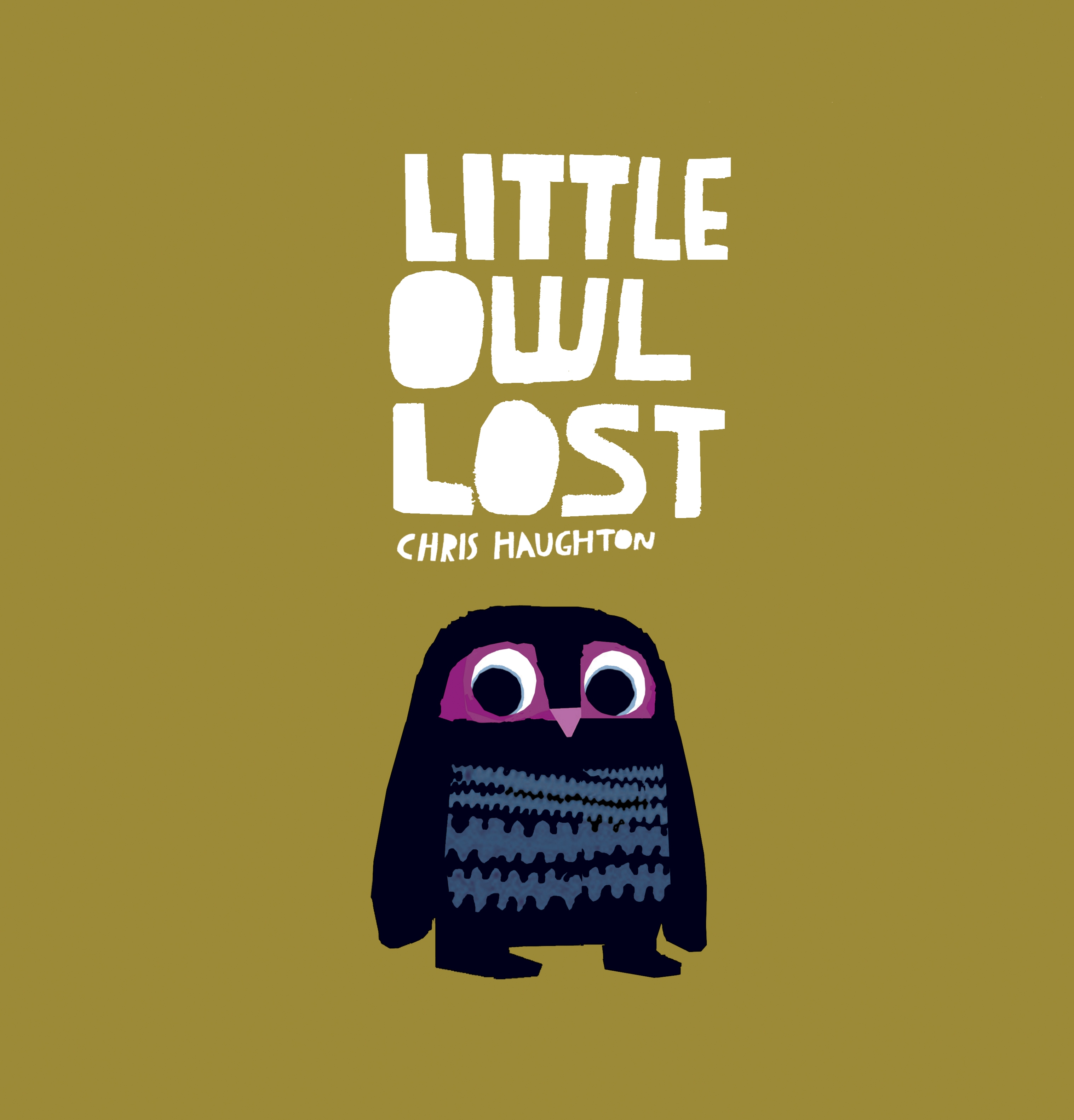
Little Owl Lost by Chris Haughton, Candlewick, 2010

The Dog Who Belonged to No One, by Amy Hest, illustrated by Amy Bates, Abrams Books for Young Readers, 2008

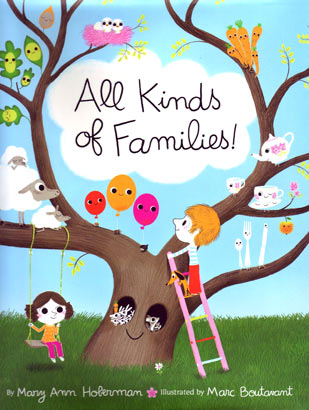
All Kinds of Families, by Mary Ann Hoberman, illustrated by Marc Boutavant, Little, Brown, 2009

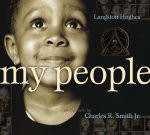
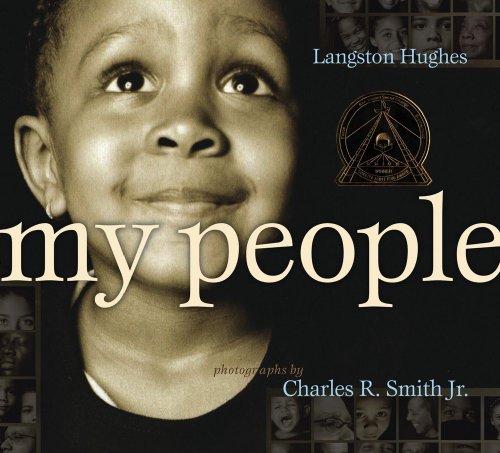
My People by Langston Hughes, illustrated by Charles R. Smith, Atheneum, 2009

I’ll See You in the Morning, by Mike Jolley, illustrated by Mique Moriuchi, Roaring Brook, 2008

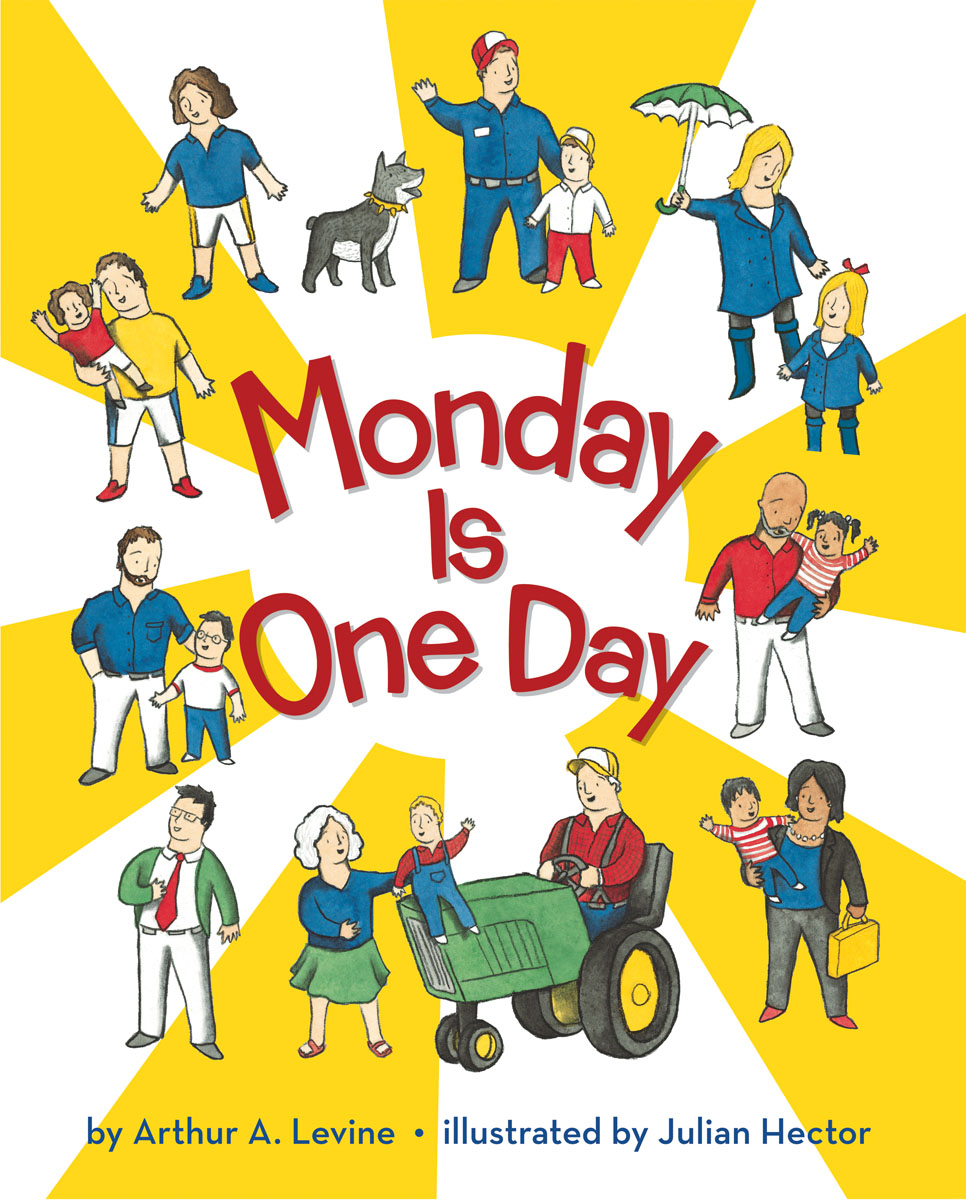
Monday is One Day by Arthur Levine, illustrated by Julian Hector, Scholastic, 2011

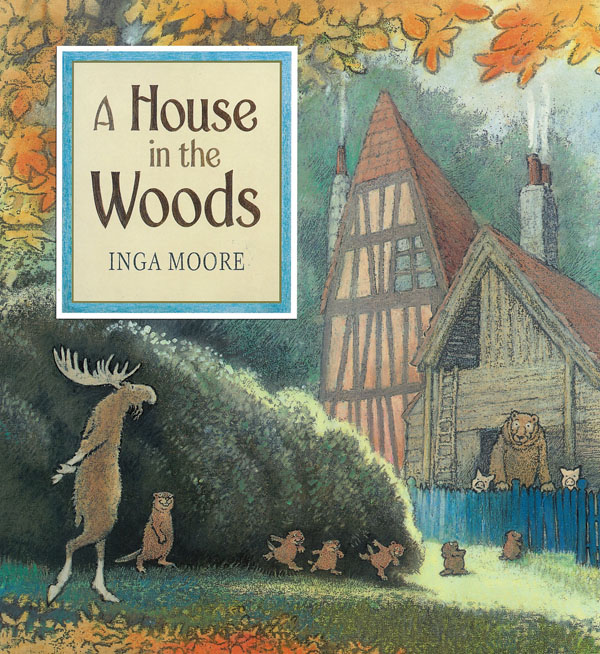
A House in the Woods by Inga Moore, Candlewick, 2011

The Family Book by Todd Parr, Little Brown, 2003

In Our Mothers’ House by Patricia Polacco, Philomel, 2009

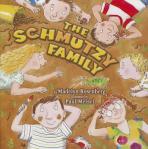
The Schmutzy Family, by Madelyn Rosenberg, illustrated by Paul Meisel, Holiday House, 2012

Mad at Mommy by Komako Sakai, Arthur A. Levine Books, 2010

marisollittle owl lostdog who belonged to no one all kinds of families     my people ill see you in the morningmonday is one dayhouse in the woodsfamily bookin our mothers houseschmutzy family    mad at mommy

Open This Little Book

open this little bookOpen This Little Book

written by Jesse Klausmeier

illustrated by Suzy Lee

Chronicle Books, 2013

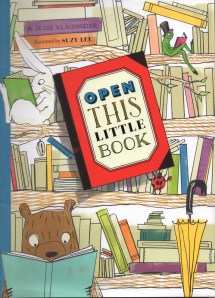
In a world where meta is everywhere, a book turning in on itself might come across as trendy or superficial. Indeed, many such books do. But the overuse of a particular approach to storytelling does not make such an approach necessarily obsolete. It does, however, raise the storytelling bar. To transcend the dangers of gimmickry, a meta picture book needs to weave together its plot, text and illustration into a tight and cohesive package, in service of a reverberant message. Fixing meta’s self reflection in some meaningful purpose grounds it, rescuing the by-definition disconnectedness of the narrative from flapping in the literary breeze. When done right, this kind of circular storytelling packs a real wallop, and such is the case with Open This Little Book.

The book is literally a number of books inside one another, each smaller than the last, each identified by a different colored cover (purple, red, green, orange, yellow, blue), each “opened” in succession by a different character (reader, ladybug, frog, rabbit, bear, giant), and then consumed and read in reverse order, arriving at the end with a compelling case for more. More books. More reading. More community. The clarity of Klausmeier’s text, clean and simple and exact, and the way she establishes and then breaks the patterned structure, shows more than tells us about the seductive sway of a well-written book. Suzy Lee’s careful illustrations begin in monochrome with the singular color of the little books’ titles. With each successive opening we have more colors in which to delight, and by the time we arrive at the final scene, with all of our friends, plus many more, luxuriating beneath and within a polychrome tree full of books, the remarkably appealing rainbow of variety stands as an immediate, resonant symbol of the endless glories of books and reading.

This is a book you need to find and experience with your own hands and eyes (and spirit). I include the book trailer below to give you a sense of the mechanics and the mood, but there is no substitute for opening this little book yourself.

A Library Lost

Seattle Public Library

Seattle Public Library

I’ve noticed an apocalyptic atmosphere has permeated the mindset of more than a few library folk pondering the future of libraries and cannot imagine it is entirely related to recent popularity surges in dystopic YA literature. Upon entering one south suburban public library recently, I felt an urge to manually shut my gaping mouth. The foyer (if you will) is stories high, endless in square footage, and enveloped with more glass than the Louvre. Stunning? Absolutely. Overkill? Of course it is; to someone who believes the mass exodus from and therefore subsequent end of the library as we know it is nigh. It seems unreasonable to spend already scarce dollars on fanciful buildings to house ill-fated manuscripts. Surely, there are more important things for society to build. Maybe a new strip mall just inches away from already abandoned ones? Did anyone say coffee shops? While no architectural expert, I would suggest that the increasing number of contemporary library spaces boasting impressive price tags speaks volumes. There’s still an outside chance that libraries are doing alright. On the other hand, to the catastrophe seeker, such spending makes for shameful waste in a time with only one apparent certainty: library mortality is imminent. The party is over.

So be it! Car per diem, or is it carpe diem? Sempre Fi? Siempre fiel? Who can say? Alas, I shall prepare for mine end. Woe to he who dares wish be in a shelf-lined fallout shelter donning a scraggly, Howard Hughes-esque beard and early Roman Empire garb (shiver). I, for one, have chosen not to ignore the copious patron masses that frequent these new library spaces. None need tell my family I love them and am hoarding countless first editions, many of which are self-help volumes to ease my transition into a loathsome, lackluster, library-less shell of a world. Perhaps a day will come when mean-spirited, torch-wielding, cyborgs with melting faux-flesh enter our sanctuaries to destroy all who read have come to champion. Nevertheless, I will not go shhhhingly into those dark stacks. Hear me, faithful library servant, I feign no shame in sharing my last crumb with the likes of Despereaux, in shedding one last tear over the quintessential relationship troubled, in breathing the last collective breath of gallant protagonists lost. No, I shall with constant vigilance continue fighting for freedom of the intellectual kind until that shiny, circuit driven, skeletal hand punches through four stories of plate glass bellowing “You are terminated!”

Image from http://www.spl.org/locations/central-library

The Brother’s Grimm: Popular Folk Tales

brothers grimmThe Brothers Grimm: Popular Folk Tales

Newly translated by Brian Alderson, illustrated by Michael Foreman

Doubleday, 1978

This rich collection of thirty-one Grimm’s tales combines familiar stories, such as “Hansel and Gretel,” “Rapunzel,” and “Rumpelstiltskin,” with lesser-known tales like the haunting “Fitcher’s Bird” and “King Throstlebeard.” While the anthology contains no formal introduction, internal notes or citations, there is a table of contents and a list of color illustrations in the front matter. Alderson also includes detailed “Afterward” and “Notes” sections in the back matter, in which he affirms his mission for the book. He states that many English translations of Grimm, though accurate, “miss the spirit of the tales” (188), and his objective for this collection is to translate the German tales “not from the scholar’s study but from a storyteller talking to his listeners” (188). He succeeds in this goal, as the translations are clear, concise, and readable—yet they still contain anecdotes of humor, gruesome description, and evocative imagery. Alderson notes that the Brothers Grimm stories “exist in a number of forms,” and his translation “is largely based on texts which had reached [the] final form, the ninth edition of the ‘Grosse Ausgabe’” (189). When he uses previous versions of the tales in his translations, he does not make a specific source note in the internal text, but he does mention it in the “Notes”, which are a thorough three pages long. Alderson comments that himself, his illustrator, and his publisher chose the specific tales to be included, and notes that the order of arranging the tales is intentional. He states, “It was hoped that the sequence of stories would have a naturalness about it that would make it comfortable for readers to work through, if they wished, from one end to the other” (189). Michael Foreman’s dynamic illustrations enhance the collection, as each tale begins with a black-and-white thumbnail sketch and twenty-six full-color, vibrant, watercolor illustrations are scattered throughout the book. Foreman captures the tone of each tale, using muted and dark colors, shadow, and thin lines in the mysterious tales and luminous color, imaginative details, and softer lines in the lighter tales. The collection’s most remarkable feature is its potential diversity of audience. Because of the collection’s comprehensible translation, it is a great resource for the oral storyteller, but it is also a worthy selection for upper-elementary children, as the illustrations bring out the pathos of each story. Translated and illustrated by two qualified, experienced experts in children’s literature, this collection is a significant addition to the canon of folklore for children.

Ed Young to visit the Butler Center!

Caldecott Medalist Ed Young is coming to the Butler Center in February for two spectacular events.

ed youngOn Friday, February 22 at 6:00pm Mr. Young will deliver the inaugural Butler Lecture “The House Baba Built” in which he will talk about his book of the same name. This beautiful and engaging piece of expressive nonfiction chronicles his childhood in Shanghai and illuminates the monumental home his father built for his family, which was both a playground for Young and his siblings, and a refuge from the dangers of the second world war for friends from around the world. The lecture is free and open to the public, but registration is required. Click here to register.

On Saturday, February 23 Mr. Young headlines The Truth About Expression, the Butler Center’s fourth annual continuing education conference. Every year we look to literature for young people as a means of pursuing and understanding some aspect of our world a little more fully. This year we investigate expression. Joining Mr. Young are Ascha Drake, Amanda Freymann and Joan Sommers, cocreators of Chuck Close: Face Book, the artist’s Boston Globe Horn Book Award winning autobiography; members of the Butler Center community; and local storytellers of international repute. Visit The Truth About Expression  page for more information and click here to register.

Oliver Jeffers

I have written before about the glories of This Moose Belongs to Me. Here’s an appealing video wherein author/illustrator Oliver Jeffers talks about his process. It’s fascinating to hear about the integration of text and image from the very beginning, and really cool to see his visual aesthetic (and effervescent sense of humor) manifest all across his life.

“Rubberized” book covers?!

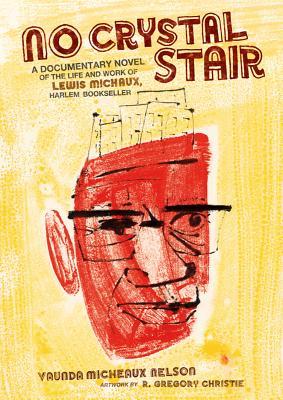
Is it just me? It seems that publishers have become really enamored of some new dust jacket treatment that adds an almost sticky texture to the paper. It feels sort of like a neoprene wetsuity material. I was on the Boston Globe Horn Book Award jury for 2012 and we recognized three pieces of fiction: No Crystal Stair by Vaunda Michaux Nelson (winner), Life: An Exploded Diagram by Mal Peet (honor book), and Code Name Verity by Elizabeth Wein (honor book). And all three have been subjected to these rubbery covers. Two of the three have dark, black backgrounds and I will admit that the matte finish of the texture adds some depth to it. But it also shows fingerprints something awful. And it’s a little tacky (duct-tape-adhesive tacky, not white-pants-after-labor-day tacky). Most libraries will put mylar covers over the jacket, simultaneously solving the problem of the unpleasant feel and compromising the benefits of the matte finish. And, really, at the end of the day, it doesn’t much matter. At all. But, still, someone is going to a lot of trouble (it must be some trouble) to take what might be perfectly fine dust jackets and make them stick.

What do you think?

no crystal stairlife an exploded diagramverity

For your consideration 3

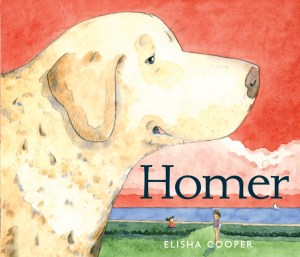
Why teach an old dog new tricks when the old dog is already perfect? Our Caldecott consideration continues.

homerHomer

Elisha Cooper

Greenwillow, 2012

Look closely here. On the surface this is a simple, lovely story about a nice old dog (a dog who doesn’t die, by the way, for those of you worried about that kind of thing). With sensitive brush and pencil work Cooper gives us an irresistible, flesh and blood (and fur) dog in Homer. But beneath that sweet surface is an especially sophisticated piece of storytelling. Copper lays the story out across a carefully structured set of panels. One by one, the members of Homer’s family pass him on the porch, inviting him to join in one outing or another. And with each cumulative turn of the page and subsequent invitation, we see the previous family member attending to his or her pursuit. And then the whole things plays back in reverse as the family returns. A wordless denouement finds Homer leaving his post on the porch and joining the family inside, hoisting his arthritic frame into what is clearly his chair. And there is peace. Cooper’s ability to paint such full-bodied characters, human and canine, is such simple linear gestures is, on its face, a little bit amazing. That he applies that skill to a brilliant narrative arc is extraordinary. It’s hard to imagine paying more respect to a child audience.

For your consideration 2

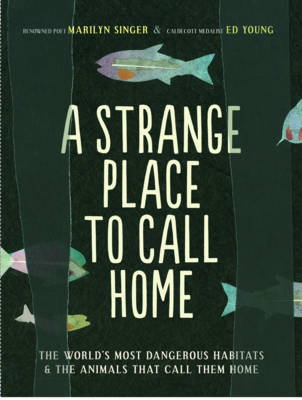
Our Caldecott consideration continues with a fascinating book of poetry about strange habitats and their stranger inhabitants.

A Strange Place to Call Home

Marilyn Singer, illustrated by Ed Young

Chronicle, 2012

Ed Young has been on something of a stylistic tear of late. He strikes me as one of those undeterrable illustrators compelled to pursue a particular vision. Of course the Caldecott Committee is forbidden from considering a body of work. But A Strange Place to Call Home gives them plenty to consider in a single package. Singer presents fourteen different unlikely animal habitats in poems as different as their subjects. And Young goes to town (quite literally, in the case of some urban foxes). These are not the warm and fuzzy animals of petting zoos. These are peculiar and wild and just a little off-putting, and Young’s mysterious collages do them enigmatic justice. In many of the spreads the subject is not immediately identifiable, never mind recognizable. These images require attention, and reward it with curiosity. Neither the poetry nor the images explain these unfamiliar creatures, but their mysterious expression compells us to wonder and to investigate. And, really, what more can we ask than that?