How To Release Your Grumbles: A Review of Grumble Boats 

Grumble Boats 
Written by Susannah McFarlane 
Illustrated by Tamsin Ainslie 
Published by Charlesbridge 
Ages 3-6 
Available April 15, 2025 

Who helps you release your grumpy feelings? Emma doesn’t know how to release her grumbles when her parents don’t let her go to the pirate party with her brother. After Emma is dropped off at her grandma’s house, Grandma sees how upset Emma is and quickly comes up with a solution. Together, they walk to the beach, draw their grumbly and grumpy feelings, and watch them sail away after folding them into paper boats. After they say goodbye to their grumbles, Emma feels much better and is ready for a fun day of playing and eating grilled cheese with Grandma. 

Susannah McFarlane presents readers with a simple yet well-written story about a young girl coping with her grumpy feelings. With straightforward text, she shows why Emma is upset and the effort that Grandma puts into cheering her up. Through Grandma’s character, McFarlane writes about an easy way to release your feelings: by drawing them out and releasing them to sea. She thoughtfully shows Grandma helping Emma move on from her grumpiness without invalidating her feelings by reassuring her that she would have been an excellent pirate as they watch their grumbles float away. There are also instructions at the end that show readers how to make their own grumble boats so they can participate in this practice in mindfulness. Ainslie’s watercolor and pencil illustrations pair well with the text to bring Emma’s world to life, illustrating Emma’s grumpy facial expressions especially well. The illustrations are detailed, and Ainslie utilizes a muted full-color palette, which has the same calming effect that Grandma’s grumble boats have on Emma’s feelings. Grumble Boats is a lovely addition to any classroom library or program to give young readers a chance to learn about healthy emotional regulation. 
Finding the Words: A Review of A Voice in the Storm 

A Voice in the Storm 
Written and illustrated by Karl James Mountford 
Candlewick Press/Candlewick Studio 
Ages 3-7 
Available November 5, 2024 

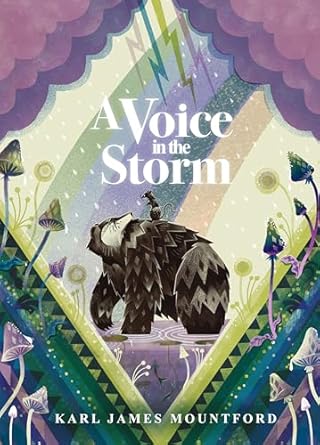
Sometimes, it’s hard not to feel like there is a storm raging inside. In Karl James Mountford’s A Voice in the Storm, Rat struggles with her own emotional storm and how to open up to her friends about her feelings. When a storm starts outside, she runs away from her friends, Jackdaw and Hedgehog. As lightning flashes and thunder cracks, Rat has a frightening experience with Snake, almost stepping into his mouth when he offers to shelter her. Afterwards, she runs into Bear, who teaches her that the storm outside “‘needs time to free its voice’” (p. 22). With Bear’s advice and support, Rat learns how to open up to her friends and give a voice to the storm happening inside her. 

Mountford’s stunning artwork and poignant prose come together to create a touching story that discusses depression and helps guide readers in figuring out how to express themselves. Mountford uses digitally created, geometric illustrations with a color palette of purples, greens, blacks, and grays to draw the eye of the reader and show the intensity of Rat’s emotions. His animals are expressive, showing Rat’s sadness, Jackdaw’s worry, and Bear’s kindness. Mountford’s use of storms as a metaphor aptly describes mental health struggles in a way that’s easy for young readers to understand and relate to. Additionally, the dialogue between characters, especially Rat and Bear, introduces readers to ways they can articulate their own feelings: Bear tells Rat that “‘all voices [are] just noise until someone listens’” (p. 22). When Rat opens up to Bear, she tells him that she “‘[cares] about everything all at once, and yet, [she doesn’t] feel anything at the same time’” (p. 25). This conversation gives readers an opportunity to learn how they can ask for support when they need it. While the publisher recommends this book for preschool-early elementary school readers, this emotionally moving story can serve as a thoughtful conversation starter for all ages participating in discussions about mental health. 

Best Friends Forever: A Review of When a Friend Needs a Friend

When a Friend Needs a Friend
Roozeboos (Anne Roos Kleiss)
Scholastic
February 7, 2023
Age 4-8

Creativity and imagination rule for best friends Aya and Oskar. But when Oskar is feeling sad, Aya isn’t sure how to help him get back to enjoying their adventures. With guidance from some caring adults, she finds a way to understand his big feelings, give him space, and offer support until he is ready for fun again. In this thoughtful exploration of friendship, Roozeboos illustrates both the experience of sadness in oneself and in a loved one, and how working through our own feelings of confusion and rejection can help support a friend. Mixed media collage art, with a naïve sensibility, complements the chaos of both creativity and emotion found in the story. Rich natural tones play well with vibrant oranges and turquoise and add a sophistication to the guileless art. Despite simple faces, she captures the feelings of both central characters as they move from joy to sadness to understanding. Spreads that depict the passage of time let both Aya and Oskar feel their feelings and come through them to a new perspective on their surroundings and each other.

Empathy and compassion shine in a gentle story about accepting a friend and their feelings without trying to fix them.

How Do You Feel?: SEL Picture Books for All Ages

Managing emotions can be hard, whether you’re 4 or 44, but successful social emotional learning can help all of us learn how to identify and express our feelings, and support others in handling theirs. Fortunately, 2021 picture book authors are here to help with this roundup of titles just waiting for their chance to shine in an SEL themed story time or a lesson for older kids.

A Cat with No Name: A Story About Sadness
What a Feeling Series
Kochka, Illustrated by Marie Leghima
Parent notes by clinical psychologist Louison Neilman
Quarto/words & pictures
Ages 3-6

Olive cares for a lost kitten that she quickly comes to love. When he doesn’t return one day, a neighborhood search proves he’s been reunited with his owners. Olive’s dad helps her realize that it’s ok to be sad about missing him and how to find peace in remembering. Originally published in France, the line drawings limited color palette have a European sensibility. End notes from a psychologist provide information and tips on recognizing and supporting a child handling sadness.

Big Feelings
Alexandra Penrose, illustrated by Suzanne Kaufman
Penguin Random House/Alfred A. Knopf
Ages 4-8

A diverse group of children have big plans for the day, but when things don’t go as planned, frustration, anger, and fights get in the way. As they work through their differences and work together on a new plan, respect, kindness, and excitement bring them together as a team. Bright mixed media illustrations and expressive little faces show a range of emotions and illustrate some great ways to express them in healthy and productive ways.

How to Apologize
David LaRochelle, illustrated by Mike Wohnoutka
Candlewick
Ages 3+

It’s not always easy to say “I’m sorry,” but this sweet instruction manual is a specific and silly how-to guide. Whether you’ve made a mistake, been mean to a friend, or had an accident, this step-by-step guide shows the do’s and don’ts of apologies. Hilarious illustrated oops-moments help soften the instructions on how, when, and why we should all learn to apologize.

It Could Be Worse
Einat Tsarfati, translated by Annette Appe
Candlewick
Ages 4-8

Albertini and George have been shipwrecked. Albertini is upset, but George keeps looking on the bright side and after each new misadventure (storms, flying fish, ghost pirates, and a hungry whale) declares “It could always be worse!” Vibrant digital illustrations and outrageous situations provide levity in this silly series of catastrophes, proving that attitude is everything and even a bad day can feel better when you face it with a friend.

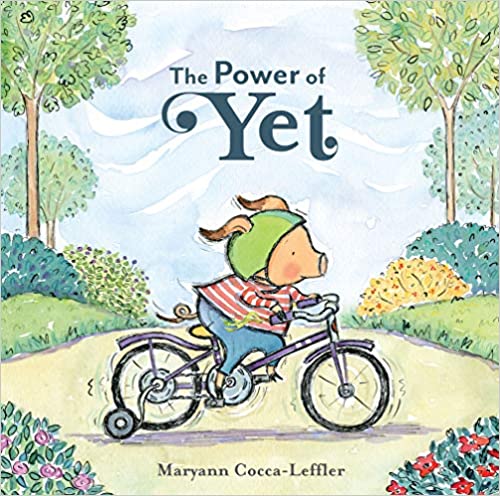
The Power of Yet
Maryann Cocca-Leffler
Abrams/Appleseed
Ages 3-6

A small piglet knows the frustration that comes with being a kid. You’re not big enough, strong enough, experienced enough—yet. But trying and growing and practicing leads to learning and success. Pen and ink drawings with pastel watercolors gently follow piglet’s persistence and celebration as yet turns to now.

The Smile Shop
Satoshi Kitamura
Peachtree
Ages 3-6

The market is an exciting place when there is pocket money just waiting to be spent. When a sudden collision sends a small boy’s change down the drain, his hopes of a treat are dashed. But in the Smile Shop, the kindness of a shopkeeper proves that money can’t buy happiness, but human connection sure can. Soft-focus line and watercolor illustrations shift palettes as the boy goes from excited to despondent to hopeful and finally cheerful as he discovers all the smiling faces that surround him.