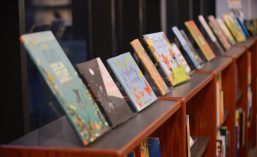
Picture Books Featuring the Caring Nature of Children

By Alena Rivers

Acts of kindness can be simple gestures or complex, thoughtful ones. Either way, the effects on the recipients can be heartwarming. Stories that express the multiple ways that children show their concern for others help young readers explore how they can positively interact with individuals and the world around them.

The stories featured today each demonstrate the ways children share their compassionate sides. The books present a quiet simplicity in style but they reveal a clear message; our kind gestures have a strong impact on those with whom we come in contact.

The Day I Became a Bird by Ingrid Chabbert, illustrated by Guridi (Kids Can, 2016)

A young boy falls in love with his classmate, Sylvia, on their first day of school. He discovers that Sylvia is in love with birds but she does not seem to notice him. In order to win her attention, the young boy builds a bird costume to wear to school. Becoming a bird is not easy. Not only must he endure the stares and giggles from his classmates, but navigating the bathroom and the soccer field in a large bird costume has its challenges. Still the boy’s determination to connect with Sylvia makes him indifferent to these obstacles. Wearing a bird costume during school for several days may seem like a grand gesture for the attention of another, but the protagonist’s efforts pay off in a satisfying and sweet ending.

Originally published in Spain, this book gently portrays the story of a young child’s admiration for his classmate. Illustrator Guridi  uses pencil drawings and photoshop to create both realistic images and the costumed version of the birds that are central to this story. The Day I Became a Bird is an inspiring story that demonstrates how taking risks to show you care can be worth the effort.

Look Up! By Jung Jin-Ho (Holiday, 2016)

Look Up! takes on the perspective of a young child in a wheelchair peering over a balcony above a busy neighborhood street. Like the child, the reader can only see the tops of people’s heads as they walk along the street without noticing the child above, who only wants them to “Look Up!”. Finally, a young boy looks up and notices the child on the balcony. He lays on the ground so the child can see him. This act starts a chain of pedestrians who stop to see what he is doing and, in turn, lie down so they, too, can look up.

Jung Jin-Ho’s black-and-white sketches give readers a unique perspective beyond the bustle of daily life to remind us that through our busiest moments, we can stop to see someone who may otherwise be overlooked.

Lucy by Randy Cecil (Candlewick, 2016)

As though in a theater production, Lucy is told in four acts. Each act starts the same as the previous one but builds on the story of a tenacious stray dog who visits the front door of an apartment building.  It is here that he is greeted each morning by a young girl who dangles her leftover food by a string from her bedroom window to provide breakfast to the little stray. The young girl lives with her father who is a store stock-person by day and an aspiring vaudeville performer with stage fright by night. The story comes full circle when we learn how the small dog became a stray and how she finds a place to call home.

Randy Cecil’s black-and-white oil textured illustrations strongly support the text that, in turn, nicely frames and punctuates the images. As if through a telescope, the reader gets a glimpse of the small dog’s day through images rendered in a circular frame in the center of each page. Lucy is a charming story that young children will enjoy watching unfold.

The Big Read Bibliography

The Butler Children’s Literature Center has partnered with Dominican’s Crown Library, the Oak Park Public Library and several other local libraries for the Big Read program to create a bibliography of books for elementary and middle school readers inspired by this year’s Big Read, Into the Beautiful North by Luis Alberto Urrea. The bibliography contains fiction books published between 2014-2016 that explores the multiple aspects of the immigrant experience. You can find The Big Read Bibliography on the Butler’s Pantry blog under Bibliographies.

B3 Butler Book Banter

Wednesday, September 21, 2016, 6-7 p.m.

Exploring Farms and Food

From classic picture books such as Lois Ehlert’s Eating the Alphabet (Harcourt, 1989) and Growing Vegetable Soup (Harcourt, 1987) and Elisha Cooper’s Farm (Orchard, 2010) to more contemporary middle-grade fiction such as Return to Sender by Julia Alvarez (Knopf, 2009) and informational books including the young readers’ edition of The Omnivore’s Dilemma by Michael Pollan (Dial, 2015), food and where it comes from has been a perennial topic in children’s lit.

Fall season is harvest time, and for our first B3 of the year we’ll focus on food, farms, and farmers’ markets. There is a full crop of newly-published foodie books this year, and we’ll focus on these:

Board books: Edible Colors and Edible Numbers, both by Jennifer Vogel Bass (Roaring Brook, 2016)
Picture books: Grow! Raise! Catch! How We Get Our Food by Shelly Rotner (Holiday House, 2016); On the Farm, at the Market by G. Brian Karas (Holt, 2016); and Sleep Tight Farm by Eugenie Doyle, illus. by Becca Stadtlander (Chronicle, 2016)
Informational: The Story of Seeds by Nancy F. Castaldo (Houghton Mifflin Harcourt, 2016)

Whether you’ve read all, some, or none, please join us in the Butler Center to talk about kids books about food, and enjoy some farmers’ market treats. We’ll have the food and, um, books out at 5:30 for perusal and partaking.

Time Flies When You’re Reading Books

By Diane Foote, Hal Patnott and Alena Rivers

The Butler Center has received hundreds of books published this year, or to-be-published in the coming months, and the Butler Center staff has been busy reviewing dozens of these books! Our list of books that we would like to read outpaces our time to read them. Our hope is to squeeze in a few hours before fall classes begin so we can read at least one more book from our list. Here is a sampling of titles that we plan to read over the next couple of weeks. What’s on your last minute list?


The Inexplicable Logic of My Life by Benjamin Alire Sáenz, (Houghton Mifflin Harcourt/Clarion 2017)

Salvador Silva experiences the world through the words he meets. See, “words only existed in theory” until “one ordinary day you ran into a word…met it face to face. And then that word became someone you knew” (16). As Salvador’s senior year of high school begins and his Mima’s health starts to fail, new words like “college” and “cancer” loom on his horizon. For the first time, he starts to question who he is and whether he has value.

Towers Falling by Jewell Parker Rhodes (Little, Brown, 2016)

Dèja is a fifth grade student starting off in a new school. As the 15th anniversary of 9/11 approaches, Dèja’s teacher begins a lesson about the events of 9/11. Dèja and her new friends learn not only about 9/11 but also how it has impacted their nation and their own lives. Dèja discovers more about her family, as they cope with financial struggles while living in a shelter, and she begins to understand the role 9/11 has played in shaping her life. A diverse set of characters lends different voices to this exploration of a topic that is still new to many of our youth.

Booked by Kwame Alexander (Houghton Mifflin Harcourt, 2016)

One of the most buzzed-about books of the year features high-school soccer star Nick Hall as he copes with his linguistic professor father’s “verbomania,” a disinclination to pay attention in class, and the fact that his best friend Coby will now be playing for Nick’s team’s toughest opponent. But nothing shakes Nick the way he’s shaken by a sudden announcement his parents make, throwing the rest of his problems into perspective. Written in verse style familiar from Alexander’s Newbery Medal-winner Crossover (Houghton Mifflin Harcourt, 2014), Nick’s compelling first-person account is one we’re a little embarrassed not to have read yet.

Books to Celebrate the 2016 Summer Olympics

By Alena Rivers

The 2016 Summer Olympics have just begun in Rio de Janeiro, Brazil and the 2016 Summer Paralympics will follow. Watching each athlete compete in the Olympics is only part of their story. These athletes also have amazing stories that highlight the challenges they have had to, and continue to, overcome to rise to top in their sport. Their stories are full of determination, commitment and serve as sources of inspiration for aspiring athletes. This week, the Butler Center pays tribute to the work of all athletes by highlighting two 2016 books inspired by Olympic Gold Medalists.

The Quickest Kid in Clarksville by Pat Zietlow Miller, illus. by Frank Morrison (Chronicle, 2016)

Young Alta is known as the quickest kid in her hometown of Clarksville, Tennessee; the same town that is currently awaiting the arrival of their hometown hero, Wilma Rudolph, the first African American to win three gold medals at the 1960 Summer Olympics in Rome, Italy.

Alta is confident in her ability to run faster than any other kid in Clarksville until a new girl, Charmaine, challenges Alta to a race. Charmaine is quick to point out that she has new shoes, just like the ones Wilma Rudolph wears. Alta’s shoes are worn out and dotted with holes but she knows that shoes don’t make the runner, so she accepts Charmaine’s challenge.  The girls’ race is heated and Alta channels the strength of Wilma Rudolph in her legs as she keeps step to the rhythm of the champion’s name. Though they get off to a rough start, ultimately, the girls pull together to support their hero during a parade in Wilma Rudolph’s honor, which turns out to be an experience uniting not only the girls but their segregated town of Clarksville, as well.

Pat Zietlow Miller creates text that is oftentimes rhythmic and sets the pace for the cadenced pattern of racing feet through the story. Frank Morrison, depicts the movement and mannerisms characteristic of young girls at play and competition. The watercolor images are soft and suggest the tone of the 1960’s. The author’s note contains a photo of Wilma Rudolph in the Clarksville, TN parade and a brief overview of her Olympic achievements and their impact on her hometown and the nation.

Nadia: The Girl Who Couldn’t Sit Still by Karlin Gray, illus. by Christine Davenier (Houghton Mifflin Harcourt, 2016)

Nadia Comaneci is an historic Olympic Gold Medalist from Romania, scoring the first perfect 10 in Olympic history, seven perfect 10’s in fact, and winning several medals in the 1976 Montreal Olympics. Nadia is an active young girl who is constantly in motion, running, jumping and climbing trees. Her parents see fit to direct her energy into gymnastics lessons. Not long after, while doing cartwheels on her school playground, she is spotted by Bela and Marta Karolyi. At age six, Nadia is recruited to train under the Karolyi’s, and through dedication and commitment, by the age of 14 she makes it to the Olympics, coached by the Karolyi’s.

Nadia’s story is told in easy to follow text that highlights moments of trial and error through her progression to the 1976 Olympic Games.  The ink and colored pencil drawings are full of movement, evocative of that of Nadia herself. The Afterword contains a description of events following Nadia Comaneci’s Olympic wins, citations for quoted text, and a bibliography of articles, books, and websites.

Four Books for Four Hogwarts Houses

By Hal Patnott and Alena Rivers

In anticipation of the release of Harry Potter and the Cursed Child this weekend, we decided to feature four books and sort them into the Hogwarts Houses based on the traits of their main characters. The original idea for this post came from a post on the yalsa-bk listserv titled “Sort YA into Hogwarts Houses?” written by Rachel Moir, the teen services librarian at Worcester Public Library. The titles we selected are all middle grade fiction from our 2016 collection. Stop by the Butler Center to check them out for yourself!

Gryffindor

Shadow Magic by Joshua Khan (Disney/Hyperion, 2016)

When thirteen-year-old Thorn’s father disappeared, he promised his mother and little siblings that he would bring him home by harvest, but ever since he left his village, Thorn’s circumstances went from unlucky to a living nightmare. Bound into the service of an executioner, the road ahead of Thorn leads straight to Gehenna, a kingdom of shadows where necromancers wear the crown.

Lilith never wanted to wear the Mantle of Sorrows and assume the position as the Lady Shadow, ruler of al Gehenna, but after the brutal murder of her parents and older brother, she has no choice. Without her father’s sorcery, her kingdom is falling apart. Magic flows through her veins too, but the law forbids her from learning.

Shadow Magic begins in the thick of danger, and the stakes only get higher for Thorn and Lilith as they become ensnared in dark magic and a murder mystery. To survive and save Gehenna they need the courage to disregard the rules and unleash their own hidden talents.

Slytherin

The Gallery by Laura Marx Fitzgerald (Penguin/Dial, 2016)

The Gallery begins in present day New York where 100-year-old Martha O’Doyle is being interviewed by a young reporter sent to do a short piece featuring Martha as she crosses over her centennial year. The young reporter has discovered that Martha is the only surviving witness to the death of a newspaper tycoon and his wife who were in their home when it was bombed. Curious about the details of the bombing, the young reporter probes Martha for more information. Though the reporter doesn’t get her story, Martha decides it’s time to write out the details as she remembers them from nearly 90-years ago. She reflects on her year as a maid for Mr. J. Archer Sewell and his wife, Rose Sewell. In her younger years, Rose had been known to be a rambunctious, socialite who was not adverse to scandal. But when young Martha arrives at the Sewell house she finds that Rose has become a recluse, never leaving their home and only caring for the countless, priceless paintings she and her father collected over the years. Rose refuses to interact with anyone other than a small handful of people but Martha is curious, strong-willed and has little regard for rules so she devises a way to communicate with Rose and in doing so, discovers there is more to Rose’s story.

Told in retrospect, Martha’s character is independent, determined and resourceful. Readers will feel the tension between the story’s characters and Martha’s challenge to balance restraining her thoughts and opinions while pushing to learn the truth.

Hufflepuff

The Inn Between by Marina Cohen (Macmillan/Roaring Brook, 2016)

Eleven-year old Quinn’s best friend Kara is moving with her family from Denver to Santa Monica. Quinn and Kara have been best friends since kindergarten and the thought of them being apart has both girls dreading the impending move. Quinn is invited to join Kara’s family on their trip to their new home so she and Kara can spend more time together and to help Quinn reconcile some of her own personal issues. The story opens as the girls and Kara’s family drive through a long stretch of desert. As the evening approaches the weary travellers decide that they all could use a break from the road so they stop at a grand Victorian inn that seems out of place and isolated in the great expanse of desert. While The Inn Between is a magnificent and beautifully ornate building, only moments after checking-in, Quinn begins to feel uneasy about their temporary shelter. After spending the night in the hotel, Quinn, Kara and her brother, Josh, discover that Quinn’s parents are missing and not long after, Josh goes missing as well. These are not the only strange things the girls notice about the inn, its staff and its guests. Quinn and Kara must unravel the mystery of Kara’s missing family or risk never leaving The Inn Between.

Marina Cohen’s story explores the strong bond between Quinn and Kara. Readers will be touched by Quinn’s loyalty to their friendship and they will be drawn into Quinn’s intuitive distrust of their surroundings that is matched by her determination to find the answers to the mysteries that unfold.

Ravenclaw

Behind the Canvas by Alexander Vance (Feiwel and Friends/Macmillan, 2016)

Claudia Miravista has no friends in her sixth grade class, but she knows everything about art history. She spends her free time drawing, and reading about the great painters of the past. Her only companion, a mysterious blue-eyed boy named Pim, lives inside the canvas, where he has been trapped for over three-hundred years. Although Claudia has just begun to discover her powers as an Artista, she is the only one with the skills to save Pim and free him from his prison.

Footnotes of historical facts and commentary about art accompany the story in Behind the Canvas. Claudia’s enthusiasm for art is infectious. In spite of what her classmates may think of her at first, she holds onto her passion and learns to harness her artistic power.

Supporting Early Literacy Practices with Newly-Published Board Books

By Alena Rivers

The Association for Library Service to Children, a division of the American Library Association, advocates for early childhood literacy in many ways, including the Babies Need Words Every Day project and the Every Child Ready to Read (ECRR) program, which it administers in partnership with the Public Library Association. ECRR stresses the importance of five practices that support early literacy skills in babies and toddlers: talking, singing, reading, writing and playing. Babies and toddlers can learn immense amounts of vocabulary and communication skills when parents and caregivers participate in these activities with their prereaders.

With their sturdy format and exciting visual content, board books support the practice of reading to very young children. Board books offer a wonderful introduction to building a habit of reading together while providing babies and toddlers with a valuable learning experience. Many board books are concept books, or books that present information on ideas such as numbers, colors, shapes or the alphabet. Concepts can be introduced through a variety of subject matter, from the familiar to the novel. The board books below offer three different ways to introduce the concepts of numbers and colors by way of food, animals and trains.

Edible Colors by Jennifer Vogel Bass (Roaring Brook, 2016)

Edible Numbers by Jennifer Vogel Bass (Roaring Brook, 2016)

Jennifer Vogel Bass’ board books provide vibrant, colorful photos of an unusual collection of fruits and vegetables. Babies and adults can find a visual explosion of colorful foods, some common and some unknown varieties, to explore while learning numbers and colors.

Edible Colors features a plethora of fruits and vegetables and provides them in a rainbow of colors. Well-known fruit and vegetable color combinations, such as orange carrots and green cucumbers are followed by a generous selection of additional fruits and vegetables of the same color.

Edible Numbers invites young children to explore numbers from 1-12 while counting the variations on more common fruits and vegetables. A two-page spread at the end of the board book provides a comprehensive view of the numbers and foods used throughout the book.

Picture This: Colors by Marie Vendittelli (Houghton Mifflin Harcourt, 2016)

Picture This: Numbers by Judith Nouvion (Houghton Mifflin Harcourt, 2016)

The Picture This board books series explores homes, shapes, colors and numbers through images from nature. The full-color photos are close-up, textured depictions of animals in their natural habitats that babies and toddlers will find compelling.

Picture This: Colors features 14 vibrant photos of animals exhibiting each featured color. The text identifies the animal and its environment in a simple, repeating and predictable pattern.

Picture This: Numbers groups animals by numbers 1-10. Each animal featured is identified with a brief one or two sentence fact about the animal.

Steam Train, Dream Train 1-2-3 by Sherri Duskey Rinker, illus. by Tom Lichtenheld (Chronicle, 2016)

Steam Train, Dream Train Colors by Sherri Duskey Rinker, illus. by Tom Lichtenheld (Chronicle, 2016)

These board books were inspired by the Steam Train, Dream Train   picture book. The board book counterparts are illustrated with oil pastel drawings that identify the different types of train cars. Rhyming text offers a predictive pattern of language babies and toddlers will enjoy hearing.

Steam Train, Dream Train 1-2-3 uses half of each two-page spread to identify a number from 1-10 along with rhyming text describing the corresponding scenes of animals interacting with objects such as cars and balloons on each train car.

Steam Train, Dream Train Colors features a train in one of 10 different colors accompanied by rhyming text describing the train car and its animal passengers.

Soul-Searching Books for Sweltering Days: Middle Grade Summer Reads

By Alena Rivers

In a recent blog post, we featured picture books that speak to the summer experiences of young readers. This week’s books are summer-themed tomes fit for the elementary and middle-grade reader. These older children are embarking on a new level of self-discovery and finding their place in the world amongst their family and friends. Slow summer months can be full of opportunities for older children to do some soul-searching and to confront issues in their lives. The children in the stories featured here explore bigger themes in their lives such as adoption, death and divorce. Their experiences may be challenging but their stories are interlaced with touching, humorous and revelatory moments that lighten their moods. When given the space and the freedom that summer vacation can often provide, children can take another step into maturity by discovering that elusive balance between accepting their circumstances and doing something about them.

As Brave As You by Jason Reynolds (Simon & Schuster/Atheneum, 2016)

Twelve-year-old Genie and his older brother Ernie are spending a month with their grandparents in North Hill, Virginia while their parents spend time together sorting out their fading marriage. Genie is distraught knowing that his parents are on the brink of divorce so his time away from them has him more anxious than usual. Shortly after they arrive at their grandparents’ home Genie learns that his grandfather is blind. This revelation, and adapting to an environment unlike his home in Brooklyn, only adds to Genie’s anxiety. Country life offers a quiet and industrious place for Genie to roam, think and get to know his grandfather. All of these experiences deepen his understanding of his family history and help him discover more about himself and his role within the family. Readers will empathize and laugh with Genie as he braves new territory learning about grits, sweet tea and family secrets. Recommended for ages 9-12.

Just Like Me by Nancy Cavanaugh (Sourcebooks, 2016)

Julia is an eleven-year-old girl who has been encouraged by her parents to attend a week-long, overnight summer camp to bond with her “Chinese sisters.” Julia, Becca and Avery are not exactly sisters, but they were adopted from the same adoption agency in China and their families get the girls together occasionally. Julia is not excited about spending more time with Becca and Avery who identify more with their Chinese heritage than Julia. To add to her frustration, within minutes of checking into their camp cabin, Julia realizes that all six cabin-mates are not going to get along well. Through narrative text and periodic journal entries, Julia shares her week-long experiences as she tries to navigate contentious relationships while still enjoying proverbial summer camp activities. Julia’s concerns about her adoption story and her periods of reflection provide readers with thoughtful examples of how taking risks can help us find answers. Recommended for ages 9-12.

Summerlost by Ally Condie (Penguin Random House/Dutton, 2016)

Nearly a year ago, twelve-year-old Cedar Lee suddenly lost her father and youngest brother in a car accident. Cedar, her mother and her remaining younger brother, still feeling the pain of their loss, move to their mother’s home town for the summer where Cedar finds an unexpected friendship, mystery and a summer job at the Summerlost theater festival to keep her busy. Despite her new distractions, the loss of her loved ones leaves a void not easily filled. Cedar’s time over the summer is spent building relationships, bravely taking on new experiences and learning how to find strength through the recovery process. A heart-felt exploration of the growth we hope to find after losing loved ones. Recommended for ages 9-12.

To Grandmother’s House We Go!

by Alena Rivers

Not all of our summer excursions can be tropical vacations. Whether taking time for staycations or logging miles and miles on the road to visit family, for children, time spent in a different place, or traveling to it, can spark imaginations and inspire new adventures. Long road trips and quiet summer days provide great opportunities for children to explore their surroundings and give their brains the freedom to daydream. Here are a group of newly-published picture books in the Butler Center that feature children and the imaginative ways they spend time with grandparents or passing the time on warrior-style road trips to visit them.

Are We There Yet? By Nina Laden, illus. by Adam McCauley (Chronicle, 2016)

A boy and his mother take an extended drive to grandmother’s house. Not long before they are on the road, the boy asks his mother, “Are we there yet?”. The mother simply replies, “No.” This familiar-to-adults exchange is repeated across each two-page spread of the book while readers are taken on an illustrated journey through cities, over bridges past farms and deserts until they reach grandmother’s house. The story is a simple reminder for kids and their adult caregivers of the excitement just outside the car window that can be easily overlooked on long road trips.

Are We There Yet? By Dan Santat (Little, Brown, 2016)

Caldecott medalist, Dan Santat creates a larger-than-life visual voyage when a young boy and his parents embark on what feels like the longest car ride ever to his grandmother’s birthday party. The boy’s initial excitement about the road trip is soon stunted by the bland scenery outside his car window. Santat illustrates imaginative scenes and uses minimal but complimentary text to depict what can happen when you let your brain run wild during the most mind-numbing, tiresome treks to the fun waiting at the end of the road.

The Bell in the Bridge by Ted Kooser, illus. by Barry Root (Candlewick, 2016)

Charlie, a young boy, makes annual, two-week summer visits to his grandparents’ farm. Not much happens during these summer visits so Charlie amuses himself by playing near a stream with tadpoles and turtles. Charlie discovers that by using a rock to hit the railing of a bridge over the stream, the result is a bell-like sound with its faint echo following it. One day after banging the bridge, an extra sound, just like his, is returned in the distance. Who or what is causing this additional sound? The mystery adds just the right amount of excitement to speed up the slow summer days that remain before Charlie’s parents come to pick him up. Soft water color and gouache shades of green, yellow and orange enhance the feeling of quiet warmth indicative of summer mornings and late afternoons.

The Not-So-Faraway Adventure by Andrew Larsen, illus. by Irene Luxbacher (Kids Can, 2016)

Young Theodora, or Theo as her grandfather, Poppa, calls her, decides that a trip on a streetcar to a nearby beach is the perfect birthday present for her adventurous grandfather. The journey takes time but there is much to see along the way. When they finally reach the beach, Theo and Poppa spend the day discovering its many treasures and dreaming up big adventures. Their trip ends with a refreshing meal of gazpacho soup and another surprise waiting for Poppa in his apartment. Colorful, mixed-media artwork provides vivid illustrations of the city, beach and all the places in between.

Picture Book Themes Exploring Friendships Lost, Gained, Treasured and Imagined

Many picture book themes resonate with children, especially those that portray the various aspects of friendship. Preschoolers and early elementary school-aged children are just beginning to experience what it means to be a friend, to share, to be kind, to cooperate, to disagree, to get angry, to reconcile, to feel accepted and understood. Friendships start small and grow, are tested and even lost but these relationships are an integral part of a young child’s development into a compassionate, self-aware human being.

Children lose friendships, when neighbors or classmates move or change schools, and they make new friends for the same reasons. What happens when a child has a best friend and a new one comes along, changing the dynamic of an existing friendship? How do children respond when their best friend is being teased? How do children learn to stand up for friends who are being teased? No one wants to feel isolated or unwelcome, and yet there will be times when children experience these challenges.

Books are an excellent way to explore these facets of friendship. The Butler Center has recently received several picture books that share a common theme when best friends, whether real or imaginary, are lost, gained, challenged and treasured.  We hope you can take a few minutes to peruse these titles and others in the collection!

Big Friends by Linda Sarah, illus. by Benji Davies (Henry Holt, 2016).

Two young boys, Birt and Etho have formed a comfortable, dependable friendship as they spend their days coming up with imaginative ways to pretend play with two cardboard boxes. A third boy, Shu, asks if he can join them and the three boys spend time together, until Birt finds that he misses playing alone with his best friend, Etho. He stops playing with them altogether until he is coaxed back in with a new box invention created by Etho and Shu. This is a warm, gentle story that depicts the trials young children face with the changing dynamics of expanding friendships.

Life Without Nico by Andrea Maturana, illus. by Francisco Javier Olea (Kids Can Press, 2016).

Nico and Maia are best friends who find endless ways to play together until Nico learns that his family must move away for a period of time, leaving Maia to overcome the empty feeling of lost friendship. Time without Nico is difficult for Maia, but she eventually discovers other ways to pass her time and even meets a new friend. Upon Nico’s return, Maia fears that these changes will affect her friendship with Nico, but happily learns otherwise. Author, Andrea Maturana, explores our capacity for change and our ability to reconnect with absent friends.

My Friend Maggie by Hannah E. Harrison (Dial Books, 2016).

Paula adores her best friend Maggie. They are inseparable until Veronica, another classmate, convinces Paula that Maggie is too big and clumsy to be worth hanging around. Paula drifts away from Maggie but finds herself in the same position when Veronica decides that Paula is the next target of her teasing. Young children can explore ways to stay true to meaningful friendships, even when they are challenged by others. This book will be released in August. An advanced reader’s copy is available for review in the Butler Center.

Sam and Jump by Jennifer K. Mann (Candlewick, 2016).

A child’s best friend does not always have to be human! Author, Jennifer K. Mann describes the friendship between Sam and his stuffed animal, Jump. Characteristic of best friendships, Sam and Jump are never apart, until Jump is accidentally left behind at the beach when Sam finds, Tim, a young boy with whom he spends the day playing in the sand and water. Sam experiences a restless night worrying about ever seeing his beloved stuffed animal again. The next day, a grateful Sam is not only reunited with Jump, but with his new friend Tim. Children whose most precious friendships begin with a treasured stuffed animal or toy will identify with the feelings associated with losing and, hopefully, reuniting with it, as well as finding comfort in welcoming new relationships.