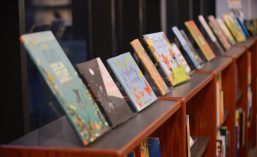
Across the country these days folks are busy carping about the weather. It’s a dangerous business, that. In Chicago, at any rate, complaints about snow or temperatures (don’t even MENTION the wind) are met with furious dismissal. Give it a try. The next time a cashier asks you how you are, offer up something like “I’m freezing, thanks, how are you?” Dollars to donuts there’s someone a person or two behind you in line at the ready with “We do live in Chicago, Wimpy McPutyourbootson” or some other upbraiding that’s just as helpful.
I grew up in Cleveland. I get it.
But if all of us are mentioning the weather all of the time, there’s probably a reason. And rather than complaining about the complainers, I’m fixing to join in the fun.
So, here are a few wintry picture books to make something magical, or at least memorable, of all of that brrr.
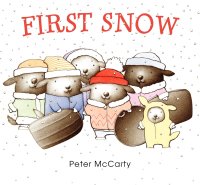 First Snow
by Peter McCarty
HarperCollins, 2015
Pedro has never seen snow before, and he’s not sure he’s interested. His canine cousins assure him it’s the best, and set out to convince him, with all of the best things about snow. They sled and snowball, make angels and catch flakes on their tongues. Who could resist? Not Pedro. He’s a convert, and so, perhaps, am I. McCarty has a magical way with texture. Working in graphite, he manages to create the softest, fuzziest creatures, and contrasts that incredibly tactile fur with flat, solid bundle-wear, producing a cast of characters impossible not to warm to. Time for some hot chocolate.
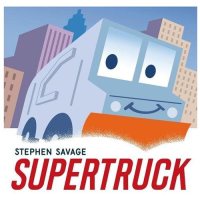 Supertruck
by Stephen Savage
Roaring Brook, 2015
The city depends on trucks, to fix power lines, tow stranded school buses, and put out fires. The lowly garbage truck occupies the glamourless place at the bottom of the heap until a seasonal snowfall brings the city to its knees (shoulders?). With a plow affixed to his front (and without his Clark Kent spectacles) Supertruck saves the day. As he did in Little Tug, Savage imbues his transportational characters with extraordinary personality, especially given their simple, iconic colorations and blocky nature, and sets them all against a mid-century-style city brimming with life. Little kids will welcome Supertruck’s arrival. I’d be happy for him to drive past my house, too, right about now, come to think of it.
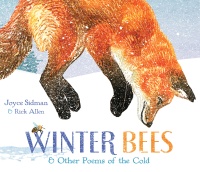 Winter Bees & Other Poems of the Cold
by Joyce Sidman, illustrated by Rick Allen
HMH, 2014
While there are surprises in this life, so are there predictabilities. When winter arrives in Chicago, it will be cold and snowy. When I go outside to shovel my walks, my dogs will ruin something inside. When Joyce Sidman produces a book of nature poetry, it will be lovely. In Winter Bees she examines the winter activity of various flora and fauna, combining poetry and science in her trademark way. Individually the entries, with their bright language and crisp, polychrome linoleum prints, celebrate the variety of life happening beneath the snow. And together they communicate the delicate ecological symbiosis that sustains us all. It’s all too easy to forget that winter has its purpose and its place, and I’m happy for this elegant reminder.
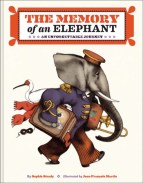 Join us for our second annual Mock CaldeNott discussion on Thursday, January 15, 2015! Once again we’ll investigate a collection of extraordinary picture books from the previous year, using the Caldecott terms and criteria as our guide to illustrative excellence. The special component of our experience is that we’re looking at books that are ineligible for the actual Caldecott Medal due to their international provenance. It’s extra-informative and super-fun. You should really come.


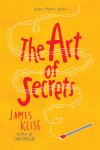 The Art of Secrets by James Klise, published by Algonquin Young Readers, 2014
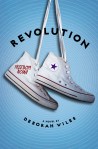 Revolution by Deborah Wiles, published by Scholastic Press, 2014.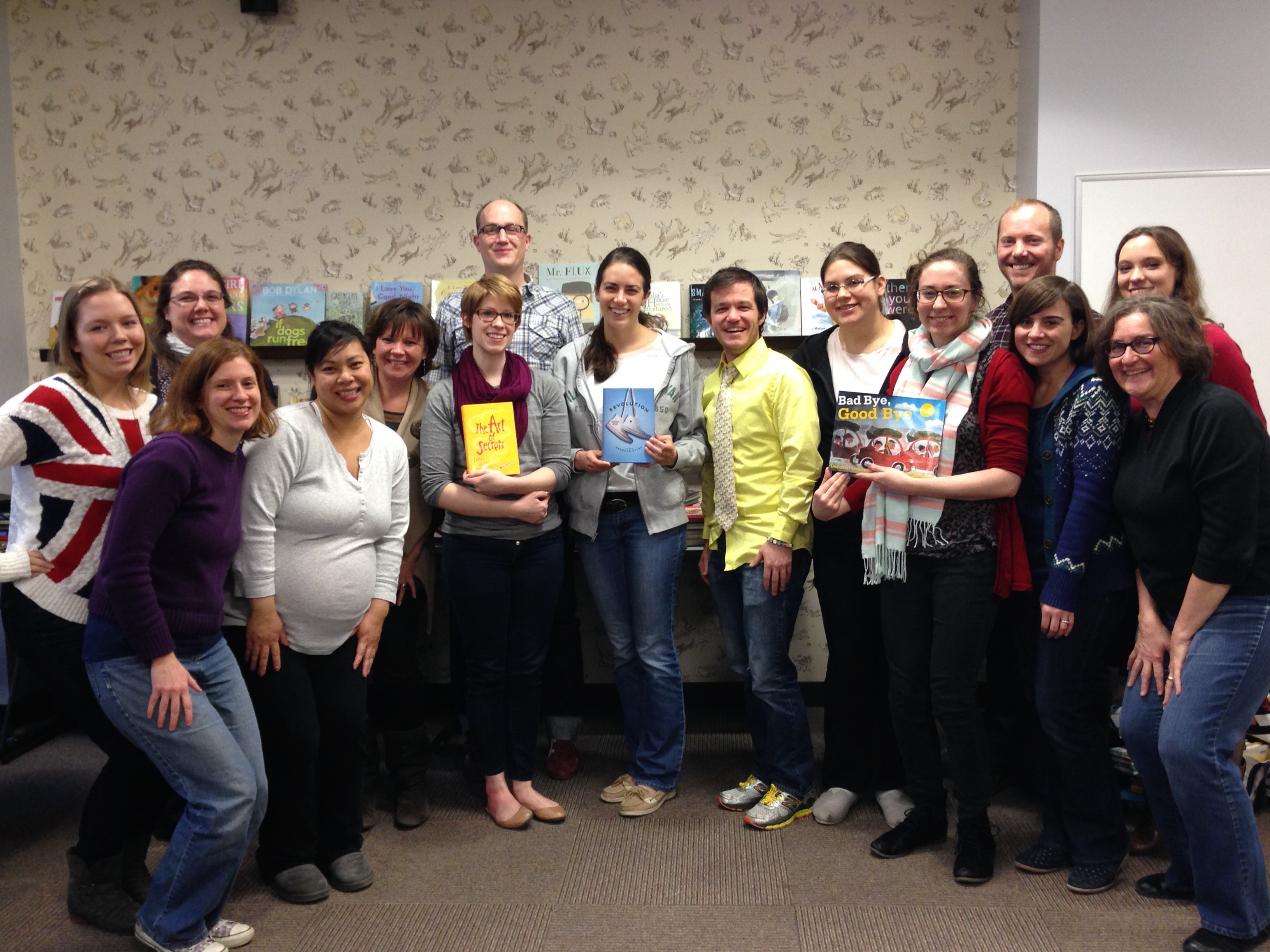
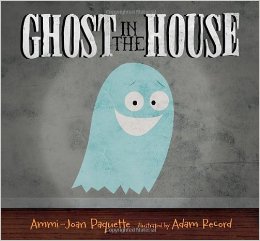 Ghost in the House
 The submissions are fascinating, with a surprising variety. To be sure, the collection includes some well-loved, to be expected titles. Where the Wild Things Are gets three mentions, and Dr. Seuss shows up six times, twice for The Cat in the Hat, twice for Green Eggs and Ham, and once each for Oh, the Places You’ll Go! and One Fish, Two Fish, Red Fish, Blue Fish. I’m not surprised to see Louisa May Alcott or A.A. Milne, C.S. Lewis or Lewis Carroll (or Robert Louis Stevenson) in the mix. The single most-cited title is Shel Silverstein’s The Giving Tree, with four mentions, which is something of a surprise, not because it’s a book I don’t care for (indeed, I don’t care for it) but because it seems to have the sort of nostalgic perspective that I never thought spoke strongly to children. Consider me schooled. I was somewhat surprised, too, to find books outside the children’s canon, by the likes of Hemingway and Steinbeck and Dwight D. Eisenhower. We didn’t specify that the book needed to be a book written expressly for children, just that it resonated in the participant’s childhood, so it makes perfect sense that books like these would show up. It’s a great reminder of my own myopia, that I automatically understand young people’s reading through my deep engagement with the body of literature I study. Schooled again!

 Here is the World: A Year of Jewish Holidays
 On September 23rd, Dominican University will be holding its fifth annual Caritas et Veritas Symposium, and the Butler Center will be taking part in the festivities. We’ve created library date-due cards with space for members of the Dominican Community to answer a single question: what book from your childhood contributed to your identity? Participants are encouraged to bring their cards to the Butler Center on the second floor of Rebecca Crown Library, room 214, where we will collect your responses.
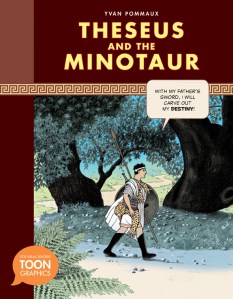 Theseus and the Minotaur
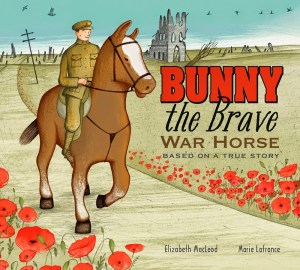 ve War Horse: Based on a True Story
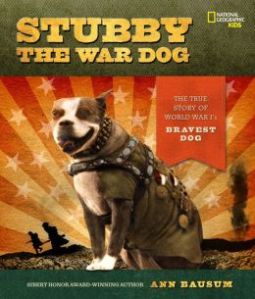 Stubby the War Dog: The True Story of World War I’s Bravest Dog
 The Caldecott terms and criteria constitute a particular, prescriptive lens through which to look at picture book illustration. The Caldecott Medal is arguably the most prestigious prize a picture book can win, and as such the specific elements and attributes it recognizes have a particular role to play as we examine and evaluate books in the canon. To be sure, the Caldecott terms and criteria are not the only measure we can apply. Indeed, in our day to day work with children, other things–iconic characterization, accessibility, suitability for a group read aloud–can be much more significant. Still, measuring picture books with the Caldecott measuring stick allows us to delve deeply into the quality of the illustration, and gives us meaningful information about the application and legacy of the Medal itself.






 Butler's Pantry