Butler Bookshelf

Now that school has started, so has the lesson planning! Whether you want to keep the lessons going at home or you’re looking for books to add to your classroom, we have a lot of new nonfiction books to share, including Wild Brunch: Poems About How Creatures Eat by David L. Harrison and illustrated by Giles Laroche. Harrison uses fun poems to explain how different animals across the world eat their food every day. He covers a wide range of animal species, from sea creatures, like narwhals, to land animals, like aardvarks; he also features a variety of flying animals, like turkey vultures, Mexican free-tailed bats, and houseflies. Harrison even includes a poem about mayflies, who only live for one day and don’t eat at all! Harrison includes a back matter that goes into more detail about each animal he writes about and their eating habits, sharing sources for where readers can learn more. Accompanied by Laroche’s detailed collages, Wild Brunch is sure to delight and educate any animal enthusiast!

Check out more of our nonfiction collection below!

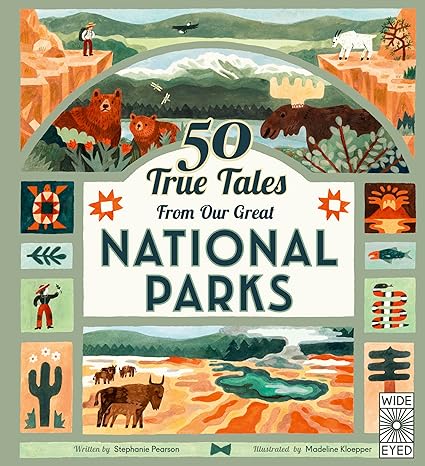
50 True Tales From Our Great National Parks
Written by Stephanie Pearson
Illustrated by Madeline Kloepper
Published by Wide Eyed Editions
Available now

Evidence!: How Dr. John Snow Solved the Mystery of Cholera
Written by Deborah Hopkinson
Illustrated by Nik Henderson
Published by Knopf Books for Young Readers
Available now

Radar and the Raft: A True Story About a Scientific Marvel, the Lives it Saved, and the World it Changed
Written by Jeff Lantos
Published by Charlesbridge
Available September 24th, 2024

The Shape of Things: How Mapmakers Picture Our World
Written by Dean Robbins
Illustrated by Matt Tavares
Published by Knopf Books for Young Readers
Available now

Wild Brunch: Poems About How Creatures Eat
Written by David L. Harrison
Illustrated by Giles Laroche
Published by Charlesbridge
Available now

How It Works: A Review of Bounce!: A Scientific History of Rubber

Bounce!: A Scientific History of Rubber
Sarah Albee
Illustrated by Eileen Ryan Ewan
Charlesbridge
October 22, 2024
Age 6-9

Used for everything from bike tires to raincoats, rubber plays a major role in things springy, stretchy and bouncy in ours daily lives. Follow its history from the discovery by indigenous Central American tribes (who farmed natural rubber latex from local plants), adoption by Europeans (imagine the difference when their soccer balls could bounce!), and the evolution in its usefulness into the multipurpose substance we can’t live without today. Part narrative nonfiction and part traditional nonfiction, Bounce combines a fascinating story of invention with “The Science!” interjections that explain the how or why of a narrative detail (what is it that makes rubber sink or float?).

Award-winning nonfiction author and former basketball-player (who appreciates a bouncy ball more?), Sarah Albee explores the history and science behind a very common part of everyday life. With a panel of expert readers—chemists, materials scientists, and engineers—Albee dives deep into both the story and the scholarship with accessible language and delightful facts. The extensive and respectful backmatter includes sections on tribal naming preferences, acknowledgement of the troubling issues of slavery and the environmental impact of rubber production, a timeline that dives deeper into some details from the narrative, and a thorough bibliography and source notes. Intricate yet fluid pen, ink, and watercolor illustrations connect closely to the text descriptions with detailed images of the action, movement in the line work, and expressive faces. Eileen Ryan Ewan uses color to help show the passage of time, moving from muted and historically accurate colors to more vibrant shades in the modern spreads. This engaging and fact-filled picture book would be a perfect accompaniment to introductory science lessons on the properties of matter or chemistry in upper elementary school or for the budding scientists in any library.

Follow the Clues: A Review of A Strange Thing Happened in Cherry Hall

A Strange Thing Happened in Cherry Hall
Jasmine Warga
HarperCollins Childrens
Age 8-12
September 10, 2024

Stolen art, a floating girl, and a mystery-solving turtle make for a quirky and suspenseful whodunit. Introverted and outcast, Rami spends more time than he’d like at the Penelope L. Brooks Museum where his mom oversees the cleaning crew. When a painting is stolen from the Cherry Hall gallery, and he and his mom become suspects, Rami begins seeing a ghost girl hovering in that same gallery. And she looks an awful lot like the girl in the missing painting. With the help of a Veda, a clever classmate and aspiring detective, and an observant turtle named Agatha, he will unravel the story of the girl, the painting, and the theft at the Penelope.

In a story about the importance of being seen, Jasmine Warga explores the connection between art, understanding, and truth. As a child of Lebanese immigrants, Rami is an outcast at school, and too timid to make trouble. Veda, however, is a bold and quirky personality, willing to challenge him to be daring in an attempt to solve the mystery. Their tentative new friendship is drawn with thoughtful attentions to the changeable emotions and growing pains of middle school. Themes of friendship and the desire to be seen (by Rami and Veda, by the girl, and by Agatha) provide subtlety to balance the heavier aspects of loneliness and the immigrant experience. This gentle, yet thrilling early elementary school mystery combines brief chapters, a fast pace, and multiple narrators to appeal to a young audience without being entirely childish. Warga breaks the fourth wall in chapters narrated by Agatha to add context, and a touch of magical realism, for young readers. The best combination of a warm-hearted friendship and clue-laced mystery.

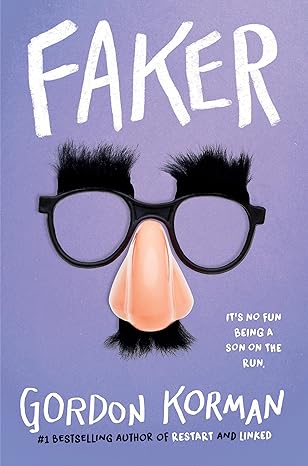
The Big Score: A Review of Faker

Faker
Gordon Korman
Scholastic
Age 8-12
July 2, 2024


Is Trey really defined by what his family does? Confidence man, liar, criminal… Faker? Living a high-end life funded by his father’s career as a con artist, Trey and his little sister are in on the game, to reel in families in a series of prep schools and wealthy communities. Settling into what could be their biggest score yet—the big kahuna—a fictional electric car start-up looking for investors, he begins to question it all. An influential middle school ethics teacher and his activist daughter open Trey’s eyes to the morality of the “family business” and a growing disillusionment with how it affects those around him.

In the authentically conflicted voice of an adolescent boy, Korman gives this realistic fiction tale a twist. What if this boy was a con trying to go straight? Then he adds all the middle school conflict that comes with friendships, family drama, and questioning parental authority. Is Dad right that no one is hurt when you take from the rich? Brisk plotting and snappy dialog mirror the pace of Trey’s quickly developing conscience. “I can’t believe I ever thought it was anything more than stealing” (p. 170). Trey matures throughout the narrative, getting involved to rehab a local park and discovering that a new friend is also part of a con artist family, efficiently driving the final action. In a conveniently tidy conclusion, he makes a dramatic decision—they all go straight, return the money, and build the stable home life Trey always wanted. A funny and fast-paced coming of age story for middle schooler readers that want a side of crime with their family drama.

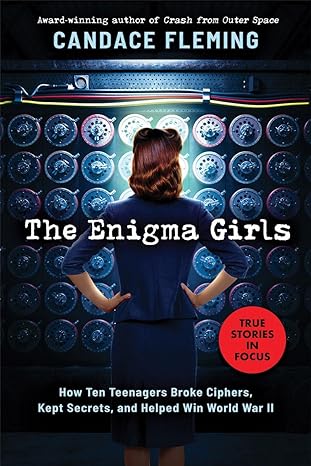
Can You Keep a Secret?: A Review of The Enigma Girls

The Enigma Girls: How Ten Teenagers Broke Ciphers, Kept Secrets, and Helped Win World War II
Candace Fleming
Scholastic
March 5, 2024
Age 8-12

It wasn’t just the boys doing their bit for the war effort during the harrowing years of World War II. Sibert Award-winner Candace Fleming follows The Enigma Girls, ten young women working with the British government, cracking ciphers and codes to help win the war. Based out of Station X at Bletchley Park, a once top secret center of the British intelligence, thousands of people (nearly ¾ of them young women, p. 237) worked night and day intercepting, decoding, transcribing, translating, and cataloging secret communications from German, Italian, and Japanese government and military leaders. Walking chronologically through the war years (1939-1945), Fleming introduces each woman as she’s recruited into the sphere of Bletchley Park, snippets of her life before, during, and after the conflict, and her often emotional reactions to the exhaustion, secrecy, and triumph of the work.

The brisk pace and simple, yet engaging prose of this narrative nonfiction title pull readers into the frantic feelings and tense atmosphere of Station X. Fleming balances that emotion with well-explained vocabulary and intra-chapter information about codes and code breaking. Extensive photo documentation of Europe at war and Bletchley Park in particular bring the horrors of war and high stakes of the work to vivid life. Due to the clandestine role that the women and Bletchley played in the war, primary source material from the time is limited. Fleming’s source notes show extensive research into the biographies and autobiographies of the women (most of them wrote of their wartime experiences once they were allowed), and archives in Britain and beyond. Other backmatter includes thorough source notes, photography credits, and author’s note, and an index to come (not included in the reviewed ARC).

A deftly crafted tribute to the unsung young women whose efforts often turned the tides of battle, saving the lives of allied servicemen.

Elementary!: A review of The Improbable Tales of Baskerville Hall

The Improbable Tales of Baskerville Hall
Ali Standish
Harper Collins Children’s Books
Age 8-12
Available September 12, 2023

In a middle-grade twist on the Sherlock Holmes stories, a brilliant young Arthur Conan Doyle accepts a full scholarship to a mysterious school for exceptional students. In the hopes of providing a better life for his family, Arthur devotes himself to school, including the friendships, mysteries, and mayhem that one would expect of a 19th century English boarding school—eccentric students and professors, secret societies, magical clocks, and even a baby dinosaur. But when it comes time to submit to the questionable ethics of the secret society, and their promises of wealth and power, or do the right thing at the possible expense of his future, Arthur shows integrity to the end.

Standish borrows liberally from the Holmes novels with characters, like Dr. Watson, Jamie Moriarty, and Sherlock Holmes himself, named for many of the original Doyle’s most famous characters. Arthur himself is drawn as one would imagine a young Sherlock. These details, however, may be lost on young readers. The swiftly plotted and intricately detailed mystery can stand alone though, using its quirky characters and darkly atmospheric setting to draw the reader into its world and to rooting for the cast of diverse and well-crafted characters. Themes of friendship, integrity, and problem-solving run heavily through the novel and help to ground some of the more outlandish plot devices, like time travel and dinosaur hatching. And with a parting “the game is afoot” (p. 310), Standish sets the stage for a series of future adventures that junior sleuths will be sure to love.

Claiming Her Place: A Review of We Still Belong

We Still Belong
Christine Day
HarperCollins Children’s Books
Age 8-12
August 1, 2023

Excitement, anxiety, disappointment, and hope—over the course of one emotional day, Wesley Wilder explores all the feeling middle school has to offer. As the early riser in her close-knit, multi-generational, indigenous household, Wesley battles nerves over the big day she’s planned. She’s written a heartfelt poem for the school newspaper in celebration of Indigenous People’s Day. She’s planning to use the same newspaper issue to ask her kind, funny, gamer-boy, crush to the school dance. And will cap off the day celebrating at the intertribal powwow planned in her Seattle area community.

As the title implies, themes of belonging, community, family, and friendship drive the fast-paced plot of this middle grade novel. Wesley is a thoroughly sympathetic character, full of all the uncertainty, eagerness, and budding confidence of adolescence, while exhibiting a strong connection to her single mother, grandfather, and extended family (a well-crafted network of supportive adult characters). Her thoughtful voice, and desire for community, come through in care for her best friend, Hanan, and her efforts to reach out to those around her in need of a friend. And even when things around Wesley seem to unravel, like her crush already having a date or her aunt’s family’s potential move, she grounds herself in gratefulness, showing a mindfulness uncommon to most middle grade characters. Day (Upper Skagit) handles incidences of discrimination toward indigenous people and causes with a gentle touch, weaving them into the narrative in a way that explains and exemplifies Wesley’s kindness. A day in the life of a soft-hearted girl growing into her voice.

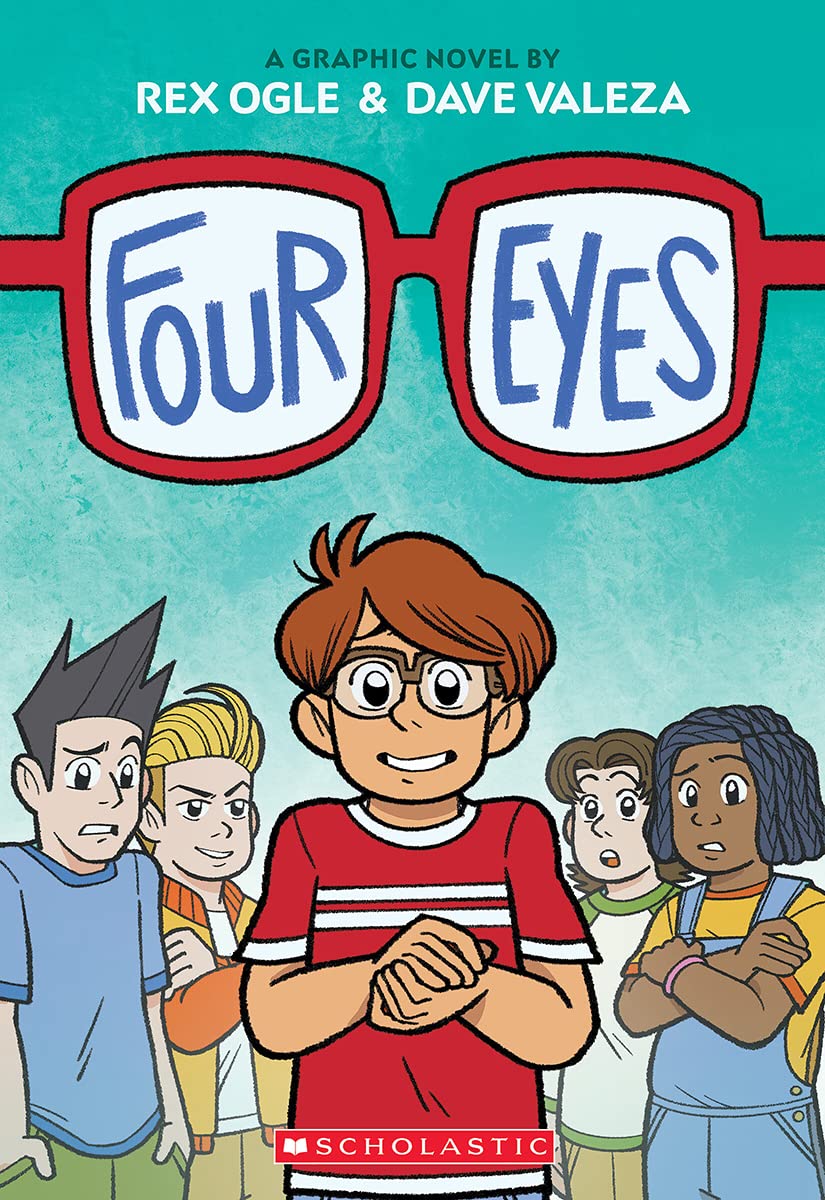
How to Survive Sixth Grade with Glasses: A Review of Four Eyes

Four Eyes
Rex Ogle
Illustrated by Dave Valeza
Graphix
Ages 8 to 12
May 2nd, 2023

Rex thought sixth grade was going to be exciting, with new teachers, a fancy locker, and his best friend by his side. He was going to conquer the year with flying colors. Then his best friend starts hanging out with the popular crowd who don’t like the comics and who start bullying Rex for being short. Rex’s year can’t get any worse—until he finds out he needs glasses. Now, Rex has to deal with wearing glasses and being bullied for it, while navigating sixth grade, having no friends, and a family who don’t understand him.

The pencil-drawn illustrations express detailed features like the emotional facial expressions of each character and objects in the background. The warmer-hued colors distinguish the characters and the scene and give energy to the novel, matching the fast-pace of the story. The author and illustrator express an encouraging tone when themes of growing up and trying to figure out a place in school are brought up in Rex’s life. As Rex matures into his own person, he learns that everyone needs help sometimes, even adults. A major emotional moment in the story explores the difficulty of living in a low-income household, and although his family can’t afford the fancy pair of glasses for him or the nice clothes, Rex learns that having a loving family, a safe place to sleep, and the things you need are more important than what you might want. Middle school may be hard to figure out, but Rex finds his place by making new friends, and with their support, stands up to the bullies that his friend is hanging out with. Eventually, he also understands that becoming your own person means it’s okay to let go of old friends and accepts that glasses don’t change who you are. Four Eyes is a coming-of-age story for readers who are trying to navigate the intricate balance of middle school and what it means to grow up.

Little Seeds Saving the Planet: A Book Review of Big Tree

Big Tree
Brian Selznick
Scholastic Press
Ages 7 and up
April 4, 2023

Louise and Merwin, two Sycamore seeds, have always assumed they would live with their Mama for a long time before setting down their roots. However, when the mysterious voice of the Old One whispers of impending danger to Louise, and strange incidents start happening in the forest, Louise and Merwin are thrust into an unknown world away from their Mama. Forced to explore the changing and dangerous world around them, the siblings face dinosaurs, meteors, and volcanoes to find a safe place to grow. When the voice of the Old One becomes louder to Louise, she realizes that they may have a higher purpose—to save the world.

Pros and illustrations make this a non-traditional children’s fiction book as it uses both as an integral part of the story; with pages switching from pros, illustrations, and to a combination of both. The black and white charcoal illustrations bring another layer to the story while giving a changing perspective shift from microscopic to galactic view of the world and its creatures. The illustrations are ordered to show the motion of objects, animals, and plants giving life to the story, especially when whole pages portray the walk of a dinosaur past the forest (Pgs. 70-81). Through great changes, Merwin and Louise must change their perspective to adapt to the world around them. Merwin becomes pragmatic and protective of Louise, who is being guided to safety by the Old One, and mostly leads them astray of the Old One’s plan. Louise basks in the new sensations of the world and delves more into trusting and listening to the world around them. Eventually, learning to trust in one another, they both listen to the Old One and prepare for the chance to save the world. In this adventure, Selznick gives a voice to the world by using the Old One as a wise and protective being that wishes to help all its children, while also teaching them that death is just one part of the Cycle of Life. Selznick includes backmatter on the original idea of this book, the science behind key characters, and an acknowledgment of all the scientists and specialists that have helped him research in preparation for this book. As Louise guides Merwin, Big Tree will guide readers to listen to the sound of the world and care for our fragile planet before it’s too late.


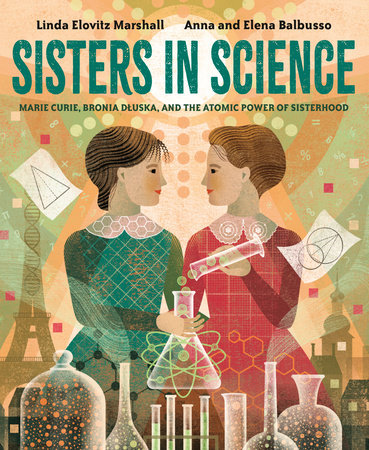
Lab Partners: A Review of Sisters in Science: Marie Curie, Bronia Dluska, and the Atomic Power of SisterhoodLab Partners: A Review of

Sisters in Science: Marie Curie, Bronia Dluska, and the Atomic Power of Sisterhood
Linda Elovitz Marshall
Illustrated by Anna and Elena Balbusso
Knopf
February 14, 2023
Age 5-9

Marie and Bronia grew up in a home surrounded by love, learning, and tragedy. Losing their mother and sister when they were quite young inspired the sisters to discover ways to help others. They supported each other through school and beyond in their journey to become a doctor and scholar in search of medical miracles. Each grew to make significant impacts on their chosen field, and on each other’s lives, through their curiosity, determination, and courage. This picture book biography of Marie Curie and Bronia Dluska explores the lives of the brave and brilliant sisters as they broke gender boundaries and cultural norms in late 1800s Poland to educate themselves and others in their quest to save the world. Marshall tells the story of their progress from young students to scientific trailblazers in a factual, often bleak, manner, broken by moments of whimsy. She describes the struggles between work and family obligations, accompanied by a moody-toned illustration of the conflict, leading into a spring-like spread of Marie and her husband Pierre on their bicycling honeymoon (p. 10-13). She balances moments from their personal biographies with their professional accomplishments, crafting an example of strong, but well-rounded women in science as role models for young readers, developing scientists, and sisters of all ages. Sisters Anna and Elena Balbusso’s geometric, sepia-toned, mixed media illustrations capture the STEM focus and historic setting to perfection. Utilizing imagery of atomic bonds, equations, and lab equipment against poignant images of the family, they reinforce the conflicting priorities that must have been a constant struggle for the women during that time period (and often still are). A time line and reading list (for children and adults) adds weight to this inspirational addition to STEM and Women’s History Month collections and programming.

A story of sisterhood and intellectual curiosity that lead to some of the great medical and scientific discoveries of the 19th and 20th centuries.