Welcome to the online presence of the Butler Children's Literature Center, housed within Dominican's School of Information Studies, Crown Library room 214. Here, we celebrate the best in books for youth and those who delight in sharing them. For Fall 2026, BCLC will offer collection access to the Dominican community and general public during posted open hours: Monday, Tuesday, Thursday, and Friday 9am-4pm, and by appointment with the Curator. Contact Jen Clemons at butler@dom.edu or jclemons@dom.edu to make arrangements.
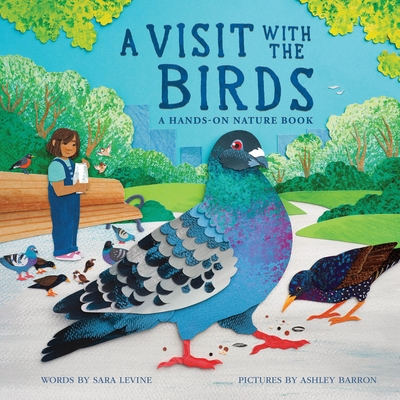
Nature is omnipresent and can be fun to interact with, especially for young children. Reading books about nature can introduce young readers to the wonders of the great outdoors, which is why we’re featuring nature literature from our nonfiction collection! This week’s feature pick is A Visit With the Birds: A Hands-On Nature Book by Sara Levine and illustrated by Ashley Barron. In this picture book, a child and their parent go to the park to feed and look at the birds that inhabit the city park. Young readers can point at which birds or other creatures they find on the pages. There is also a page spread that encourages readers to take a moment to move and make bird sounds. At the back of the book, there’s end matter about all the birds featured in the illustrations.
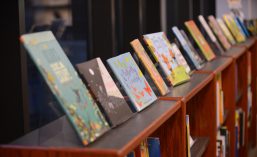
Check out this and other nature titles!
A Visit with the Birds: A Hands-on Nature Book Sara Levine Illustrated by Ashley Barron Sourcebooks Kids/sourcebooks eXplore Available now!
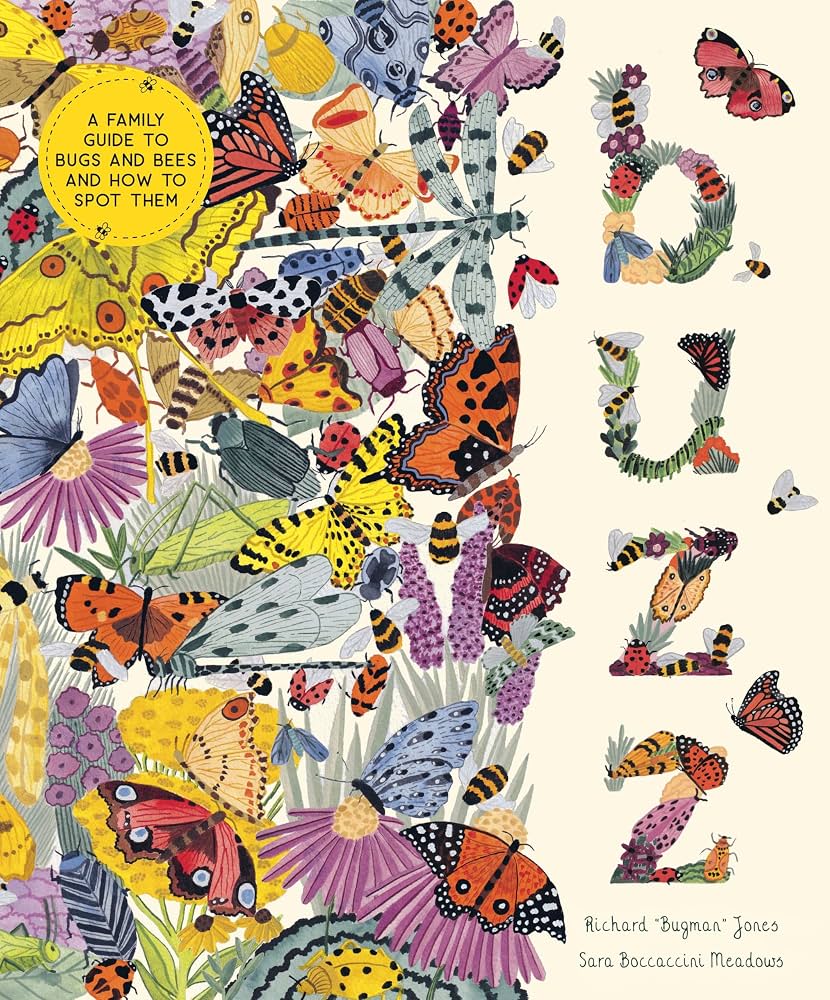
Buzz: A Family Guide to Bugs and Bees and How to Spot Them Richard “Bugman” Jones Illustrated by Sara Boccaccini Meadows ABRAMS/Magic Cat Publishing Available now!
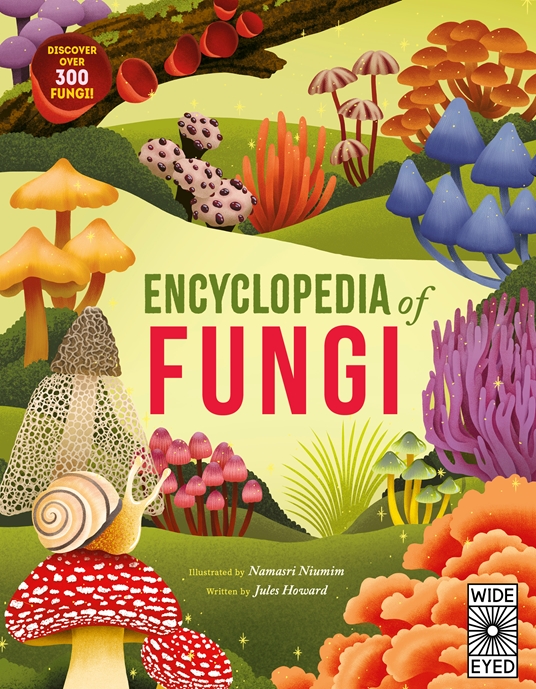
Encyclopedia of Fungi Jules Howard Illustrated by Namasri Niumin The Quarto Group/Wide Eyed Productions Available now!
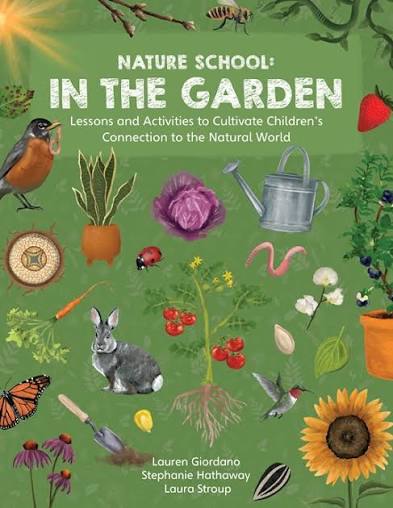
Nature School: In the Garden: Lessons and Activities to Cultivate Children’s Connection to the Natural World Lauren Giordano, Stephanie Hathaway, and Laura Stroup The Quarto Group/Quarry Books Available now!
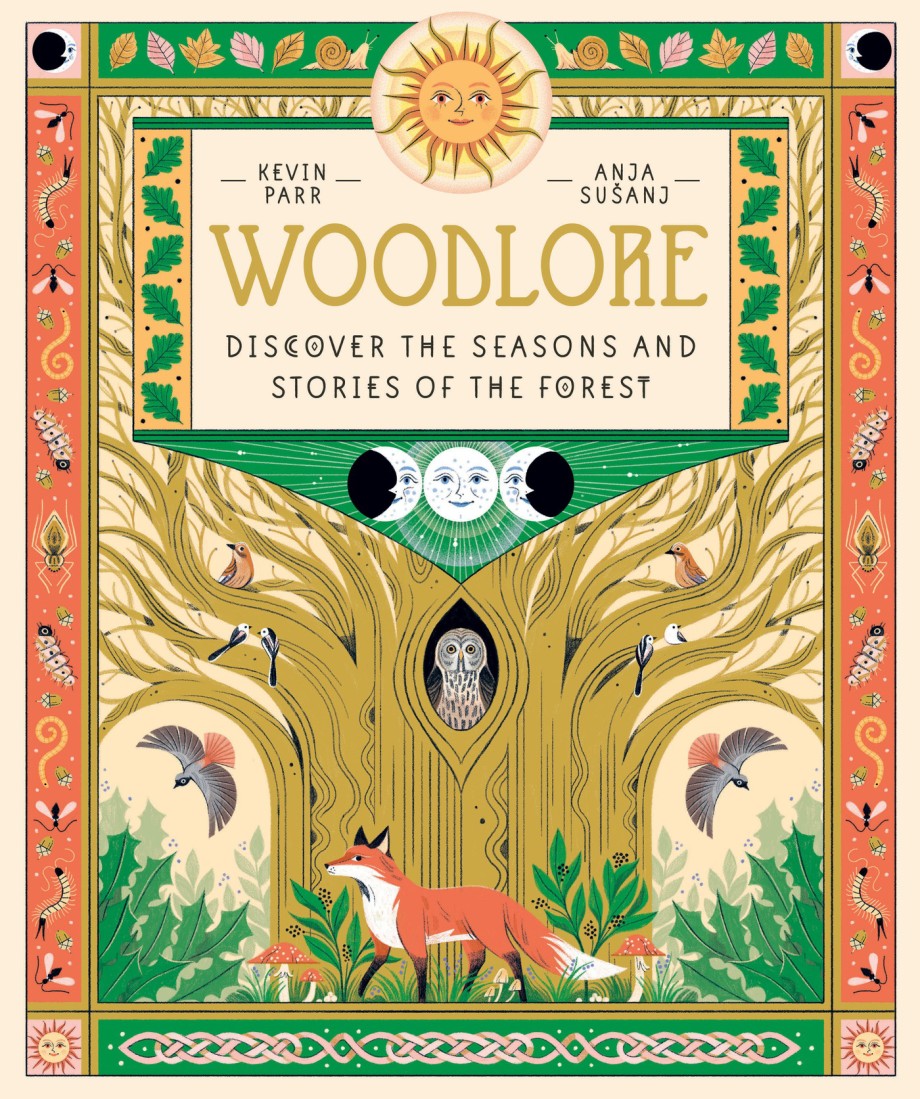
Woodlore: Discover the Seasons and Stories of the Forest Kevin Parr Illustrated by Anja Sušanj ABRAMS/Magic Cat Publishing Available now!
Pueblo Storyteller by Marie G. Romero (Jemez Pueblo)
The Butler Children’s Literature Center is home to two incredible historical collections: the Effie Lee Morris Collection of African American Booksand the Ellin Greene Storytelling Collection. These collections are non-circulating and must be viewed inside of the center. As a child of the technological age, there are many things I know about exclusively through the Internet. When I originally discovered Dominican’s Butler Children’s Literature Center, I wanted to know more about the books it held and found the Rebecca Crown Library website a little difficult to use to view all the Center’s titles. After I was given the opportunity to see the collections, my desire to bridge the gap between the physical collection and what people could see of it online only grew. At the very least, I wanted online visitors to be able to get a general understanding of the collection’s holdings and filter quickly for titles that align with their interests.
So, I’m very glad that I was able to put together this SeaTable database (password BCLCCollections) that blog visitors can use to explore. It contains many of the titles currently present in both collections. Visitors can filter by different tags, like “African American Author” or “Poetry/Verse”, or search for keywords like titles, authors, and places of origin. I hope that providing an easy avenue for people to poke around allows the physical collection to gain even more attention.
Some Tips for Filtering and Sorting the Database:
Filtering: Click the “Filter” button, then “+ Add Filter” or “+ Add Filter Group.” Select the column you’d like to filter, and the information you’d like to filter by. Click the “X” to remove any of these filters.
Sorting: Click the “Sort” button, then “+ Add Sort.” Select the column you’d like to sort and specify if you’d like to sort “Up” or “Down.” Click the “X” to remove any of these “sorts.”
You can also sort by clicking the dropdown arrow next to any column name and selecting “Sort ascending” or “Sort descending”:
Check out what these collections hold and know there’s even more to see in person. Reach out to Curator, Jen Clemons (jclemons@dom.edu), or the Butler Center (butler@dom.edu) to schedule a visit.
Project Credit: This project was completed by Wren Ambroise as part of the Butler Youth Services Scholarship program. Ambroise is a recent graduate of Dominican University’s Master of Library Science program, with a certificate in Youth Services. As 2023-24 Butler Youth Services Scholar, he put this database together to be a resource for online exploration of the wonderful historical collections that call the Butler Children’s Literature Center home.
Now that school has started, so has the lesson planning! Whether you want to keep the lessons going at home or you’re looking for books to add to your classroom, we have a lot of new nonfiction books to share, including Wild Brunch: Poems About How Creatures Eat by David L. Harrison and illustrated by Giles Laroche. Harrison uses fun poems to explain how different animals across the world eat their food every day. He covers a wide range of animal species, from sea creatures, like narwhals, to land animals, like aardvarks; he also features a variety of flying animals, like turkey vultures, Mexican free-tailed bats, and houseflies. Harrison even includes a poem about mayflies, who only live for one day and don’t eat at all! Harrison includes a back matter that goes into more detail about each animal he writes about and their eating habits, sharing sources for where readers can learn more. Accompanied by Laroche’s detailed collages, Wild Brunch is sure to delight and educate any animal enthusiast!
Check out more of our nonfiction collection below!
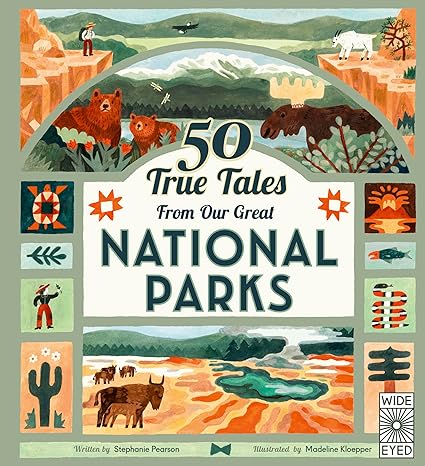
50 True Tales From Our Great National Parks Written by Stephanie Pearson Illustrated by Madeline Kloepper Published by Wide Eyed Editions Available now
Evidence!: How Dr. John Snow Solved the Mystery of Cholera Written by Deborah Hopkinson Illustrated by Nik Henderson Published by Knopf Books for Young Readers Available now
Radar and the Raft: A True Story About a Scientific Marvel, the Lives it Saved, and the World it Changed Written by Jeff Lantos Published by Charlesbridge Available September 24th, 2024
The Shape of Things: How Mapmakers Picture Our World Written by Dean Robbins Illustrated by Matt Tavares Published by Knopf Books for Young Readers Available now
Wild Brunch: Poems About How Creatures Eat Written by David L. Harrison Illustrated by Giles Laroche Published by Charlesbridge Available now
Last spring, I decided virtual conferences were a silver lining to a socially distanced and anxiety-ridden time. The endlessly creative library and book world was just a click away, and all the conferences I’d dreamt of participating in were suddenly coming right to the safety of my desk (AKA the dining room table)! And while I love the energy and spontaneous meet-ups of a face-to-face conference, I’m excited for another summer of safely connecting online while the world recovers from this pandemic. Check out this roster of fabulous upcoming events for your professional development delight. And perhaps we’ll meet in a virtual happy hour—cheers!
SLJ Day of Dialog May 20, 2021 9:00am-6:00pm EST Free with registration.
Come hear about the latest and most exciting forthcoming titles for children, tweens, and teens, from picture books and nonfiction to graphic novels and YA, and engage in Q&A sessions with authors and illustrators. There will also be opportunities to visit the virtual exhibit hall to network with leading publishers, enjoy additional author chats, and download digital galleys and other free resources.
Publisher’s Weekly: US Book Show May 25-27, 2021 9:00am-4:00pm CDT Registration required—librarian ticket $35
Attendees will enjoy a wide array of book and author panels; programming geared to publishing professionals; and exhibitor booths available on a sliding scale meant to attract displays from a range of vendors, from small presses to midsize imprints, university presses, sideline producers, distributors, library data providers and the largest publishers. Special programming for librarians will put forth thought-provoking discussions about the challenges and opportunities facing libraries now.
Indigenous Voices: Authentic Children’s Literature in the Classroom & Library May 25-26, 2021 12:00 pm – 3:00 pm PDT Free with registration by May 25th
San Diego County Office of Education is hosting this two-day event featuring Debbie Reese, Traci Sorell, Anton Treuer, Arigon Starr, Dawn Quigley, Naomi Bishop, and Darcie Little Badger. The webinar is free and open to the public.
Bologna Children’s Book Fair June 14-17, 2021 Combination of free and paid events with registration required.
Visit the BCBF page for events (with registration details) ranging from a Virtual Illustrators Wall, to Awards Ceremonies, Master Class sessions, and licensing events.
ALA Annual Conference and Exhibition June 23-29, 2021 Registration required, fee based on membership category.
Join your community online at the leading library event of the year with more than 200 educational sessions, 250+ exhibitors, 25+ Featured Speakers, and more than 140 authors — and the best part you’ll have access to the conference content for a full year!
London Book Fair June 7-10 and June 29-July 1 Registration opens soon.
This series of publishing and rights related events delivers quality content, exciting keynote speakers, future-gazing presentations, heated debate and unrivalled networking opportunities. Full conference programs will be posted soon.
American Booksellers Association The 2021 Children’s Institute August 30-September 1, 2021 Registration opens June 15th
Attendees can expect all their favorite events from Children’s Institute, including keynotes, author appearances, education sessions, rep picks presentations, social events, and more, but with a twist only available to booksellers in a virtual world.
What events are you attending this summer? Drop us a note if there is another can’t miss event you’d love to share and we’ll help spread the word.
Here at the Butler Center, instead of our regular Butler Bookshelf, we are turning our attention to lifting up resources to help combat racism. As a Sinsinawa Dominican-sponsored institution, Dominican University prepares students to pursue truth, to give compassionate service, and to participate in the creation of a more just and humane world. The Butler Children’s Literature Center carries out its own mission as a reflection of that inspiration.
Below please find resources for children’s book lists, resources for educators, as well as industry and publishing information.
It’s the little things, isn’t it? What I Like The Most singles out life’s small pleasures: apricot jam on toast, the mailman on the street. We’re thrilled with this new picture book, written by Mary Murphy and illustrated by Zhu Cheng-Liang, which celebrates daily life and all its changes. For more great reads, check out the list below!
Molly’s Moon Mission
Written and illustrated by Duncan Beedie
Published by Templar
Available now!
Not Playing by the Rules: 21 Female Athletes Who Changed Sports
Written by Lesa Cline-Ransome
Published by Knopf Books for Young Readers
Available now!
Happy: A Children’s Book of Mindfulness
Written by Nicola Edwards and illustrated by Katie Hickey
Published by Caterpillar Books
Available now!
William Shakespeare’s The Tempest
Retold by Georghia Ellinas and illustrated by Jane Ray
Published by Candlewick
Available now!
Alphamaniacs: Builders of 26 Wonders of the World
Written by Paul Fleischman and illustrated by Melissa Sweet
Published by Candlewick Studio
Available now!
What I Like The Most
Written by Mary Murphy and illustrated by Zhu Cheng-Liang
Published by Candlewick
Available now!
Anxiety Relief for Teens: Essential CBT Skills and Mindfulness Practices to Overcome Anxiety and Stress
Written by Regine Galanti, PhD
Published by Zeitgeist
Available March 31, 2020
Ages 13+
In this practice-based book, Dr. Regine Galanti addresses anxiety in teens. Galanti is a licensed clinical psychologist and founder of the New York-based Long Island Behavioral Psychology and has expertise in obsessive-compulsive disorder (OCD) and anxiety, as well as parenting and behavior problems. Galanti employs cognitive behavioral therapy, or CBT, to give teenagers mindfulness tools and coping skills so that they can—with consistent practice—meet their fears and challenges and improve their quality of life.
Mindfulness is a word thrown around a lot these days. For Galanti, mindfulness skills are integral in addressing anxiety because they allow the individual to be present and observe their surroundings without judgment. Of course, as anyone who’s tried to meditate knows: it’s no easy feat. Which is why the realism behind her Galanti’s mindfulness practices will be welcome to anyone who’s ever worked with teenagers: no quick fixes are promised, but consistent and deliberate practice can improve one’s reaction to life’s stressors. These practices run the gamut from “talking back” to your fears to visualization exercises where teens imagine breathing in a calm color (blue) and exhale a stressful color (in this case yellow, like a caution sign). The sheer abundance of cognitive behavioral techniques (there are over 30 instances) lets readers choose what works for them—and invites them to try on different tools for different stressors. Galanti’s judgment-free writing makes these exercises appealing, never shaming. It is important to note: Galanti is quick to provide hotline numbers and a medical disclaimer in the pages. That warning is serious; this book can be a wonderful supplement to those in treatment—possibly a standalone for a teen who is looking to improve their negative reactivity. This is a great resource for teens, but it should not be the only resource. This book includes quiz-style assessments, sample worksheets, and diagrams; its back matter includes a list of mental health resources.
Introduction:
Inspired by We Need Diverse Books and the University of Wisconsin-Madison info-graphic breaking down the percentage of books depicting diverse characters (specifically race and ethnicity) we here at Butler decided to evaluate our 2018 collection to determine whether or not we had a similar breakdown. Questions that we hope to answer by looking back at our 2018 titles included: Does our collection accurately represent what’s being published? Do we need to do some active curation to give our users a better picture of current publishing trends? Although we realize that we receive much fewer books in one year than either of this two institutions do, we felt that is our responsibility to ensure that our collection was an accurate reflection of what is published in a given year.
We Need Diverse Books & CCBC Diversity info-graphic
Method & Results:
1. Gather all 2018 titles Butler received and put it into an excel doc. Delete any and all duplicate titles within the excel doc. This was done by putting the doc in alphabetical order by author to make it easier to spot any duplicates.
2. We then looked up each book on Kirkus and Amazon to determine the race/ethnicity of the protagonists of each book. Once this was determined, this would be indicated on the excel doc with the following acronyms:
African/African American (A/AA)
American Indian/First Nations (AI/FN)
Asian Pacific Islander/Asian Pacific American (API/APA)
Latinx
White
In the case that it was none of the above, we left it blank to represent animals/other.
3. After determining the contents diversity, we then went on to look up the author and illustrator of the title to determine whether or not the title was own voices. If it was own voices, an ‘x’ was put in the excel doc. If the title was not own voices, this would be indicated in the excel doc by writing the race/ethnicity of the author and illustrator next to one of the above acronyms.
4. After all this was done, we found that we had a few anthology titles that included both diverse characters and none diverse characters. Since we could not determine how much of these titles were dedicated to either non diverse or diverse characters we decided to delete these titles from the doc so as not to misrepresent them in our graphic.
5. We then organized the doc in alphabetical order based off our acronyms. From there we counted how many books we had in all of our categories—including those we had left blank that represented books about animals or other inanimate objects. For each category we had the following amount of books:
6. With these numbers in mind, we decided to focus on the 240 books that had diverse content to see how many were own voices.
7. We counted how many ‘x’ indicators we had in our A/AA, AI/FN, API/APA, and Latinx categories to see how many titles we had that were actually own voices.
We found that altogether there were only 119 titles that were on voices.
Once all the data had been gathered we made a graph breaking down all the books by content and a graph that broke down the number of own voices titles by race/ethnicity.
Notably, we found that although the graph based off content indicated that of the 1420 we had only 0.42% was AI/FN content. The own voices graph, on the other-hand, indicated that of the 240 books we had with diverse characters 2% of own voices content was AI/FN.
In fact, the percentages for each category doubled between graphs. However, the overall percentage of non-own voices content made up 50% of the second graph while no individual category went above 19%.
Overall, own voices content only made up 8% of the total number of books that we received in 2018.
Breaking this down further, looking at each A/AA, AI/FN, API/APA, and Latinx individually to see what percentage of the content about them was own voices, we found that although A/AA had the most content its overall percentage of own voices titles was the lowest of all the other categories at 41%. Meanwhile Latinx, which had the second lowest amount of content had the highest percentage of own voice titles at 68%.
Conclusions:
The percentages of our content graph are overall lower than those found by We Need Diverse Books (WNDB) and the University of Wisconsin-Madison. However, the one area where we had a higher percentage than WNDB and University of Wisconsin-Madison was in our other/animal category. This may in part be due to the fact that we included self-help and how-to books within this category. Without knowing exactly how WNDB and University Wisconsin-Madison determined what went into this category it is hard to say why this discrepancy exists.
On the whole, our results seemed to match the same pattern as WNDB and the University of Wisconsin with White making up the majority of content, followed by Animal/Other, A/AA, API/APA, Latinx, and AI/FN at the bottom. While the gap between diverse and not diverse content is great, the gap between own voices content and non-own voices content is even greater still.
Final Thoughts:
As more diverse titles are published, it is important that they are predominantly written by people from the community they are writing about. It is not enough to have a diverse cast of characters if they do not act or accurately reflect the community they are meant to represent. At the very least, writers and illustrators should make sure that whatever they are producing does not further advance negative stereotypes of their subjects. People are not always aware of the biases they may hold; it is always a good idea to have a sensitivity reader look over and reevaluate your work so as not to further any biases that may be present.
These findings, as well as the findings by WNDB and the University of Wisconsin-Madison, may be helpful to librarians, educators, and parents when curating their own collections. Knowing that publishers mostly publish content depicting white children or animals, librarians, educators, and parents can take the appropriate steps to ensure that their collections are representative of the diverse communities of people which they serve. It is important that everyone feels heard and represented, and making sure that the books we select accurately reflect these voices is critical to expanding children’s world views and validating their self-worth.
You Are Enough: Your Guide to Body Image and Eating Disorder Recovery By Jen Petro-Roy
February 19, 2019
Grades 6 and up
You Are Enough is a guide for young people struggling with eating disordered behavior and provides helpful resources, exercises, and information for readers to try and work towards recovery. Jen Petro-Roy writes about her own experiences of eating disordered behavior as well as her attempts at recovery, showing readers that they are not alone in their fight against their eating disorders. The book provides a list of resources on its last pages, spanning from where to get scholarships for treatment, body positive Instagram accounts, books, and websites dedicated to helping those with eating disordered behaviors. The book speaks at length about the need to find comfort in one’s self, rather than trying to make yourself likable to others. Attempts to control how others perceive you through eating disordered behavior will only serve to make you unhappier. By accepting yourself for who you are, and taking pride in what makes you unique, you can start the long and hard road to recovery.
You Are Enough is a non-fiction companion piece to Jen Petro-Roy’s fiction novel, Good Enough, about a young girl with an eating disorder. You Are Enough can be read as a standalone work without Good Enough. While the bulk of the work is meant for those already suffering from eating disordered behavior, it can be used and read by anyone. The book makes a point of showing that the world we live in inundates us with messages of self-worth being tied to self-image and how harmful it can be for our mental health. This a fantastic book for anyone wanting to better improve their relationship with their own self-image.




 Anxiety Relief for Teens: Essential CBT Skills and Mindfulness Practices to Overcome Anxiety and Stress

 6. With these numbers in mind, we decided to focus on the 240 books that had diverse content to see how many were own voices.


