On a Beam of Light

on a beam of lightOn a Beam of Light

by Jennifer Berne, illustrated by Vladimir Radunsky

Chronicle, 2013

I fancy myself a scaredy dad. My son, who has been with us now for approximately 750ish days, has managed to instill a deep rooted paranoia within me concerning every possible aspect of the human condition. “Is he choking or just laughing really hard?” “What was that, a poop or a toot” (please just be a toot!)? And something I’m certain every parent can relate to: “Why isn’t he deciphering complex algebraic proofs yet?” Unreasonable? Absolutely! Whereas I can look past perceived mathematical deficiencies, I worry away over words and speech.

Believe it or not, other parents have shared concerns for their child’s development. Case in point; THE EINSTEINS! Turns out, even the most (arguably) brilliant scientist ever took a while to blossom. Jennifer Berne’s book On a Beam of Light reveals a quiet, curious baby Albert who barely spoke at the age of three. He sort of took his time checking things out. Upon receiving a compass from his father, young Albert became mesmerized by the consistency of its northward pointing needle. This revelation developed a thirst for knowledge within him that would span a lifetime. Far more inquisitive than his classmates, some teachers believed he would be an utter failure in life. Unperturbed, he searched for answers in books on science and math. Tireless thinking and daydreaming led him to discover some of the most important concepts in scientific history.

Berne takes an interesting approach to Einstein’s story by focusing on his difficulties fitting in, his curious nature, and a love of simple pleasures. In a word: his normalcy. For all practical purposes this seemingly super-natural man was little more than a thoughtful boy who loved music, riding his bicycle, eating ice cream, and wearing shoes with no socks. The author’s clever references to activities children adore make Albert all the more appealing to young readers and listeners. Particularly keen observations and significant moments in Albert’s story are written in large, red ink to emphasize their meaning.

Vladimir Radunsky creates a whimsical mood with static pen drawings which are often colored with ink and gouache paints. Some of Albert’s thoughts and questions are drawn as word bubbles. Particularly effective are the freckled, parchment-like pages which are soft on the reader’s eyes. Images frequently portray Albert in a pensive pose. Depictions of his thoughts and dreams bounce across pages as if they were darting through his mind. One particular spread illustrating a scene made of atoms accompanies Albert’s understanding of nature’s building blocks. In another, mathematical formulas and sheet music spew from a violin played by the passionate genius.

On a Beam of Light is a unique middle grade picture book that allows young readers to indulge their inner mathematician and/or scientist without feeling compelled to learn. It feels complete in many ways. The exquisite, diverse artwork complements the energizing text creating broad appeal for a topic some young readers may consider bland. It even gives fretful parents food for thought. I take comfort in the realization that my boy is WAY smarter than Einstein was at his age. Fellow scaredy dads, there’s hope for us all.

One for the Murphys

One for the Murphys

One for the Murphys
by Lynda Mullaly Hunt
Nancy Paulsen Books, 2012

For a dog owner, it’s always a fascinating exercise to see what your pet notices. You pick up the house keys and she’s at the door; simply raise your eyebrows and her ears are pricked up in anticipation. A dog’s job is above all observing her humans, and we’re amazed by what she notices.

Yet nothing tops our own species as the reigning champions of observation. When we’re paying attention, we see everything: the slight tightness in a boss’s face, or the averted eyes of a suspicious stranger. The key is the paying attention part. In psychology experiments, a subject might be “primed” for a test by viewing significant words or images. In life, our past experiences teach us what to look out for.

One for the Murphys is a story about seeing. Twelve-year-old Carley Connors keeps much to herself, but the reader sees she’s a pro at observation, especially of her foster family:

“Michael Eric comes in with his hand tucked into his armpit. His mother drops to the floor like someone has kicked her behind the knees, but she lands gently, holding out her arms, and he melts into them.”

From smiling photos, neatly arranged pantry supplies, and especially the warm gestures and touches exchanged between the Murphys, Carley sees she doesn’t belong. She sees other things, too: moments of tension, worry, and anger. To another’s eyes, these might be normal moments of stress for a family, especially a new foster family. But to Carley, every frown is evidence that she is unwanted. Every hand reaching out is a potential slap, and she reflexively flinches. Although she has a keen eye for observation, her perception is skewed.

Through fragments of memory, the reader starts to see why: the last thing Carley saw before she woke up in the hospital was her stepfather raising his fists to beat her, and her mother holding her down. Carley, believing strength and emotion are mutually exclusive, doesn’t share this information readily with the people she encounters. Without all the facts, these other characters make their own judgments: a police officer sees her as an instigator; a classmate, seeing only the new clothes Mrs. Murphy has purchase for Carley, thinks she’s a mindless clone of any other kid. But the reader is granted the most accurate view. In seeing each person’s mistakes in perception, including Carley’s, we start to wonder about the people we see and the judgments we make. There’s almost always more to the story – in One for the Murphys and in life – and it isn’t always something that we great observers can clearly see.

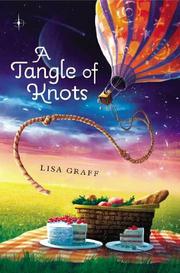
A Tangle of Knots, by Lisa Graff

9780399255175

I pick up a book for a number of reasons—good reviews, a fabulous cover, or because a friend or colleague gives a recommendation. Rarely does a book’s title encourage me to dive in. Even though A Tangle of Knots has all of the aforementioned things, its title is what really struck me.

Tangles and knots both suggest tension, complexity, and stress. I don’t know about anyone else out there, but the world has seemed to be a tangle of knots lately. I’m not sure when the tangle of knots began for me—maybe 9/11 was the first time I truly  comprehended catastrophe. Since then, and very recently, it feels like they just keep coming– the shootings in Aurora, Colorado and Newtown, Connecticut. The Boston Marathon bombings. The tornado. The daily violence here in Chicago.

That’s just the United States. If I start thinking about the terrorism in Mogadishu or the violence in Syria, the knots get thicker and the tangles more snarly.

So what does this difficult stuff have to do with a middle grade novel? Well, I picked up this book in the middle of one of those really tangly, knotty weeks. I had read first-person accounts from the families affected by the Newtown, CT shootings at my doctor’s appointment. The Boston Marathon bombings happened. Then the tornado came. Yet, as I read Graff’s novel, a number of things changed for me. First of all, I let myself sink into the world of the novel and was distracted from my sensitivity for little while. Graff’s eloquent, imaginative story weaving and her sophisticated, third-person writer’s voice made it impossible not to be encapsulated by the book. Secondly, I laughed, probably for the first time that week. Lastly, the book was a window and a mirror.  I thought about the book’s tangle of knots, my own tangle of knots, and the world’s tangle of knots, and I accepted them all.

This acceptance probably has to do with the fact that the book is all about cake, and there is no way I can be in a bad mood when I am reading about cake. The protagonist, Cady, is an orphan searching for her place in the world. She has her own special Talent—she can meet someone and instantly know his or her favorite cake. I love Cady. The novel is rich with a puzzle of characters, but what I love about Cady is that she has lost almost everything, and she is not bitter. By the end of the book, I realized that Cady’s magic had nothing to do with her cake making—it is all about her heart. Add in a whimsical family, an old woman who has lost her ability to speak, a boy who has a Talent for spitting, a thief, several real cake recipes, and some blue suitcases–we’ve got a winner.

As I turned the last page, I stopped thinking about the horrific parts of past tragedies and turned toward the small miracles. The police workers on 9/11. The Boston marathoners who crossed the finish line and ran to the local hospitals to give blood. The interview with the woman who had lost her dog in the rubble of Oklahoma’s tornado (see attached video). I know people talk about the small stuff, but it truly is everywhere. And it’s written all over Graff’s novel. A ferret. Peanut butter cake.  A missing dinosaur bone.

And then I thought: tangles and knots. Yes, both suggest tension. But put in a different light, they suggest stability, support, strength. We tie knots when we want something to stay together. When my hair tangles, it comes together in clumps, and each individual hair is indistinguishable. Maybe sometimes we need to be individuals, to be untangled and free. But other times, especially hard times, we need to tie knots with each other, and learn to lean on each other for support and strength. Cady does.

Graff writes, “Cady was one of the biggest-hearted people Marigold had ever met—she tried harder than anybody else to make others happy…If Marigold had learned anything that week, it was that trying hard and being a good person didn’t always mean that good things would happen to you.”

We all know that bad things happen. But that fact doesn’t make Cady lose her sensitive heart or her willingness to stay positive, so it won’t make me lose mine, either.

I think my favorite cake would be a chocolate one; almost brownie-like, with a really rich, dense texture and chocolate frosting, warmed up with ice cream on the side.

What’s your favorite?

Get well Tim Curry

News is emerging that actor Tim Curry is recovering from a stroke. Initial reports suggested that he had collapsed yesterday following a massive episode. More recent reports say that, while he collapsed in his LA home yesterday, the stroke occurred last July, and he has been recovering (well) ever since. In any event, I wish him very well.

rocky horrorWhen I was in High School I went to midnight showings of the Rocky Horror Picture Show week after week (after week) at the Coventry Cinema in Cleveland Heights. I think its fair to say that the experience had a profound effect on my adolescence, offering an indelible, albeit particular, affirmation of different ways of being. Watching and eventually joining the participatory irreverence, throwing toast, spritzing rain, singing and dancing along, offered me a kind of community I really needed at the time. Who knew musical theater could be like that?!

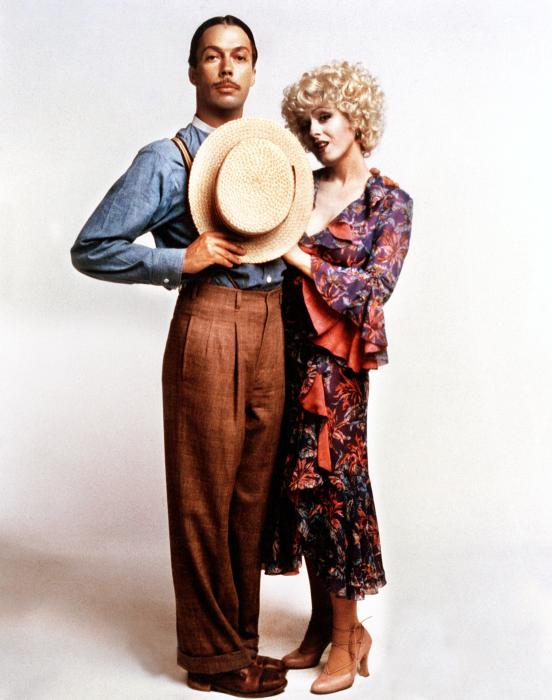
annieSpeaking of musical theater, I refuse to apologize for the fact that I love all things Annie. I just do. Ask me about Kristen Vigard’s casting as the original red-mopped orphan and her replacement with Andrea McArdle after previews in Conecticutt. Heck, watch the Julie Stevens documentary, Life After Tomorrow (SJP!) if you want to know more about it. Anyhow, Curry plays Rooster in the 1982 movie version. There’s lots to love about the film, if you’re me, at least, including his sneaky, sinister performance. He’s brilliant. And, thinking back, it’s a little striking how much Carol Burnett, as Miss Hannigam. looks like Frank N. Furter. Huh.

But today I remember Tim Curry as an extraordinary narrator of audiobooks. My introduction to audiobooks came with my very first ALSC evaluation committee experience as a member of Notable Recordings for Children. Back then each of us was assigned a sampling of eligible recordings (cassette tapes!), based on the first letter of the title. I was assigned A-C, and received, relatively early in the year, the first of  Lemony Snicket’s Series of Unfortunate Events, The Bad Beginning. So charming. Curry’s arch, over-the-top narration makes the most of the tongue-in-cheek prose, honoring its playful irony and milking the humor. It’s just a little irresistible.

AbhorsenBut my favorite audiobook performance of all time must be his stunning readings of Garth Nix’s Abhorsen trilogy. It was such an interesting choice, casting a man to read these menacing novels about a family of necromancers in a centuries-old battle against conspiring evil, as all of the protagonists are young women. But once you hear Curry’s contemptuous reading of Mogget the familiar, and the positively dripping malevolence of Orannis, the baddest of the many baddies, you know the choice was just perfect. I have listened to all three, in sequence, at least five times, stem to stern, and they never disappoint. I recommend them all the time, and do so again today, to you.

So, here’s wishing Tim Curry a continued speedy recovery, with hopes that he finds his way back to the recording booth soon.

Summer and Bird

ImageSummer and Bird

by Catherine Catmull

Dutton, 2012

This book is a book to write about.

I first picked it up on Thom Barthelmess’s (curator of The Butler) recommendation, but was also instantly attracted to the beauty of the cover. A cream background contrasted with eerie, sharp bare tree branches echoes the themes of light and dark in the text. A giant swan opens its wings at the top of the cover, inviting you to look at the beautifully embossed, maroon, shiny cursive-like font of the title. The stark white of the back cover seems stripped of feeling, except for the back of two girls walking away, close in physical space but looking in different directions. Ingenious design here.

The text itself is lyrical, insightful, and entirely imaginative. Like Shannon Hale, Catmull pulls you slowly into her world, and in order to follow, you have to surrender your skepticism and let yourself be taken over by the lush phrases and astonishing world building. As with Neil Gaiman or Kathi Appelt, you must relinquish control let the author lead you through a story that will surely be magical, and maybe will even change you.

The plot centers on two very different sisters, Summer and Bird, who wake up one day to find their parents missing in their forest home. Softspoken, warm Summer and the young, spunky, but selfish Bird are overwhelmed with confusion, rejection, and mystery, but decide to follow a cryptic note from their mother and are drawn to the woods in search of their parents. Much like Narnia or The Looking Glass, the sisters enter into the fantasy world of Down, where they take separate, parallel journeys as they try to find their parents. Through their own experiences—Bird falling under the power of The Puppeteer, a manipulative bird who has stolen her mother’s crown, and Summer finding herself stuck in a nest high in the sky with nothing but a small egg—they find that maybe what they were searching for wasn’t necessarily their parents, but themselves. Touching on complex themes of jealousy, desire for power, betrayal, guilt, anger, the dynamic nature of family relationships, courage, inner strength, hope, and freedom, this book is mesmerizing and thought provoking. I admit that as I was reading it, I went through cycles of emotion—anger, fear, irritation, hope, joy, catharsis, and a type of tender sorrow that reaches down deep where I can feel my chest sting a bit with wonder.

Catmull writes in a third-person omniscient perspective, one that is difficult to write in and hard to keep your reader involved in, because the narrator knows every character, and can write from each of their viewpoints. Catmull, however, uses the perspective to add layer and layer upon the story, sometimes jumping in time, sometimes giving the reader secret information that Summer and Bird do not know. Abundant with the mythology of birds and elements of fairy tale, Catmull entwines sections of her story like a skilled weaver, leaving her reader with a one-of-a-kind, extraordinary piece of art.

An eloquent, magical, unsettling, brave debut novel, this is one you want to read.

“All their lives, Bird had been the difficult one, the unmanageable child, and Summer the good girl who could always be relied on. But Summer could see that Bird had always found her own story and chosen to follow it, and Summer envied that. Most of all, she envied the magnetic bird-soul that had told Bird what to do.”

~from the text

Three Times Lucky

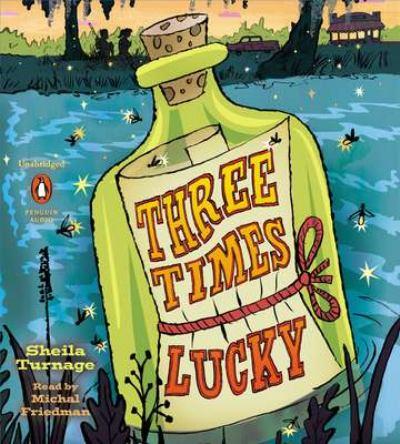
three-times-luckyThree Times Lucky

by Sheila Turnage

read by Michal Friedman

Penguin Audio, 2012

My colleague Luke recently posted about Marcelo in the Real World, 2010 Schneider Award winner, paying particular attention to the audio version. I, too, am busy listening to award-winning titles, and find myself charmed by Michal Friedman’s reading of Three Times Lucky by Sheila Turnage.

Audiobook evaluation can be a tricky business, and this title makes for a nice case study. One of the stickier wickets has to do with separating the quality of the reading and the production from the quality of the source material. As far as the quality of the source material here, we have the endorsement of the 2013 Newbery Committee, who chose Three Times Lucky as one of their Honor Books (and I’m more than happy to throw my enthusiastic appreciation into the pot).

Then there’s the question of artistic interpretation. Set in fictional  Tupelo Landing, NC, the book features a cast of honest, sometimes quixotic characters, drawn with the thick outline of bigger-than-life eccentricity. Turnage is a native of North Carolina herself. She chronicles the outlandish, small-town behavior of the inhabitants of Tupelo Landing with a generous, colorful twang and Friedman captures the cadence of the language and the integrity of the characters in her spirited reading.

The story features a few mysteries playing out on different levels: Mo and her friend Dale are “assisting” the police with a murder investigation; Mo is searching for her own mother, who left her drifting down a river in a basket (Mo is short for Moses); and the reader is busy puzzling out the truth about Mo’s adopted family, The Colonel and Miss Lana, and their own mysterious behavior. Friedman’s narration manages a sharp intensity that maintains all of that suspense without ever puncturing the delicate humor.

As far as the production values, there is much to celebrate here. The source material comes easily divided into chapters of manageable size, and are broken into tracks accordingly. The sound is crisp, clean and consistent, without any audible hissing, muddiness, or variations in the voice reproduction. There is nothing to notice here, and that’s just as it should be.

My one quibble would be with the application of southern accents. While Turnage’s language feels authentic, Friedman’s North Carolina drawl has a few consistency issues. I can’t speak to the authenticity of the North Carolina accent in general, but I don’t think it unreasonable to expect one character to pronounce another character’s name consistently throughout. The cadence feels genuine, though, and beautifully captures the essential nature of the characters. And Mo’s first person narrative, even with the pronunciation lapses, is remarkably and genuinely childlike, in a refreshing and indelible way. So, my quibble is just that, and nothing more.

At the end of the day I look for an audiobook that adds something to the experience that I can’t bring to it myself, reading in my head, and in that regard this one scores right off the charts. Give it a listen and tell me what you think!

Make Magic! Do Good!

make magic

Make Magic! Do Good!

by Dallas Clayton

Candlewick, 2012

We who work at the Butler Center have the privilege of opening up new packages of books nearly every day, sometimes fresh from the press. Books get stacked, fiction and non-fiction become intermingled, and it is easy for a wonderful book to get lost amidst the chaos. But then each book is picked up and entered into our system. I always look at each book as a new experience, a wonderful possibility for my next read. But then I move along because, well…it’s my job to.

Yet, sometimes the reader inside gets the best of me, and I find myself lost in a book. It is a rare occasion, because I am a very diligent worker, but sometimes a book grabs me so tightly that I have no chance of becoming free until I turn the final page. This recently happened to me here in the Butler Center with Dallas Clayton’s 2012 book of poetry titled Make Magic! Do Good!

Sometimes quiet, sometimes loud, sometimes joyful, sometimes gently sad, this book respects the child reader and understands that he or she experiences profound, deep feelings just as much as grownups. There are forty-nine poems in the collection, all illustrated in a simple, sketch-like style with vibrant colors and dynamic expression. About the artistic medium, the front matter states, “The illustrations were done in two parts positive vibes and three parts watercolor rainbow sprinkles.” This captures the whimsical, creative, playful spirit of the poetry. The silly poems, such as “Amanda the Panda” and Xavier Xing Xu” wholly encapsulate the spirited, snappy mind of a child. Clayton’s humorous illustration note does not demonstrate the incredible emotional depth several poems communicate. One of my favorites is titled “Slumber,” and it’s only four, simple lines:

You won’t know all the answers

You won’t get everything right

But once you learn you don’t have to know ‘em

You’ll sleep the best at night.

The illustration accompanying this poem is a big, pink animal, fast asleep in a bed covered in a blue and orange starred comforter, and the vast white space comforts the eye. I opened this page, experienced both text and image, and I had to experience it again. As a person who struggles with perfectionism and anxiety, this poem is the perfect mantra for peace. What a lesson to learn, and absolutely beautiful that Clayton is telling it to children.

It doesn’t stop there. Clayton’s honest poems and imaginative illustrations include topics as varied as enemies, decision-making, love, sharing, friendship, money, and the potential end of the world, and he tackles them with vibrant energy, poignant honesty, and joy. And there are some pretty darn silly ones along the way.

I haven’t been stopped like this by a book here at the Butler Center in a while, but Make Magic! Do Good! certainly shouted my name that day and echoed in my heart and mind for the days and weeks to come. In a world that we all know is filled with bad stuff—violence, sadness, sickness—it is lovely to find a book filled with message of hope, love, strength, silliness, honesty, warmth, and peace, peace, peace.

Please watch this animation based on the book, and listen to the profound poem that closes the work, the title poem of the collection, Make Magic! Do Good!

Sir Quentin Blake

quentin blakeAfter a long and storied career, British illustrator Quentin Blake was knighted by the Prince of Wales today. From Mrs. Armitage to Matilda, he has deposited lots and lots (and lots) of indelible characters, human and otherwise, into our collective consciousness, where they will stay in perpetuity. He is also responsible for the wonderful wallpaper on the display wall right here in the Butler Center. On this side of the pond he is best known for his spot illustrations for the Roald Dahl oeuvre, but in his 64 year career (and 64 is my favorite number) he has crafted a remarkable variety of really exquisite books, as author and as illustrator. Here are a few standouts:

CockatoosCockatoos

by Quentin Blake

Little, Brown 1992

Professor Dupont is a slave to his routine, and it is driving his cockatoos crazy! They decide to teach him a lesson, and distribute themselves about the conservatory, never to be seen again. Or not.  This clever, infectious book turns the familiar counting book on its head, with the ever diminishing items-to-be-counted hidden (in plain, polychrome sight), to the delight of observant children everywhere.

tell me a picture

Tell Me A Picture

by Quentin Blake

Millbook Press, 2003

Quentin Blake curated a collection of 26 paintings and children’s book illustrations and employs his trademark figures to interpret them with us. Each work of art enjoys four pages, two for uncluttered presentation, followed by two more where the sketchy individuals respond, with genuine curiosity, puzzlement, and affection. As much about looking at art as it is about art itself, it offers children a safe and stable place from which to begin their own inquisitions.

michael rosens sad bookMichael Rosen’s Sad Book

by Michael Rosen

illustrated by Quentin Blake

Candlewick, 2005

Michael Rosen tells the story of his own experience losing his adult son, and explores the fundamental nature of grief. Blake’s sketchy, chaotic images, in drab greys and blues, express grief’s uncontrollable disquiet in a profound and deeply affecting way. The world will continue to debate whether or not it is a book for children (it is), but it’s artistic power is undeniable.

On the money (mostly)

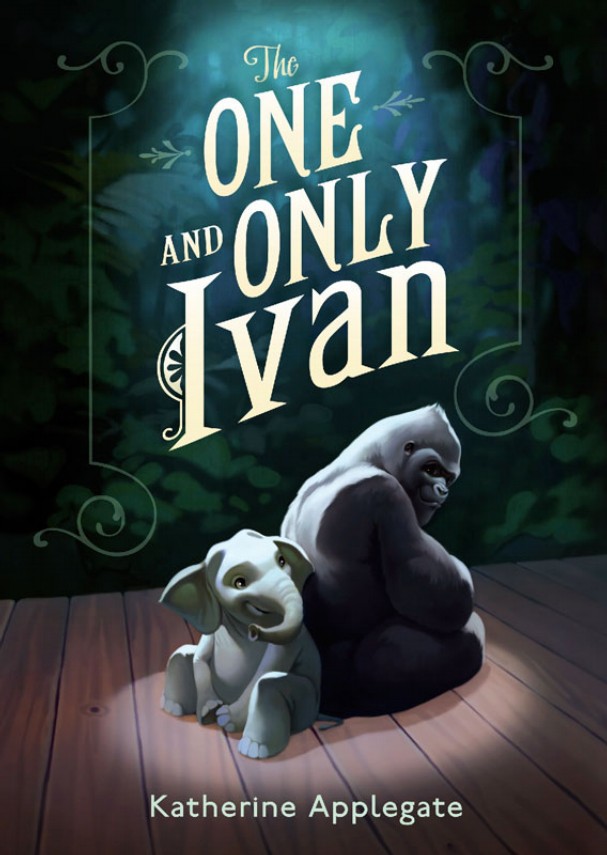
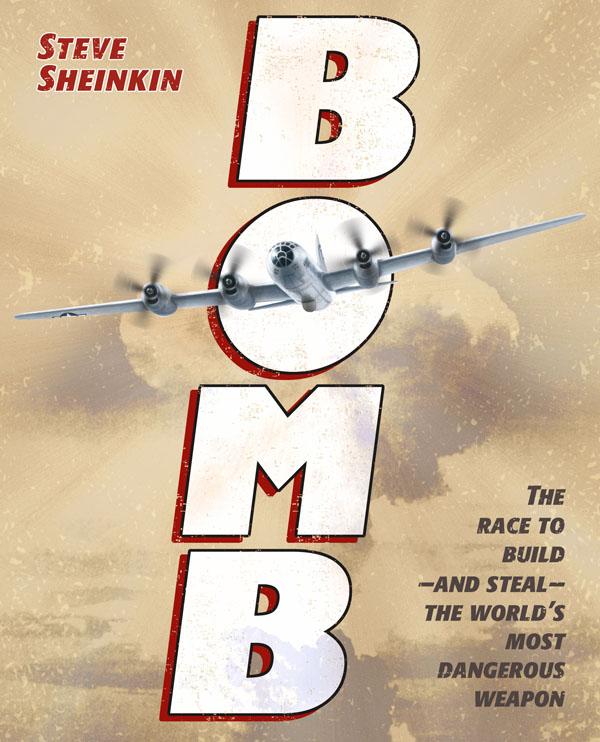
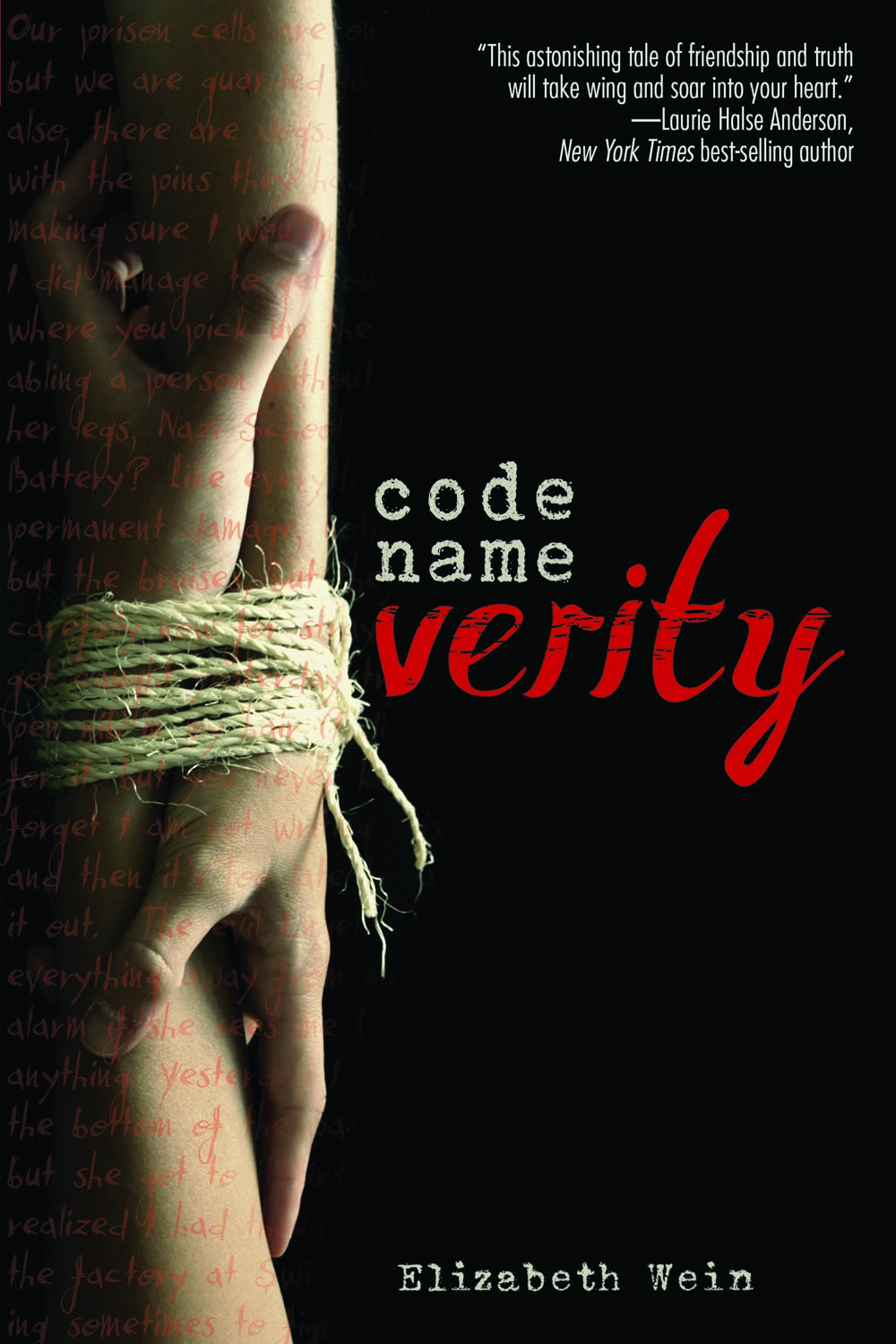
Back in December we suggested some books as particularly holiday-giftable. Looking back, I see that among the eight books for young people we recommended, half were recognized at the ALA Youth Media Awards! We had the Newbery winner (The One and Only Ivan), The Sibert winner/Newbery honor book (Bomb: The Race to Build–and Steal–the World’s Most Dangerous Weapon), a Caldecott honor book (Extra Yarn), and a Printz honor book (Code Name Verity). Not bad for a day’s work.

The One and Only IvanbombExtra YarnCode Name Verity


You can find a link to all of the ALA award winning titles here.

The Brother’s Grimm: Popular Folk Tales

brothers grimmThe Brothers Grimm: Popular Folk Tales

Newly translated by Brian Alderson, illustrated by Michael Foreman

Doubleday, 1978

This rich collection of thirty-one Grimm’s tales combines familiar stories, such as “Hansel and Gretel,” “Rapunzel,” and “Rumpelstiltskin,” with lesser-known tales like the haunting “Fitcher’s Bird” and “King Throstlebeard.” While the anthology contains no formal introduction, internal notes or citations, there is a table of contents and a list of color illustrations in the front matter. Alderson also includes detailed “Afterward” and “Notes” sections in the back matter, in which he affirms his mission for the book. He states that many English translations of Grimm, though accurate, “miss the spirit of the tales” (188), and his objective for this collection is to translate the German tales “not from the scholar’s study but from a storyteller talking to his listeners” (188). He succeeds in this goal, as the translations are clear, concise, and readable—yet they still contain anecdotes of humor, gruesome description, and evocative imagery. Alderson notes that the Brothers Grimm stories “exist in a number of forms,” and his translation “is largely based on texts which had reached [the] final form, the ninth edition of the ‘Grosse Ausgabe’” (189). When he uses previous versions of the tales in his translations, he does not make a specific source note in the internal text, but he does mention it in the “Notes”, which are a thorough three pages long. Alderson comments that himself, his illustrator, and his publisher chose the specific tales to be included, and notes that the order of arranging the tales is intentional. He states, “It was hoped that the sequence of stories would have a naturalness about it that would make it comfortable for readers to work through, if they wished, from one end to the other” (189). Michael Foreman’s dynamic illustrations enhance the collection, as each tale begins with a black-and-white thumbnail sketch and twenty-six full-color, vibrant, watercolor illustrations are scattered throughout the book. Foreman captures the tone of each tale, using muted and dark colors, shadow, and thin lines in the mysterious tales and luminous color, imaginative details, and softer lines in the lighter tales. The collection’s most remarkable feature is its potential diversity of audience. Because of the collection’s comprehensible translation, it is a great resource for the oral storyteller, but it is also a worthy selection for upper-elementary children, as the illustrations bring out the pathos of each story. Translated and illustrated by two qualified, experienced experts in children’s literature, this collection is a significant addition to the canon of folklore for children.