Out of the Easy

Image

Out of the Easy

by Ruta Sepetys

Philomel, 2013.

Ruta Sepety’s second novel, Out of the Easy, is set in a world of cigarette smoke, shadows, and bourbon. It’s 1950 in the french quarter of New Orleans. Josie is a smart girl with hopes of college, but the city feels like a cage. Her mother is a call girl at a well-known brothel and a highly publicized murder has caught them both in a web of lies and secrets. A supporting cast of prostitutes, errand boys, madames, and madmen completes the picture.

In short, this is a noir.

And noir is a rare setting for a YA novel. Perhaps authors assume that the iconic imagery and archetypal characters will be unrecognizable to the Millennial generation. Maybe they are uncomfortable with the femme fatale and the mess of gender stereotypes that come with her. Or maybe they just don’t like it.

But there’s more to noir than snappy dialogue and shoulder pads. Beyond the private eyes and sexual innuendos are themes of misrepresentation, moral ambiguity, betrayal, and alienation. Its perspective is cynical, depicting a world infested with lies and liars.

For many (myself included) adolescence is a period of not fitting in, feeling that the world around you is obscure and impossible to navigate, like being lost in a maze. Sometimes, at least, it can feel like noir.

Which is why Sepetys’ choice of setting feels so right for a young adult audience. When Josie realizes that she has only herself to blame for the web of self-serving lies and half-truths she has has been spinning, she is both the quintessential young adult and the quintessential noir anti-hero.

Scowler


Image
Scowler

by Daniel Kraus

Delacorte, 2013

As always in a Daniel Kraus novel, there’s plenty going on and it’s all terrible.

In Scowler, Kraus’ latest, two monsters threaten the lives of nineteen-year-old Ry, his mother, and his younger sister. The first is Ry’s father. Abusive and cunning, he has escaped from prison with plans to slaughter his family. The second threat is Ry himself. Or rather, Ry’s hallucinations of boyhood toys, come to life, telling him what to do. (Plus, there’s a comet headed for the family’s farm.)

But with all the gruesome twists and turns of the plot, there’s one early scene that stands out to me. I can’t seem to shake it.

Ry recalls a morning after one of his parents’ violent fights. His father has left and he breaks into his parents’ locked bedroom. His mother has been sewn to the bed. Every part of her body, from her ear to each space in between her toes has been methodically threaded to the mattress.  Ry gets scissors and begins the long process of removing every stitch. He recalls the details with tenderness:

“Ry felt the prim fealty of a nurse as he took up the pink fabric, shook out its crusty folds, and quartered it… He found a clean edge and swept beads of sweat from his mother’s lip and brow. Then he refolded it again and wiped the urine from her thighs and blotted what he could from the mattress. He discarded the fabric in the trash can and took up the shears. It was the most intimate thing he had ever shared with anyone.”

Daniel Kraus is masterful at confronting both his characters and readers with the meaty reality of the human body. He loves to expose our physicality and ultimately our mortality, turning our bodies into terror.

But it was the tenderness of this scene that shook me. In Ry’s response Kraus exposed a fear beyond the physical. It’s not just about losing a parent to death or violence. It’s about taking on the role of caregiver when a parent is weak and needy – losing a parent to adulthood.

The scene felt deeply familiar to me, reminding me of those moments when I was confronted with my own parents’ physical, mental, or emotional weaknesses. There is a unique blend of terror and love in those moments when a parent needs you more than you need them. And I think Daniel Kraus captured it perfectly.

I am at least ten years older than the intended audience of this book and my parents are significantly older than those of my peers. So perhaps this scene generates images and feelings for me that it would or could not for teen readers. But I suspect that for a lot of people the struggle of their teenage years is intricately tied to the loss of a parent, sometimes to death or illness, but more often to a painful recognition of their parents’ limitations. So while the scene may not feel familiar to all readers, it can still presage the inevitable consequences of adulthood.

Get well Tim Curry

News is emerging that actor Tim Curry is recovering from a stroke. Initial reports suggested that he had collapsed yesterday following a massive episode. More recent reports say that, while he collapsed in his LA home yesterday, the stroke occurred last July, and he has been recovering (well) ever since. In any event, I wish him very well.

rocky horrorWhen I was in High School I went to midnight showings of the Rocky Horror Picture Show week after week (after week) at the Coventry Cinema in Cleveland Heights. I think its fair to say that the experience had a profound effect on my adolescence, offering an indelible, albeit particular, affirmation of different ways of being. Watching and eventually joining the participatory irreverence, throwing toast, spritzing rain, singing and dancing along, offered me a kind of community I really needed at the time. Who knew musical theater could be like that?!

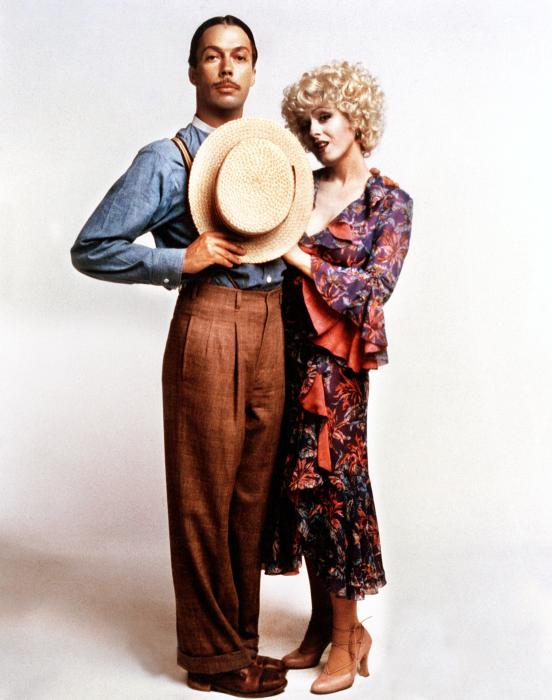
annieSpeaking of musical theater, I refuse to apologize for the fact that I love all things Annie. I just do. Ask me about Kristen Vigard’s casting as the original red-mopped orphan and her replacement with Andrea McArdle after previews in Conecticutt. Heck, watch the Julie Stevens documentary, Life After Tomorrow (SJP!) if you want to know more about it. Anyhow, Curry plays Rooster in the 1982 movie version. There’s lots to love about the film, if you’re me, at least, including his sneaky, sinister performance. He’s brilliant. And, thinking back, it’s a little striking how much Carol Burnett, as Miss Hannigam. looks like Frank N. Furter. Huh.

But today I remember Tim Curry as an extraordinary narrator of audiobooks. My introduction to audiobooks came with my very first ALSC evaluation committee experience as a member of Notable Recordings for Children. Back then each of us was assigned a sampling of eligible recordings (cassette tapes!), based on the first letter of the title. I was assigned A-C, and received, relatively early in the year, the first of  Lemony Snicket’s Series of Unfortunate Events, The Bad Beginning. So charming. Curry’s arch, over-the-top narration makes the most of the tongue-in-cheek prose, honoring its playful irony and milking the humor. It’s just a little irresistible.

AbhorsenBut my favorite audiobook performance of all time must be his stunning readings of Garth Nix’s Abhorsen trilogy. It was such an interesting choice, casting a man to read these menacing novels about a family of necromancers in a centuries-old battle against conspiring evil, as all of the protagonists are young women. But once you hear Curry’s contemptuous reading of Mogget the familiar, and the positively dripping malevolence of Orannis, the baddest of the many baddies, you know the choice was just perfect. I have listened to all three, in sequence, at least five times, stem to stern, and they never disappoint. I recommend them all the time, and do so again today, to you.

So, here’s wishing Tim Curry a continued speedy recovery, with hopes that he finds his way back to the recording booth soon.

Emily’s Dress and Other Missing Things

“Emily Dickinson is the perfect thing to hand to a 16-year old girl,” advised fellow blogger lynchlibrarian recently. What is it about Emily? Indeed, I was 16 when I purchased my paperback copy of her complete works (at the local Borders bookstore, my idea of the cool hangout spot), and I vividly remember discussing “Success is counted sweetest” in my high school’s U.S. Literature class. Certainly I considered her words earlier and later in life, though not by much: an eager seventh grade teacher chalked “I never saw a moor” on the board for the daily quote; in my second year of college, fellow English majors and I spent the better part of a class dissecting the differences between her 1859 and 1861 versions of “Safe in their Alabaster Chambers” (the power — of a dash!).

So what is it about Emily that resonates during young adulthood? While increasingly introspective teens may be intrigued by her famously reclusive habits, it’s her words that truly inspire. At a time when teenagers feel pulled between their past and future selves, her voice simultaneously offers innocence and wisdom. As they encounter the terribly great problems of the world and personal decisions to make, her subject matter rings with the impossible brightness and darkness of life’s great questions. Through succinct, tender verses, Emily provides young people with a “nugget of pure truth” to grasp in their hands and hearts. (My Virginia Woolf obsession came later in life.)

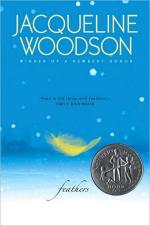
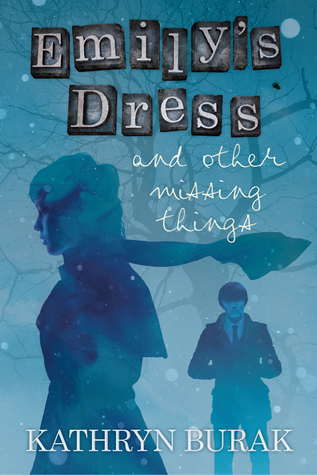
  Feathers by Jacqueline Woodson   Emily's Dress and Other Missing Things

If young people miss out on enthusiastic teachers reading Emily’s poetry aloud, I’m happy to know they may also discover her in the pages of fiction. Jacqueline Woodson’s beloved Feathers (Putnam, 2007) perfectly pairs “‘Hope’ is the thing with feathers” with a story that examines the power of friendship over divisions and discrimination during the 1970s, a fragile, precariously hopeful time in our nation’s history. What a perfect story for a 12-year-old.

For older readers, Kathryn Burak’s novel Emily’s Dress and Other Missing Things (Roaring Book Press, 2012) explores Emily’s darker side. After experiencing personal tragedy, Claire and her father attempt to start fresh by moving to Amherst, Massachusetts, the home of Emily Dickinson. Claire is a poet herself  and finds herself drawn to Emily’s words, rich with poignant examinations of death, and to Emily’s house, now of course a museum where Emily’s personal belongings are artfully arranged for tourists to view. As if in a creative trance, she breaks in, night after night, to write while wearing Emily’s white dress — until the day the college-aged student teacher Tate discovers her. Instantly linked by this strangely intimate crime, they run, stealing the dress in the process. Burak’s poetry is the star of this novel, both in the actual verses Claire writes — the portals by which she gradually shares the tragic details of her past — and in the crisp, shimmering prose of Claire’s narration:

The smell of snow on the winter air fades. I take a deep breath. I smell paper. Here I have the cool, clean feeling of paper, too.

I am so glad to get away. To be in Emily Dickinson’s house.


With a frigate like this book, the reader will certainly agree.

Maggot Moon

maggot moon

Maggot Moon

by Sally Gardner

Candlewick/Brilliance Audio, 2013

There is so much I want to say about this book. So much. But each and every element or facet or consequence I might mention would rob you of the opportunity to experience it yourself, thereby diminishing your encounter. Even saying that much feels like something of a spoiler.

So I’ll make just these few short comments:

1) Every now and again you read something that feels actually new. This is one of those stories.

2) For a good while you will feel disoriented. Stick it out. It’s worth it.

3) There are some powerful, interactive spot illustrations in the print book that contribute to the mood. The audiobook is sharp and reserved and extraordinary. Take your pick.

4) Please read this book as soon as you can, then find me so we can talk about it.

Summer and Bird

ImageSummer and Bird

by Catherine Catmull

Dutton, 2012

This book is a book to write about.

I first picked it up on Thom Barthelmess’s (curator of The Butler) recommendation, but was also instantly attracted to the beauty of the cover. A cream background contrasted with eerie, sharp bare tree branches echoes the themes of light and dark in the text. A giant swan opens its wings at the top of the cover, inviting you to look at the beautifully embossed, maroon, shiny cursive-like font of the title. The stark white of the back cover seems stripped of feeling, except for the back of two girls walking away, close in physical space but looking in different directions. Ingenious design here.

The text itself is lyrical, insightful, and entirely imaginative. Like Shannon Hale, Catmull pulls you slowly into her world, and in order to follow, you have to surrender your skepticism and let yourself be taken over by the lush phrases and astonishing world building. As with Neil Gaiman or Kathi Appelt, you must relinquish control let the author lead you through a story that will surely be magical, and maybe will even change you.

The plot centers on two very different sisters, Summer and Bird, who wake up one day to find their parents missing in their forest home. Softspoken, warm Summer and the young, spunky, but selfish Bird are overwhelmed with confusion, rejection, and mystery, but decide to follow a cryptic note from their mother and are drawn to the woods in search of their parents. Much like Narnia or The Looking Glass, the sisters enter into the fantasy world of Down, where they take separate, parallel journeys as they try to find their parents. Through their own experiences—Bird falling under the power of The Puppeteer, a manipulative bird who has stolen her mother’s crown, and Summer finding herself stuck in a nest high in the sky with nothing but a small egg—they find that maybe what they were searching for wasn’t necessarily their parents, but themselves. Touching on complex themes of jealousy, desire for power, betrayal, guilt, anger, the dynamic nature of family relationships, courage, inner strength, hope, and freedom, this book is mesmerizing and thought provoking. I admit that as I was reading it, I went through cycles of emotion—anger, fear, irritation, hope, joy, catharsis, and a type of tender sorrow that reaches down deep where I can feel my chest sting a bit with wonder.

Catmull writes in a third-person omniscient perspective, one that is difficult to write in and hard to keep your reader involved in, because the narrator knows every character, and can write from each of their viewpoints. Catmull, however, uses the perspective to add layer and layer upon the story, sometimes jumping in time, sometimes giving the reader secret information that Summer and Bird do not know. Abundant with the mythology of birds and elements of fairy tale, Catmull entwines sections of her story like a skilled weaver, leaving her reader with a one-of-a-kind, extraordinary piece of art.

An eloquent, magical, unsettling, brave debut novel, this is one you want to read.

“All their lives, Bird had been the difficult one, the unmanageable child, and Summer the good girl who could always be relied on. But Summer could see that Bird had always found her own story and chosen to follow it, and Summer envied that. Most of all, she envied the magnetic bird-soul that had told Bird what to do.”

~from the text
Makankosappo Kamehameha

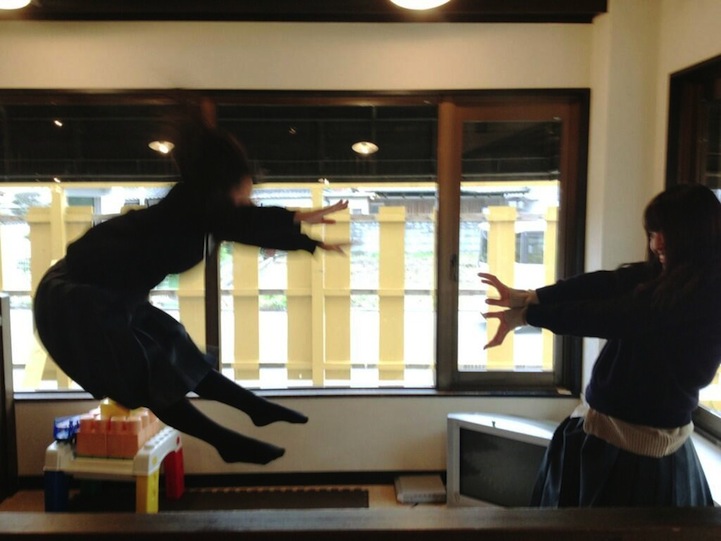
dragonballz6My friend Heath alerted me to this trend of Japanese young people sharing photographic interpretations of manga/anime energy cannons. I love so much about it: the appropriation of the theme and its translation to a new medium, the ironic juxtaposition of prim, restrained school uniforms and dynamic, energetic composition, and the contagious fun. Just look. For all of their serious machinations, they can’t help but grin. It’s no surprise that it’s catching on quick. It’s like planking only interesting.

My favorite thing, though, is its expressive process of story. All of this began with books, books that made a mark on the cultural consciousness that these kids feel the need to explore and share. In 2013, in a world suffused with gadgetry, this is how stories perpetuate themselves. We get so distracted by sensational arguments about the end of publishing and fling ourselves on the funeral pyre of the printed book, and miss the truth staring us in the face. Stories are there. Right in front of us, telling us something about ourselves, just like they always have. We just have to remember to look.

Thank you, Mr. Stork

Marcelo-in-the-Real-WorldMarcelo in the Real World

by Francisco X. Stork

Arthur A. Levine, 2009

Late to this literary shindig, I often find myself running (speed walking?) to keep up with my fellow bibliophiles. Better said, I’m discovering pots of gold that have long ago been plundered by my colleagues, but finding them nonetheless. Such is the case with Marcelo in the Real World. Content with studying at Paterson High School, (a special school for students with Asperger’s Syndrome) caring for horses and living in his own tree house, seventeen year old Marcelo Sandoval is challenged by his father to accept a summer job at his law firm. Marcelo reluctantly accepts and begins to feel and express emotions that he has never before recognized. As he learns to cope with this new world, what Marcelo once saw as clear lines between right and wrong, good and bad, and the like become fuzzy. The competitive nature and opposing viewpoints of this ‘real world’ create a far more challenging, often confusing reality for Marcelo.

As with many books of late, I experienced Marcelo as an audio book. Fellow listeners can attest to the utter deflation of a good book brought on by poor audio production. The audio starts off slow and I admit hovering my finger over the eject button on my CD player. Fortunately, I remained patient and soon the reader’s (Lincoln Hoppe) deliberately slow pace and hushed, deep tone became harmonious with Marcelo’s unique and wonderful thought processes. Though I have never had the occasion to read a book after listening to it, I most assuredly will do so with Marcelo. Indeed, not since The Miraculous Journey of Edward Tulane (Thank you, Ms. DiCamillo) has there been a creation I wished I had written. For those who have not yet read it, try listening to it. To those who have, I offer the same advice.

On the money (mostly)

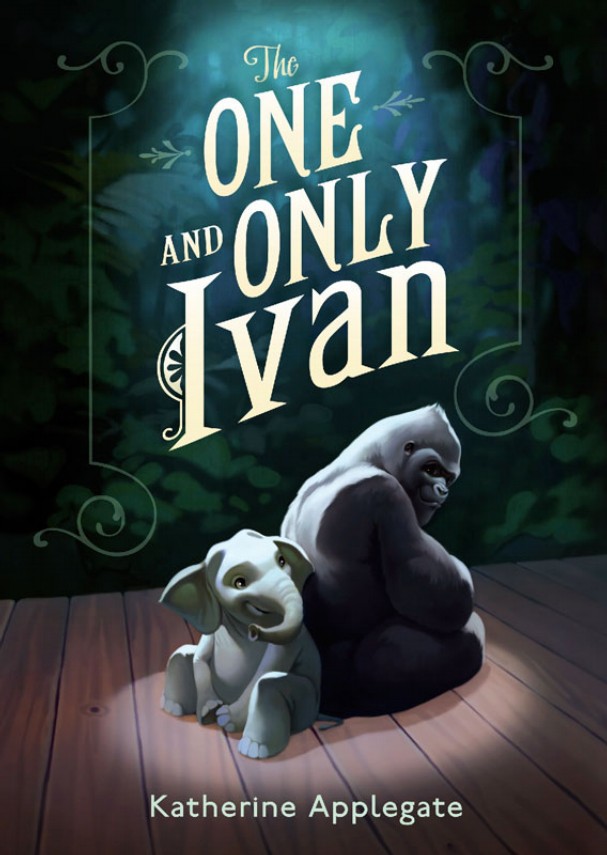
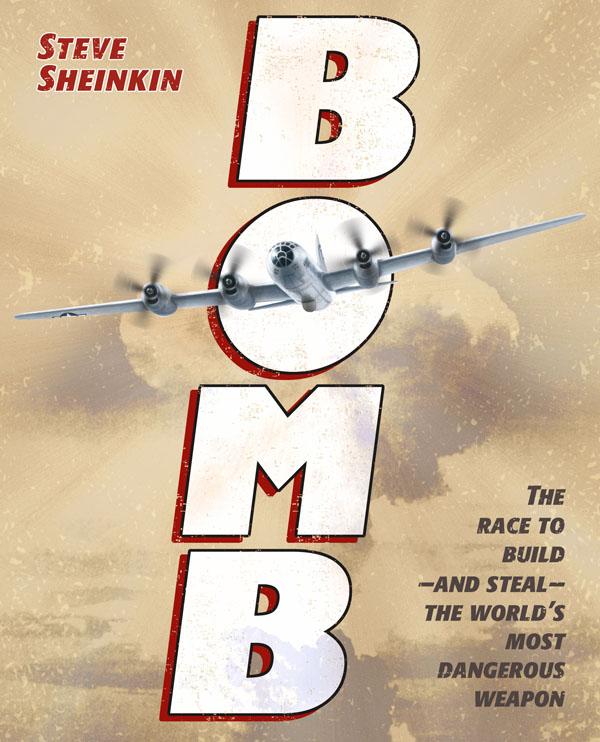
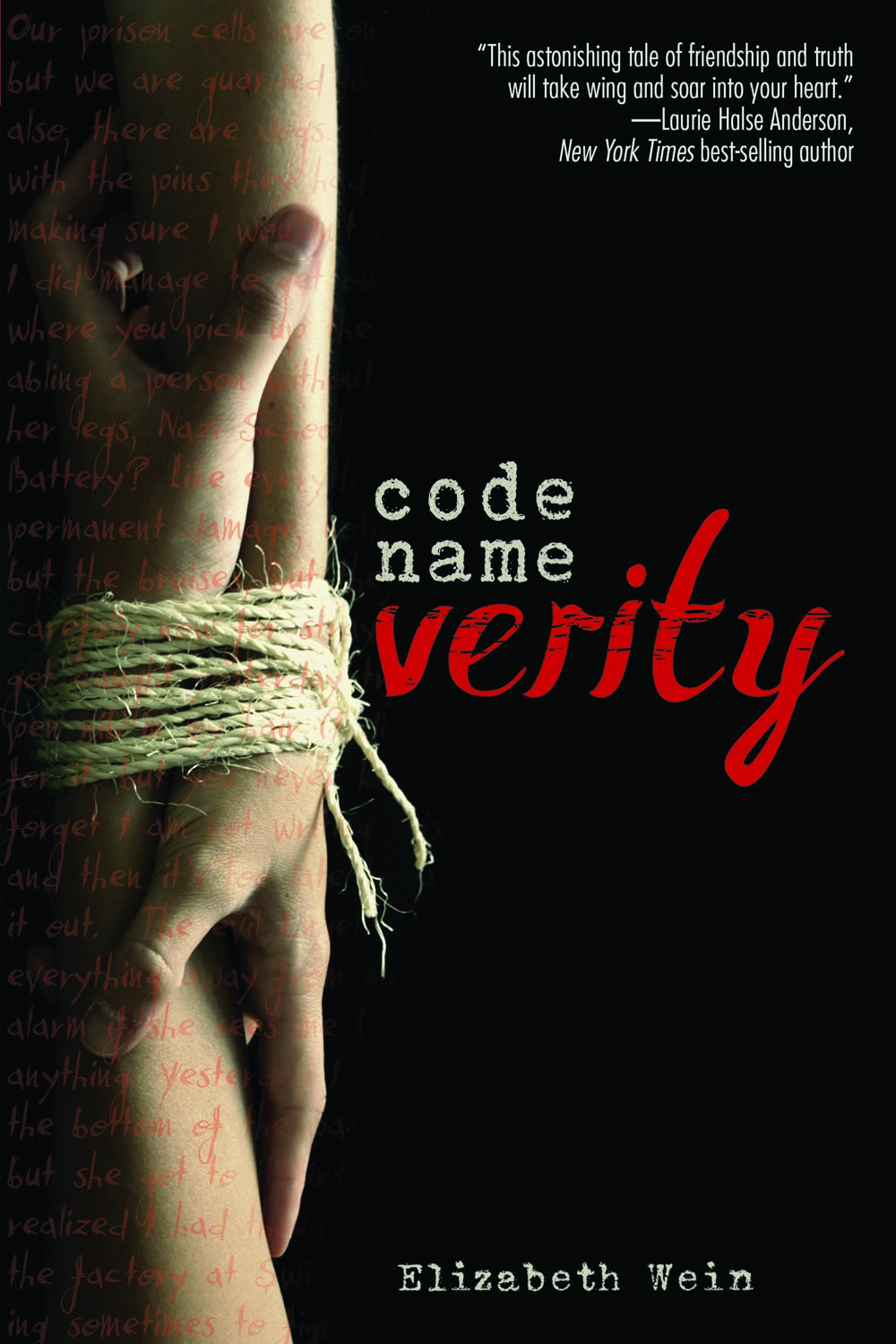
Back in December we suggested some books as particularly holiday-giftable. Looking back, I see that among the eight books for young people we recommended, half were recognized at the ALA Youth Media Awards! We had the Newbery winner (The One and Only Ivan), The Sibert winner/Newbery honor book (Bomb: The Race to Build–and Steal–the World’s Most Dangerous Weapon), a Caldecott honor book (Extra Yarn), and a Printz honor book (Code Name Verity). Not bad for a day’s work.

The One and Only IvanbombExtra YarnCode Name Verity


You can find a link to all of the ALA award winning titles here.

The Brother’s Grimm: Popular Folk Tales

brothers grimmThe Brothers Grimm: Popular Folk Tales

Newly translated by Brian Alderson, illustrated by Michael Foreman

Doubleday, 1978

This rich collection of thirty-one Grimm’s tales combines familiar stories, such as “Hansel and Gretel,” “Rapunzel,” and “Rumpelstiltskin,” with lesser-known tales like the haunting “Fitcher’s Bird” and “King Throstlebeard.” While the anthology contains no formal introduction, internal notes or citations, there is a table of contents and a list of color illustrations in the front matter. Alderson also includes detailed “Afterward” and “Notes” sections in the back matter, in which he affirms his mission for the book. He states that many English translations of Grimm, though accurate, “miss the spirit of the tales” (188), and his objective for this collection is to translate the German tales “not from the scholar’s study but from a storyteller talking to his listeners” (188). He succeeds in this goal, as the translations are clear, concise, and readable—yet they still contain anecdotes of humor, gruesome description, and evocative imagery. Alderson notes that the Brothers Grimm stories “exist in a number of forms,” and his translation “is largely based on texts which had reached [the] final form, the ninth edition of the ‘Grosse Ausgabe’” (189). When he uses previous versions of the tales in his translations, he does not make a specific source note in the internal text, but he does mention it in the “Notes”, which are a thorough three pages long. Alderson comments that himself, his illustrator, and his publisher chose the specific tales to be included, and notes that the order of arranging the tales is intentional. He states, “It was hoped that the sequence of stories would have a naturalness about it that would make it comfortable for readers to work through, if they wished, from one end to the other” (189). Michael Foreman’s dynamic illustrations enhance the collection, as each tale begins with a black-and-white thumbnail sketch and twenty-six full-color, vibrant, watercolor illustrations are scattered throughout the book. Foreman captures the tone of each tale, using muted and dark colors, shadow, and thin lines in the mysterious tales and luminous color, imaginative details, and softer lines in the lighter tales. The collection’s most remarkable feature is its potential diversity of audience. Because of the collection’s comprehensible translation, it is a great resource for the oral storyteller, but it is also a worthy selection for upper-elementary children, as the illustrations bring out the pathos of each story. Translated and illustrated by two qualified, experienced experts in children’s literature, this collection is a significant addition to the canon of folklore for children.