One for the Murphys

One for the Murphys

One for the Murphys
by Lynda Mullaly Hunt
Nancy Paulsen Books, 2012

For a dog owner, it’s always a fascinating exercise to see what your pet notices. You pick up the house keys and she’s at the door; simply raise your eyebrows and her ears are pricked up in anticipation. A dog’s job is above all observing her humans, and we’re amazed by what she notices.

Yet nothing tops our own species as the reigning champions of observation. When we’re paying attention, we see everything: the slight tightness in a boss’s face, or the averted eyes of a suspicious stranger. The key is the paying attention part. In psychology experiments, a subject might be “primed” for a test by viewing significant words or images. In life, our past experiences teach us what to look out for.

One for the Murphys is a story about seeing. Twelve-year-old Carley Connors keeps much to herself, but the reader sees she’s a pro at observation, especially of her foster family:

“Michael Eric comes in with his hand tucked into his armpit. His mother drops to the floor like someone has kicked her behind the knees, but she lands gently, holding out her arms, and he melts into them.”

From smiling photos, neatly arranged pantry supplies, and especially the warm gestures and touches exchanged between the Murphys, Carley sees she doesn’t belong. She sees other things, too: moments of tension, worry, and anger. To another’s eyes, these might be normal moments of stress for a family, especially a new foster family. But to Carley, every frown is evidence that she is unwanted. Every hand reaching out is a potential slap, and she reflexively flinches. Although she has a keen eye for observation, her perception is skewed.

Through fragments of memory, the reader starts to see why: the last thing Carley saw before she woke up in the hospital was her stepfather raising his fists to beat her, and her mother holding her down. Carley, believing strength and emotion are mutually exclusive, doesn’t share this information readily with the people she encounters. Without all the facts, these other characters make their own judgments: a police officer sees her as an instigator; a classmate, seeing only the new clothes Mrs. Murphy has purchase for Carley, thinks she’s a mindless clone of any other kid. But the reader is granted the most accurate view. In seeing each person’s mistakes in perception, including Carley’s, we start to wonder about the people we see and the judgments we make. There’s almost always more to the story – in One for the Murphys and in life – and it isn’t always something that we great observers can clearly see.

Out of the Easy

Image

Out of the Easy

by Ruta Sepetys

Philomel, 2013.

Ruta Sepety’s second novel, Out of the Easy, is set in a world of cigarette smoke, shadows, and bourbon. It’s 1950 in the french quarter of New Orleans. Josie is a smart girl with hopes of college, but the city feels like a cage. Her mother is a call girl at a well-known brothel and a highly publicized murder has caught them both in a web of lies and secrets. A supporting cast of prostitutes, errand boys, madames, and madmen completes the picture.

In short, this is a noir.

And noir is a rare setting for a YA novel. Perhaps authors assume that the iconic imagery and archetypal characters will be unrecognizable to the Millennial generation. Maybe they are uncomfortable with the femme fatale and the mess of gender stereotypes that come with her. Or maybe they just don’t like it.

But there’s more to noir than snappy dialogue and shoulder pads. Beyond the private eyes and sexual innuendos are themes of misrepresentation, moral ambiguity, betrayal, and alienation. Its perspective is cynical, depicting a world infested with lies and liars.

For many (myself included) adolescence is a period of not fitting in, feeling that the world around you is obscure and impossible to navigate, like being lost in a maze. Sometimes, at least, it can feel like noir.

Which is why Sepetys’ choice of setting feels so right for a young adult audience. When Josie realizes that she has only herself to blame for the web of self-serving lies and half-truths she has has been spinning, she is both the quintessential young adult and the quintessential noir anti-hero.

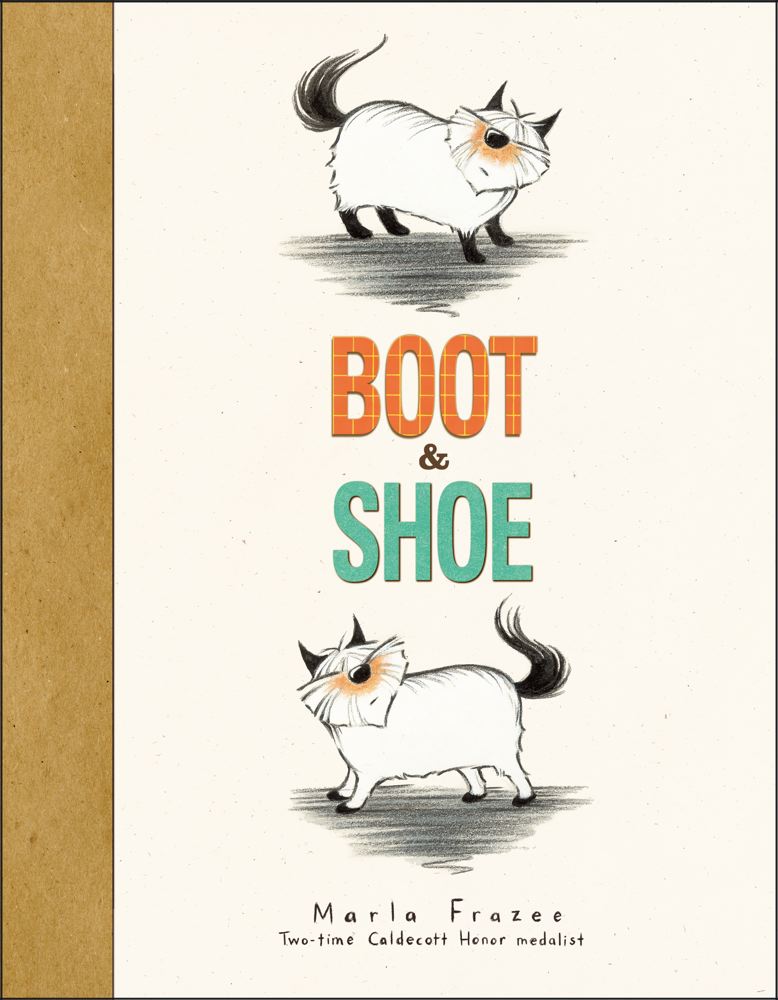
Boot & Shoe

boot & shoeBoot & Shoe

by Marla Frazee

Beach Lane Books, 2012.

There is no denying that Marla Frazee has made her mark on children’s literature. Her signature illustration style has delighted children and award committees with titles such as Stars, All the World, and A Couple of Boys Have the Best Week Ever.

Boot & Shoe, Frazee’s 2012 gem, stands out for me among her work. I know this is partially because I’m a dog person—I even have two dogs who are brother and sister, similar to Boot and Shoe. But this book is much more for me than just being part of a target audience. It is rich with humor, artistry, and honesty.

Boot and Shoe come from the same litter, and they do everything together—eat, sleep, and even pee. But, Boot likes the back porch and Shoe likes the front porch. Frazee uses soft lines of black Primsacolor pencil and textures and details every page with gouche paint to bring out a wide variety of moods. Significant white space is used throughout the book to highlight vignettes, half-page spreads, and energetic scenes. The crisis of the book—when the dogs can’t find each other—instantly changes Frazee’s artistic style. In nighttime, sad scenes, Frazee uses harsher, straighter lines and deep colors of black and blue pencil. One of my favorite spreads is when the sun comes up, and both Boot and Shoe begin to cry.

So, the book changes. I read this book in a storytime, and kids were laughing and giggling and pointing at the beginning. But when the dogs couldn’t find each other, there was real fear in the room. When Boot and Shoe cried, the room was silent. While I was reading, I kept thinking, “Wow, this is a dynamic book.” Yes, it’s about dogs and friendship. But it’s also about loss; it’s telling children that it’s okay to cry when you feel sad, and it’s doing it with an honest intention and a comforting approach. Rather than books that are only charming and funny (which are great at times, too), Boot and Shoe really spans a variety of moods and emotions, just like we all feel every day. How great to have such authentic, conscientious storytelling for children.

And I gotta say it: If you have dogs or love dogs, this is a book for you. I grew up with one dog, and when she passed away my parents decided to get two—a brother and sister, Jem and Scout. Since getting to know these cuddly dudes, I’m telling you, I’ve never seen such friendship. Besides the fact that Jem would eat all of Scout’s food if he could and Scout bites Jem’s ears constantly, these two dogs are BFFs. Just like Boot and Shoe, they sleep together, eat together, play together. But they are individuals, too. Seeing how much they love each other just makes me want to love more, and to treat each person I meet the way they treat each other—with an open heart, a forgiving soul, and always a shoulder (or back or stomach) to lie on.

Thanks, Marla Frazee. You rule.

Check out Scout and Jem’s friendship throughout their lives below.

IMG_0067  IMG_0258 IMG_0305

IMG_0665 IMG_0746_2

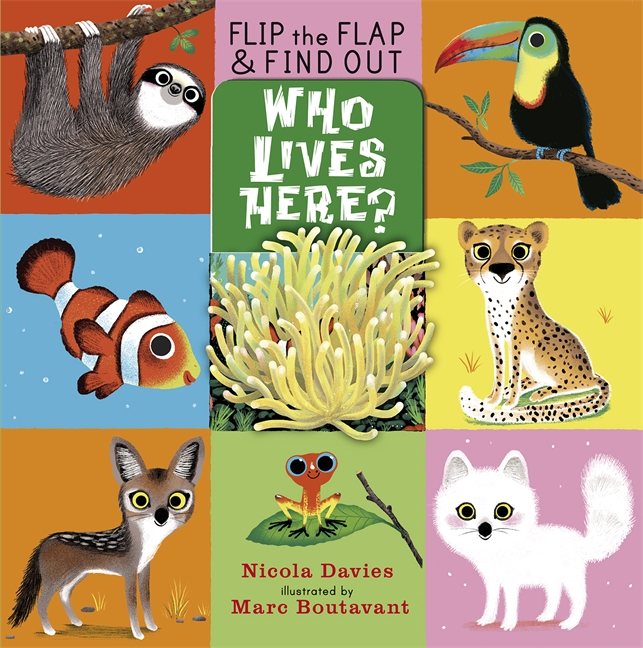
Who Lives Here?

who lives hereWho Lives Here?

by Nicola Davies, illustrated by Marc Boutavant

Candlewick, 2012

Davies employs her considerable zoological chops in service to very young children in this ingenious, elegant and especially attractive lift-the-flap matching-game. The author introduces a series of five habitats (warm, steamy jungle; still, cool pond; dry, sunny grassland; warm, clear, salty ocean; and snowy, frozen Arctic) in two two-page spreads. In the first spread, on the left is the habitat itself, with various forms of wildlife hidden about, and on the right are four quadrants, each with a flap decorated with an abstracted image representing a different habitat. Lifting each flap reveals a different animal who says where it lives, with the final (bottom right) flap exposing one animal who lives in the habitat in question. The subsequent spread shows an expanded image of the habitat, with clearer views of its many inhabitants and a few details about the one animal hidden beneath the flap on the previous page. A final spread identifies all 20 animals and invites us to match them, using their background colors as a guide.

Boutavant’s deliciously cute images, with big eyes and softened, rounded edges, recall an earlier age of children’s book illustration. Indeed, they would look right at home in the 1950s. But beyond their obvious appeal to the target audience (and to me), they conform to careful and deliberate book design pattern, adding lots of value to the entire outing. For example:

  • Each of the flaps attaches on a different axis, the first at the bottom, the second on the left, the third on the right, and the fourth at the top.
  • Each habitat image hides four animals. One of them appears under the matching habitat flap on the next page. The other three appear under the flaps for that habitat on the other pages.
  • The flaps are affixed to quadrants of contrasting colors, and the color behind the “correct” flap matches the background color of the particular habitat.
  • Text on the back of each flap offers further information about the habitat it represents and the particular animal beneath it.

And all of this pattern means that there’s lots and lots to learn from a book like this. Wildlife ecology is just the beginning. For here are lessons about how books work, and what we can and should look for as we consume them. In lots of ways, this is a book about books and reading as much as it is a book about habitat.

I love it up.

Scowler


Image
Scowler

by Daniel Kraus

Delacorte, 2013

As always in a Daniel Kraus novel, there’s plenty going on and it’s all terrible.

In Scowler, Kraus’ latest, two monsters threaten the lives of nineteen-year-old Ry, his mother, and his younger sister. The first is Ry’s father. Abusive and cunning, he has escaped from prison with plans to slaughter his family. The second threat is Ry himself. Or rather, Ry’s hallucinations of boyhood toys, come to life, telling him what to do. (Plus, there’s a comet headed for the family’s farm.)

But with all the gruesome twists and turns of the plot, there’s one early scene that stands out to me. I can’t seem to shake it.

Ry recalls a morning after one of his parents’ violent fights. His father has left and he breaks into his parents’ locked bedroom. His mother has been sewn to the bed. Every part of her body, from her ear to each space in between her toes has been methodically threaded to the mattress.  Ry gets scissors and begins the long process of removing every stitch. He recalls the details with tenderness:

“Ry felt the prim fealty of a nurse as he took up the pink fabric, shook out its crusty folds, and quartered it… He found a clean edge and swept beads of sweat from his mother’s lip and brow. Then he refolded it again and wiped the urine from her thighs and blotted what he could from the mattress. He discarded the fabric in the trash can and took up the shears. It was the most intimate thing he had ever shared with anyone.”

Daniel Kraus is masterful at confronting both his characters and readers with the meaty reality of the human body. He loves to expose our physicality and ultimately our mortality, turning our bodies into terror.

But it was the tenderness of this scene that shook me. In Ry’s response Kraus exposed a fear beyond the physical. It’s not just about losing a parent to death or violence. It’s about taking on the role of caregiver when a parent is weak and needy – losing a parent to adulthood.

The scene felt deeply familiar to me, reminding me of those moments when I was confronted with my own parents’ physical, mental, or emotional weaknesses. There is a unique blend of terror and love in those moments when a parent needs you more than you need them. And I think Daniel Kraus captured it perfectly.

I am at least ten years older than the intended audience of this book and my parents are significantly older than those of my peers. So perhaps this scene generates images and feelings for me that it would or could not for teen readers. But I suspect that for a lot of people the struggle of their teenage years is intricately tied to the loss of a parent, sometimes to death or illness, but more often to a painful recognition of their parents’ limitations. So while the scene may not feel familiar to all readers, it can still presage the inevitable consequences of adulthood.

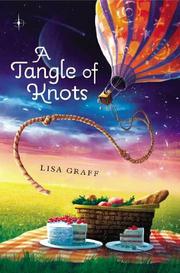
A Tangle of Knots, by Lisa Graff

9780399255175

I pick up a book for a number of reasons—good reviews, a fabulous cover, or because a friend or colleague gives a recommendation. Rarely does a book’s title encourage me to dive in. Even though A Tangle of Knots has all of the aforementioned things, its title is what really struck me.

Tangles and knots both suggest tension, complexity, and stress. I don’t know about anyone else out there, but the world has seemed to be a tangle of knots lately. I’m not sure when the tangle of knots began for me—maybe 9/11 was the first time I truly  comprehended catastrophe. Since then, and very recently, it feels like they just keep coming– the shootings in Aurora, Colorado and Newtown, Connecticut. The Boston Marathon bombings. The tornado. The daily violence here in Chicago.

That’s just the United States. If I start thinking about the terrorism in Mogadishu or the violence in Syria, the knots get thicker and the tangles more snarly.

So what does this difficult stuff have to do with a middle grade novel? Well, I picked up this book in the middle of one of those really tangly, knotty weeks. I had read first-person accounts from the families affected by the Newtown, CT shootings at my doctor’s appointment. The Boston Marathon bombings happened. Then the tornado came. Yet, as I read Graff’s novel, a number of things changed for me. First of all, I let myself sink into the world of the novel and was distracted from my sensitivity for little while. Graff’s eloquent, imaginative story weaving and her sophisticated, third-person writer’s voice made it impossible not to be encapsulated by the book. Secondly, I laughed, probably for the first time that week. Lastly, the book was a window and a mirror.  I thought about the book’s tangle of knots, my own tangle of knots, and the world’s tangle of knots, and I accepted them all.

This acceptance probably has to do with the fact that the book is all about cake, and there is no way I can be in a bad mood when I am reading about cake. The protagonist, Cady, is an orphan searching for her place in the world. She has her own special Talent—she can meet someone and instantly know his or her favorite cake. I love Cady. The novel is rich with a puzzle of characters, but what I love about Cady is that she has lost almost everything, and she is not bitter. By the end of the book, I realized that Cady’s magic had nothing to do with her cake making—it is all about her heart. Add in a whimsical family, an old woman who has lost her ability to speak, a boy who has a Talent for spitting, a thief, several real cake recipes, and some blue suitcases–we’ve got a winner.

As I turned the last page, I stopped thinking about the horrific parts of past tragedies and turned toward the small miracles. The police workers on 9/11. The Boston marathoners who crossed the finish line and ran to the local hospitals to give blood. The interview with the woman who had lost her dog in the rubble of Oklahoma’s tornado (see attached video). I know people talk about the small stuff, but it truly is everywhere. And it’s written all over Graff’s novel. A ferret. Peanut butter cake.  A missing dinosaur bone.

And then I thought: tangles and knots. Yes, both suggest tension. But put in a different light, they suggest stability, support, strength. We tie knots when we want something to stay together. When my hair tangles, it comes together in clumps, and each individual hair is indistinguishable. Maybe sometimes we need to be individuals, to be untangled and free. But other times, especially hard times, we need to tie knots with each other, and learn to lean on each other for support and strength. Cady does.

Graff writes, “Cady was one of the biggest-hearted people Marigold had ever met—she tried harder than anybody else to make others happy…If Marigold had learned anything that week, it was that trying hard and being a good person didn’t always mean that good things would happen to you.”

We all know that bad things happen. But that fact doesn’t make Cady lose her sensitive heart or her willingness to stay positive, so it won’t make me lose mine, either.

I think my favorite cake would be a chocolate one; almost brownie-like, with a really rich, dense texture and chocolate frosting, warmed up with ice cream on the side.

What’s your favorite?

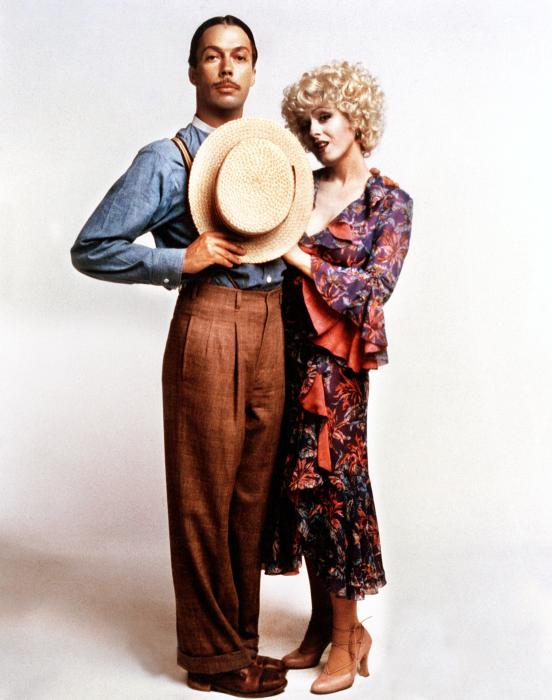
Get well Tim Curry

News is emerging that actor Tim Curry is recovering from a stroke. Initial reports suggested that he had collapsed yesterday following a massive episode. More recent reports say that, while he collapsed in his LA home yesterday, the stroke occurred last July, and he has been recovering (well) ever since. In any event, I wish him very well.

rocky horrorWhen I was in High School I went to midnight showings of the Rocky Horror Picture Show week after week (after week) at the Coventry Cinema in Cleveland Heights. I think its fair to say that the experience had a profound effect on my adolescence, offering an indelible, albeit particular, affirmation of different ways of being. Watching and eventually joining the participatory irreverence, throwing toast, spritzing rain, singing and dancing along, offered me a kind of community I really needed at the time. Who knew musical theater could be like that?!

annieSpeaking of musical theater, I refuse to apologize for the fact that I love all things Annie. I just do. Ask me about Kristen Vigard’s casting as the original red-mopped orphan and her replacement with Andrea McArdle after previews in Conecticutt. Heck, watch the Julie Stevens documentary, Life After Tomorrow (SJP!) if you want to know more about it. Anyhow, Curry plays Rooster in the 1982 movie version. There’s lots to love about the film, if you’re me, at least, including his sneaky, sinister performance. He’s brilliant. And, thinking back, it’s a little striking how much Carol Burnett, as Miss Hannigam. looks like Frank N. Furter. Huh.

But today I remember Tim Curry as an extraordinary narrator of audiobooks. My introduction to audiobooks came with my very first ALSC evaluation committee experience as a member of Notable Recordings for Children. Back then each of us was assigned a sampling of eligible recordings (cassette tapes!), based on the first letter of the title. I was assigned A-C, and received, relatively early in the year, the first of  Lemony Snicket’s Series of Unfortunate Events, The Bad Beginning. So charming. Curry’s arch, over-the-top narration makes the most of the tongue-in-cheek prose, honoring its playful irony and milking the humor. It’s just a little irresistible.

AbhorsenBut my favorite audiobook performance of all time must be his stunning readings of Garth Nix’s Abhorsen trilogy. It was such an interesting choice, casting a man to read these menacing novels about a family of necromancers in a centuries-old battle against conspiring evil, as all of the protagonists are young women. But once you hear Curry’s contemptuous reading of Mogget the familiar, and the positively dripping malevolence of Orannis, the baddest of the many baddies, you know the choice was just perfect. I have listened to all three, in sequence, at least five times, stem to stern, and they never disappoint. I recommend them all the time, and do so again today, to you.

So, here’s wishing Tim Curry a continued speedy recovery, with hopes that he finds his way back to the recording booth soon.

Caldecott 2014 continued some more

There are two more spring books that have caught my Caldecotty attention:

round is a tortillaRound is a Tortilla: A Book of Shapes

written by Roseanne Greenfield Thong

illustrated by John Parra

Chronicle, 2013

To begin with, this book is supremely lovely. Of course, lots of books are lovely, and loveliness is not a particular criterion for Caldecott consideration. But let’s just put that out there. Parra’s figure work is warm and personal, simultaneously accessible and specific. His largely symmetrical composition affords the imagery some organizational clarity, making it especially easy on the eye (and enhancing the shape identification, to boot). But there is much to admire beyond the simple beauty. The color work is extraordinary. Parra sets vibrant reds and oranges against grayed-out blues and greens. The unexpected result, with its dramatic sense of light and shadow, enhances the sense of place. It feels like a hot day in the Mexican shade. The treatment of shapes is suitably sophisticated. Rhyming verse calls attention to one shape at a time, and while many of the shape in question are present for searching and finding, there are other shapes represented, too.

And if ever there was a book jacket optimized to accept a golden circle sticker, this is it. I mean, really.

henris scissorsHenri’s Scissors

written and illustrated by Jeanette Winter

Simon and Schuster, 2013

Illustrating a picture book about a famous artist is no small thing. How does the illustrator capture the essence of the artist’s style without resorting to mimicry, expressing without copying? Jeanette Winter makes it look easy. In this simple picture book biography of Henri Matisse she employs color to set Matisse’s artwork apart from its contextual environs, replicating the vibrant artwork with rich, saturated color and using a more reserved, pastel palette for the artist and his surroundings. She structures the story carefully, covering the first 70 years of his life in the first few pages and dedicating the balance of the book to the paper-cutting for which he is most celebrated today. Matisse made the technical discovery while recovering from a severe, debilitating illness, and Winter reflects its transformational power with a major compositional shift. The exposition unfolds with images in small, tight squares on a clean, buff ground. At the pivotal moment of discovery, when the artist finds his way to creation again, the images break across the entire spread, reaching beyond the edge of the page in expressive freedom. Most picture books contribute to the storytelling with representative imagery. Using the art itself to tell the story, in its structural design, adds layers of meaning to an already illuminating story. I’d call that excellence of pictorial interpretation of story, theme, or concept.

Anyone out there excited about any 2013 American picture books?

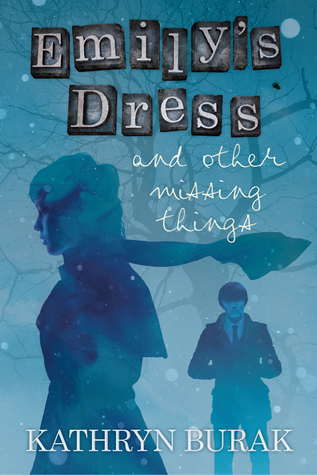
Emily’s Dress and Other Missing Things

“Emily Dickinson is the perfect thing to hand to a 16-year old girl,” advised fellow blogger lynchlibrarian recently. What is it about Emily? Indeed, I was 16 when I purchased my paperback copy of her complete works (at the local Borders bookstore, my idea of the cool hangout spot), and I vividly remember discussing “Success is counted sweetest” in my high school’s U.S. Literature class. Certainly I considered her words earlier and later in life, though not by much: an eager seventh grade teacher chalked “I never saw a moor” on the board for the daily quote; in my second year of college, fellow English majors and I spent the better part of a class dissecting the differences between her 1859 and 1861 versions of “Safe in their Alabaster Chambers” (the power — of a dash!).

So what is it about Emily that resonates during young adulthood? While increasingly introspective teens may be intrigued by her famously reclusive habits, it’s her words that truly inspire. At a time when teenagers feel pulled between their past and future selves, her voice simultaneously offers innocence and wisdom. As they encounter the terribly great problems of the world and personal decisions to make, her subject matter rings with the impossible brightness and darkness of life’s great questions. Through succinct, tender verses, Emily provides young people with a “nugget of pure truth” to grasp in their hands and hearts. (My Virginia Woolf obsession came later in life.)

  Feathers by Jacqueline Woodson   Emily's Dress and Other Missing Things

If young people miss out on enthusiastic teachers reading Emily’s poetry aloud, I’m happy to know they may also discover her in the pages of fiction. Jacqueline Woodson’s beloved Feathers (Putnam, 2007) perfectly pairs “‘Hope’ is the thing with feathers” with a story that examines the power of friendship over divisions and discrimination during the 1970s, a fragile, precariously hopeful time in our nation’s history. What a perfect story for a 12-year-old.

For older readers, Kathryn Burak’s novel Emily’s Dress and Other Missing Things (Roaring Book Press, 2012) explores Emily’s darker side. After experiencing personal tragedy, Claire and her father attempt to start fresh by moving to Amherst, Massachusetts, the home of Emily Dickinson. Claire is a poet herself  and finds herself drawn to Emily’s words, rich with poignant examinations of death, and to Emily’s house, now of course a museum where Emily’s personal belongings are artfully arranged for tourists to view. As if in a creative trance, she breaks in, night after night, to write while wearing Emily’s white dress — until the day the college-aged student teacher Tate discovers her. Instantly linked by this strangely intimate crime, they run, stealing the dress in the process. Burak’s poetry is the star of this novel, both in the actual verses Claire writes — the portals by which she gradually shares the tragic details of her past — and in the crisp, shimmering prose of Claire’s narration:

The smell of snow on the winter air fades. I take a deep breath. I smell paper. Here I have the cool, clean feeling of paper, too.

I am so glad to get away. To be in Emily Dickinson’s house.


With a frigate like this book, the reader will certainly agree.

Maggot Moon

maggot moon

Maggot Moon

by Sally Gardner

Candlewick/Brilliance Audio, 2013

There is so much I want to say about this book. So much. But each and every element or facet or consequence I might mention would rob you of the opportunity to experience it yourself, thereby diminishing your encounter. Even saying that much feels like something of a spoiler.

So I’ll make just these few short comments:

1) Every now and again you read something that feels actually new. This is one of those stories.

2) For a good while you will feel disoriented. Stick it out. It’s worth it.

3) There are some powerful, interactive spot illustrations in the print book that contribute to the mood. The audiobook is sharp and reserved and extraordinary. Take your pick.

4) Please read this book as soon as you can, then find me so we can talk about it.