Such Soft, Snuggly, Sleepy, Sloths

Lucy Cooke celebrates the otherwise underappreciated sloth in her book a little book of SLOTH. Few children’s books begin with an author’s note confessing “I love sloths. I always have.” Of course, to my knowledge, there are just not many books entirely dedicated to the beloved sloth and shame on publishing for that. Books about soft, fuzzy kittens and playful puppies enjoy rampant popularity. To be sure, if mice were paid for their abundance of stories they would have started their own colony on the moon (after all it is made of cheese, right?) far from those mean kittens. Who knows why authors love them so. No offense against rodents but even I jump when one scampers across the living room floor. The world’s largest rodent, the capybara, happens to be my favorite but how many books were published about the capybara last year (seriously, if there were any, let me know)?

slothMy apologies…this is neither about my empathy for the under-sloth as it were nor my anxiety from excessive dog/cat/mouse lit.

Slothville shelters well over a hundred sloths that have been hurt or found parentless in the wild. Founded by Judy Arroyo in Costa Rica, the sanctuary cares for the curious, grinning creatures which are lanky in appearance and leisurely in motion. In reference to a sloth named Mateo who is particularly protective of his stuffed cow Moo, Cooke jests, “If any of the other baby sloths tries to sneak a Moo hug, a fight breaks out – a very, very slow fight, in which the winner is the last sloth to stay awake.” Each page of the colorful photo album contains a single image or multiple images of the animals in cute poses a la Anne Geddes, hanging from tree limbs, or snuggling with stuffed toys, blankets, and fellow sloths. Alongside images the author relays interesting tidbits with clever quips on the animal’s behavior. The sloth’s unique behavior and bizarre characteristics will fascinate parents and children alike while the round eyed, stumpy nosed babies in their hand-crafted onesies are absolutely adorable. Besides, with a little imagination they sort of look like mice, too. Envision a rainy evening, scoop up your little one, and snuggle up to a little book of SLOTH.

A Little Book of Sloth

by Lucy Cooke

Margaret K. McElderry Books, 2013

Brave Irene

brave-ireneBrave Irene

by William Steig

Farrar, Straus and Giroux, 1986

A childhood favorite of mine, this book is about one girl’s determination to help her mother in the face of trouble. When Irene’s mother, a seamstress, falls sick, there is no one to take a beautiful gown to the duchess on the day of her big ball. Irene takes on the job, and bounds through whirling snow and bitter wind that taunts Irene, telling her to GO HO—WO—WOME!” After the package flies out of Irene’s arms and the dress blows away, Irene becomes buried in snow and almost gives up. But remembering her mother’s face, she leaps out of the snow and races down the hill to the duchess’s house. She sees the beautiful dress her mom made next to a tree, and is greeted by a glowing fire, a warm meal, and cheerful faces when she knocks on the duchess’s door. William Steig’s classic illustration style—with atmospheric color, bold outlining, and sketch-like detail—shines in this heartwarming story. It is notable that the text is longer than the average picture book, and so I would only use this with a well-behaved preschool storytime group. It is also significant that the story deals with some heavy, questionable circumstances. As I child, I never wondered why Irene’s mother let her go out in the freezing snowstorm, but now I do. I never worried about the implications of young Irene staying overnight in a stranger’s home, but now I do. When Irene gets buried in the snow, she asks herself, “Why not freeze to death, and let all these troubles end?” Of course, the beauty is that she finds hope in the image of her mother’s face and keeps going, but it is definitely intense material for storytime. Yet, the theme of this picture book is hope amidst chaos, and determination in a world that wants you to give up. How can we not share a book with such poignant themes with children?

Bbbbbbbbbbbbbbbbbbb!

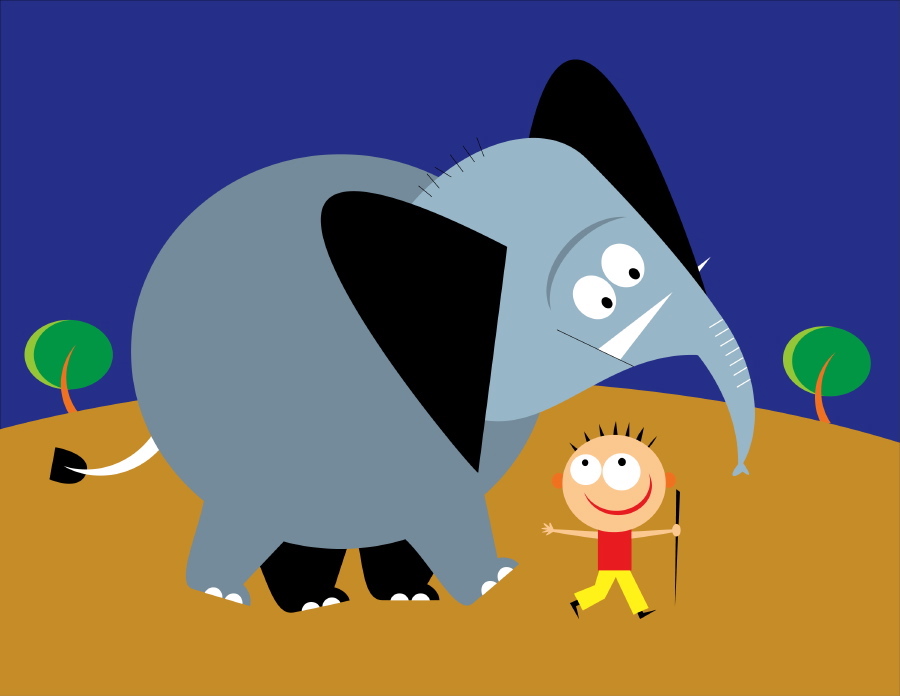
elephantMy wife and I recently brought our 22 month old son to his first pajama storytime. Unwise in the ways of toddler aging, I would prefer, “He is almost two year old.” He in his onesie, me in my version of pjs, and Mom the only mature, pajama-less one of us set out for an adventurous evening at our library. I suppose I should mention here my disappointment that adult onesies are not widely fashionable. When they are, as my dreams foretell, I shall forever wear them.

As I was saying, we planned to arrive at the library a bit early so B could explore. Unfortunately, a significant aspect of his exploratory process includes climbing stairs at the speed of molasses. Against his wishes, we decided to carry him up for fear of missing the program entirely. Librarians have organized short, picture book stacks in rows overlooking a play area and glass-walled activity room. My eager little guy scurried through the aisles pointing, oohing, and ahhing almost exactly the way I envisioned he would. For B, nearly every audible thing on earth; cars, elephants, trains, cows, trains with car driving cows and elephants, produce an enthusiastic ‘Bbbbbbbbbbbb!’ sound. Naturally, when he noticed the dozens of stuffed animal characters on top of each book stack, the once quiet library was transformed into a bustling circus train yard. I was smitten.

B has little previous contact with other children beyond our nuclear family. Toddler storytime at the library proved an excellent way to introduce him to other people his age. Although he looked to be the youngest of the bunch, he interacted with other children through play, crafting, and dancing while learning to share, communicate, and listen. Not bad for a 30 minute library program. The theme was spring and although librarian shared only two books (for the life of me, I can’t remember them…I was too busy being a proud father; bad librarian!), the group was ready to graduate to building a paper plate mask with lion and lamb on either side. Afterward, we scurried out to the play area for some block building and car ‘bbbbbb’ing.

As we left the library I reflected on the last hour (should I have said sixty minutes?) feeling happy and eager to enjoy our next visit. Strapping B into his car seat, I realized that the chances of him remembering his first storytime when he was say 96 months old were remote. Fortunately, I knew that I would never forget it.

Image from Microsoft Word Clip Art

Babies!

What’s little and round and needs to be read to every day?

A baby, that’s what. Thankfully, there is no shortage of wonderful, baby-friendly reading material out there. Here are a few recent titles that caught our attention:

now im bigNow I’m Big!

by Karen Katz

McElderry Boos, 2013

Karen Katz has dozens of bright, ebullient, irresistible board and picture books to her credit, all populated with her unmistakably round baby figures, in vivid, technicolor glory. This time around a collection of toddlers reminisce about their long-ago infancy. Each spread has a baby on the left suffering some baby indignity (When I was a baby I had to wear diapers) followed by the grown-up toddler celebrating new found preschool prowess (NOW I’M BIG! I can wear underpants and poo in the toilet). The final situation has a little girl welcoming a new baby to the family, offering a litany of all the ways she can help, now that she’s big. While toddlers will love feeling all grown-up, the bright colors, expressive faces and simple illustrative style make this a winner for the brand-newest little ones, too.

faces for babyFaces for Baby

curated by Yana Peel

Templar Books, 2013

In 2009 Templar Books created an exquisite board book of black and white fine art reproductions specially selected for babies’ taste for bold, high-contrast imagery. This follow up taps in to babies’ interest in faces, offering twelve modern depictions of the human face in varying styles. The composition is uncluttered, with nothing but the image, with the artist’s name and date of the work printed unobtrusively below. Brief biographical information of the artists represented appears on the verso and a circular mirror on the final page stands apart from the series of rectangular pieces, distinguishing baby’s face from the others. A luxe and lovely package.

you are my baby farmYou Are My Baby: Farm

by Lorena Siminovich

Chronicle, 2013

This charming, ingenious board book takes advantage of a deceptively simple die-cut process, making a matching game of farm animal parents and their young. On each large page a grown-up farm animal describes her baby, complete with a color reference (You have a curly pink tail) and on the smaller pages the baby is pictured, identified by name, and the animal sound is communicated (You are my baby, little piglet. Oink! Oink!). The large and small pages turn independent of one another, though careful use of backgrounds that contrast in color and texture facilitates easy matching. With all sorts of developmental concepts at play (colors, patterns, animal names and sounds, matching, motor skills) this winning volume and it’s sister volume You Are My Baby: Safari fire on all baby cylinders.

What are your favorite books for baby?

Green Malt-O-Meal and Specialness, Among Other Things

During this time of year when I was a kid, my family was usually going nuts with activities. Dad was just getting back from choir tour, Mom was busy teaching music to her crazy kindergarteners, and us kids were somewhere doing speech, theatre, taekwondo, ballet, piano lessons, homework—or sometimes combinations of these things. It was hard to catch time for a dinner together or even a hello after play rehearsal. But Mom and Dad were a pretty great mom and dad, and they always managed to make all three of us kids feel special. They dyed malt-o-meal green on St. Patrick’s day, they slipped little notes in our lunchboxes, and on Easter, each of us got a basket with our favorite candy—Snickers for Josh, Reeses Peanut Butter Cups for Rachel, and Jelly Belly jelly beans for me. Sometimes there would be a little trail of jellybeans from the door to my bed, as if the Easter Bunny had accidentally dropped them on his way (even when I was sixteen).

Now, I’m not home anymore. I’m still their kid, but now I have a job and a school twelve hours away from them, and they aren’t by my side to make me feel special anymore. They still do, of course, it it just over the phone or in cardboard package, but it doesn’t have the same immediacy. So I find ways of discovering what’s special now on my own—through friends, through art, through music, and also, of course, through books.

The following three picturebooks are all published in 2012, and they all have something to say about being special. Sometimes specialness is far away and you have to find it. Sometimes, it’s right next to you and you don’t see it. Sometimes, it’s in an animal or in a friend or in a mysterious something that might surprise you or take a while to understand. Sometimes, it is lost or forgotten.

13414866In Lovabye Dragon, by Barbara Joosse and illustrated by Randy Cecil, a little girl longs for a dragon friend, and a dragon longs for a little girl friend. They dream about finding each other, but the poor girl becomes so sad that she cries silver tears all the way to the dragon’s cave. When the dragon follows the tears, he finds the girl in her castle, and the double-page spread is filled with light and celebration of their union. Cecil’s lovely oil paintings use diverse shades of blue to express the rich, atmospheric tone of the book, and Joosse’s sensitive text celebrates the friendship of two creatures that in every way are different, but together build something special. Though this story could be taken as fantasy, fairy tale, or some version of destiny, I take from it a sense of hope and beauty. You can be alone. You can be sad. You can be alone and sad for a long time. But sometime, somewhere, someone might find you and call you special, or you might be led down a path to find someone special. In the meantime, there’s no harm in calling yourself special. Because it’s true.

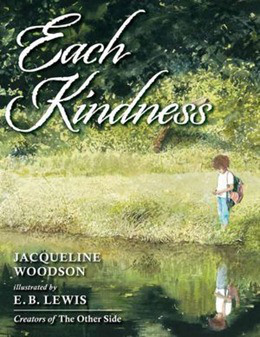
ImageEach Kindness, written by Jacqueline Woodson and illustrated by E.B. Lewis, has a more deliberate message about treating others with respect. Written in the first-person, it tells the story of a new girl coming to school. The narrator character and her friends ignore the new girl—they whisper secrets, laugh, make fun of the girl’s clothing, and refuse to play with her. Lewis’s realistic watercolor illustrations captivate the eye and change perspectives drastically on every page, as if they are begging the narrator to change her own perspective. She doesn’t, though—not until it is too late and the girl has moved away. The book ends with the young protagonist watching the water ripples come and fade, wishing she would have made the new girl feel special.

Don’t we all wish we could go back and change something we did, or make someone feel special when we didn’t? I remember being the bystander in a few instances in elementary school—not teasing, but not standing up for anyone either. My feelings of guilt were strong and palpable—I can still feel them now. So palpable, in fact, that I became a “Peer Mediator” in upper elementary school and was determined to calm fights and extinguish any bullying I saw. Now, it’s easy to see someone’s uniqueness—we are adults. It’s easy to forget the “rules” of being cool in school, and seeing people’s “special qualities” certainly wasn’t part of the being cool plan. I wish we could change that.

ImageFinally, a lovely interplay of humor and heart-warming charm harmonize in Boy + Bot, written by Ame Dyckman and illustrated by Dan Yaccarino. A young boy and a red robot meet each other in the forest one day, and instantly become friends. Trouble ensues when the two friends roll down a hill and Bot’s power switch turns off. The boy tries everything he knows to help—feeds him applesauce, reads him a story, and tucks him in to sleep. But then, when the bedroom door opens, Bot’s power switch turns on and he is frightened to see that Boy cannot be awakened! He tries everything he knows to help—bring him to his home (a mysterious tower), gives him oil, and brings in a spare battery. Bot’s inventor discovers him, the boy awakens, and the two friends are reunited. Bright colors and artistic vignettes bring out both the boldness and softness in this book, and it’s pretty fabulous to see two characters with an honest connection in just thirty-two pages. But it happens with little kids, right? Kids (I’m talking before school starts) can meet each other and instantly hold hands, then go off and play Legos. They make each other feel special all the time.

Okay, maybe by now you’re screaming at your computer—enough with the cheesiness, the sugary clichés, the specialness!

But I still dream about the green Malt-o-Meal, and I’m 28. I still love the Easter Basket with the trail of Jelly Bellys. And I still want hugs and phone calls and everything else that makes me feel special.

Because I am. And so are you. So spread it, what else is there to do?

Lion vs Rabbit

lion vs rabbitLion vs. Rabbit

by Alex Latimer

Peachtree, 2013

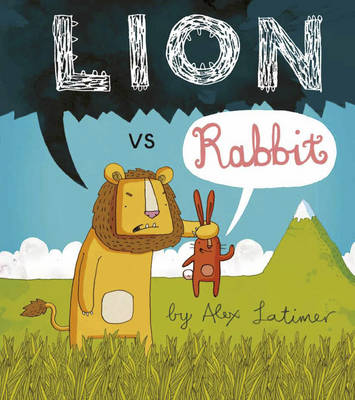
Lion is the king, and something of a bully. He steals Hyena’s lunch monkey. He gives Buffalo a wedgie. Baboon puts an ad in the paper, looking for someone to put lion in his place. Bear and Moose and Tiger arrive on a plane, ready to challenge Lion, one by one. Lion wins, every time. Then comes Rabbit. Rabbit chooses his own contests (marshmallow eating, painting, trivia) and wins each one. Lion relents, agreeing to bully no more, and rabbit takes his leave. As his ship departs we learn that he is in fact a bunch of rabbits, chosen specifically for the individual contests. And, indeed, looking back through the book we see evidence of the subterfuge. For every rabbit competing there are other rabbits hiding, their ears or tails peeking out from behind rocks or hills or tall grasses. Droll details and comic characterizations add wild panache. The story’s skewed humor and buoyant charm delight on their own, but the regular opportunities for the listener to know just a little more than the protagonist elevate this outing from mere felicity to full-on fun.

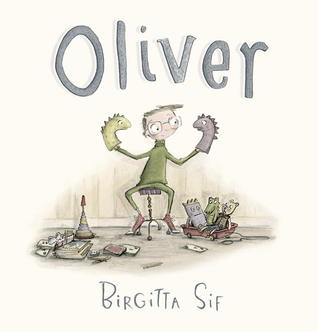
Oliver

Oliver by Birgitta Sif

Oliver

by Birgitta Sif

Candlewick, 2012

From Ferdinand to Frederick, children have wonderful (often animal) picture book role models who express the value in accepting yourself. And of course that message is all well and good. Yet in reality, the self satisfaction found in cherishing your uniqueness sometimes fails to eclipse the loneliness that so often accompanies it. Take Oliver. Here’s a young person who doesn’t seem particularly plagued by the burden of his differentness. He’s not cursing a defect or suffering from taunts; he’s not asking a parent why he is the way he is. He rather enjoys his quiet, imaginative life. His playmates are his toys, plush animals whom he carts around the library and yard. Even surrounded by his boisterous family, Oliver prefers to retreat into his own world with these soft-hearted friends.

And with these playful illustrations, the reader may retreat with him. Notice the subtle glances of otherwise button eyes, the teasing suggestion of life from what reason would inform are inanimate objects: a tiny glimpse for us into the everyday magic Oliver experiences.

Until one day, it’s not enough for Oliver. His animal friends, heaped in a pile, don’t respond like they used to. Yes, Oliver likes the way he is, and isn’t purposefully ostracized for it. There’s no doubting of self here. What Oliver lacks is someone who sees the world like he sees it; someone who can appreciate him and share his fantastical world and adventures. By the book’s end and through a fateful moment, Oliver finds his someone: a someone who’s more than plush stuffing and button eyes. And as the reader turns back to pore over the warmly detailed illustrations, she discovers that Oliver’s new friend has been with him all along, present but unseen. More magic lives on these pages, and in Oliver’s world, than first meets the eye. And as Oliver discovers, magic begs to be shared.

Sir Quentin Blake

quentin blakeAfter a long and storied career, British illustrator Quentin Blake was knighted by the Prince of Wales today. From Mrs. Armitage to Matilda, he has deposited lots and lots (and lots) of indelible characters, human and otherwise, into our collective consciousness, where they will stay in perpetuity. He is also responsible for the wonderful wallpaper on the display wall right here in the Butler Center. On this side of the pond he is best known for his spot illustrations for the Roald Dahl oeuvre, but in his 64 year career (and 64 is my favorite number) he has crafted a remarkable variety of really exquisite books, as author and as illustrator. Here are a few standouts:

CockatoosCockatoos

by Quentin Blake

Little, Brown 1992

Professor Dupont is a slave to his routine, and it is driving his cockatoos crazy! They decide to teach him a lesson, and distribute themselves about the conservatory, never to be seen again. Or not.  This clever, infectious book turns the familiar counting book on its head, with the ever diminishing items-to-be-counted hidden (in plain, polychrome sight), to the delight of observant children everywhere.

tell me a picture

Tell Me A Picture

by Quentin Blake

Millbook Press, 2003

Quentin Blake curated a collection of 26 paintings and children’s book illustrations and employs his trademark figures to interpret them with us. Each work of art enjoys four pages, two for uncluttered presentation, followed by two more where the sketchy individuals respond, with genuine curiosity, puzzlement, and affection. As much about looking at art as it is about art itself, it offers children a safe and stable place from which to begin their own inquisitions.

michael rosens sad bookMichael Rosen’s Sad Book

by Michael Rosen

illustrated by Quentin Blake

Candlewick, 2005

Michael Rosen tells the story of his own experience losing his adult son, and explores the fundamental nature of grief. Blake’s sketchy, chaotic images, in drab greys and blues, express grief’s uncontrollable disquiet in a profound and deeply affecting way. The world will continue to debate whether or not it is a book for children (it is), but it’s artistic power is undeniable.

On the money (mostly)

Back in December we suggested some books as particularly holiday-giftable. Looking back, I see that among the eight books for young people we recommended, half were recognized at the ALA Youth Media Awards! We had the Newbery winner (The One and Only Ivan), The Sibert winner/Newbery honor book (Bomb: The Race to Build–and Steal–the World’s Most Dangerous Weapon), a Caldecott honor book (Extra Yarn), and a Printz honor book (Code Name Verity). Not bad for a day’s work.

The One and Only IvanbombExtra YarnCode Name Verity


You can find a link to all of the ALA award winning titles here.

My Family Valentine

When I was growing up, Valentine’s Day was the biggest holiday going. The Valentine’s Day Peacock would administer the annual treasure hunt, hiding construction paper hearts around the house, each with a different clue on it, in Latin, and it fell to me and my sisters to hunt them down, translating one to lead to the next, and so on. Each of us was assigned a different color heart (lest they get confused) and as we grew older, the clues became more difficult and more plentiful. The trail invariably ended with particular paydirt: a cellophane-wrapped, heart-shaped box of chocolates and a pair of pink socks. I believe this went on all through our high school years (though my sister swears it was the Valentine’s Day Aardvark, so my memory may not be especially dependable) and was, even as a teen, a sweet, resonant tradition. To me, Valentine’s day will always be a holiday about family, more than romance, and so I offer you a bevy of picture books about family love, in its infinite variety, as my valentine.

Marisol McDonald Doesn’t Match/Marisol McDonald no combina by Monica Brown,  illustrated by Sara Palacios, Children’s Book Press, 2011

Little Owl Lost by Chris Haughton, Candlewick, 2010

The Dog Who Belonged to No One, by Amy Hest, illustrated by Amy Bates, Abrams Books for Young Readers, 2008

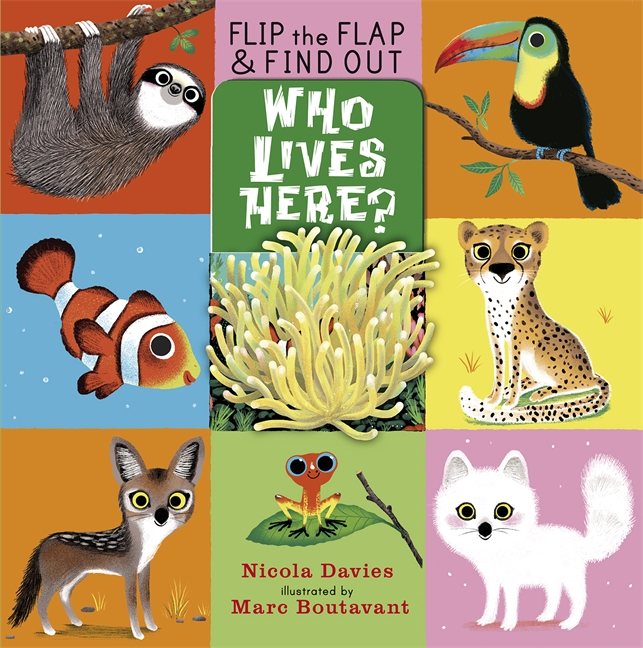
All Kinds of Families, by Mary Ann Hoberman, illustrated by Marc Boutavant, Little, Brown, 2009

My People by Langston Hughes, illustrated by Charles R. Smith, Atheneum, 2009

I’ll See You in the Morning, by Mike Jolley, illustrated by Mique Moriuchi, Roaring Brook, 2008

Monday is One Day by Arthur Levine, illustrated by Julian Hector, Scholastic, 2011

A House in the Woods by Inga Moore, Candlewick, 2011

The Family Book by Todd Parr, Little Brown, 2003

In Our Mothers’ House by Patricia Polacco, Philomel, 2009

The Schmutzy Family, by Madelyn Rosenberg, illustrated by Paul Meisel, Holiday House, 2012

Mad at Mommy by Komako Sakai, Arthur A. Levine Books, 2010

marisollittle owl lostdog who belonged to no one all kinds of families     my people ill see you in the morningmonday is one dayhouse in the woodsfamily bookin our mothers houseschmutzy family    mad at mommy