Butler Bookshelf

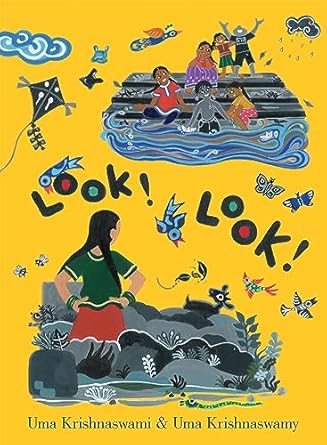
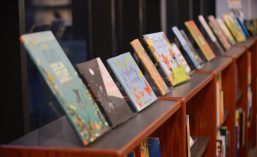
Diverse stories are an important part of literature for all ages, especially for kids. October is Global Diversity Month, so this week’s Butler Bookshelf highlights some fiction and nonfiction books from authors around the world. One of these books is Look! Look! written by Uma Krishnaswami and illustrated by Uma Krishnaswamy. Krishnaswami tells the story of a young Indian girl discovers a slab of stone in the weeds, and she calls her friends to come and take a look. They work together to clean the weeds, garbage, and other stones up. Soon, more and more people from their village and other villages nearby help them uncover an old step well. Once the well is cleaned up, rain fills the well, and the previously dry and dusty land comes back to life as plants begin growing again and the animals return. Accompanied by colorful, geometric illustrations done in acrylic, poster color, and water color by Uma Krishnaswamy, Look! Look! is a delightlful story that educates readers on ancient Indian step wells and shows how they can potentially be a solution for handling floods and providing water in India.

Check out more books from diverse authors below!

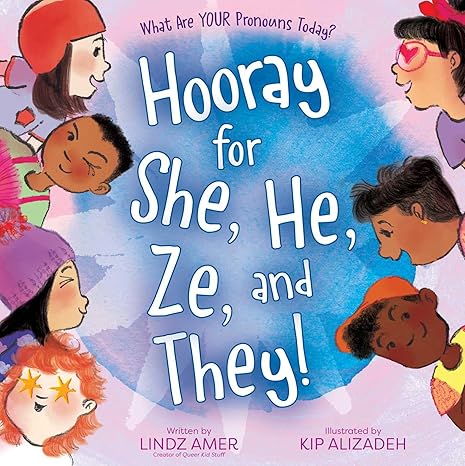
Hooray for She, He, Ze and They!: What Are Your Pronouns Today?
Written by Lindz Amer
Illustrated by Kip Alizadeh
Published by Simon & Schuster Books for Young Readers
Available now

Look! Look!
Written by Uma Krishnaswami
Illustrated by Uma Krishnaswamy
Published by House of Anansi Press
Available now

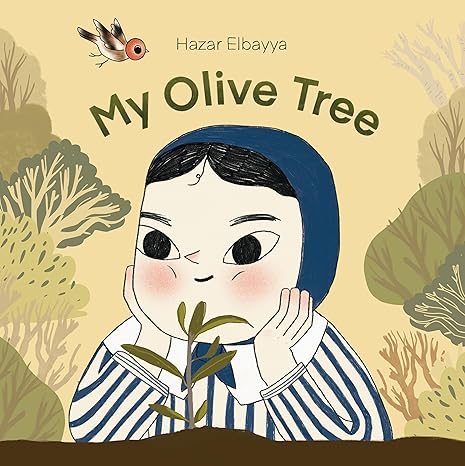
My Olive Tree
Written and illustrated by Hazar Elbayya
Published by Anne Schwartz Books
Available now

Old Wounds
Written by Logan-Ashley Kisner
Published by Delacorte Press
Available now

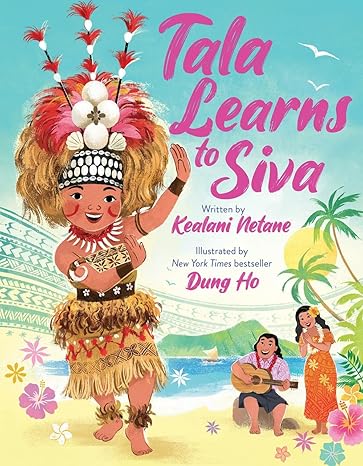
Tala Learns to Siva
Written by Kealani Netane
Illustrated by Dung Ho
Published by Orchard Books
Available now

Butler Bookshelf

For this week’s Butler Bookshelf, we’re highlighting some of the books in our board book collection! Perfect for babies and toddlers, our board books cover a wide range of topics, like airplane travel and the love of grandparents around the world. This week’s featured book, Gus & Sully Watch the Weather, written and illustrated by Steve Light, follows friends Gus and Sully as they talk about what the weather might be like that day. They explore all kinds of weather, from sunny to snowy to foggy. Light uses beautiful watercolor, pen, and ink illustrations to bring weather to life in this book. Gus & Sully Watch the Weather is perfect for introducing babies and young children to weather conditions, and the end gives kids a great prompt to look outside and describe the weather that day.

Check out more of our board books below!

Baby on Board: Airplane
Written and illustrated by Sebastien Braun
Published by Templar Books
Available now

The Earth Book
Written and illustrated by Hannah Alice
Published by Nosy Crow Ltd
Available now

Global Baby Grandparents (Global Babies)
Written by Maya Ajmera
Published by Charlesbridge
Available now

Gus and Sully Watch the Weather
Written and illustrated by Steve Light
Published by Candlewick Press
Available now

Hey! What’s That?
Written and illustrated by Sandra Boynton
Published by Boynton Bookworks
Available now

Peek-a-boo, Thumper!
Written by Disney Books
Illustrated by Jerrod Maruyama
Published by Disney Press
Available now

The Strength in Being Seen: A Review of Deer Run Home by Ann Clare LeZotte 

Deer Run Home 
Written by Ann Clare LeZotte 
Scholastic Inc/Scholastic Press 
Ages 10-14 
Available October 1, 2024  

Effie Pappas is Deaf and linguistically isolated from her family, who don’t speak American Sign Language. Effie and her sister, Deja, are sent to live with their father at the end of the summer. When school starts, Effie’s ASL interpreter, Miss Kathy, begins to suspect that something is wrong with Effie’s home life. After Miss Kathy visits Effie’s home and sees the neglect, she is awarded temporary custody of Effie. Now that she finally has a safe home and a budding friendship with a new girl at school named Cait, Effie starts to open up about her experiences with her family. Miss Kathy eventually petitions for and wins permanent custody of Effie, giving her the security and family she never had. 

Ann Clare LeZotte’s Deer Run Home is a touching story that exposes the reality that d/Deaf children can experience growing up in hearing families without ASL. LeZotte draws on the real-life court case this novel is inspired by to thoughtfully depict the neglect that Effie experiences because her family won’t learn her language, as well as the difficulty Effie has with speaking up about the sexual abuse she endures at the hands of her stepfather. The sexual abuse happens before the novel begins and is thoughtfully described only once, but it serves as one of the obstacles Effie is able to overcome when she finds kindness and support from Miss Kathy and other adults at school. LeZotte takes advantage of the verse format to mirror ASL grammar and storytelling styles at some points. The verse is poignant and moving, and every word is intentional. Readers are drawn to Effie’s character, feeling every bit of her joy, sadness, fear, and loneliness. LeZotte also ties in a plotline of habitat loss for the local deer population, drawing parallels between the displaced deer and Effie’s feelings of loneliness and being lost. At once heartbreaking and empowering, Deer Run Home shows the healing and growth that comes with discovering your voice. 

Butler Bookshelf

Now that school has started, so has the lesson planning! Whether you want to keep the lessons going at home or you’re looking for books to add to your classroom, we have a lot of new nonfiction books to share, including Wild Brunch: Poems About How Creatures Eat by David L. Harrison and illustrated by Giles Laroche. Harrison uses fun poems to explain how different animals across the world eat their food every day. He covers a wide range of animal species, from sea creatures, like narwhals, to land animals, like aardvarks; he also features a variety of flying animals, like turkey vultures, Mexican free-tailed bats, and houseflies. Harrison even includes a poem about mayflies, who only live for one day and don’t eat at all! Harrison includes a back matter that goes into more detail about each animal he writes about and their eating habits, sharing sources for where readers can learn more. Accompanied by Laroche’s detailed collages, Wild Brunch is sure to delight and educate any animal enthusiast!

Check out more of our nonfiction collection below!

50 True Tales From Our Great National Parks
Written by Stephanie Pearson
Illustrated by Madeline Kloepper
Published by Wide Eyed Editions
Available now

Evidence!: How Dr. John Snow Solved the Mystery of Cholera
Written by Deborah Hopkinson
Illustrated by Nik Henderson
Published by Knopf Books for Young Readers
Available now

Radar and the Raft: A True Story About a Scientific Marvel, the Lives it Saved, and the World it Changed
Written by Jeff Lantos
Published by Charlesbridge
Available September 24th, 2024

The Shape of Things: How Mapmakers Picture Our World
Written by Dean Robbins
Illustrated by Matt Tavares
Published by Knopf Books for Young Readers
Available now

Wild Brunch: Poems About How Creatures Eat
Written by David L. Harrison
Illustrated by Giles Laroche
Published by Charlesbridge
Available now

How It Works: A Review of Bounce!: A Scientific History of Rubber

Bounce!: A Scientific History of Rubber
Sarah Albee
Illustrated by Eileen Ryan Ewan
Charlesbridge
October 22, 2024
Age 6-9

Used for everything from bike tires to raincoats, rubber plays a major role in things springy, stretchy and bouncy in ours daily lives. Follow its history from the discovery by indigenous Central American tribes (who farmed natural rubber latex from local plants), adoption by Europeans (imagine the difference when their soccer balls could bounce!), and the evolution in its usefulness into the multipurpose substance we can’t live without today. Part narrative nonfiction and part traditional nonfiction, Bounce combines a fascinating story of invention with “The Science!” interjections that explain the how or why of a narrative detail (what is it that makes rubber sink or float?).

Award-winning nonfiction author and former basketball-player (who appreciates a bouncy ball more?), Sarah Albee explores the history and science behind a very common part of everyday life. With a panel of expert readers—chemists, materials scientists, and engineers—Albee dives deep into both the story and the scholarship with accessible language and delightful facts. The extensive and respectful backmatter includes sections on tribal naming preferences, acknowledgement of the troubling issues of slavery and the environmental impact of rubber production, a timeline that dives deeper into some details from the narrative, and a thorough bibliography and source notes. Intricate yet fluid pen, ink, and watercolor illustrations connect closely to the text descriptions with detailed images of the action, movement in the line work, and expressive faces. Eileen Ryan Ewan uses color to help show the passage of time, moving from muted and historically accurate colors to more vibrant shades in the modern spreads. This engaging and fact-filled picture book would be a perfect accompaniment to introductory science lessons on the properties of matter or chemistry in upper elementary school or for the budding scientists in any library.

No Matter What: A Review of If Anything Happens To Me by Luanne Rice 

If Anything Happens To Me 
Written by Luanne Rice 
Scholastic Inc/Scholastic Press 
Ages 14-17 
Available September 17, 2024

Eight months ago, Eloise Parrish’s body was found in the woods, and her killer still hasn’t been found. Her older sister, Oli, is still reeling in her grief and anger, and she’ll stop at nothing to find Eloise’s killer. When Oli finds Iris, a girl left for dead in the same spot her sister’s body was found, Oli knows she’s closer than ever to getting justice for Eloise. The only problem? Iris has no memory of her life or how she came to be in the woods. Together, Oli and Iris piece together what happened to her and realize that the perpetrator still has Iris’s little sister, Hayley. As they race against time to find Hayley and solve the mystery, Oli learns more about her hometown than she ever knew before, including who she can or can’t trust.  

Luanne Rice’s newest thriller keeps readers hooked until the last page. There are plenty of twists and turns to keep readers engaged, starting with introducing the newest victim of her sister’s killer to incorporating supernatural elements. Rice uses themes of sisterhood and sibling bonds to explore how the love and determination that grow from them can cause good or evil actions. While the characterization, especially in the sister relationships, feels a bit predictable at times—both sets of sisters are opposites of each other—the character development was well-rounded and satisfying. The story ends with Oli and her friends healing from their experiences and hopeful for the future. Rice creates an immersive setting by describing the natural New England flora and fauna through Oli’s naturalist hobby she shares with her friends and sister. The supernatural elements in the story add charm and whimsy to this idyllic setting that offsets the darker points of the story. These elements also add higher stakes to the mystery and a stronger bond between Oli and Eloise. Using descriptive language, magical elements, and characters that readers can root for, Rice creates a compelling mystery with enough darkness to keep readers interested and enough love to keep them hopeful at the end. 

Follow the Clues: A Review of A Strange Thing Happened in Cherry Hall

A Strange Thing Happened in Cherry Hall
Jasmine Warga
HarperCollins Childrens
Age 8-12
September 10, 2024

Stolen art, a floating girl, and a mystery-solving turtle make for a quirky and suspenseful whodunit. Introverted and outcast, Rami spends more time than he’d like at the Penelope L. Brooks Museum where his mom oversees the cleaning crew. When a painting is stolen from the Cherry Hall gallery, and he and his mom become suspects, Rami begins seeing a ghost girl hovering in that same gallery. And she looks an awful lot like the girl in the missing painting. With the help of a Veda, a clever classmate and aspiring detective, and an observant turtle named Agatha, he will unravel the story of the girl, the painting, and the theft at the Penelope.

In a story about the importance of being seen, Jasmine Warga explores the connection between art, understanding, and truth. As a child of Lebanese immigrants, Rami is an outcast at school, and too timid to make trouble. Veda, however, is a bold and quirky personality, willing to challenge him to be daring in an attempt to solve the mystery. Their tentative new friendship is drawn with thoughtful attentions to the changeable emotions and growing pains of middle school. Themes of friendship and the desire to be seen (by Rami and Veda, by the girl, and by Agatha) provide subtlety to balance the heavier aspects of loneliness and the immigrant experience. This gentle, yet thrilling early elementary school mystery combines brief chapters, a fast pace, and multiple narrators to appeal to a young audience without being entirely childish. Warga breaks the fourth wall in chapters narrated by Agatha to add context, and a touch of magical realism, for young readers. The best combination of a warm-hearted friendship and clue-laced mystery.

The Big Score: A Review of Faker

Faker
Gordon Korman
Scholastic
Age 8-12
July 2, 2024


Is Trey really defined by what his family does? Confidence man, liar, criminal… Faker? Living a high-end life funded by his father’s career as a con artist, Trey and his little sister are in on the game, to reel in families in a series of prep schools and wealthy communities. Settling into what could be their biggest score yet—the big kahuna—a fictional electric car start-up looking for investors, he begins to question it all. An influential middle school ethics teacher and his activist daughter open Trey’s eyes to the morality of the “family business” and a growing disillusionment with how it affects those around him.

In the authentically conflicted voice of an adolescent boy, Korman gives this realistic fiction tale a twist. What if this boy was a con trying to go straight? Then he adds all the middle school conflict that comes with friendships, family drama, and questioning parental authority. Is Dad right that no one is hurt when you take from the rich? Brisk plotting and snappy dialog mirror the pace of Trey’s quickly developing conscience. “I can’t believe I ever thought it was anything more than stealing” (p. 170). Trey matures throughout the narrative, getting involved to rehab a local park and discovering that a new friend is also part of a con artist family, efficiently driving the final action. In a conveniently tidy conclusion, he makes a dramatic decision—they all go straight, return the money, and build the stable home life Trey always wanted. A funny and fast-paced coming of age story for middle schooler readers that want a side of crime with their family drama.

Bloom Where You’re Planted: A review of Millie Fleur’s Poison Garden

Millie Fleur’s Poison Garden
Christy Mandin
Scholastic/Orchard Books
July 2, 2024
Age 4-8

Garden Glen is basic: the homes look the same, the adults look the same, the gardens look the same. And they want to keep it that way. But when Millie Fleur La Fae and her family move to the Addams Family-esque house on the edge of town, things are bound to change. To make Garden Glen feel like home, she plants a truly peculiar garden—full of fanged fairy moss and grumpy gilliflower—and draws the ire of her neighbors who want to “mow it down!” With determination, creativity, an inclusive spirit, and some encouragement from Mom, she invites her young classmates to experience something a little different, but wonderfully weird. And little by little, builds a culture of acceptance in her new home.

In this sweet, silly, yet layered homage to individuality, Mandin proves that a lot of flare and a little bravery can make a big impact. Millie Fleur’s persistence and Mom’s wisdom about fear disguised as resistance offer an unambiguous message on what it takes to effect change. Met with everything from disdain to threats by adults, Millie Fleur finds her peers more open to something new. The full-color, sepia toned illustrations lend a retro feel that’s both appropriate to 1950s feel of the very proper town and the straight-laced character costuming. The “hand-drawn” style of the digital illustrations is deceptively simple, with expressive faces and moments of architectural precision that complement the layers of meaning in the story. An author’s note introduces some unique (though sadly un-fanged) plants that young gardeners can add to their own yard and background on the true poison garden that helped inspired the tale.

A charming, yet inspiring tale for the young change agents in your library.