Butler Bookshelf

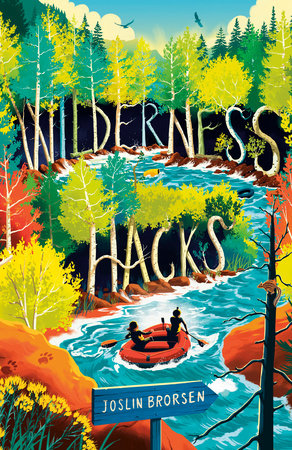
The first day of school is just around the corner, but the adventurous summer fun never ends here at the Butler Center. This week we’re featuring middle-grade adventure novels from our Children’s Fiction collection! Our feature pick of the week is Wilderness Hacks by Joslin Brorsen. Twelve-year-old Sadie Hahn didn’t picture herself on a raft with world famous YouTube star Radley “Rad” Shaw after winning a contest, but she’ll do anything to cheer her younger brother and Rad Shaw superfan, Silas, who was too young to compete. Rad, on the other hand, has millions of online followers but no real-life friends, and to make matters worse, he doesn’t give Sadie a good first impression. Things quickly devolve into disaster when their scripted rafting adventure goes off script, leaving both tweens to need to put aside their differences to survive in the wild.

Check out this and other adventurous titles here!

Wilderness Hacks
Joslin Brorsen
Alfred A. Knopf/Random House Children’s Books
Available now!

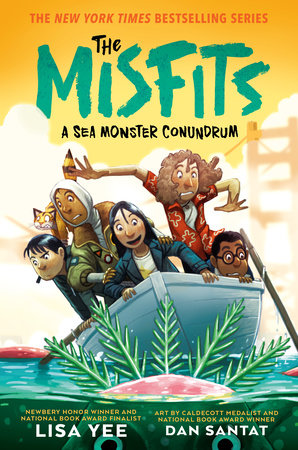
The Misfits: A Sea Monster Conundrum (The Misfits Book: 3)
Lisa Yee
Illustrated by Dan Santat
Random House Books for Young Readers/Random House Children’s Books
Available now!

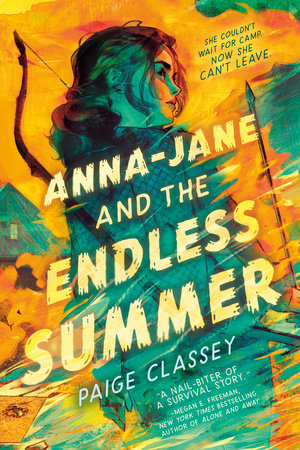
Anna-Jane and the Endless Summer
Paige Classey
Random House Books for Young Readers/Random House Children’s Books
Available now!

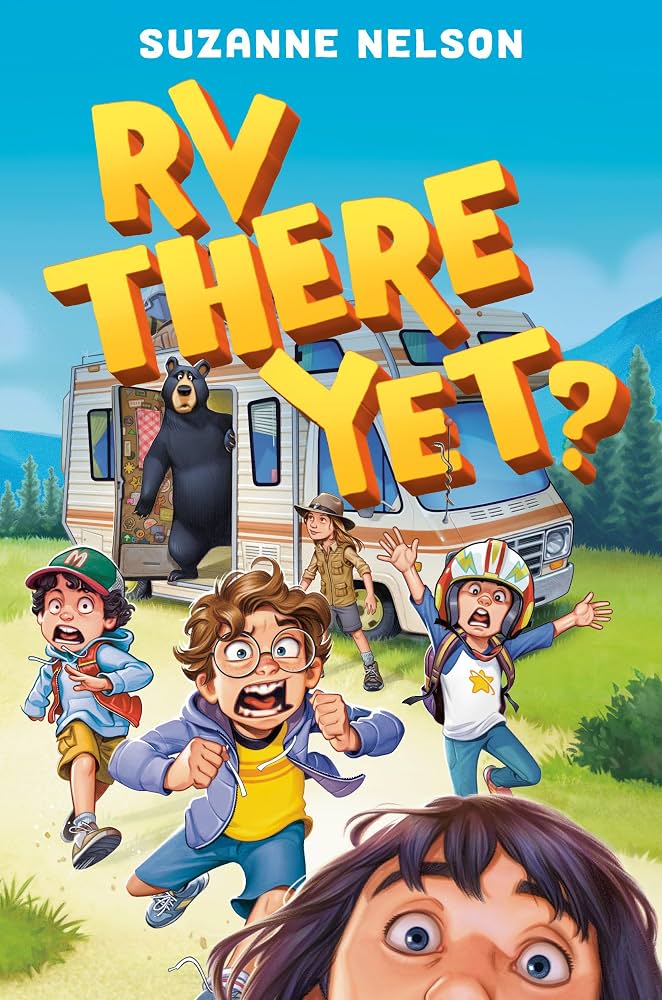
RV There Yet?
Suzanne Nelson
Alfred A. Knopf/Random House Children’s Books
Available now!

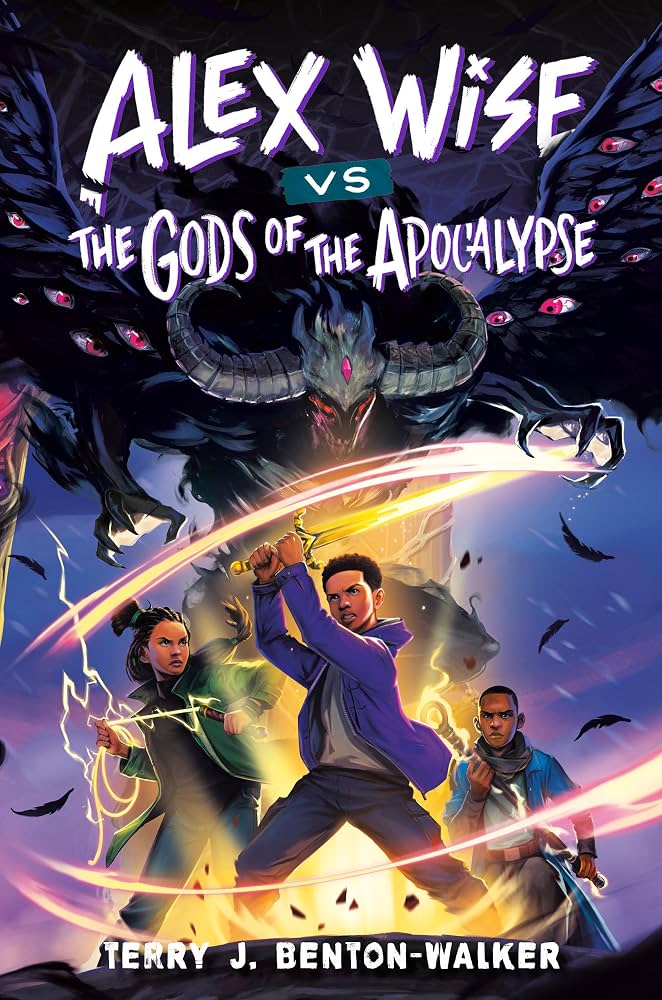
Alex Wise Vs. The Gods of the Apocalypse (Alex Wise Book: 3)
Terry J. Benton-Walker
Labyrinth Road/Random House Children’s Books
Available now!
Finding Perseverance Through Friendship: A Review of Dasia (Forever)

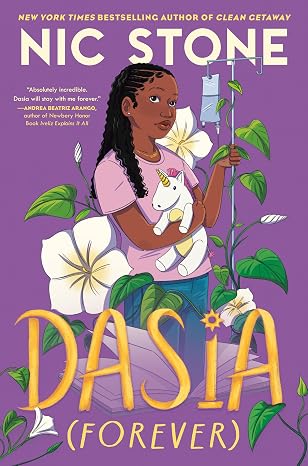
Dasia (Forever) 
Nic Stone 
Illustrated by Simone Douglas 
Crown Books for Young Readers, an imprint of Random House Children’s Books
Ages: 10+ 
Available: October 6, 2026  

13-year-old Dasia Monae Riley is not supposed to have visitors while undergoing bone cancer treatment. This doesn’t stop 14-year-old fellow cancer patient Jameson “Jimmy” Jeffs from entering her room, unnoticed by the doctors and nurses, and having a conversation with her on a lonely July night. As the two girls talk, Dasia realizes she has more in common with Jimmy than she first thought. Little does she know that one night in spectral Jimmy’s company will change her life forever.

This magical realistic middle grade fiction novel, a spin-off of Stone’s the Dear Martin series, is part prose and part verso libre poetry in the form of Dasia’s unsent letters to her incarcerated older brother, LaQuan. The letters give readers a glimpse of Dasia’s life prior to induction chemo, feelings and experiences that she’s rarely shared with others except for Jimmy. Simone Douglas’s black-and-white illustrations, mainly seen as margin doodles in Dasia’s letters, accurately capture her sometimes-extreme emotional state. Stone gives the intense topic of childhood cancer gravitas and is not shy in including the isolation and pain associated with it, while Jimmy’s encouragement for Dasia to keep going and Dasia’s resolve to still fight her cancer, even at her lowest point, provide the reader hope. Extensive prior knowledge of the Dear Martin series isn’t required to understand Dasia’s narrative. Its powerful message of optimism in the face of illness is strong enough to stand alone. In short, Dasia (Forever) is an emotionally charged tale that will tug a reader’s heartstrings. 

The World Around Us: A review of Maptacular!

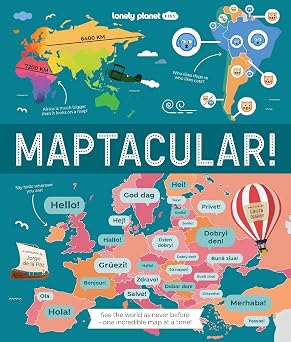
Maptacular!
Laura Baker
Illustrated by Jorge De La Paz
Lonely Planet Kids
November 10, 2026
Age 8-12

Most maps divide the world by country borders, but what if it were split by favorite ice cream flavors, tallest trees, or global distribution of video gamers? Prolific children’s nonfiction author, Laura Baker, along with travel guide powerhouse Lonely Planet, offers middle grade readers this fascinating, infographic-like twist on cartography. Maptacular! features 70+ maps with chapters focused on countries, people, nature, transportation, history, and technology, then subdivided further into 2-page spreads exploring a single topic or question, such as “Do You Need a (School) Uniform?” or “Marco Polo’s Voyage.” The amount of easily digestible text varies from spread to spread, but most include a helpful key for understanding the map and fun facts associated with the topic, like that Australia is home to 28 million people and 40 million kangaroos (p24). Without a strong narrative structure, the title allows for consuming intriguing details at a reader’s own pace, either moving slowly through the ideas and images, or dipping in and out like a reference text, while wildly varied topics nurture curiosity about both the earth and the global community. Baker introduces deeper topics for consideration in age-appropriate ways, like that maps are organized the way they are (with Europe in the center) because they were developed by European explorers, gently encouraging readers to look at other things from a new perspective. De La Paz uses graphic design-inspired digital images in a candy-colored palette to clearly express the facts of each topic. Clean image overlays help simplify complex ideas, like the way Mercator Projection maps stretch out the land at the top/bottom of the globe. The inclusion of several wayfinding aids, an about section (explaining the parts of each spread), a world map, glossary, and resource list support both new nonfiction readers and those looking to dig deeper into a topic.

A vivid, info-packed guide for geography buffs and fun fact collectors alike.