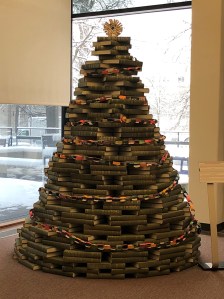
How is it we are already looking at a Christmas tree in the Crown Library? I may not be ready for the holidays just yet, but it does seem appropriate with this wintry weather. And as the year winds down, it also seems appropriate for the requisite year-end, or at least semester-end, recap. So here’s just a quick look at what the Butler Children’s Literature Center has been up to this semester and a sneak peek at what we’re planning for the Spring semester.
Fall Semester Happenings–
Professional Development
This semester we were thrilled to host two professional development events for librarians, teachers, teacher-librarians, and really everyone interested in great books and getting them into the hands of great kids.
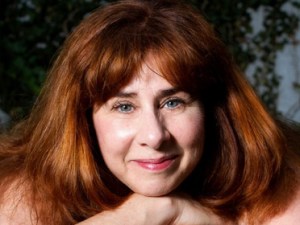 In September, we welcomed Evanston author Sarah Aronson for a chat about local authors and creative ways to incorporate their books into your programming. Her presentation, “Made in Illinois: New Books by Illinois Authors and How to Use them in the Classroom (and Library),” sparked an engaging conversation about how collaboration between authors, teachers, and librarians can make books come alive. She also shared information about READ LOCAL, a new initiative by the Society of Children’s Book Writers and Illustrators for connecting those who create books with those who share them. Find out more at https://illinois.scbwi.org/read-local/.
In October, professional reviewers Janice Del Negro (Associate Professor, Dominican University SOIS) and Hal Patnott (Library Assistant, Oak Park Public Library and former Butler Center Graduate Assistant) led a book reviewing workshop with thoughtful discussion on the history of reviewing and current trends in the field, as well as the resources and skills required for professional reviewing of youth literature.
Illinois Library Association Annual Conference
I was excited to spend three days at the ILA Annual Conference in Peoria this October attending programming sessions, reconnecting with former colleagues and classmates, and chatting with alumni at the DU exhibit table. The knowledge, passion, and collaborative spirit on display throughout the event were truly inspiring. And the ILA staff and conference committee did an impressive job of hosting, organizing, shepherding, and generally managing the chaos of that many librarians in one place.
What’s Up Next–
Butler Center Book Sale
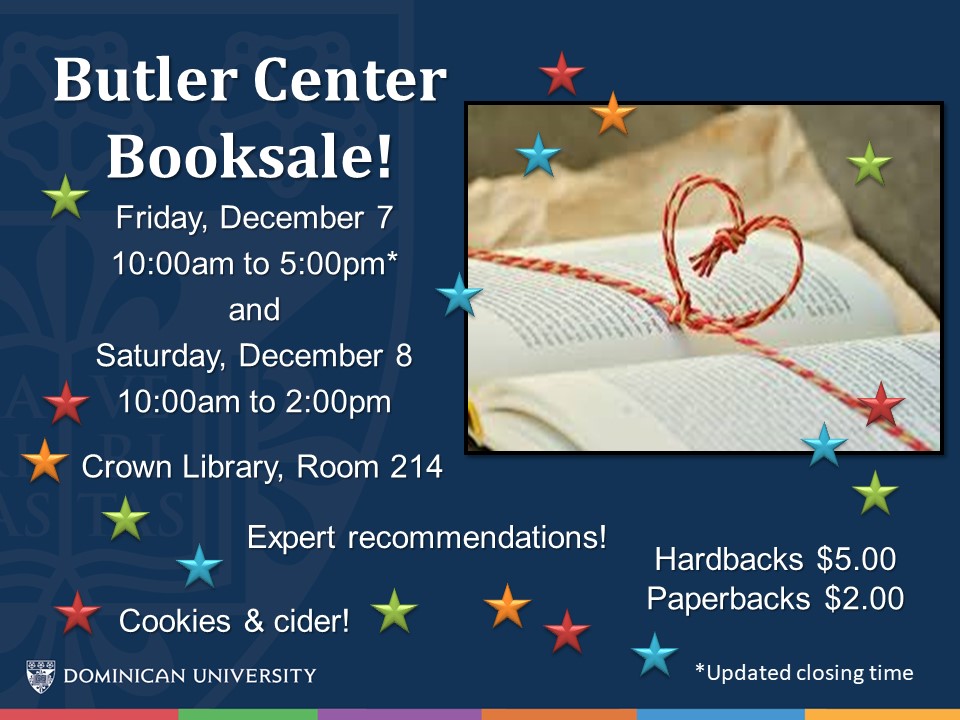
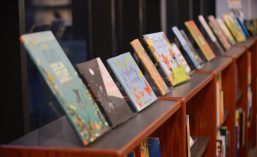
Join us for the annual Butler Center Book Sale on Friday 12/7 from 10:00 am to 5:00 pm* and Saturday 12/8 from 10:00 am to 2:00 pm. Get expert book recommendations, enjoy cider and cookies, and check some gifts off your holiday shopping list. Know a teacher or librarian that could use some new books in their collection? Bring them along! Hardcover books are just $5 and paperbacks only $2. Proceeds from the sale support Butler Center programming. *Please note the change in Friday’s closing time from previous book sale announcements.
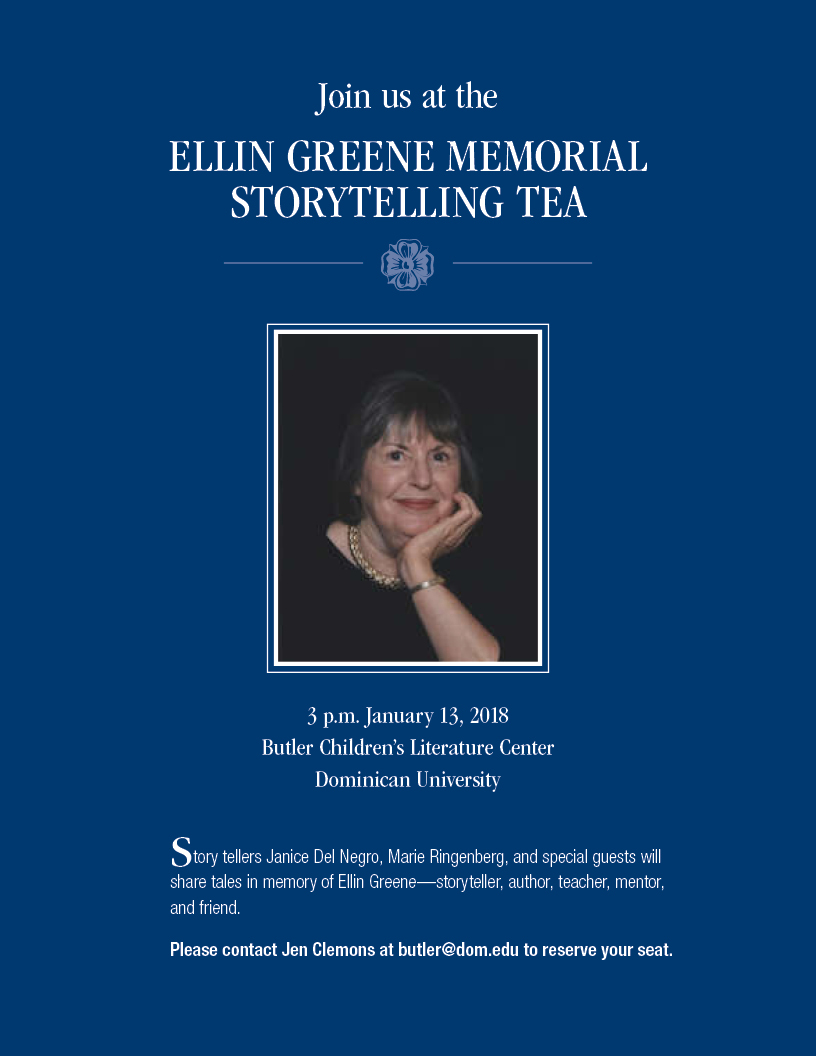
Ellin Greene Memorial Storytelling Tea
We were saddened to learn about the passing of Ellin Greene this past summer. This storyteller, author, teacher, mentor, and Butler Children’s Literature Center champion will be missed in the storytelling community and beyond. In her honor, the Butler Center will host a Storytelling Tea on Sunday, January 13th at 3:00 pm. Storytellers Janice Del Negro, Marie Ringenberg, and special guests will share tales in memory of their friend and colleague. If you’d like to join us in celebrating the life and legacy of Ellin Greene, please RSVP to Jen Clemons at butler@dom.edu by January 4th.
Butler Lecture
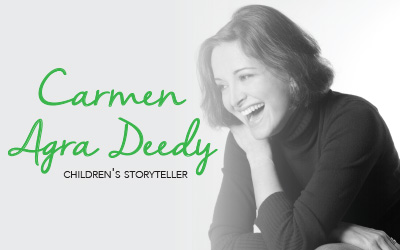
 On March 20, 2019, the Butler Children’s Literature Center welcomes award-winning children’s author, Carmen Agra Deedy for the 7th Annual Butler Lecture. Join us for The End of the Story as Deedy shares rousing tales of her own families’ life experiences and how the most unlikely of teachers coupled with a series of seemingly small events, made an enormous impact in shaping generations of lifelong learners. The lecture begins at 6:00 pm; a reception and book signing will follow the lecture. Registration opens mid-January.
Professional Development
Our professional development series will continue next semester. Keep your eye out for announcements on Spring events focused on self-care (for those of us that invest so much of ourselves in the kids we serve), as well as research and programs to support kids in bilingual homes. Dates and times to be announced on the Butler’s Pantry in later this year.
Open Hours
The Butler Center welcomes teachers, librarians, booksellers, parents, grandparents, caregivers and anyone interested in literature for young people. As the holiday season approaches, we will be closed following the Dominican University school closing calendar for the Christmas/New Year break, but otherwise open Monday – Thursday from noon-4 p.m., or by appointment with the curator; contact butler@dom.edu to make special arrangements or just to make sure we’re not on vacation.
The Center is a non-lending library but our staff is here to assist you in locating books that address specific themes, age groups, or reading levels.
The Butler Center is located in the Rebecca Crown Library, room 214, on Dominican’s main campus at 7900 W. Division Street in River Forest, Illinois. Directions and a campus map are available here. The Butler Center is administered by Dominican’s School of Information Studies and is generously supported by the Butler Family Foundation. We hope you’ll want to visit us, or join us for an event, and stay tuned for our news and upcoming events. Please contact me with any questions you have. I look forward to seeing you soon!
Happy Holidays,
Jen Clemons
Curator, Butler Children’s Literature Center
Dominican University SOIS
sois.dom.edu
butlerspantry.org
butler@dom.edu

 Join Elizabeth Lynch of Addison Public Library and Kelly MacGregor of Berwyn Public Library for an in-depth look at how they worked to improve service for the teens at their library and a discussion of how you can too.
 Butler's Pantry