Brain Gain: A Review of Goodnight to Your Fantastic Elastic Brain

Goodnight to Your Fantastic Elastic Brain
JoAnn Deak, PhD and Terrence Deak, PhD
Illustrated by Neely Daggett
Sourcebooks
April 5th, 2022
Ages 4+

In Good Night to Your Fantastic Elastic Brain, we follow Brain, the pink walnut-looking organ in your head, starting with a brief and general explanation of what Brain does, and going through their nightly checklist, from development all the way through dreaming. With each task coming in the order they happen through a sleep cycle. As psychologists, the authors, Doctors JoAnn and Terrance Deak’s passion for the topic is evident. Using a tone of “isn’t the brain cool!” keeps the reader engaged and never talks down to them. Excelling when paired with a completely natural but potentially scary topic like REM paralysis that is part of dreaming. Illustrations by Neely Daggett are simple abstractions with implied details. For example, Brain has bumps along its edge letting the reader do the work of extrapolating the wrinkles in their mind without cluttering the illustrations. In diagrams, while not realistic, they show locations for different sections of the brain accurately, substituting the anthropomorphic brain for a clear cross-section in profile with colored highlights. The art and the writing use metaphors to explain brain processes to readers, using abstractions like stamping when creating memories and baths when Brain needs to clean themselves, to give children simple reasons to want to sleep. The journey through a sleep cycle wraps up with a reiteration that your brain is you, what happens if you don’t sleep well, and actionable advice on how to improve your sleep that is useful for everybody, not just children. One missing feature is a bibliography or a list of continued reading resources for those who want more.

An enthusiastic explainer made for kids who need a good reason to hit the hay.

Be Bold, Be Brave: A Review of Epically Earnest

Epically Earnest–cover art

Epically Earnest
Molly Horan
Clarion Books
June 21, 2022
Ages 12+

At one-year-old, Jane Worthing was abandoned in the back of the Poughkeepsie train station. Despite this unlucky start, Jane’s led a happy life thanks to the generous and supportive man who found, and later adopted her. Now eighteen-years-old and in the final months of her senior year, Jane finds herself with all the typical high school drama and more. Her best friend Algie secretly, and high-handedly, sent her DNA to Ancestry.com. Jane has always avoided searching for her birth parents out of fear of what she might uncover. But now there’s a familial match in the form of an acorn, staring at her from the computer screen. On top of this, Gwendolyn Fairfax—Algie’s cousin and the girl Jane’s been in love with since she was 13—is visiting over school break. Jane has some big decisions to make. Should she click the acorn? Profess her love to Gwen? When the final decision is made, will chaos ensue, or will she finally find what she’s longing for?

Inspired by Oscar Wilde’s The Importance of Being Earnest, Epically Earnest shares character names, loves, and the protagonist’s back story—left in an oversized handbag. Horan adds a contemporary twist to these plot lines with the discovery of baby Jane becoming a viral video and Jane’s bisexual identity. Epically Earnest centers themes of acceptance, believing in yourself, and what it means to be family. Jane comes to find that searching for her birth family isn’t a betrayal to her adoptive parents. Her birth family is an addition to the family she already loves. Throughout the story, Jane becomes more confident in herself. She gains the courage to pursue Gwen, believing that she deserves to be happy and that being honest with herself and others is the best way to get what she needs. Horan includes a further nod to Wilde by prefacing each chapter with a quote from one of his plays. A sweet and romantic comedy, this coming of age novel illustrates that happiness comes to those boldly open to it.

Some things are too important to be taken seriously. — Oscar Wilde.

Sharing Nature Through Seasons: A Review of Emile and the Field

Emile and the Field 
Kevin Young 
Illustrated by Chioma Ebinama 
Make Me a World 
March 15, 2022 
Ages 4-8 

Young Emile loves the field close to his home, spending time alone in the field where he appreciates all the animals. He sees the field as a living being itself, thoughtfully wondering about things the field cannot experience that are far away from it, such as the sea. He also contemplates how the field changes during the seasons. He is upset that in the winter he must share his field with others who come to loudly play in the snow. When Emile shares this thought with his father, his father explains that no one owns the field and that sharing it ensures that it will continue to exist. The book closes with an illustration of Emile playing in the field with someone else in the spring. 

This is Young’s first book for children, though his experience with poetry and essays comes through in the lyrical writing style. The book is written in rhythmic verse, with many rhyming lines. The text on each page is sparse and appears in a variety of placements. This highlights the watercolor illustrations which bring the vibrant field to life through the usage of a wide color palette. The textured look of watercolor further brings the field to life. The initial textual description of Emile’s field even takes pause early on to allow for a full two-page illustration which depicts the lush field. The illustrations are key to storytelling as at the end of the book we see that Emile has learned to share the field only through illustration. This ending highlights the theme of thoughtfully enjoying nature while sharing it with others. The eye-catching illustrations and rhythmic writing make this book a great option for story time and new readers. 

A New Take on An Old Story: A Review of Travelers Along the Way

Travelers Along the Way: A Robin Hood Remix 
Aminah Mae Safi 
March 1, 2022 
Feiwel and Friends 
Ages 13-18 

The third entry of the Remixed Classics series, this young adult novel reimagines Robin Hood as a Muslim teen girl amid the Third Crusade. Rahma followed her older sister Zeena into the war, though really all she wants to do is make sure her sister stays safe. As the sisters travel towards Jerusalem, Rahma continually produces schemes to get them out of trouble. She initially steals a horse that she sees is being abused, only to find out it is the invading Queen Isabella’s horse. This and further thefts lead to her gaining a reputation as the Green Hood. Through their travels, Rahma sees how much the people themselves are affected by the war, and she repeatedly redistributes the spoils of her thefts to the common people who help her. The two sisters meet a variety of like-minded individuals who join them as the group’s schemes escalate. They eventually steal wealth the queen is bringing to negotiate with King Richard. They find a peace treaty with the treasure, learning that Isabella is planning to manipulate Richard into peace on her terms. This leads to a final plan, with the goal being to end the war in a way that is beneficial to the citizens of the land. 

The story is told primarily in the first person, from Rahma’s point of view. Occasional chapters are written in the third person and from the perspective of the invaders, such as Queen Isabella and King Richard. Large bold text indicates the location is shifting, which helps to ease the possible confusion when the point of view changes. The band of protagonists is diverse. While the main character is Muslim, supporting characters include Jewish and Christian representation. There is also an LGBT romance among the members of the group. The pace is quick, with Rahma’s group eventually reaching six members. They bond while the action itself occurs, allowing the story to move forward quickly. Back matter includes a brief timeline of the Third Crusade and an author’s note that encourages the reader to further research the time period on their own, rather than providing extensive notes of Safi’s own research. This novel is sure to appeal to teens interested in historical fiction, especially those looking for representation outside of what tends to exist in this genre. 

Bedtime Q&A: A Review of Goodnight, Butterfly

Goodnight, Butterfly 
Ross Burach 
Scholastic Press 
March 3, 2022 
Pre-k to 3rd grade 

In the third installment of Ross Burach’s Butterfly series, the titular Butterfly is awakened in the middle of the night by Porcupine as they are eating their breakfast. Initially, Butterfly is ecstatic at the new experience of being awake at night, learning about what it means to be nocturnal through word play and asking more questions than poor Porcupine can handle. The art shows this through an abundance of brightly colored images in Burach’s signature naïve style of mixed media art. However, as Butterfly tires, the fast pace of the early pages slows down significantly. The puns and traditional wordy jokes of the front half are replaced by sight gags, like Butterfly accidentally mistaking Porcupine for a pinecone. Questions from Butterfly peter out, even if Butterfly is still trying to make night time adventures for the pair to get into, and Porcupine is able to give some advice about falling to sleep. Burach shows the switch in tone using the color of the space between illustrations from a white to the more calm colors of lavender and indigo towards the end of the book. Burach’s use of framing and pace in service of comedy is impeccable. In early jokes, he uses cluttered dialogue and page turns to build tension while releasing it through punchlines. These are given room to breathe by the switch to a single, simpler composition for a spread. While the jokes are less set up later in the story, to aid in winding down, the page turns are still used to hide silly fun, like Butterfly using a book as a bed. In the last few pages, Butterfly finally decides to stop fighting sleep and Porcupine encourages them to think about calming ideas, teaching readers that if you want to go to sleep, it’s better to focus on calm ideas instead of questions you cannot answer. A colorful and funny addition to any bedtime book collection, just be careful, it might be too much fun to fall asleep to.

Storytelling Through Pictures: A Review of Isla to Island

Isla to Island 
Alexis Castellanos 
March 15, 2022 
Atheneum Books for Young Readers 
Ages 10 and up 

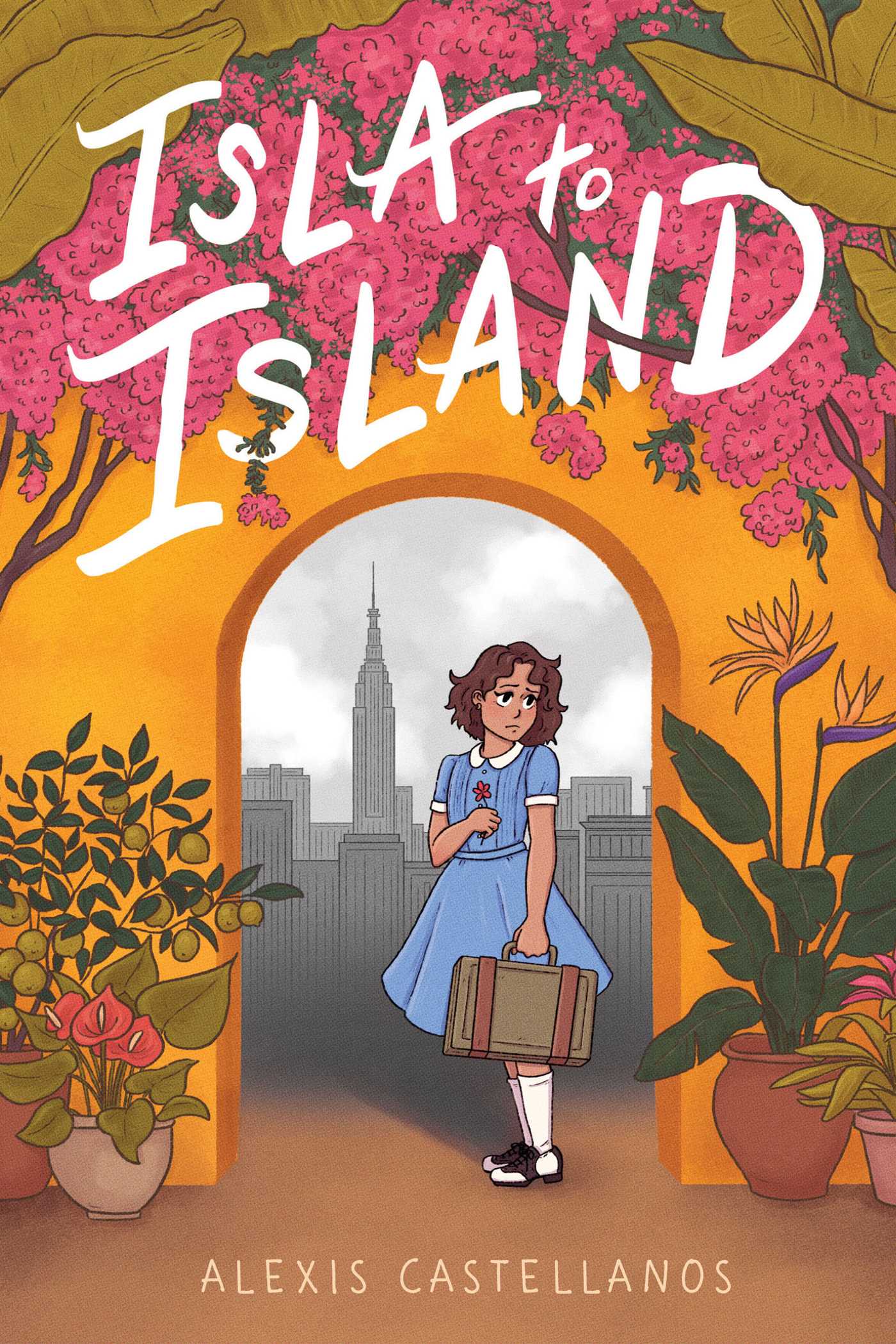
This wordless graphic novel follows Marisol, a young girl sent alone to the US when her homeland of Cuba becomes increasingly unsafe. When she first arrives in New York, she is miserable. The winter weather is nothing like what she is used to, and she does not understand anyone around her. As time passes, she comes to realize that home does not have to be restricted to one place. Marisol loves plants and teaches herself English by checking out books about nature from her school’s library. Her foster parents notice this interest and show her areas of New York that are reminiscent of home, even in the winter, like a botanical garden. As time passes and the seasons change, Marisol comes to see the same vibrant nature she loved in Cuba come to life in her new home. The story ends as she finally works up the courage to introduce herself to her peers at school, closing with an epilogue shown through photos the depicts her parents arriving in the US and Marisol herself eventually starting a family in the US. 

The book is primarily wordless, with text being used at the start and ending to label photos that set the scene. As art is the primary storytelling vehicle, movement through the story occurs with varying paneling formats. The style of the art itself is simply with uncomplicated backgrounds making the story easy to follow. When Marisol first arrives in New York, the art becomes black and white, with occasional splashes of color when she sees things that remind her of home. Through this initial lack of color, the visuals embody how terrible Marisol feels. Over time, the color returns to the illustrations, initially through the plants that Marisol sees and books she reads that make her feel at home again. By the end, the illustrations are once again in full color. Back matter provides additional context to the wordless story. This includes an explanation of Operation Peter Pan, the real-life program that brought Cuban children to the US, along with an author’s note and list of historical sources for those who want to do further reading on the topic. Isla to Island presents a touching narrative about the immigrant experience without the use of text, which allows it to have appeal to young readers who may be overwhelmed by lengthy books about this important topic. 

Monsters Among Us: A Review of Only a Monster

Only a Monster
Vanessa Len
February 22, 2022
HarperTeen
Ages 13-17 

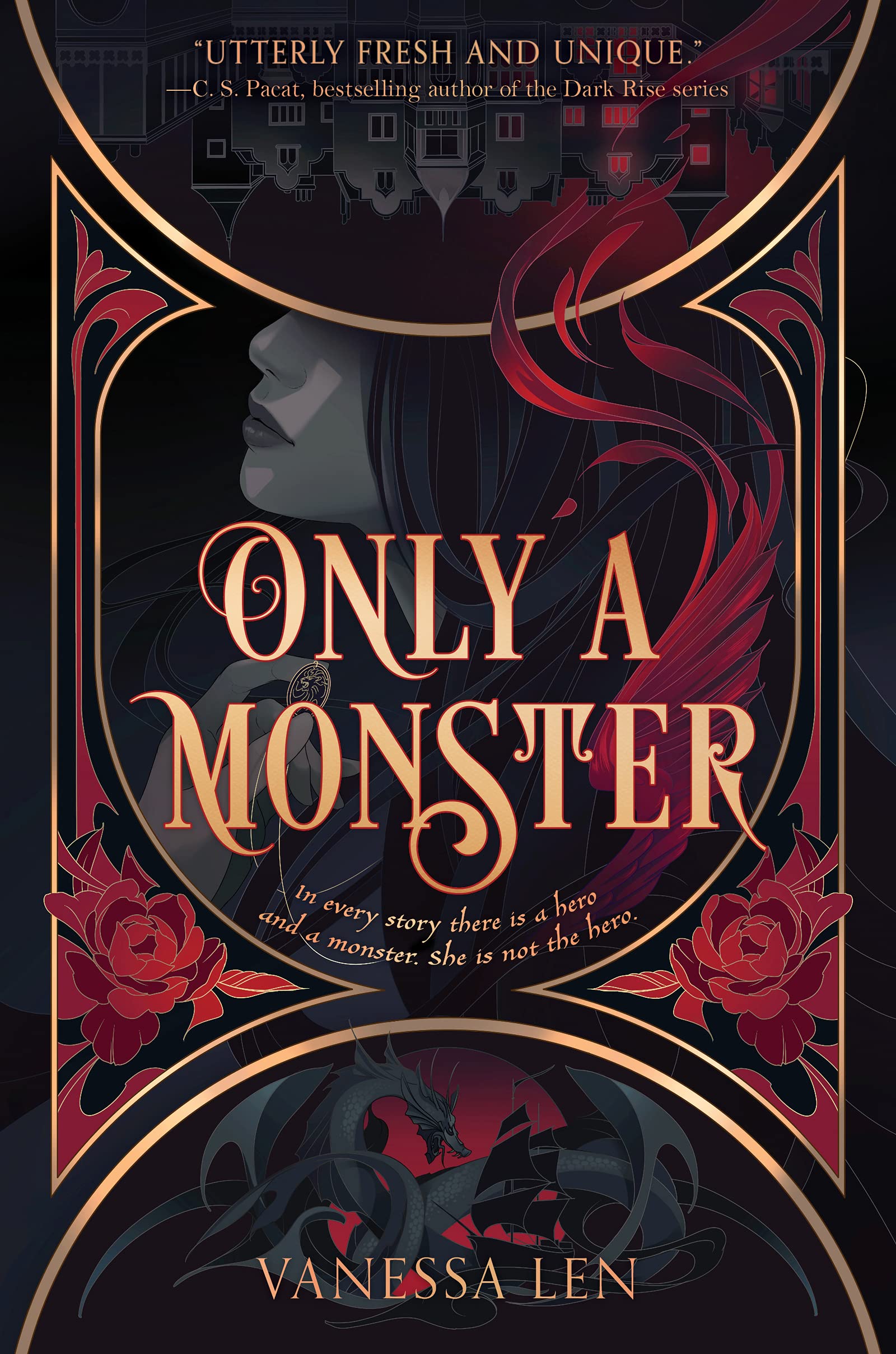
In this first installment of a planned trilogy, debut author Vanessa Len lays down the foundations of a world where monsters live among humans, appearing no different from their human counterparts. Monsters’ primary ability involves travelling through time, though in order to do so they must “steal time” from humans, shortening the lifespans of their victims. Beyond this ability that is shared by all monsters, each also has an additional ability shared by their family line. The story’s protagonist, Joan, is half-monster, half-human, and the monster half of her family has intentionally hidden the full extent of their abilities from her. Shortly after accidentally using her powers for the first time and learning the truth about them, Joan also learns that her crush, Nick, has sworn to destroy all monsters. Joan escapes a massacre, where the victims include most of her own family. As Joan teams up with another survivor of the massacre, she must quickly learn how to navigate not only her powers, but the entire society and hierarchy of monsters living hidden throughout London. 

Despite being the first in a series, Only a Monster can stand on its own as the primary conflict is solved by the end of the book, with greater unresolved questions looming for those who will wait for its sequels. Its primary theme relates to morality, and the ambiguity of good versus evil, with the ever-present question being whether monsters are always evil, and heroes are always good. Another central theme is that of adapting to a new society. In the monster world, Joan feels out of place as she is half-human. Since her family hid the truth about monsters from her, Joan is not aware of monster society which has its own rules about what can and cannot be done regarding time travel, as well as urban legends which end up having truth to them as Joan learns more.  She also alludes to feeling out of place in the human world as well due to being of mixed race. The supporting cast is also diverse, featuring characters of various ethnicities and sexualities. While the story gets dark, and features depictions of death, it is not overly graphic. Fantasy readers who enjoy time travel and related themes, such as alternate timelines, are sure to enjoy this fast-paced read. 

Myths & Sci-Fi Come to Life: A Review of Tiger Honor

Tiger Honor
Yoon Ha Lee
January 4, 2022
Rick Riordan Presents / Disney Publishing Worldwide
Ages 8-12 

In this sequel/companion to Dragon Pearl, Yoon further delves into a world that combines science fiction with Korean mythology. While events from the previous book influence the story, it can also be read as a stand-alone coming from a completely different point of view. This story focuses on Sebin, a nonbinary tiger spirit. They have always dreamed of joining the Thousand Worlds Space Forces to follow in the footsteps of their Uncle Hwan. Unfortunately, their acceptance letter comes at the same time as a message declaring that Hwan has been branded a traitor by the Space Forces. Sebin reports to the Space Forces, hoping to find out what really happened regarding their uncle and to bring honor to a family that has always prioritized discipline and loyalty to the family above all else. Sebin boards the spaceship Haetae, headed towards orientation. Almost immediately, things go wrong. As the situation becomes more dangerous, Sebin can no longer be held back by protocol. Ultimately, they are put into situations that force them to choose between loyalty to the Space Force and loyalty to their family.

The plot is fast-paced, opening with a prologue where Sebin describes their situation before backtracking a bit to characterize their family. After a few chapters of set up, the action begins. The first-person narration highlights the superhuman aspects of being a tiger spirit as Sebin mentions sensing the emotions of others based on scent. Sebin’s uncertainty in their decisions is a point of tension. While they seem to switch loyalties, this ultimately feels realistic for a 13-year-old thrust into a perilous situation. Diversity of gender identities is centered in both primary and secondary characters. Wearing pronoun pins is normalized, with Sebin noting them on others before settling on any pronouns. The Thousand Worlds is based in Korean culture, making most characters presumably ethnically Korean (as they have Korean names). Other nations are represented, with the Japan coded Sun Clan being highlighted most often. Back matter includes a pronunciation guide to assist with the names of characters and places. This book is sure to appeal to those looking for nonstop “unputdownable” action, with the blend of sci-fi and mythology adding a unique touch.

We Can Do Hard Things: A Review of The Struggle Bus

The Struggle Bus
Julie Koon
Kind World Publishing
March 8, 2022
Ages 4-8

Sometimes, when life gets really hard, the Struggle Bus shows up at the door. It grumbles and rumbles and seems completely hopeless. Lost in the fog and frozen by indecision and on its way up the mountain, the Struggle Bus breaks down. It is only with the help of friends that it can be set back on its way. And even then, it’s a hard and bumpy journey, but eventually, it finds the path, and arrives at the top of the mountain.

The Struggle Bus is a gentle rhyming story acknowledging big feelings and encouraging readers to never give up. Koon’s illustrations, a mixture of simple line drawings and watercolor, are rendered in soft, soothing colors that complement the supportive message of the text. Even amidst fog and uncertainty, the struggle bus continues on, reminding readers to feel their feelings but not let those feelings stop them from moving forward. With rhythmic text and onomatopoeia sprinkled throughout, this book is ideal for young people who need a little help to understand big emotions. At the end of the book, there are reflection questions and ideas for calming behaviors to utilize when “your bus breaks down” (p. 37). A diverse cast of characters and buses of all shapes, sizes, and colors let readers know that everyone rides the Struggle Bus sometimes, and that even the tallest, foggiest mountains are not insurmountable.

Self Discovery Through Lack of Effort: A Review of The Year I Stopped Trying

The Year I Stopped Trying
Katie Heaney
Alfred A. Knopf Books for Young Readers
November 16, 2021
Ages 12 and up

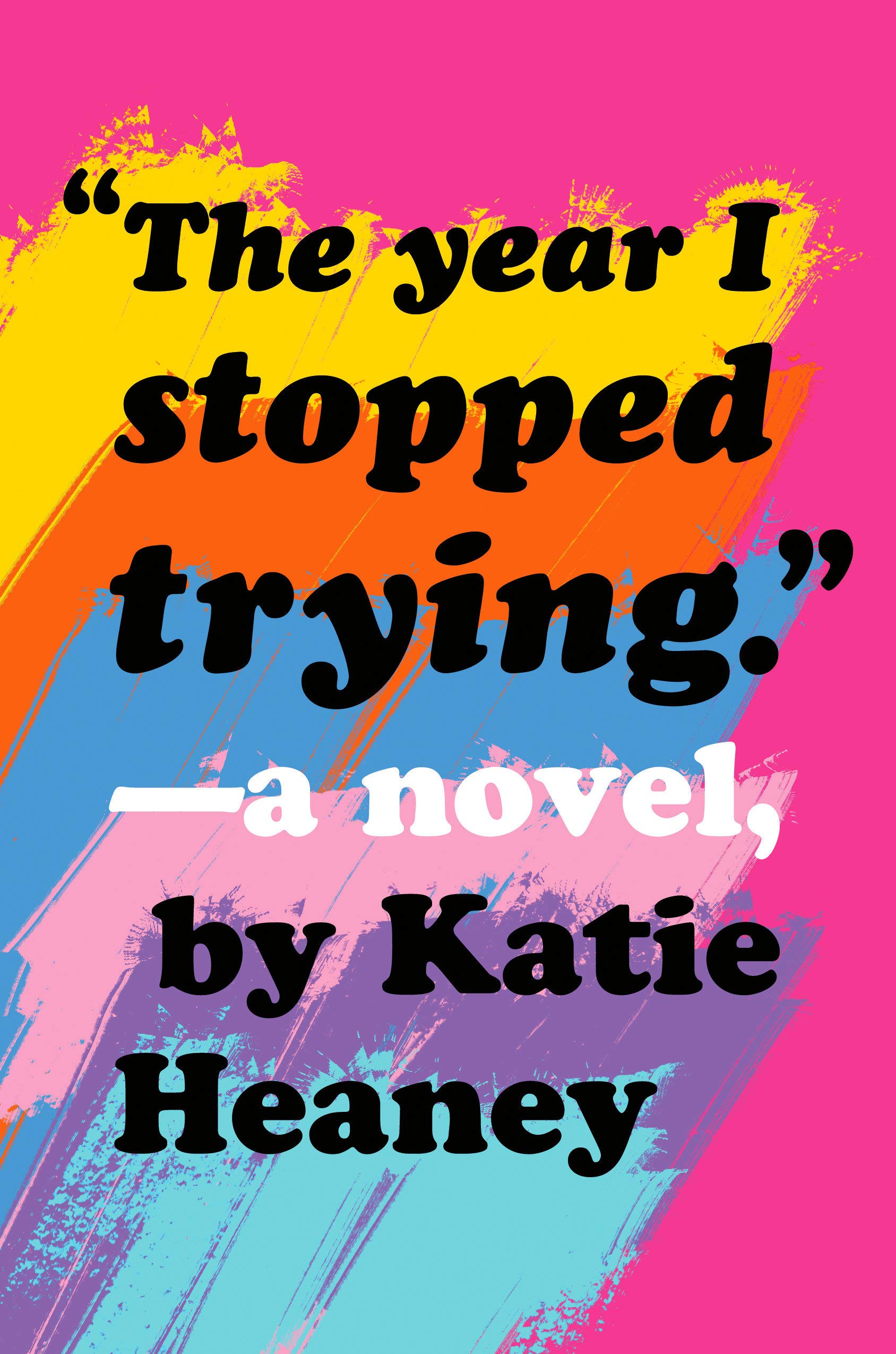
Mary has always been a good student and never gotten into trouble. One day she forgets to do a history assignment. She prepares herself for the worst, yet, nothing happens. This leads her to reflect on the purpose of doing her assignments. Has she been doing so well in school simply because she is supposed to? What does she even want for herself in life? Intentionally, she does as badly in school as she can, skipping assignments and classes. She also begins a romantic pursuit of Mitch, hoping his bad boy reputation will aid her in her “self-deterioration project.” As she gets to know Mitch, she is unsure if she truly wants to date a boy, sensing that just like with the schoolwork, she has always thought about boys simply because that was what was expected of her. Mary’s experimentation leads her to realize how preoccupied she was with how others perceived her. She ultimately comes to terms with the fact that she is not completely sure what she wants, and that is okay.

Heaney writes in a very casual, first-person style. Mary’s narration is often humorous and blunt. While she cannot express herself well to others early in the story, her character comes through in the narration style filled with inner thoughts. The setting of a suburban high school in the Midwest allows for diversity in the supporting characters, though this is not a focal point of the storytelling. The discoveries Mary makes as she tries to find herself and her purpose are ones that have value for any young person, overachiever or not. The straightforward style makes this an easy read, making the theme of self-discovery easily accessible to readers transitioning from middle grade to young adult fiction.