“Made in Illinois”: Connecting Readers with Creators in YOUR Classrooms and Libraries

Sarah Aronson

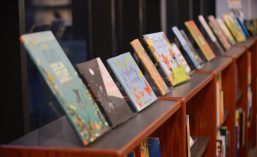
The Butler Children’s Literature Center was pleased to host local author Sarah Aronson last week Thursday, September 20th, for her “Made in Illinois” presentation. Aronson, who has written several books for children and teens, including the Wish List series for middle grade readers and an upcoming Rube Goldberg picture book biography, is originally from Pennsylvania, but now calls Evanston home. She shared with our audience various ways teachers and librarians can incorporate local authors and illustrators into their programming, from brief but impactful Skype conversations, to writing or illustrating workshops, or as enhancements to various STEAM curricula. Aronson also suggested collaborating with authors and illustrators to introduce more difficult conversations. “Books are a safe place to have a bigger discussion,” she said, whether that be about “bullying, the loss of a loved one, or talks about community and empathy.”

However educators want to work with authors and illustrators, the important thing, Aronson reminded everyone, was that the kids and their interests and imaginations be at the forefront, and that it be a collaborative effort between all parties: “When kids meet authors and illustrators, something happens. The book comes alive.” All it takes to make this magic happen is reaching out. Many authors have contact information on their websites, and there is an online resource launching this fall that will help connect local creators with local educators (look for announcements here and on our social media!).

Thanks again to Sarah, and happy collaborating to all!

Creatures with Emotions: A Review of How to Be a Good Creature

how to be

How to Be a Good Creature: A Memoir in 13 Animals
By Sy Montgomery
Illustrated by Rebecca Green
Houghton Mifflin Harcourt, September 2018

In ten brief chapters, Montgomery recalls her time with and lessons learned from 13 animals – some known only for days, some beloved family members. Each chapter is part biology lesson, part biographic narrative, and part philosophical reflection on the gift of animals in our lives. Montgomery describes in vivid detail the daily routine of emus in Australia, the playful nature of an octopus living at the New England Aquarium, the charming personality of a pig named Christopher Hogwood, and the ways in which she grew and changed as a person thanks to a variety of family pets. This memoir is unique in its creature focus, and in the full range of emotions displayed by both Montgomery and her animal companions. This heartfelt memoir written for a young audience reminds us we’re all just creatures with emotions. As she states, “A far worse mistake than misreading an animal’s emotions is to assume the animal hasn’t any emotions at all” (p 148). As a read along, read aloud, or part of a larger discussion about our place in the world, How to Be a Good Creature will be at home on many bookshelves.

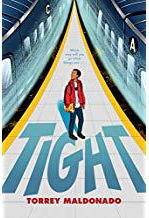
New Children’s Fiction Alert!: Tight by Torrey Maldonado

Tight by Torrey Maldonado

Tight
Torrey Maldonado
Nancy Paulsen Books, September 2018
Ages 8-12/Grades 3-7

If Bryan could be any superhero, he’d be Batman. Or Black Panther. They’re smart, they think 10 steps ahead, and they’re tough. Bryan’s dad and his older sister, Ava, both say he should be tough: “don’t be soft” they tell him, but his mom keeps him cool and level-headed. She also introduces him to Mike, who is in 7th grade – one year older than him in school – and Bryan thinks he’s pretty tight. Mike loves comics and drawing superheroes just like Bryan, and he doesn’t let school get in the way of having fun.

Slowly, Mike starts asking Bryan to take more and more risks: climbing up to the rooftop of a neighborhood building, ducking the subway turnstiles to take the train for free, skipping school to get the newest Luke Cage comic. Bryan doesn’t feel so good about lying to his parents, especially his mom, but he loves the feeling of freedom that comes with hanging out with Mike.

Bryan’s internal struggle to make the right choices is grounded in Tight’s contemporary Brooklyn setting and in his genuine interactions with strong secondary characters. He genuinely wants to do the right thing, while also wanting to give his friend a chance to choose better as well. Maldonado’s dialogues present a variety of perspectives on peer pressure and the difficulties of navigating friendships as a young person, making it easy to empathize with Bryan.

Women and Wealth Redistribution: A Review of The Forest Queen

The Forest Queen by Betsy CornwellThe Forest Queen
Betsy Cornwell
HMH/Clarion Books, August 2018

“Steal from the rich, give to the poor” gets a fresh take in this gender-swapped retelling of the classic Robin Hood tale. Sylvie, sixteen and lady of Loughsley Abbey, begins to question her family’s treatment of the people of Loughsley – especially now that her brother, John, is the unforgiving sheriff. With her childhood friend, Bird, she runs away and lives in hiding in the nearby woods. Slowly, others from Loughsley join them in their new community, including a young woman named Little Jane, the midwife Mae Tuck, and others who feared otherwise being jailed for their inability to pay egregious taxes. Sylvie must eventually confront her brother, along with her own complicity in the evils done by her family, and she comes to realize that the changes required for economic justice mean she must take “radical action” and put herself in potential danger for the greater good.
Sylvie and her mission to redistribute wealth among the people of Loughsley are easy to root for, but the additional focus on gender roles, womanhood, and the idea of community as family are what set this retelling apart. Strong secondary characters help to challenge Sylvie and force her to take a strong stand against a system that she would otherwise benefit from, and parallels can be drawn from the injustices in the story to those of today’s world. As Little Jane, who becomes a dear friend to Sylvie says, “If someone doesn’t care whether you live or die, then living itself is rebellion” (p 241). This thoughtful narrative of what can happen when the privileged few horde wealth while the majority struggles to make do with less and less shows the power in a united band of concerned citizens.

Back to School with Historical Fiction: A Review of Finding Langston

Finding Langston by Lesa Cline-Ransome

Finding Langston
Lesa Cline-Ransome
Holiday House, August 2018

Langston doesn’t like much about his new life in Chicago – not the small apartment he shares with his father, or the noisy streets and sidewalks, and definitely not his new school, where classmates call him “country boy” and make fun of how he speaks. Langston misses Alabama, where his mother died and where his Grandma still lives, though his father sends her part of his paycheck each week in the hopes of helping her move up north with them. It’s only when Langston discovers George Cleveland Hall Library, open to all Chicago residents, that he starts to feel at home.

In the safety of the library, Langston also discovers his namesake, a poet who seems to have inspired a few of the love letters written by young Langston’s mother to his father. Reading the poetry of Hughes helps Langston work through his grief at losing his mother, but it’s a new friend who recognizes that reading poetry “is a way of putting all the things you feel inside on the outside” (p 99).

Cline-Ransome mixes poetry and history in this slim fiction novel for elementary and middle school children. The post World War II era of the Great Migration is explored through the story of one family, and Langston (the character) also learns a great deal about Langston Hughes and other African American poets and writers of the time. Chicago’s Bronzeville neighborhood and Chicago Public Library’s Hall Branch are both highlighted and given extra detail in an Author’s Note at the end of the book. Told with heart and thoughtfulness, Finding Langston belongs in personal libraries and on classroom shelves alike.

Valuable Reminders: A Review of The Dollar Kids

dollar kids

The Dollar Kids
Jennifer Richard Jacobson
Illustrations by Ryan Andrews
Candlewick (August, 2018)
Ages 10-14

When his family wins the chance to buy a house for just $1, twelve-year-old Lowen sees it as a chance to hit the reset button — Mum can open her own restaurant, Dad can follow his dream of working in a clinic in an underserved community, his brother Clem can finally be the star athlete, and his sister Anneth — well, she’ll need convincing. And sensitive, artistic Lowen can work through his grief over the death of a friend and guilt over believing he caused it. But moving to a small town isn’t easy on any of them, leading everyone to question whether the Dollar House program was such a good idea after all. Dubbed the “Dollar Kids” by hostile new neighbors skeptical of the program and “whether it’s a help or drain on the town” (p. 328), Lowen and the other new kids in town struggle to make a place for themselves, rehab houses, and rebuild community.

The idea of home, be it a building, a community, a family, or a feeling creates a strong backbone for this plot, helping to pull the reader through the slightly slow start to the one year the book covers. By mid-book, the pace picks up in both action and time (the progress noted with each new chapter). While slightly awkward, the change of pacing mirrors the changes Lowen experiences as he processes his grief and settles into life in Millville. Scenes from Lowen’s comic book drawing layer in additional elements of his grieving process, questions of faith, and ultimately his healing.

Diversity (of age, gender, and cultures) among the characters in this story provide a varied range of coping mechanisms for dealing with uncertainty, insecurity, and change by both the new families settling in and Millville residents dealing with the decline of their small, but proud town. The inclusion of parents and other community members as active players in the story is a refreshing change from books that often leave you wondering “What happened to all the adults?” and provides a subtle reminder that communities need all types of diversity to thrive.

#OWNVOICES Recommendations

Though I pay for it in the morning, lately I have happily been staying up way too late reading. And while I’m making an admirable dent in my to-read list, my to-be-reviewed list is getting longer and longer and longer! So instead, here is a list of some of the powerful, sweet, funny, and very-highly recommended #ownvoices MG and YA titles I have read (and LOVED!) this spring. Check them out and judge for yourself!


amal unboundAmal Unbound by Aisha Saeed (Nancy Paulsen Books, 2018) –Pakistani
Amal’s dreams of becoming a teacher are interrupted by an accident that lands her as the indentured servant of a cruel and corrupt landlord. She must learn to work with the other unhappy inhabitants of his household to expose the truth of his misdeeds and return to her family.


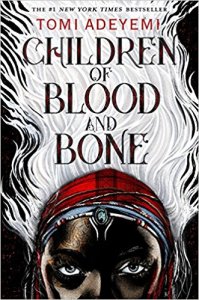
blood and boneChildren of Blood and Bone by Tomi Adeyemi (Henry Holt and Co., 2018) –West African

As a descendant of the maji, Zélie will use the power of family, will, and the magic of her clan to fight a brutal and oppressive monarchy bent on destroying her people, and magic, forever.


hurricane childHurricane Child by Kheryn Callendar (Scholastic, 2018) –US Virgin Islands/LGBTQ

Abandoned by her mother and bullied by nearly everyone else, Caroline finds comfort in a new classmate—Kalinda. She will fight her community, her emotions, and Mother Nature herself to find her mother and save her friendship.


Marcus vegaMarcus Vega Doesn’t Speak Spanish by Pablo Cartaya (Viking, 2018) –Latin cultures
When a school suspension sends Marcus, his mother and brother to Puerto Rico to “hit the reset button,” his mishap-filled search for his father helps him discover that fatherhood and family can look different than he ever imagined.


parker inheritance

The Parker Inheritance by Varian Johnson (Arthur A. Levine, 2018) –African American/US South

Two inquisitive kids spend the summer solving a mystery from the past, facing racism then and now, in a small South Carolina town that hides both terrible secrets of racial violence and a multi-million dollar treasure.


So until the next list (picture books, maybe?)… Here’s to late nights with a good book and early mornings with a big cup of coffee!

Small & Mighty: A Review of Front Desk by Kelly Yang

front deskFront Desk by Kelly Yang
Scholastic/Arthur A. Levine Books
May, 2018

Mia and her parents, recent immigrants from China, are managing a California motel in the early 1990s. It’s a family affair, as ten-year-old Mia finds herself responsible for checking in motel guests while her parents tend to the rooms and motel maintenance – though it sometimes feels like it’s Mia against the world. After a rough start including washing machine mishaps, bad grades, and arguments with her mother (who wants Mia to stick to math, something she considers Mia to be a “native” in), Mia hits her stride when she realizes the power of using her ever-improving English to help others, especially the motel guests she considers family.

Adventurous subplots and dynamic secondary characters add to the appeal of this compelling middle grade novel. Mia believes in herself and wants what is best for her friends and family, and though her quick thinking sometimes gets her in trouble, at the end of the day she is a force for good in her community. This book is fun, yet thoughtful, and shows that there’s no age requirement for taking action against injustice.

Finding Their Way Home: A Review of Refugee by Alan Gratz

Told in three separate yet connected stories, Refugee is a novel of perseverance and commitment to who you are in the face of persecution.

refugeeJosef is fleeing from 1930s Nazi Germany and the threat of concentration camps with his parents and sister. Isabel, her parents, and her neighbors use a makeshift raft to escape Cuba in 1994, during the unrest of Castro’s regime. Mahmoud, along with his parents and younger siblings, leave the violence of war in Syria in 2015, traveling through Europe as they search for a safer place to live. Though the details of their stories are unique, Josef, Isabel, and Mahmoud share more similarities than just their situations.

The attention given to creating characters with heart and conviction is engaging, while the conflicts each protagonist faces ensure none of their individual stories get stuck in the emotion of the book as a whole. Refugee tells an important story, and does so without preaching or sensationalizing the experiences of refugees past and present. Maps and an author’s note highlight the reality of Josef, Isabel, and Mahmoud’s stories and show the readers how they can help with relief efforts.

We’re Not Afraid! Two Not-Too-Scary Stories

In the spirit of Halloween, we’d like to share two new picture books with characters who rethink their requests for scary stories.

i want to be in a scary storyLittle Monster is confident he wants to be in a scary story, until he’s stuck in the middle of one. Witches, ghosts, and spooky houses? “Golly Gosh!” and “Jeepers Creepers!” he says. Little Monster doesn’t want to be scared; he wants to do the scaring! The narrator (indicated on the page with black text, where Little Monster’s words are purple) acquiesces, putting Little Monster in charge of the upcoming frights. Is Little Monster ready to scare? With charming dialogue and just enough forewarning for what the next page holds, I Want to Be in a Scary Story will delight any child who wants to be in a story – on their own terms.

too scary story

Parents who’ve struggled to satisfy competing requests will recognize Papa’s burden in The Too-Scary Story. Grace and Walter settle in for a bedtime story, but they can’t agree on how scary it should be. The dark forest setting is “too scary” for Walter, so Papa introduces the “twinkling lights” of fireflies. But that’s not scary enough for Grace! Back and forth the story goes, scary to safe, until Walter and Grace agree – the story is too scary! Luckily, Grace has her magic wand, and Papa is never too far away to bring the story back to safety. Murguia’s mixed media illustrations follow the alternating moods of the text and complete this bedtime adventure.