Scowler


Image
Scowler

by Daniel Kraus

Delacorte, 2013

As always in a Daniel Kraus novel, there’s plenty going on and it’s all terrible.

In Scowler, Kraus’ latest, two monsters threaten the lives of nineteen-year-old Ry, his mother, and his younger sister. The first is Ry’s father. Abusive and cunning, he has escaped from prison with plans to slaughter his family. The second threat is Ry himself. Or rather, Ry’s hallucinations of boyhood toys, come to life, telling him what to do. (Plus, there’s a comet headed for the family’s farm.)

But with all the gruesome twists and turns of the plot, there’s one early scene that stands out to me. I can’t seem to shake it.

Ry recalls a morning after one of his parents’ violent fights. His father has left and he breaks into his parents’ locked bedroom. His mother has been sewn to the bed. Every part of her body, from her ear to each space in between her toes has been methodically threaded to the mattress.  Ry gets scissors and begins the long process of removing every stitch. He recalls the details with tenderness:

“Ry felt the prim fealty of a nurse as he took up the pink fabric, shook out its crusty folds, and quartered it… He found a clean edge and swept beads of sweat from his mother’s lip and brow. Then he refolded it again and wiped the urine from her thighs and blotted what he could from the mattress. He discarded the fabric in the trash can and took up the shears. It was the most intimate thing he had ever shared with anyone.”

Daniel Kraus is masterful at confronting both his characters and readers with the meaty reality of the human body. He loves to expose our physicality and ultimately our mortality, turning our bodies into terror.

But it was the tenderness of this scene that shook me. In Ry’s response Kraus exposed a fear beyond the physical. It’s not just about losing a parent to death or violence. It’s about taking on the role of caregiver when a parent is weak and needy – losing a parent to adulthood.

The scene felt deeply familiar to me, reminding me of those moments when I was confronted with my own parents’ physical, mental, or emotional weaknesses. There is a unique blend of terror and love in those moments when a parent needs you more than you need them. And I think Daniel Kraus captured it perfectly.

I am at least ten years older than the intended audience of this book and my parents are significantly older than those of my peers. So perhaps this scene generates images and feelings for me that it would or could not for teen readers. But I suspect that for a lot of people the struggle of their teenage years is intricately tied to the loss of a parent, sometimes to death or illness, but more often to a painful recognition of their parents’ limitations. So while the scene may not feel familiar to all readers, it can still presage the inevitable consequences of adulthood.

Using Caldecott Books with Older Readers

by Thom Barthelmess

1203_c75logowlrgFor 75 years the Randolph Caldecott Medal has defined illustrative excellence in American picture book publication. And for 75 years children have delighted in the narrative power of imagery. A few years ago the New York Times ran an article entitled Picture Books No Longer a Staple for Children in which reporter Julie Bosman attributed a marked decline in picture book sales to parents pushing their children to the independent reading of chapter books earlier and earlier. The response from the kidlit community was fast and furious (and occasionally indignant), on the NYT site and across social media. We proclaimed the value of picture books for pre-readers, early readers and practiced readers, citing, among other things, the visual literacy, narrative sophistication and pure joy they provide.

As librarians serving young people we have a particular responsibility to the culture of reading. Children and their families observe our attitudes and behaviors and make assessments about books and reading accordingly. Lots of libraries have systematic programs that share picture books with preschool children (AKA storytime). But how many of us do the same for older readers, regularly sharing and using picture books with the upper elementary and middle school sets? If we want kids of all ages to include picture books among their reading choices, we need to show (not tell) them that picture books belong to them.

And Caldecott books seem like a pretty darn good place to start.

Here are some ideas about categorical ways we can share Caldecott Medal and Honor books with older readers, with suggestions for particular titles in each category. What has worked for you? What are you thinking about trying? Let us know in the form below!

Read Aloud!

It’s true that the Caldecott Medal recognizes excellence in illustration, and text is, by definition, not part of the evaluation equation. But many books in the Caldecott canon read aloud beautifully. And reading them aloud does double duty; on the surface kids enjoy the experience, and underneath they understand that being read to is a normal, legitimate thing (in the presence of lots of “evidence” to the contrary).

Here are some of my favorite Caldecott read alouds that older readers might enjoy:

This Is Not My Hat by Jon Klassen (Candlewick Press – CM 2013)

Dave the Potter: Artist, Poet, Slave illustrated by Bryan Collier, written by Laban Carrick Hill (Little, Brown and Company, a division of Hachette Book Group, Inc. – CH 2011)

Red Sings from Treetops: A Year in Colors illustrated by Pamela Zagarenski, written by Joyce Sidman (Houghton Mifflin Books for Children/Houghton Mifflin Harcourt – CH 2010)

Don’t Let the Pigeon Drive the Bus by Mo Willems. (Hyperion – CH 2004)

Tar Beach by Faith Ringgold (Crown Publishers, Inc., a Random House Co. – CH 1992)

A Visit to William Blake’s Inn: Poems for Innocent and Experienced Travelers illustrated by Alice & Martin Provensen; text: Nancy Willard (Harcourt – CH 1982, also NM 1982)

Rain Makes Applesauce illustrated by Marvin Bileck; text: Julian Scheer (Holiday – CH 1965)

Explore Art – Media!

Over the years the Caldecott committee has recognized illustrations in a wide variety of media (except photography?!). Examining a few books that use a particular medium in different ways is a great way to introduce that medium to kids, and get their own creative juices flowing.

Block prints

These artists use wood or linoleum blocks to make their images. You can use potatoes!

Ella Sarah Gets Dressed by Margaret Chodos-Irvine (Harcourt, Inc. – CH 2004)

Once a Mouse retold and illustrated by Marcia Brown (Scribner – CM 1962)

The House that Jack Built: La Maison Que Jacques A Batie by Antonio Frasconi (Harcourt – CH 1959)

Watercolor

Invest in some watercolor paper. The difference will astound you!

The Lion & the Mouse by Jerry Pinkney (Little, Brown & Company – CM 2010)

Click, Clack, Moo: Cows that Type illustrated by Betsy Lewin, written by Doreen Cronin (Simon & Schuster – CH 2001)

Yo! Yes? illustrated by Chris Raschka; text: edited by Richard Jackson (Orchard – CH 1994)

Look closely

Many Caldecott honorees really blossom under close examination. Engage your kids in making with images and ideas hidden inside (OK, it’s not a medium, but I like the way it fits here).

Officer Buckle and Gloria by Peggy Rathmann (Putnam – CM 1996)

Black and White by David Macaulay (Houghton – CM 1991)

Three Jovial Huntsmen by Susan Jeffers (Bradbury – CH 1974)

Tell Your Own Story!

Many illustrators have been recognized for telling their own life story, and the range of their stylistic approaches is staggering. What style might your kids adopt to tell their stories?

Expressionism? The Wall: Growing Up Behind the Iron Curtain by Peter Sís (Farrar/Frances Foster – CH 2008)

Photography? Grandfather’s Journey by Allen Say; text: edited by Walter Lorraine (Houghton – CM 1994) (I know, they’re not photographs, but they’d be a great way to prompt kids to use photographs)

Cartoon? Bill Peet: An Autobiography by Bill Peet (Houghton – CH 1990)

STE(A)M!

There is actually quite a bit of science in the Caldecott canon. Think about beginning a STEM-oriented program or series with a picture book. It’s an interesting amalgam (get it?)!

Books about science

How might you take one of these titles and expand it into an activity?

Hot Air: The (Mostly) True Story of the First Hot-Air Balloon Ride illustrated and written by Marjorie Priceman. (An Anne Schwartz Book/Atheneum Books for Young Readers/Simon & Schuster – CH 2006)

What Do You Do with a Tail Like This? illustrated and written by Steve Jenkins and Robin Page. (Houghton Mifflin Company – CH 2004)

Castle by David Macaulay (Houghton – CH 1978)

Books about scientists

Here are some wonderful and varied looks at the lives of scientists. You could pick a single scientists and have young people choose and illustrated a single episode in her life. Or work with the kids to identify a scientist of interest and give them free illustrative reign.

Me…Jane by Patrick McDonnell (Little, Brown and Company, a division of Hachette Book Group, Inc. – CH 2012)

Snowflake Bentley illustrated by Mary Azarian, text by Jacqueline Briggs Martin (Houghton – CM 1999)

Starry Messenger by Peter Sís (Frances Foster Books/Farrar Straus Giroux – CH 1997)

The Glorious Flight: Across the Channel with Louis Bleriot by Alice & Martin Provensen (Viking – CM 1984)

Books that are science

There is a goodly amount of engineering that goes into the creation of any book. Add some holes and you’ve got a project! Take a look at these books that include the sophisticated use of die cuts and use this F&G template to have kids create an F&G folio with their own surprises.

First the Egg by Laura Vaccaro Seeger (Roaring Brook/Neal Porter – CH 2008)

Joseph Had a Little Overcoat Simms Taback (Viking – CM 2000)

Color Zoo by Lois Ehlert (Lippincott – CH 1990)

Asking Questions

With a history spanning three quarters of a century, the Caldecott canon reflects our evolving sociopolitical attitudes and perspectives. Indeed, under contemporary consideration, some recognized titles raise important questions about cultural expression and representation. By talking with kids about these kinds of issues (instead of talking to them) we expand our understandings of cultural sensitivity and literature, and offer young people some welcome agency. How might you engage kids in discussion of these titles?

The Girl Who Loved Wild Horses by Paul Goble (Bradbury – CM 1979)

Arrow to the Sun by Gerald McDermott (Viking – CM 1975)

The Mighty Hunter by Berta & Elmer Hader (Macmillan – CH 1944)

What Else?

What ideas do you have about sharing Caldecott books with older readers? Let us know!
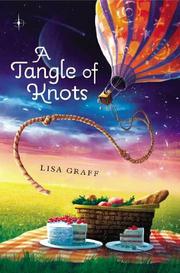
A Tangle of Knots, by Lisa Graff

9780399255175

I pick up a book for a number of reasons—good reviews, a fabulous cover, or because a friend or colleague gives a recommendation. Rarely does a book’s title encourage me to dive in. Even though A Tangle of Knots has all of the aforementioned things, its title is what really struck me.

Tangles and knots both suggest tension, complexity, and stress. I don’t know about anyone else out there, but the world has seemed to be a tangle of knots lately. I’m not sure when the tangle of knots began for me—maybe 9/11 was the first time I truly  comprehended catastrophe. Since then, and very recently, it feels like they just keep coming– the shootings in Aurora, Colorado and Newtown, Connecticut. The Boston Marathon bombings. The tornado. The daily violence here in Chicago.

That’s just the United States. If I start thinking about the terrorism in Mogadishu or the violence in Syria, the knots get thicker and the tangles more snarly.

So what does this difficult stuff have to do with a middle grade novel? Well, I picked up this book in the middle of one of those really tangly, knotty weeks. I had read first-person accounts from the families affected by the Newtown, CT shootings at my doctor’s appointment. The Boston Marathon bombings happened. Then the tornado came. Yet, as I read Graff’s novel, a number of things changed for me. First of all, I let myself sink into the world of the novel and was distracted from my sensitivity for little while. Graff’s eloquent, imaginative story weaving and her sophisticated, third-person writer’s voice made it impossible not to be encapsulated by the book. Secondly, I laughed, probably for the first time that week. Lastly, the book was a window and a mirror.  I thought about the book’s tangle of knots, my own tangle of knots, and the world’s tangle of knots, and I accepted them all.

This acceptance probably has to do with the fact that the book is all about cake, and there is no way I can be in a bad mood when I am reading about cake. The protagonist, Cady, is an orphan searching for her place in the world. She has her own special Talent—she can meet someone and instantly know his or her favorite cake. I love Cady. The novel is rich with a puzzle of characters, but what I love about Cady is that she has lost almost everything, and she is not bitter. By the end of the book, I realized that Cady’s magic had nothing to do with her cake making—it is all about her heart. Add in a whimsical family, an old woman who has lost her ability to speak, a boy who has a Talent for spitting, a thief, several real cake recipes, and some blue suitcases–we’ve got a winner.

As I turned the last page, I stopped thinking about the horrific parts of past tragedies and turned toward the small miracles. The police workers on 9/11. The Boston marathoners who crossed the finish line and ran to the local hospitals to give blood. The interview with the woman who had lost her dog in the rubble of Oklahoma’s tornado (see attached video). I know people talk about the small stuff, but it truly is everywhere. And it’s written all over Graff’s novel. A ferret. Peanut butter cake.  A missing dinosaur bone.

And then I thought: tangles and knots. Yes, both suggest tension. But put in a different light, they suggest stability, support, strength. We tie knots when we want something to stay together. When my hair tangles, it comes together in clumps, and each individual hair is indistinguishable. Maybe sometimes we need to be individuals, to be untangled and free. But other times, especially hard times, we need to tie knots with each other, and learn to lean on each other for support and strength. Cady does.

Graff writes, “Cady was one of the biggest-hearted people Marigold had ever met—she tried harder than anybody else to make others happy…If Marigold had learned anything that week, it was that trying hard and being a good person didn’t always mean that good things would happen to you.”

We all know that bad things happen. But that fact doesn’t make Cady lose her sensitive heart or her willingness to stay positive, so it won’t make me lose mine, either.

I think my favorite cake would be a chocolate one; almost brownie-like, with a really rich, dense texture and chocolate frosting, warmed up with ice cream on the side.

What’s your favorite?

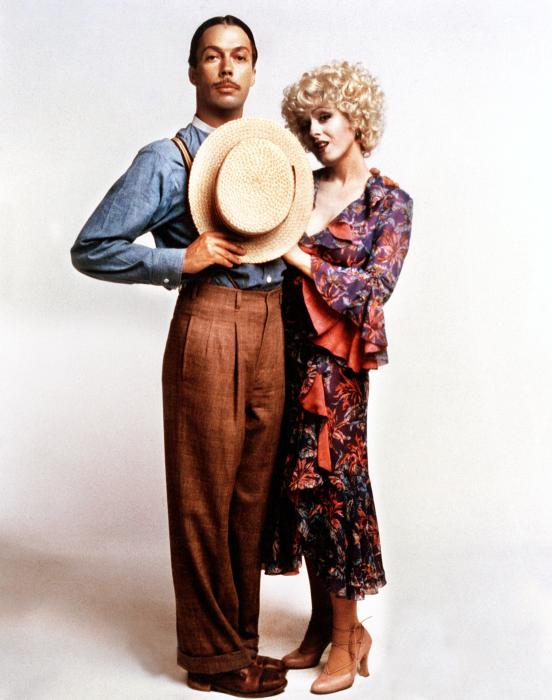
Get well Tim Curry

News is emerging that actor Tim Curry is recovering from a stroke. Initial reports suggested that he had collapsed yesterday following a massive episode. More recent reports say that, while he collapsed in his LA home yesterday, the stroke occurred last July, and he has been recovering (well) ever since. In any event, I wish him very well.

rocky horrorWhen I was in High School I went to midnight showings of the Rocky Horror Picture Show week after week (after week) at the Coventry Cinema in Cleveland Heights. I think its fair to say that the experience had a profound effect on my adolescence, offering an indelible, albeit particular, affirmation of different ways of being. Watching and eventually joining the participatory irreverence, throwing toast, spritzing rain, singing and dancing along, offered me a kind of community I really needed at the time. Who knew musical theater could be like that?!

annieSpeaking of musical theater, I refuse to apologize for the fact that I love all things Annie. I just do. Ask me about Kristen Vigard’s casting as the original red-mopped orphan and her replacement with Andrea McArdle after previews in Conecticutt. Heck, watch the Julie Stevens documentary, Life After Tomorrow (SJP!) if you want to know more about it. Anyhow, Curry plays Rooster in the 1982 movie version. There’s lots to love about the film, if you’re me, at least, including his sneaky, sinister performance. He’s brilliant. And, thinking back, it’s a little striking how much Carol Burnett, as Miss Hannigam. looks like Frank N. Furter. Huh.

But today I remember Tim Curry as an extraordinary narrator of audiobooks. My introduction to audiobooks came with my very first ALSC evaluation committee experience as a member of Notable Recordings for Children. Back then each of us was assigned a sampling of eligible recordings (cassette tapes!), based on the first letter of the title. I was assigned A-C, and received, relatively early in the year, the first of  Lemony Snicket’s Series of Unfortunate Events, The Bad Beginning. So charming. Curry’s arch, over-the-top narration makes the most of the tongue-in-cheek prose, honoring its playful irony and milking the humor. It’s just a little irresistible.

AbhorsenBut my favorite audiobook performance of all time must be his stunning readings of Garth Nix’s Abhorsen trilogy. It was such an interesting choice, casting a man to read these menacing novels about a family of necromancers in a centuries-old battle against conspiring evil, as all of the protagonists are young women. But once you hear Curry’s contemptuous reading of Mogget the familiar, and the positively dripping malevolence of Orannis, the baddest of the many baddies, you know the choice was just perfect. I have listened to all three, in sequence, at least five times, stem to stern, and they never disappoint. I recommend them all the time, and do so again today, to you.

So, here’s wishing Tim Curry a continued speedy recovery, with hopes that he finds his way back to the recording booth soon.

Caldecott 2014 continued some more

There are two more spring books that have caught my Caldecotty attention:

round is a tortillaRound is a Tortilla: A Book of Shapes

written by Roseanne Greenfield Thong

illustrated by John Parra

Chronicle, 2013

To begin with, this book is supremely lovely. Of course, lots of books are lovely, and loveliness is not a particular criterion for Caldecott consideration. But let’s just put that out there. Parra’s figure work is warm and personal, simultaneously accessible and specific. His largely symmetrical composition affords the imagery some organizational clarity, making it especially easy on the eye (and enhancing the shape identification, to boot). But there is much to admire beyond the simple beauty. The color work is extraordinary. Parra sets vibrant reds and oranges against grayed-out blues and greens. The unexpected result, with its dramatic sense of light and shadow, enhances the sense of place. It feels like a hot day in the Mexican shade. The treatment of shapes is suitably sophisticated. Rhyming verse calls attention to one shape at a time, and while many of the shape in question are present for searching and finding, there are other shapes represented, too.

And if ever there was a book jacket optimized to accept a golden circle sticker, this is it. I mean, really.

henris scissorsHenri’s Scissors

written and illustrated by Jeanette Winter

Simon and Schuster, 2013

Illustrating a picture book about a famous artist is no small thing. How does the illustrator capture the essence of the artist’s style without resorting to mimicry, expressing without copying? Jeanette Winter makes it look easy. In this simple picture book biography of Henri Matisse she employs color to set Matisse’s artwork apart from its contextual environs, replicating the vibrant artwork with rich, saturated color and using a more reserved, pastel palette for the artist and his surroundings. She structures the story carefully, covering the first 70 years of his life in the first few pages and dedicating the balance of the book to the paper-cutting for which he is most celebrated today. Matisse made the technical discovery while recovering from a severe, debilitating illness, and Winter reflects its transformational power with a major compositional shift. The exposition unfolds with images in small, tight squares on a clean, buff ground. At the pivotal moment of discovery, when the artist finds his way to creation again, the images break across the entire spread, reaching beyond the edge of the page in expressive freedom. Most picture books contribute to the storytelling with representative imagery. Using the art itself to tell the story, in its structural design, adds layers of meaning to an already illuminating story. I’d call that excellence of pictorial interpretation of story, theme, or concept.

Anyone out there excited about any 2013 American picture books?

Oklahoma relief

moore tornadoI have long admired Kate Messner, for lots of reasons. She is a sensitive and versatile writer. She is a committed teacher, and her annual letter to parents about connecting kids with books sits at the heart of my own MLIS classroom considerations of intellectual freedom, as it galvanizes the great value of a proactive, affirmative, respectful approach. Now she is leading an(other) effort to rally authors and illustrators of books for young people to raise money for folks in dire need, this time those affected by the recent tornadoes in Oklahoma. You can enter to win signed books by donating $10 to the American Red Cross. Specific instructions are here. I shouldn’t be surprised when folks who offer so much of themselves on the page are so generous in real life. So I won’t be. I’ll just be grateful.

Thanks, Kate.kate messner

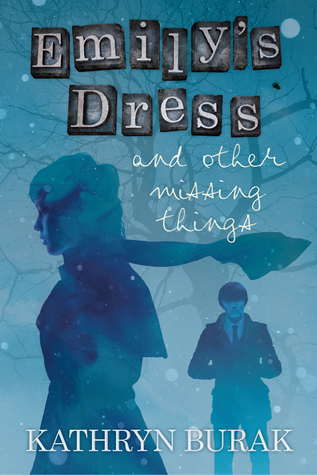
Emily’s Dress and Other Missing Things

“Emily Dickinson is the perfect thing to hand to a 16-year old girl,” advised fellow blogger lynchlibrarian recently. What is it about Emily? Indeed, I was 16 when I purchased my paperback copy of her complete works (at the local Borders bookstore, my idea of the cool hangout spot), and I vividly remember discussing “Success is counted sweetest” in my high school’s U.S. Literature class. Certainly I considered her words earlier and later in life, though not by much: an eager seventh grade teacher chalked “I never saw a moor” on the board for the daily quote; in my second year of college, fellow English majors and I spent the better part of a class dissecting the differences between her 1859 and 1861 versions of “Safe in their Alabaster Chambers” (the power — of a dash!).

So what is it about Emily that resonates during young adulthood? While increasingly introspective teens may be intrigued by her famously reclusive habits, it’s her words that truly inspire. At a time when teenagers feel pulled between their past and future selves, her voice simultaneously offers innocence and wisdom. As they encounter the terribly great problems of the world and personal decisions to make, her subject matter rings with the impossible brightness and darkness of life’s great questions. Through succinct, tender verses, Emily provides young people with a “nugget of pure truth” to grasp in their hands and hearts. (My Virginia Woolf obsession came later in life.)

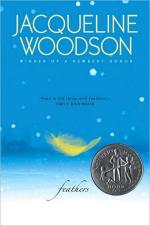
  Feathers by Jacqueline Woodson   Emily's Dress and Other Missing Things

If young people miss out on enthusiastic teachers reading Emily’s poetry aloud, I’m happy to know they may also discover her in the pages of fiction. Jacqueline Woodson’s beloved Feathers (Putnam, 2007) perfectly pairs “‘Hope’ is the thing with feathers” with a story that examines the power of friendship over divisions and discrimination during the 1970s, a fragile, precariously hopeful time in our nation’s history. What a perfect story for a 12-year-old.

For older readers, Kathryn Burak’s novel Emily’s Dress and Other Missing Things (Roaring Book Press, 2012) explores Emily’s darker side. After experiencing personal tragedy, Claire and her father attempt to start fresh by moving to Amherst, Massachusetts, the home of Emily Dickinson. Claire is a poet herself  and finds herself drawn to Emily’s words, rich with poignant examinations of death, and to Emily’s house, now of course a museum where Emily’s personal belongings are artfully arranged for tourists to view. As if in a creative trance, she breaks in, night after night, to write while wearing Emily’s white dress — until the day the college-aged student teacher Tate discovers her. Instantly linked by this strangely intimate crime, they run, stealing the dress in the process. Burak’s poetry is the star of this novel, both in the actual verses Claire writes — the portals by which she gradually shares the tragic details of her past — and in the crisp, shimmering prose of Claire’s narration:

The smell of snow on the winter air fades. I take a deep breath. I smell paper. Here I have the cool, clean feeling of paper, too.

I am so glad to get away. To be in Emily Dickinson’s house.


With a frigate like this book, the reader will certainly agree.

Caldecott 2014 continued

We left off with three women whose 2013 work merits some Caldecott consideration. Here are a few men whose illustrations we want to look at, too (remember, I’m going alphabetically by author – the gender breakdown is purely accidental):

boy and the airplaneThe Boy and the Airplane

illustrated by Mark Pett

Simon and Schuster, 2013

This wordless picture book is awash in poignant, sepia-toned nostalgia, so you know I’ll love it. A little boy receives a package (from an unidentified stranger – look carefully) and opens it to discover a red toy airplane. He plays and plays and plays, until the plane accidentally lands up on the roof, beyond his reach. Try as he might, he can’t get it down. So, he plants a seed. Year by year a great tree grows. The boy grows, too, becoming a young man and, eventually, an old, Santa-Claus-looking one. At last, he climbs the tree and finds the plane, just as he left it. Instead of playing, though, he wraps it up and pays it forward. I can already anticipate heated arguments about whether or not this is really a book for kids (nostalgia has that effect on us) but expect consensus with respect to the subtle art with which the story is told. The pages themselves are a succession of varied drab grays, fixing a somber tone that persists, even in the happier moments. And the wistful facial expressions, so simply realized, are somehow simultaneously round and piercing, all at once. We are left with a tender cycle of loss and reconciliation, but the melancholic tone establishes the losing, not the finding, as the predominant thematic emotion. We can go back and forth as much as we like about the need for a poignant picture book about the inevitability of loss. But taking the theme as a given, it’s hard to argue with its artistic execution.

the darkThe Dark

written by Lemony Snicket, illustrated by Jon Klassen

Little Brown, 2013

In 2013 Jon Klassen became the first illustrator to win both the Medal and an Honor since Leonard Weisgard did it in 1947. Can he be the first repeat winner since the Dillons did it in 1976 and 1977? With a book like The Dark in contention there’s no denying the possibility. A little boy fears the Dark, and so he confronts it. Snicket personifies the Dark in his almost elegaic text, and though our young hero Laszlo fears him, he is more a mystery than a real threat. Klassen sets the action in a huge, ramshackle house, full of the sort of staircases, closets, and corners that invite worry. But what’s especially striking about this book is not so much what Klassen build into the illustrations but what he leaves out. There is no furniture to speak of, save Laszlo’s bed, and a dresser in the basement with curious import. And there are no adults, either. Klassen has really tapped into the insecurities of childhood and manifests them on the page in stark resonance. It’s easy to celebrate an artist’s exquisite hand, fine line, sense of shape, manipulation of color, etc. It’s not so easy to recognize what the artist excludes. This book gives us the rare opportunity.

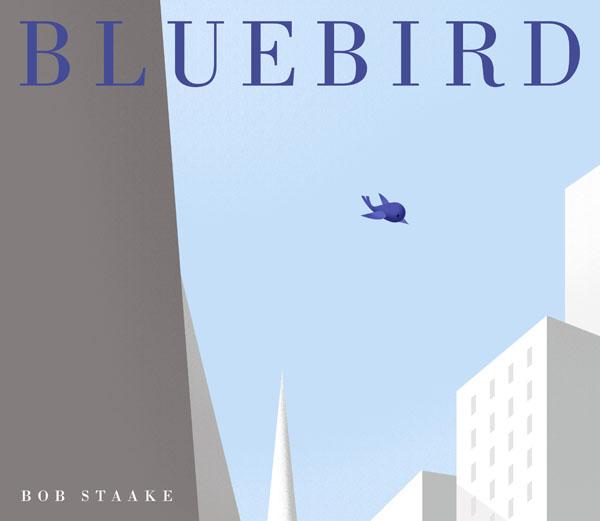
bluebirdBluebird

illustrated by Bob Staake

Schwarz and Wade, 2013

A little boy is bullied, rather mercilessly. Friendless, he roams the city streets alone. He is adopted by a little blue bird, who becomes his trusted companion. The bullies persist, though, and in a particularly brutal attack, his little blue bird is struck by a stick and killed. Other birds arrive, and the boy and his bird are flown to the sky where the little blue bird is released. The Caldecott tends not to love purely digital work; somehow art is supposed to be made by hand. But it is only a matter of time before we recognize the computer as just another medium, no different from pens or brushes or woodblocks. And this could be the time. Staake, known more for a style of chaotic, somewhat irreverent ebullience, really reins things in here, working in a restrained palette with simple lines and straightforward composition. By getting out of the story’s way, he makes it all the more powerful. I have already read some musings about the inappropriateness of such a stark treatment of difficult subject matter. But to my eyes, by expressing the truth just as he sees it, Staake pays extraordinary respect to his young readers. And there’s a lot to say about the value of that kind of respect, at least when we’re talking about the most distinguished picture book for children.

Caldecott 2014

It may be early to begin handicapping the 2014 Caldecott Medal (the committee won’t meet for its first round of deliberations until the end of next month), but this is already proving to be a strong year in picture books. I have  encountered some extraordinary titles that are, each in its own way, individually distinct. Let’s take a look, shall we? I’ll start with three today, and add some more in the coming days.

In alphabetical order by author (I am a librarian, remember):

dream friendsDream Friends

written and illustrated by You Byun

Nancy Paulsen Books, 2013

A shy little girl develops a deep friendship with a ginormous white cat, though their relationship exists only in her dreams. Those dreams become the foundation for a real life friendship, though, which soon blossoms into playgrounds-full of playpals and one flesh-and-blood BFF. The story is a sweet one, sometimes a little too sweet, but the digitally manipulated pen and ink illustrations are magnificent. Byun has a glorious sense of color, which she manages carefully to distinguish between the lands of life and dreaming. She engages her unfettered imagination in the depiction of the dream world, peppering the fantastical landscapes with flying origami cranes, pendulant upside-down clock towers,  bedroom forests festooned with bonnets, and confectionary firework displays. The artist spent her childhood in Japan and Korea, and the recognizable element of kawaii to her drawings only adds to the charm. But beyond the beauty of the images, it is Byun’s ability to establish mood, communicate emotion, and define relationships with shape and color that really distinguish this elegant outing.

flora and the flamingoFlora and the Flamingo

illustrated by Molly Idle

Chronicle Books, 2013

This interactive wordless book introduces Flora, dressed in a pink bathing costume and yellow swim cap, to a similarly pink flamingo, and the two engage in a sort of mirrored dance. The flamingo engages in a gorgeous display, extending legs and draping wings in elegant expression. Flora tries to follow along but her clumsy positions are not entirely successful. Seeing her despair, the flamingo offers assistance, and soon the two have achieved a perfect compromise. Idle is artful with the “toy-and-movable” component. Individual flaps expose individual poses, as Flora struggles to match the flamingo’s grace. When the two really join forces, a single flap perfectly expresses their combination, and their dance takes flight. A final, irresistible double-gatefold completes the lesson, as Flora takes over the instruction and the flamingo follows in her exuberant footsteps. I don’t know if the Caldecott Committee has ever recognized a book with an interactive element, but given its ingenious application here, it’s hard to imagine that they won’t be looking carefully.

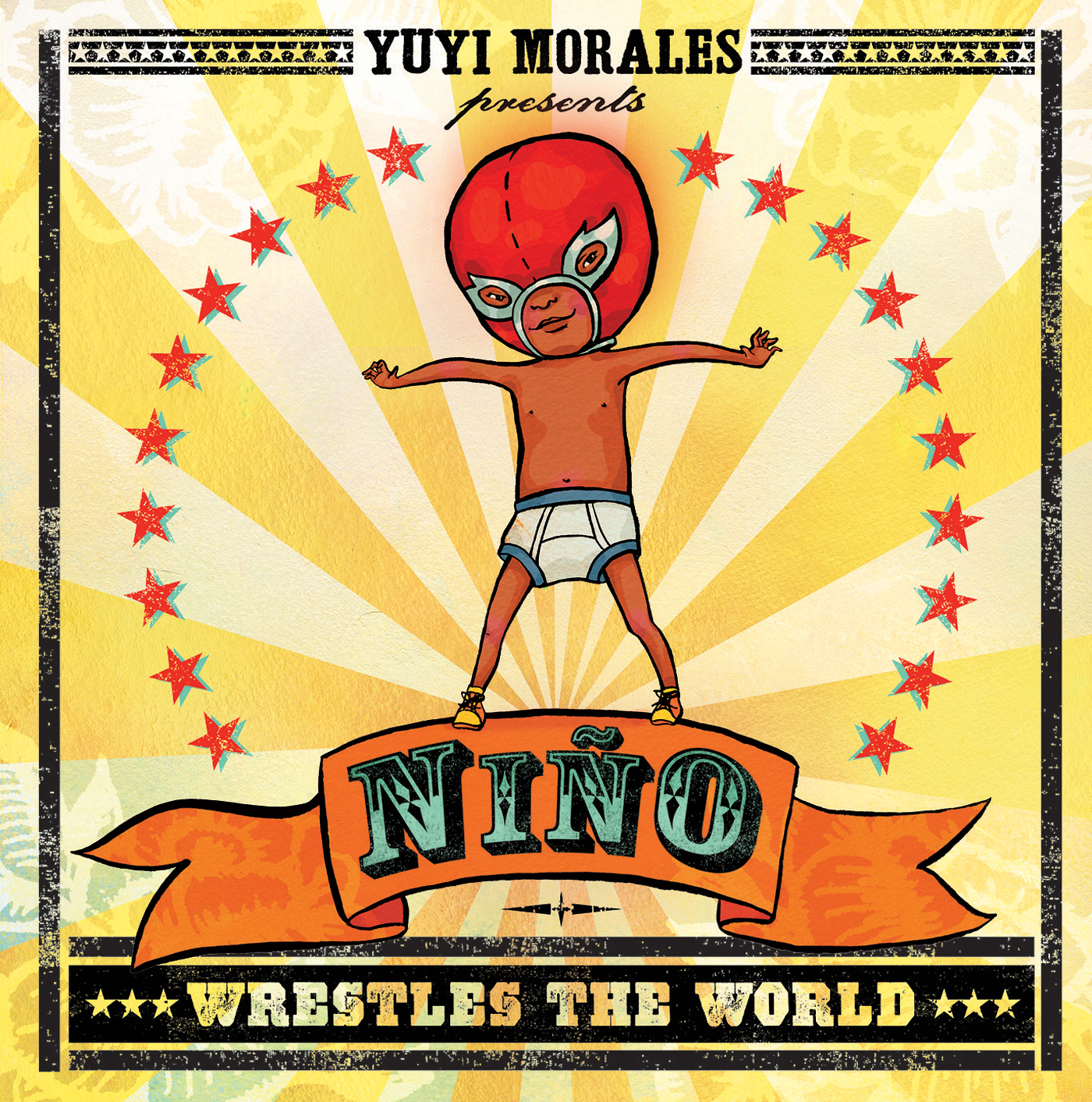
nino wrestles the worldNiño Wrestles the World

written and illustrated by Yuyi Morales

Roaring Brook Press, 2013

Niño is a pint-sized luchador who takes on all manner of pretend opponents in his living-room lucha libre ring. Each of his foes is imagined from pieces of Mexican culture, from Olmec Head to the Weeping Woman. Ultimately it is LAS HERMANITAS who prove to be the worthiest adversaries. But he clearly loves those little sisters, and the three become LOS TRES HERMANOS, establishing themselves as the team to beat. Morales works in digital collage, rearranging her handcrafted watercolors and woodblock images, inserting pieces of photography here and there. The typography is suitable exclamatory, and feels like part of Niño’s vivid imagination. As irresistible as the images are, to me the book’s standout element is the fact that it explores a quintessential childhood experience–imaginative play–in a way that is simultaneously culturally specific and universal. The Caldecott terms and criteria being what they are, the Committee will need to process that value in terms of its distinguished illustrations. I’d be happy to make the case.

Publisher Preview

Please join us on Saturday, May 11 at 1:00pm for our annual Fall Publisher Preview (yes, it’s spring, but they’re previewing their fall lists). Representatives from Albert Whitman, Capstone Press, Norwood House and Sourcebooks will be on hand to show us what they have coming down the publishing pipeline, discuss trends in the industry, and answer any questions we might have. They tend to be pretty generous, and offer lovely, book-laden goody bags as well. Not to be missed!

We meet in Springer Suites, on the bottom level of the Rebecca Crown Library on Dominican’s main campus. Go here to RSVP.

We hope to see you there!

albert whitmancapstonenorwood housesourcebooks