 Those of you who are eagerly anticipating the soon-to-be-published (posthumously) Dr. Seuss book “What Pet Should I Get?” (Penguin Random House, 2015) will likely recognize my futile attempts to come up with a clever title “in the spirit of Dr. Seuss” for this, my first Butler’s Pantry blog entry since becoming curator of the Butler Children’s Literature Center this month. I’m not alone in my plight; children’s book creators ever since the publication of And to Think That I Saw It on Mulberry Street (Vanguard, 1937) have been trying to capture Dr. Seuss’s unique blend of silliness and aptness. Anyone familiar with the children’s canon recognizes the creators who’ve successfully done it (Mo Willems! among a very few others) and those who struggle with it (we all know who they are; I’m not going to skewer anyone here). But I’d never actually tried to do it myself. It’s surprisingly hard to come with Seussian verse that isn’t clunky or awkward!
Last week I was pleased and a little nervous, when the Chicago Tribune reached out for comment on this upcoming new work from a perennial favorite author and illustrator. Pleased, because it’s always nice to be asked one’s opinion (and what’s more fun than talking about children’s literature, anyway?); nervous because, well, I haven’t actually seen the book. Turns out there is a strict laydown date of July 28, as is commonly done for books with built-in instant demand, such as every Harry Potter after the second one. It’s a bit of a reality check for those of us in the business of writing and talking about books; turns out in some cases, our opinions are pretty much irrelevant. Dr. Seuss is one of those whose names, and styles, resonate immediately with kids. It doesn’t really matter what we adults think (come on, who among you REALLY enjoys reading Fox in Socks out loud?).
So, what are your thoughts as P-Day (“Pet” Day, 7/28/15) approaches? Do you have concerns about posthumous publishing, especially in light of the current Harper Lee controversy (and she’s still with us!)? Will the kids and families you serve be lining up at your door to get their hands on “Pet?”
Read the article here (you’ll be asked to register, but it’s free at least):

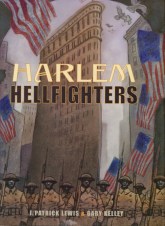


 Tiny Creatures: The World of Microbes
 Rules of Summer
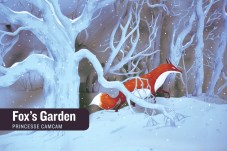 Fox’s Garden
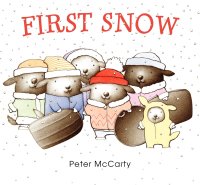 First Snow
 Supertruck
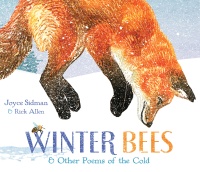 Winter Bees & Other Poems of the Cold
 Cradle Me
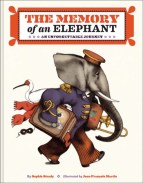 Join us for our second annual Mock CaldeNott discussion on Thursday, January 15, 2015! Once again we’ll investigate a collection of extraordinary picture books from the previous year, using the Caldecott terms and criteria as our guide to illustrative excellence. The special component of our experience is that we’re looking at books that are ineligible for the actual Caldecott Medal due to their international provenance. It’s extra-informative and super-fun. You should really come.


 The Art of Secrets by James Klise, published by Algonquin Young Readers, 2014
 Revolution by Deborah Wiles, published by Scholastic Press, 2014.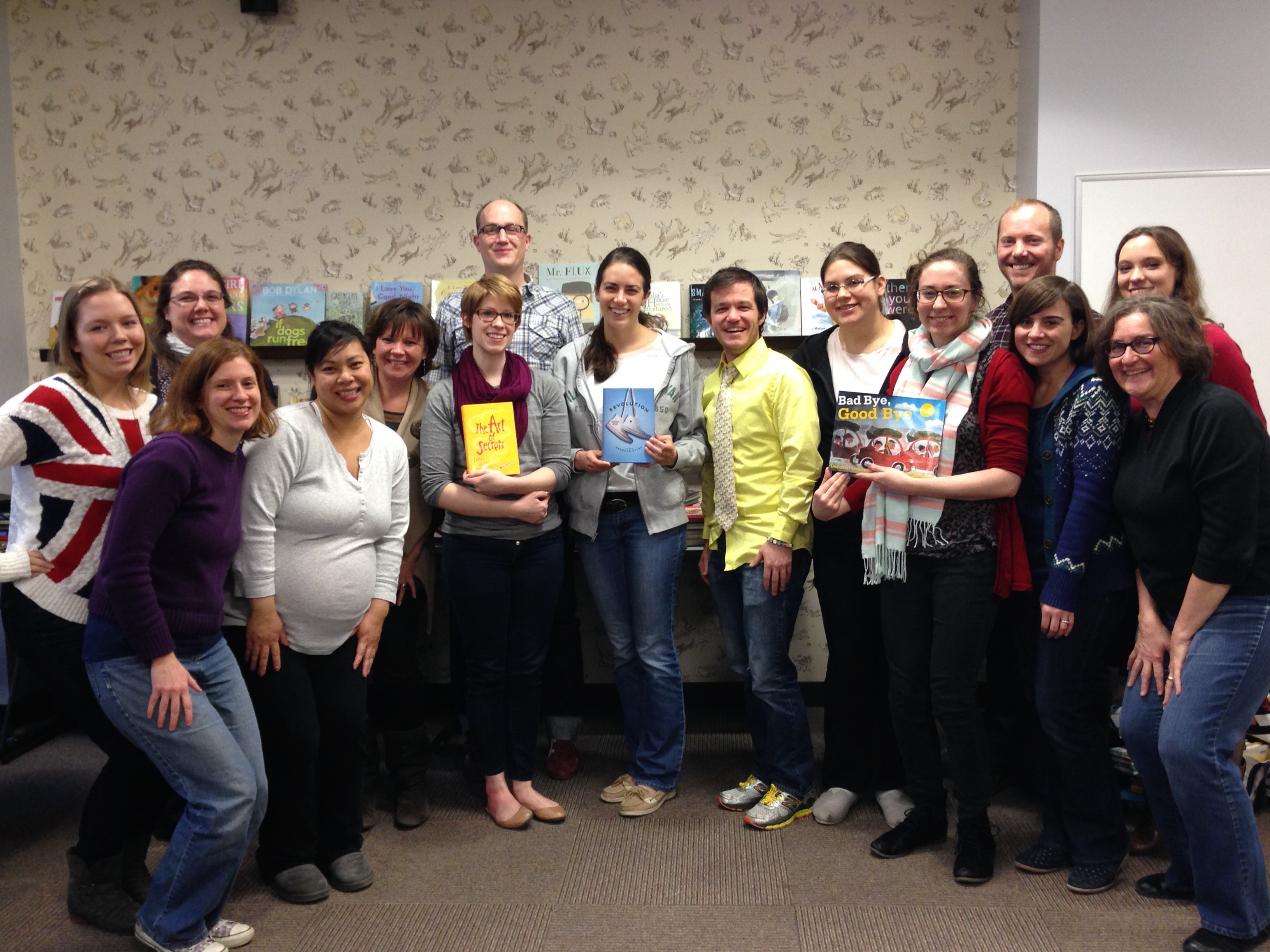
 The submissions are fascinating, with a surprising variety. To be sure, the collection includes some well-loved, to be expected titles. Where the Wild Things Are gets three mentions, and Dr. Seuss shows up six times, twice for The Cat in the Hat, twice for Green Eggs and Ham, and once each for Oh, the Places You’ll Go! and One Fish, Two Fish, Red Fish, Blue Fish. I’m not surprised to see Louisa May Alcott or A.A. Milne, C.S. Lewis or Lewis Carroll (or Robert Louis Stevenson) in the mix. The single most-cited title is Shel Silverstein’s The Giving Tree, with four mentions, which is something of a surprise, not because it’s a book I don’t care for (indeed, I don’t care for it) but because it seems to have the sort of nostalgic perspective that I never thought spoke strongly to children. Consider me schooled. I was somewhat surprised, too, to find books outside the children’s canon, by the likes of Hemingway and Steinbeck and Dwight D. Eisenhower. We didn’t specify that the book needed to be a book written expressly for children, just that it resonated in the participant’s childhood, so it makes perfect sense that books like these would show up. It’s a great reminder of my own myopia, that I automatically understand young people’s reading through my deep engagement with the body of literature I study. Schooled again!

 Here is the World: A Year of Jewish Holidays
 Butler's Pantry